


Skydance is keeping both of its Hollywood studio lots, holding on to its cable networks for now, and leaving its three television studios standing as separate shops. David Ellison and co-CEO Ynon Kreiz laid out those first operating answers on Oct. 6, 2026, the day the Warner Bros. Discovery deal closed. In the same breath, they confirmed that job cuts are coming as the company chases at least $6 billion in savings.
The two executives took questions for nearly 30 minutes on Stage 3 of the Paramount lot, Variety’s Matt Donnelly reported, hours after a town hall for employees on the Warner Bros. lot in Burbank. These two events, a staff memo, and the company’s closing announcement amount to the clearest picture yet of how Paramount, Warner Bros., CBS, CNN, HBO, and the streaming business will be run.
The division of labor at the top is set. Kreiz said all business units report to both co-CEOs, with Ellison focused on “creative technology, long-term strategy,” and Kreiz on “the operations and the day-to-day management of the business including integration, particularly the first phase.”
Two Lots, Three TV Studios, and a Full Cable Roster
“We absolutely will keep both lots, and from that standpoint, you’ll probably see us organize film on one, television and streaming on another,” Ellison said. Which lot gets which business has not been announced. Skydance’s closing announcement commits to at least 30 theatrical films a year, each with a minimum 45-day theatrical window, and counts more than 180 television shows. Warner Bros. and Paramount films will keep their own logos up front, with “A Skydance Company” beneath them.
On television, the company has no current plan to merge Warner Bros. Television, CBS Studios, and Paramount Television Studios, which will keep their own leaders and report to George Cheeks. Kreiz said the decision was “about scale. We’re not looking to reduce output production.” The same logic covers the cable networks, which Kreiz said Skydance is keeping for “economic scale,” with no divestitures currently planned. Most of those networks are not in the active programming business, Variety noted, but they still collect license fees.
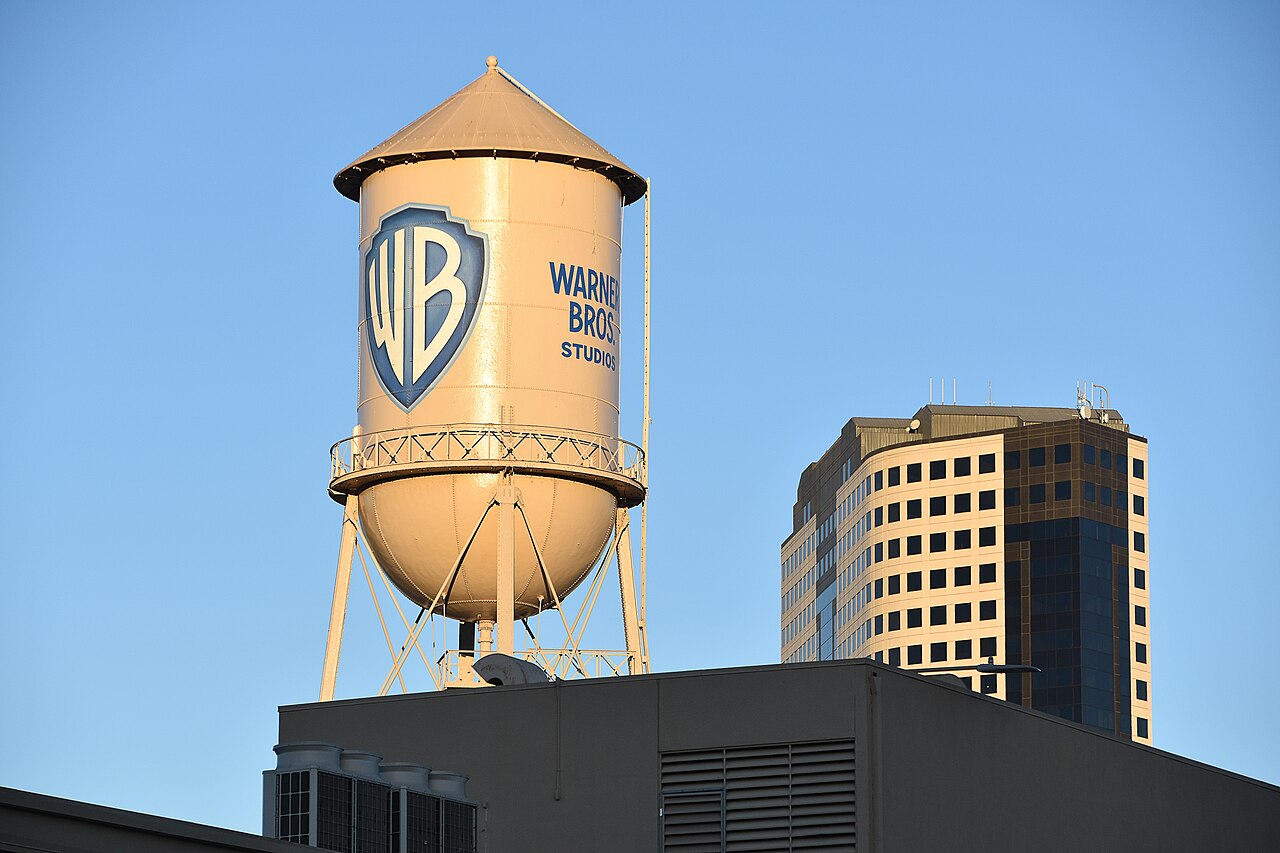
The Warner Bros. Studios water tower in Burbank, California, in 2020. Credit: Chris Yarzab / Wikimedia Commons (CC BY 2.0)
Some big pieces are still open. The closing announcement says Paramount+ and HBO Max “will unify into a single service over time,” but no timetable was given, and the executives did not say whether the TV studios or the network roster might be consolidated later.
Editorial Independence and the Washington Question
The sharpest questions were about politics. Asked what he had discussed with President Donald Trump about CNN, Ellison said: “For absolute clarity, we have not talked to any political leader of any party about news, other than to say that we want to be in the truth business and we want to be in the trust business, and we believe in complete editorial independence.” At the town hall that morning, he told CNN anchor Anderson Cooper that the network would keep “complete editorial independence,” Deadline reported.
Ellison tied his trips to Washington to a different goal: a federal production incentive. He said he and Makan Delrahim, Skydance’s chief legal officer, began working on it in October 2025 because film and TV jobs “are being shipped overseas,” adding that “almost no filming happens here in California.” He described meetings with the president about the idea and said, “A federal rebate can only get done bipartisan.”
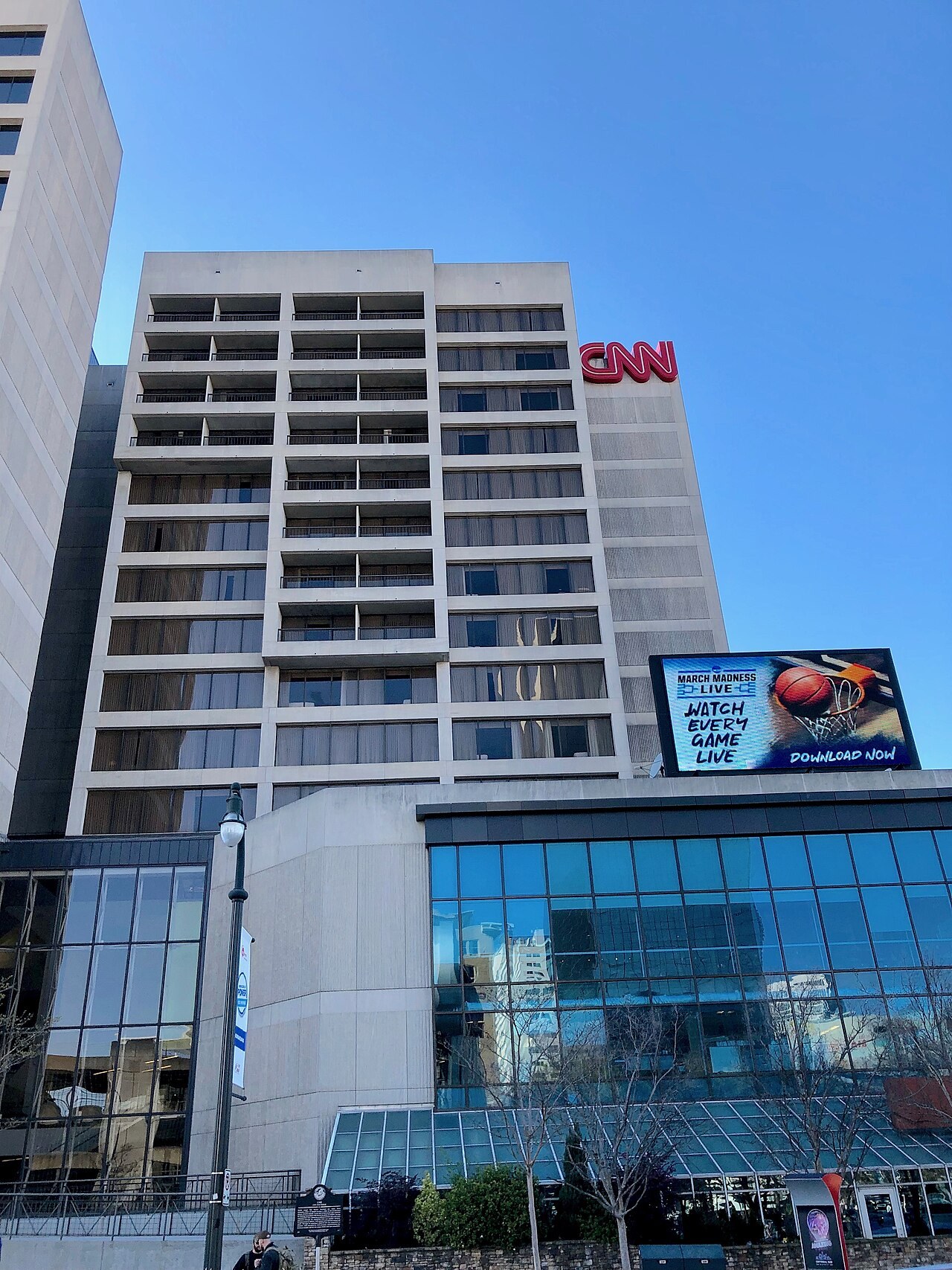
CNN Center in Atlanta, photographed in 2019. Ellison pledged “complete editorial independence” for CNN. Credit: Warren LeMay / Wikimedia Commons (CC0)
Editorial independence is a pledge from the owner. The Ellison family and RedBird Capital Partners hold all of the company’s voting shares, according to the closing announcement. Asked about the deal’s completion, Trump said Skydance is “going to be a great company,” according to a White House pool report cited by Deadline.
The $6 Billion Target and the Jobs Question
The company’s own number is “$6 billion-plus in run-rate synergies over the next three years,” which it says will come “primarily from technology, integration and procurement, marketing and real estate rationalization.” Ellison pointed to Paramount’s record after the 2025 Skydance merger, saying it will have delivered about $2.7 billion in synergies by the end of 2026 against an initial $2 billion target. On CNBC on Oct. 8, Kreiz said the savings would include “some labor,” while adding, “labor is not the majority of the savings,” according to Deadline.
Skydance has not said how many jobs will go. The Day One memo told staff that integration “will bring change, including difficult decisions that affect our workforce.” At the town hall, Ellison said, “There will be changes, and there will be impacts. I’m not going to pretend otherwise,” but the executives declined to give projections.
READ: David Zaslav Says Goodbye to Warner Bros. Discovery Employees as Skydance Takeover Ends His Tenure
The only public job figure comes from outside the company and measures something different. A Los Angeles County report released Aug. 19 estimated that about 4,500 direct film and TV jobs in the county could be lost over three years of integration, with 10,360 total job-years exposed. The county says those figures “are not layoff forecasts.” They are modeled risk, not company plans, and they should not be added to or compared directly with the $6 billion savings target.
Do two lots, three TV studios, and a full slate of cable networks sound like a company built to grow, or just the calm before the cuts? Sound off and let us know!
UP NEXT: Marvel’s Next TV Series is Zodiac…What The Heck is That!?
