


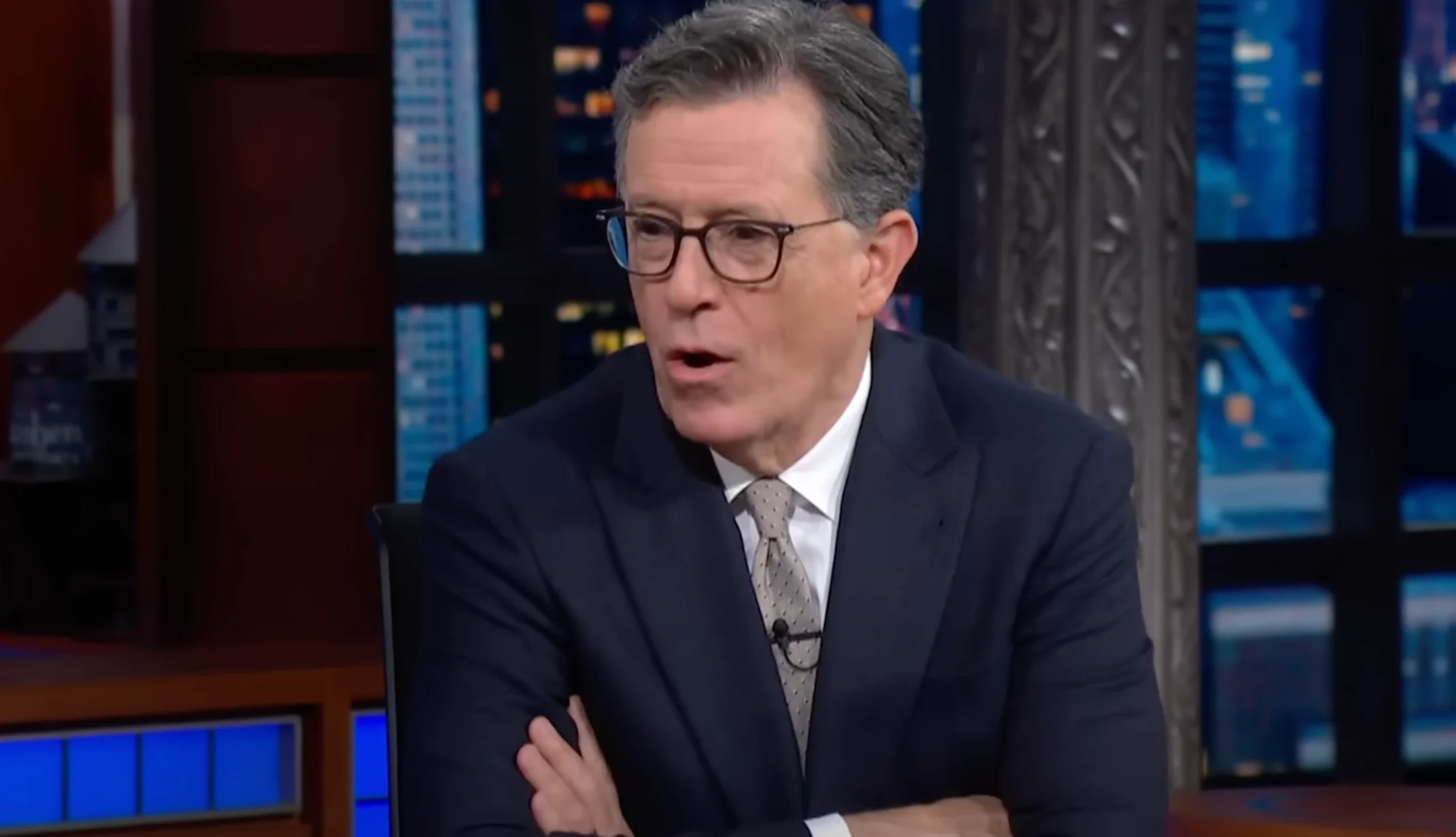
Late-night host Stephen Colbert is publicly clashing with his own network after CBS blocked an interview with a sitting politician — a decision rooted in federal broadcast law but one Colbert framed on-air as politically motivated censorship.
The dispute centers on an interview Colbert conducted with Texas State Rep. James Talarico, who is currently running for U.S. Senate. According to reporting from Variety, CBS lawyers intervened before the segment could air, citing concerns over the Federal Communications Commission’s “Equal Time” rule — a regulation requiring broadcasters to provide comparable airtime to opposing political candidates.
Colbert revealed during The Late Show that the network’s legal team contacted staff directly and told them “in no uncertain terms” that the interview could not be broadcast. He also disclosed that he had been instructed not to discuss the situation publicly — a directive he promptly ignored.
CBS Moves Over FCC “Equal Time” Concerns
Walking viewers through the legal issue, Colbert acknowledged that talk shows have historically operated under an exemption to the Equal Time rule.
“There’s long been an exception for this rule, an exception for news interviews and talk show interviews with politicians,” Colbert said. “That’s crucial. How else were voters supposed to know back in ’92 that Bill Clinton sucked at saxophone?”
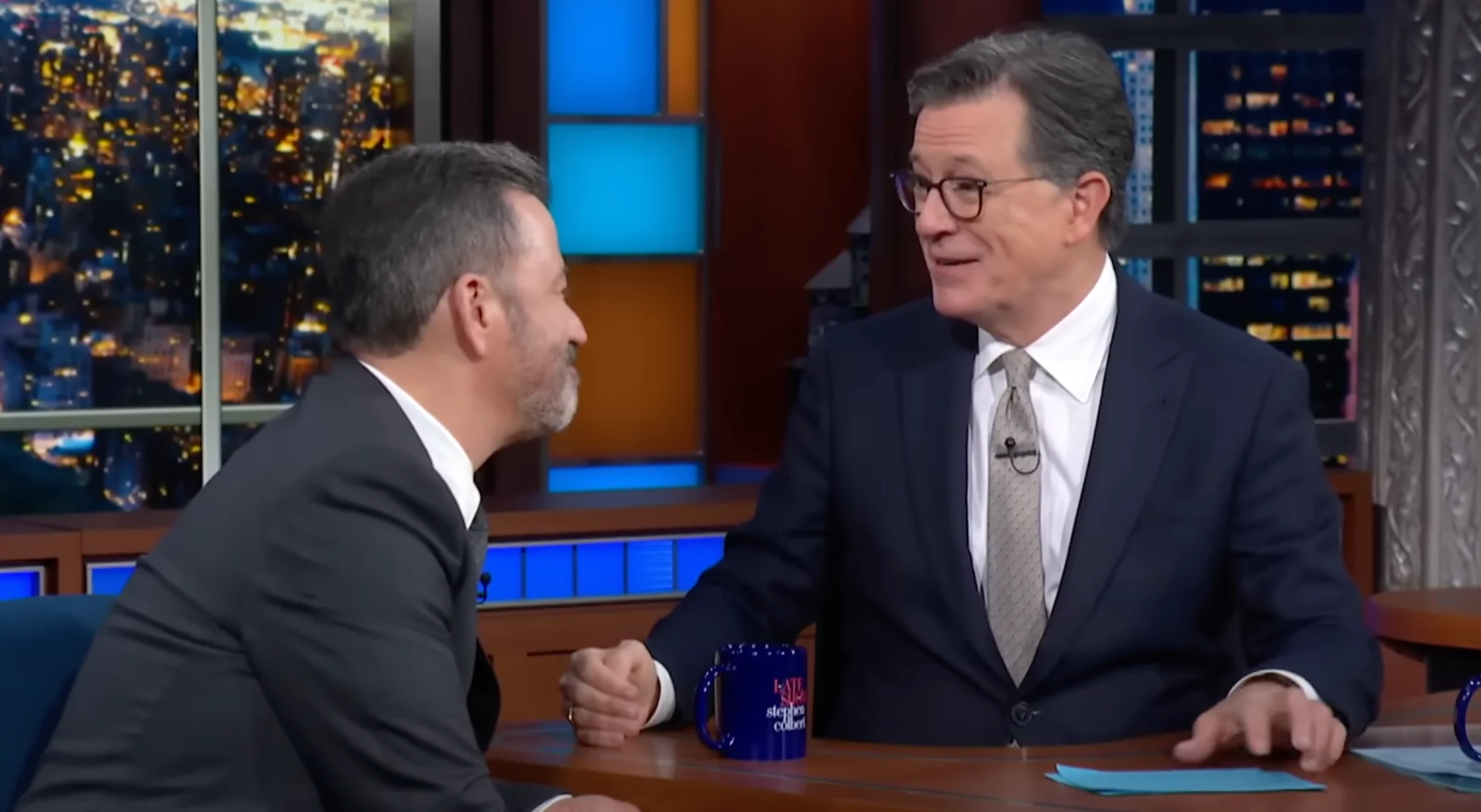
Jimmy Kimmel appears on Stephen Colbert’s show – YouTube, The Late Show With Stephen Colbert
The concern stems from recent scrutiny by FCC Chair Brendan Carr, who has floated revisiting whether partisan late-night programs should still qualify for that exemption.
While the exemption has not been formally revoked, Colbert argued CBS was acting preemptively.
“He hasn’t done away with it yet, but my network is unilaterally enforcing it as if he had,” he said, drawing boos from his studio audience.
He then mocked the network’s rationale, suggesting the move was made “for purely financial reasons.”
Guest Imbalance Raises Equal Time Questions
Colbert’s criticism of the FCC’s Equal Time scrutiny also arrives against the backdrop of longstanding concerns over the political makeup of his own guest roster.
A media study conducted by Newsbusters examining The Late Show’s booking trends found that since 2022, Colbert has hosted 176 left-leaning guests compared to just one Republican — a disparity critics argue undercuts his claims that regulatory scrutiny is politically motivated.
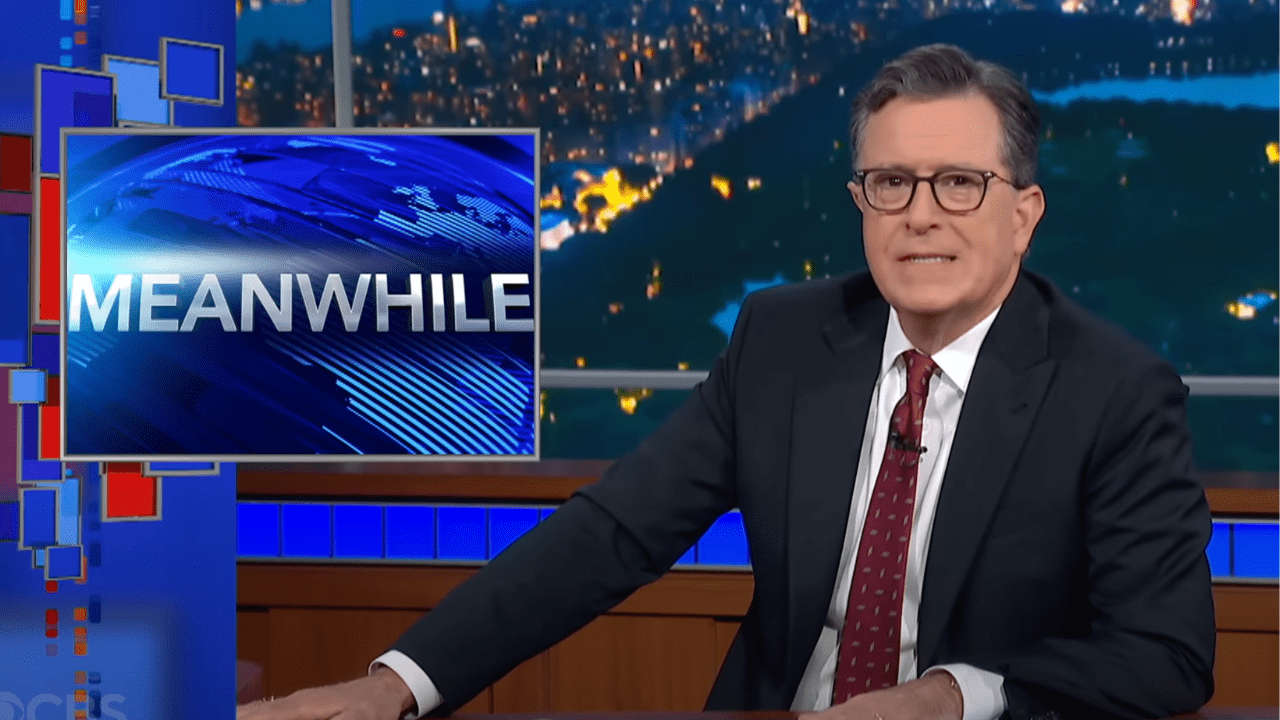
Stephen Colbert on The Late Show With Stephen Colbert – YouTube, The Late Show With Stephen Colbert
The imbalance appears to have intensified more recently. In just the first six months of 2025, the show booked 43 left-leaning political guests — and zero conservatives, according to the same analysis.
Notably, the lone Republican guest identified in the study was former Rep. Liz Cheney of Wyoming.
Even that appearance has drawn an asterisk from observers, given Cheney’s high-profile break with President Trump and her repeated public criticism of the modern GOP. As a result, critics argue her booking did little to counterbalance the show’s broader ideological tilt.
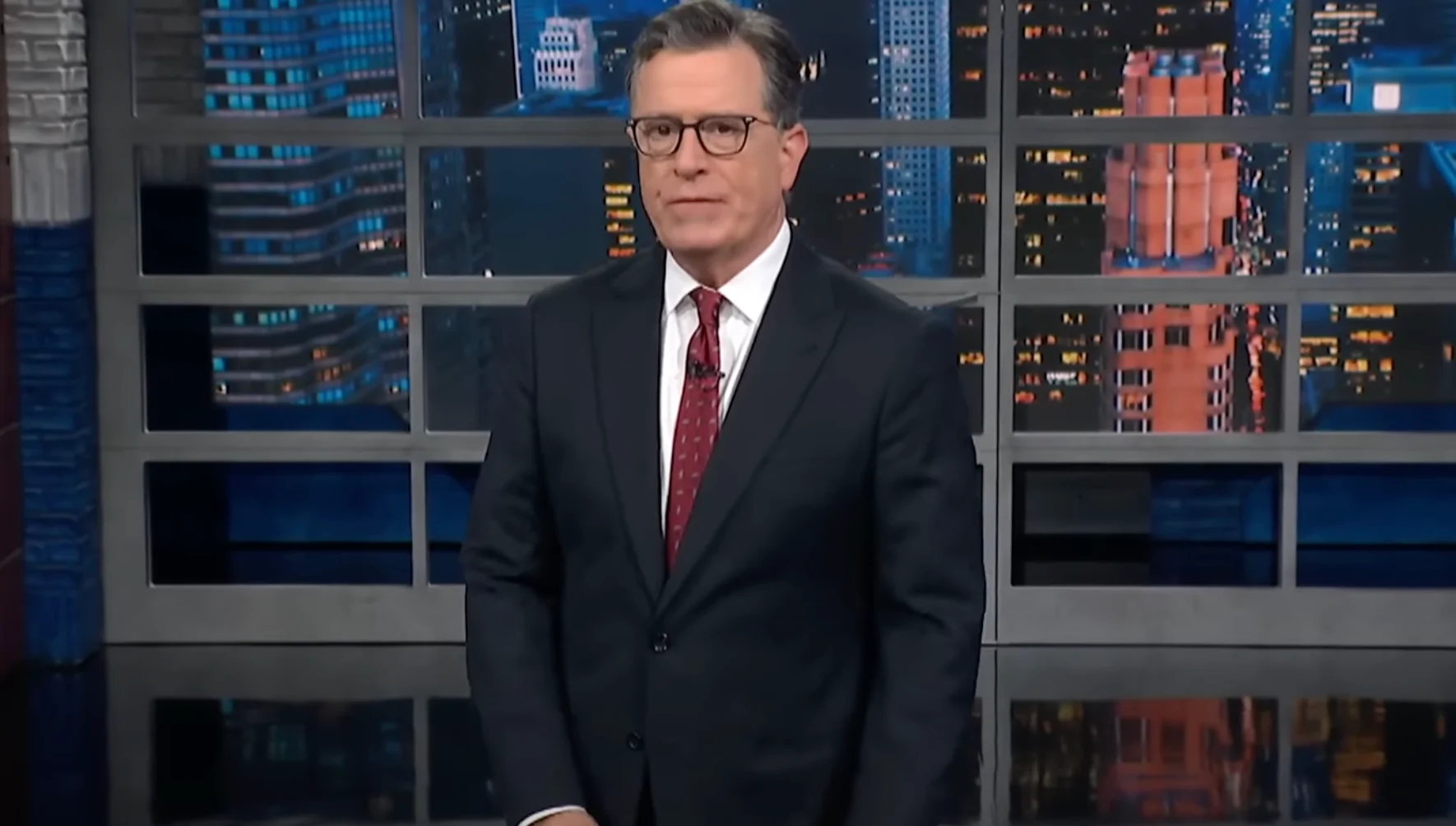
Stephen Colbert on The Late Show With Stephen Colbert – YouTube, The Late Show With Stephen Colbert
Taken together, the guest data is now being cited by detractors as evidence that Colbert’s program operates less as a politically neutral talk show — and more as a platform aimed at reinforcing one side of the political aisle, precisely the type of dynamic now being scrutinized under Equal Time debates.
Colbert Targets FCC Chair Brendan Carr
Colbert reserved his harshest rhetoric for FCC Chair Brendan Carr, whom he described as a “smug bowling pin” while responding to the regulator’s public comments about partisan late-night programming.
Addressing Carr directly, Colbert said: “FCC you… because I think you are motivated by partisan purposes yourself, sir. Hey, you smelt it ’cause you dealt it. You are Dutch-ovening America’s airwaves.”
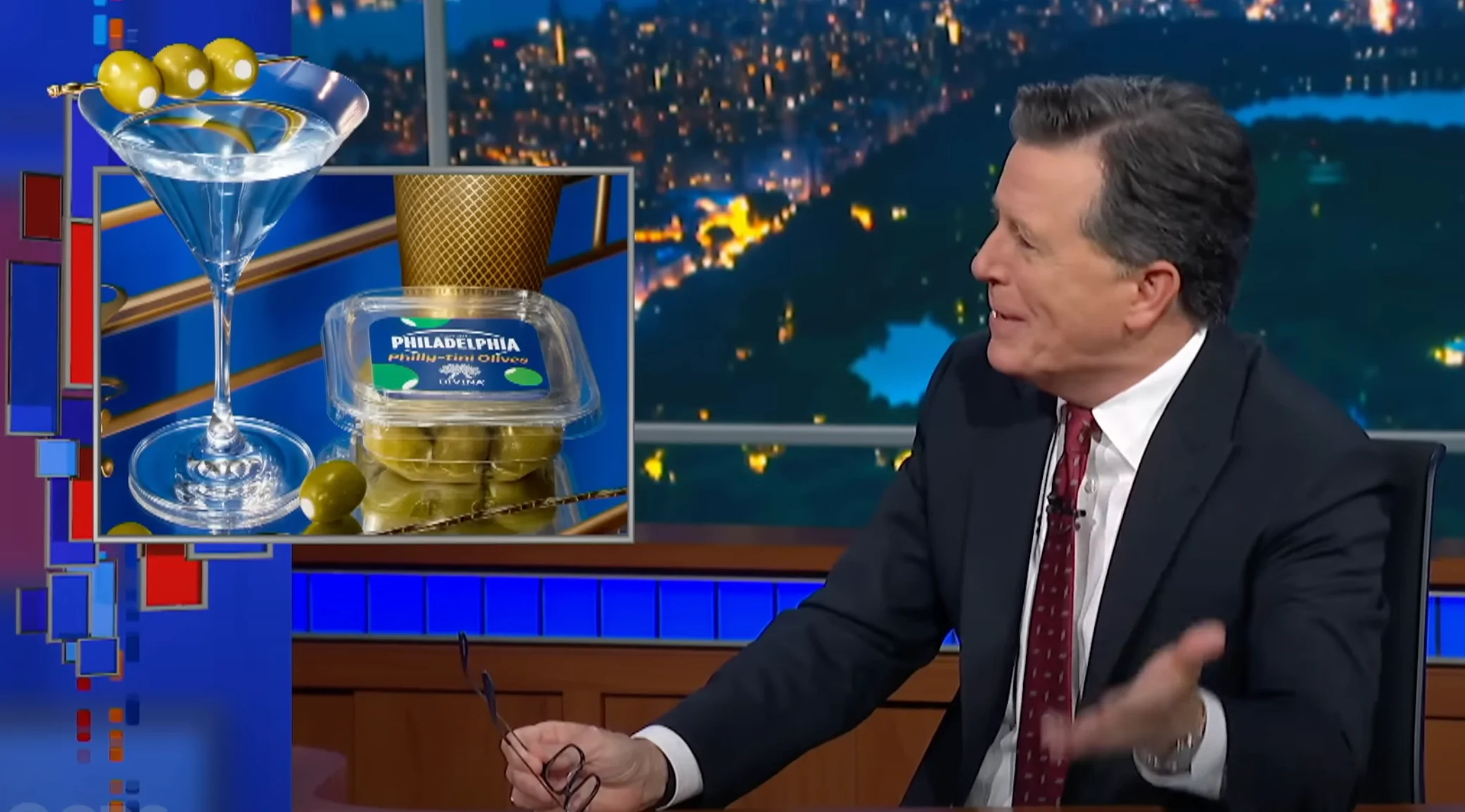
Stephen Colbert on The Late Show With Stephen Colbert – YouTube, The Late Show With Stephen Colbert
He also criticized what he framed as selective enforcement, claiming Carr had indicated conservative talk radio would not face similar scrutiny.
“I get this part,” Colbert said. “You can’t get rid of talk radio. What else would your angriest uncle do in traffic? Talk to your saddest aunt?”
Critics Point to Double Standard
While Colbert framed Carr as acting out of political motivation, critics were quick to highlight what they see as a glaring contradiction.
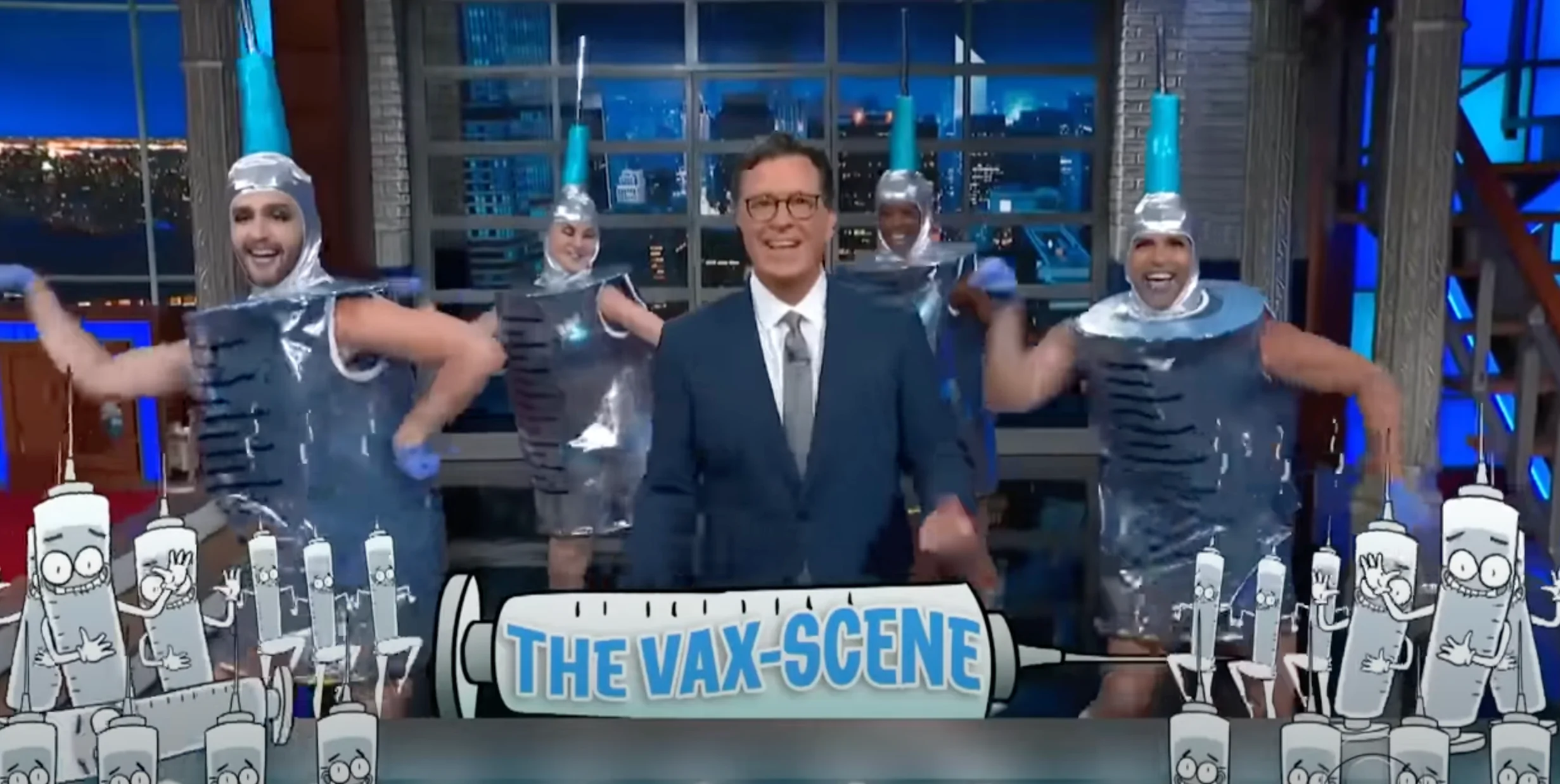
Stephen Colbert dances around with human needles – YouTube, The Late Show With Stephen Colbert
Colbert’s own program has spent years steeped in political commentary — particularly targeting conservative figures, including President Trump, in extended monologues that blur the line between comedy and advocacy. From that perspective, detractors argue that Colbert condemning alleged partisanship while building an audience — and brand identity — around overt political messaging rings hollow.
In other words, if Carr’s motivations are being questioned through a political lens, critics say the same scrutiny inevitably applies to Colbert himself.
Trump Administration Accusation
Colbert went even further, framing the regulatory pressure as part of a broader political effort.
“Let’s just call this what it is,” the canceled late night host said. “Donald Trump’s administration wants to silence anyone who says anything bad about Trump on TV, because all Trump does is watch TV. He’s like a toddler with too much screen time. He gets cranky and then drops a load in his diapers. So it’s no surprise that two of the people most affected by this threat are me and my friend Jimmy Kimmel.”

Jimmy Kimmel and Stephen Colbert laughing together – YouTube, The Late Show With Stephen Colbert
The remark illustrated the overtly political tone that has increasingly defined modern late-night programming — and which sits at the center of the Equal Time debate.
Interview Will Air — Just Not on CBS
Despite the broadcast restriction, Colbert confirmed the interview would still be released — just not on network television.
Instead, the conversation aired on The Late Show’s YouTube channel following the broadcast. However, Colbert said CBS would not permit him to promote the segment on-air.
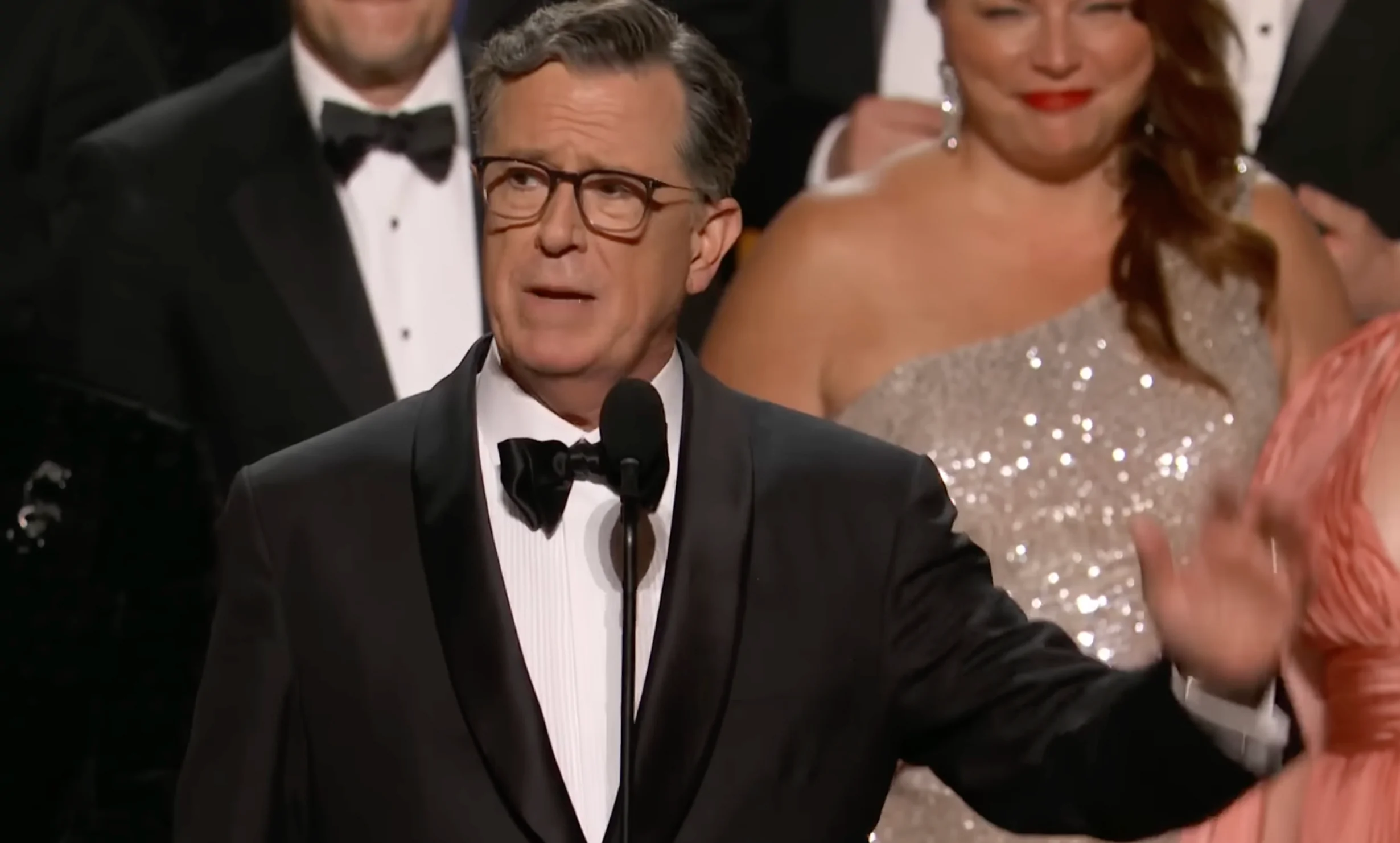
Stephen Colbert at the 2025 Emmys accepts his award – YouTube, Television Academy
He also revealed the legal limitations went even further.
Under Equal Time interpretations, the show was barred from displaying any image of Talarico — including photographs or drawings.
Colbert joked about the restriction by showing a stock image found by searching “not James Talarico,” before holding up a sketch he claimed he could not legally confirm or deny resembled the candidate — which turned out to look like Snoopy.
A Collision Between “Comedy” and Regulation
At its core, the standoff highlights a growing tension between political “comedy” and federal broadcast law.
Late-night television has evolved (or de-volved?) far beyond celebrity interviews and light entertainment, often functioning as a nightly political commentary platform. That has raised new legal and regulatory questions — particularly when hosts conduct interviews with active political candidates.
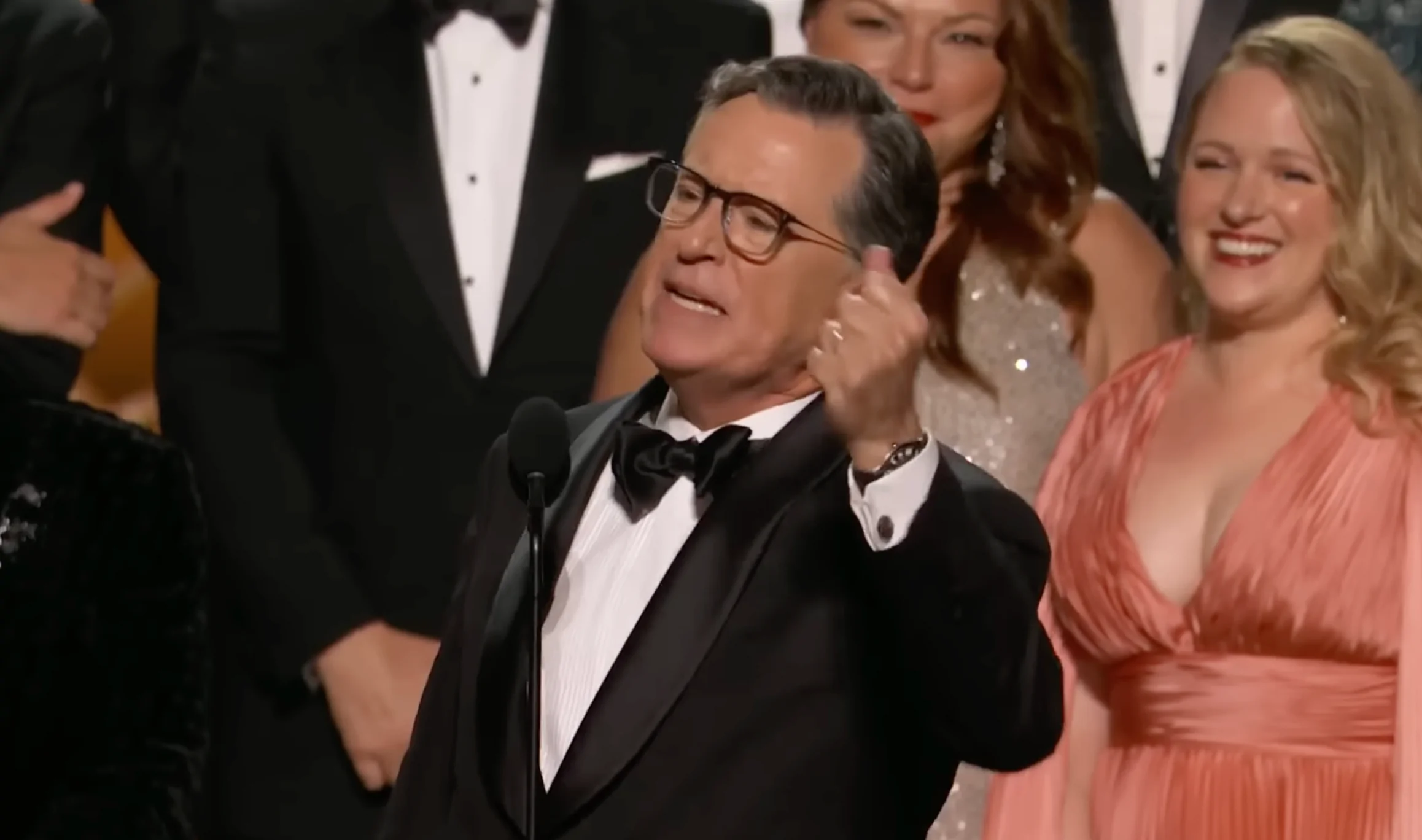
Stephen Colbert speaks at the 2025 Emmys – YouTube, Television Academy
Whether the FCC ultimately moves to formally revisit the talk show exemption remains to be seen.
But in the meantime, the Colbert-CBS clash offers a revealing glimpse into how networks, regulators, and hosts are navigating an increasingly politicized media environment — and what happens when legal risk collides with partisan programming.
Do you think CBS will punish Stephen Colbert for discussing this situation on the air against their wishes? Sound off in the comments and let us know!
