


There’s a fight for our past to control our future.
Not so much in the “I’ll be back”, lone warrior sent through time way; more of the “Oceania has always been at war with Eastasia” way.
The American revolution wasn’t about the rights of British citizens which were foreclosed against those unhappy enough to reside in a colony; no, a bunch of rich white men didn’t want to pay their taxes. Christmas was just the early Christians throwing a party to bring in pagans who celebrate Saturnalia. Greedo shot first.
Societies don’t have memories, people do. But people’s memories don’t work the way we think. If you’ve been unfortunate enough to have lost someone, then you may know what I’m talking about. Just remembering their face can be a challenge because you don’t have a picture of them in your mind.

Instead, most people have to assemble the image. It’s easier for me to remember moments I shared with my grandfather than to see him. When I get together with my siblings, and we talk about the past I find that my stories and their stories don’t match. It turns out that even our stories aren’t accurate recordings, they’re assembled. Still, our assembled life narrative informs who we are, shapes the choices we make, and guides us into who we will become.
Have you ever had the experience of talking about old times with old friends and when you start out you’ve all got different details, but as you talk you find that you’ve talked each other into a more or less cohesive story?
Societies don’t have memories, but they do have stories. If the stories are foundational, we call them myths. It is my belief that the shared mythology and a broadly shared understanding of that mythology is what creates a cohesive people. I also believe that true things can be myths. George Washington for instance is a mythological figure to Americans. Whether or not the story of him chopping down the cherry tree is true, the myth of it conveys his unusual honesty. That he threw a dollar across the Potomac is almost certainly untrue, but it conveys the image of his great physical presence and strength. The story of his army’s winter in Valley Forge is true, but still a myth because of the shared meaning the people of America have taken from it.
Artists know the power of their arts to shape understanding as much as inform and entertain.
Have you noticed that on screen portrayals of the Robin Hood myth have consistently included a Muslim character since the 1980’s? Or that women kings lead their armies into glorious fantasy battles? Shows like Bridgerton create an artifice like the regency period, but one that reflects the modern sensibilities of female empowerment and diversity, equity, and inclusion.
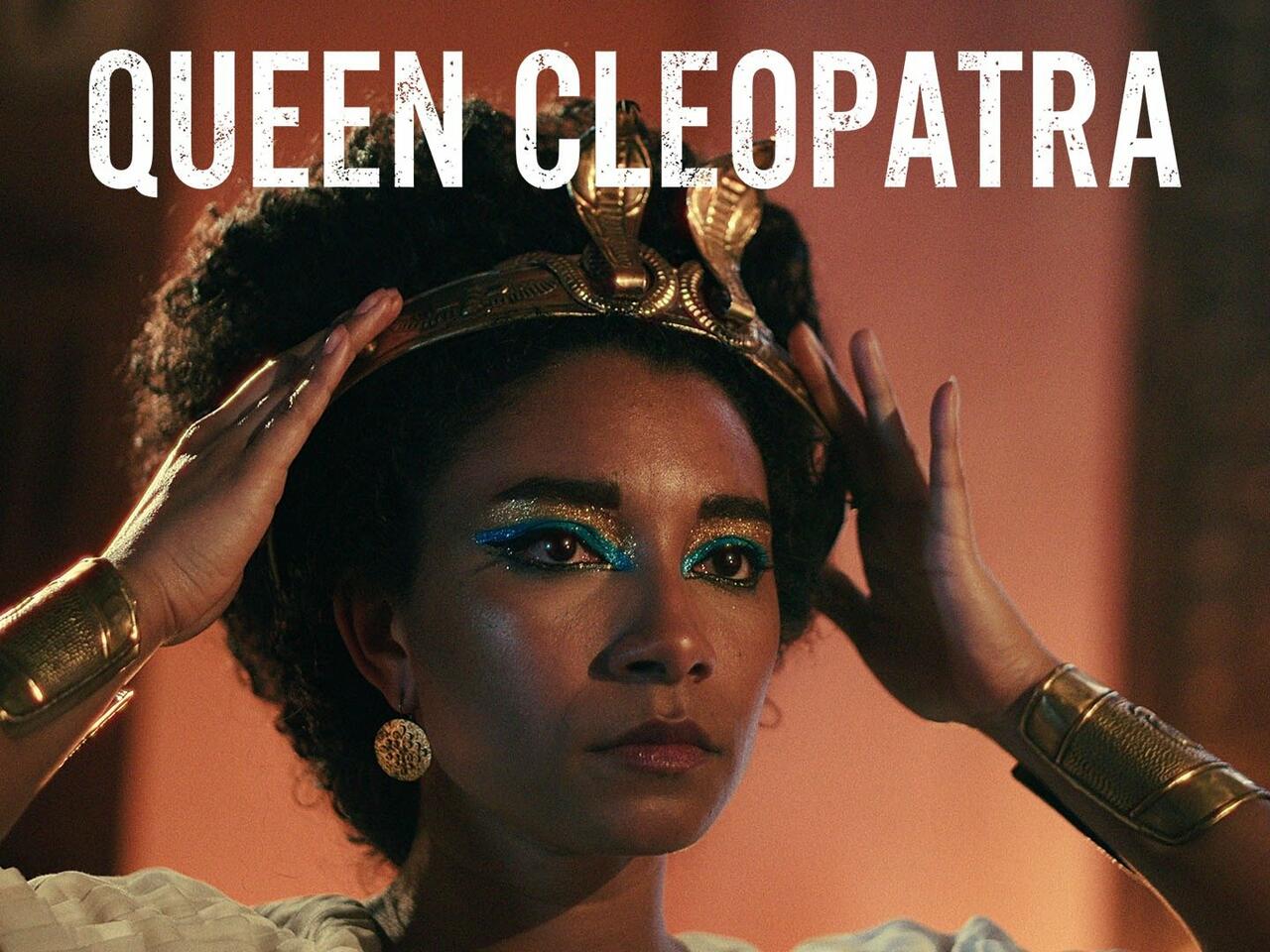
Then of course there is Netflix Africa Queens Season 2: Cleopatra. This has been litigated on YouTube and Twitter enough that we all know by now that Cleopatra was Greek, so we’re not going to retread that same path; at least not in the same way.
Perhaps, if you are old enough, you may remember those halcyon days when you would walk into a history class and find that the TV cart had been wheeled to the front of the room. That feeling of elation washing over you, knowing that learning was off the table for one wonderful hour while some History Channel recreation played out in front of you and the teacher sat at her desk filling out grades or some such thing. Try to recall those old recreations. Unless my mind is unclear, I seem to remember Justinian being portrayed by a guy who’d look like a Brussels native and not Mediterranean.
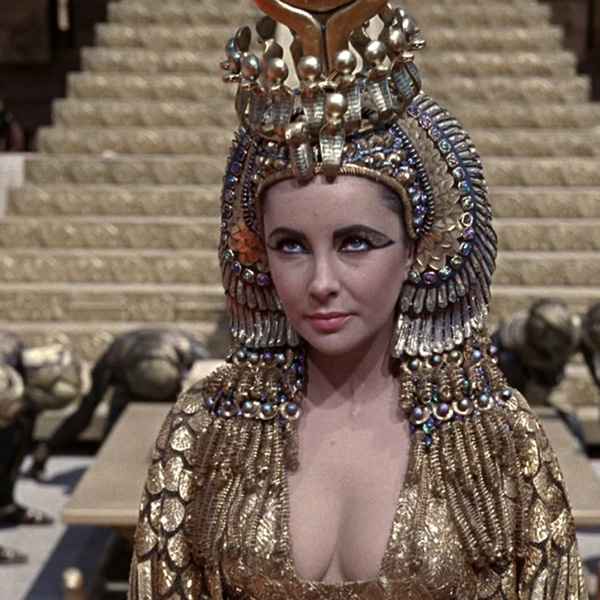
Elizabeth Taylor gave Cleopatra her most famous onscreen portrayal despite being lily white. Ditto Rex Harrison (Julius Caesar) and Richard Burton (Mark Anthony).
Take a look at Giovanni Cariani’s The Way to Calvary.

Why is the dress and architecture so distinctly 16th century Europe when the subject is 1st century Ancient Near East? Did the artist not know any better? Is he trying to whitewash Jesus? My expectation is that he has a greater message to the audience that they would act no different in the situation than the people in the painting.
If everyone is just telling their own story, how can we say this is bad, but this is good? Are some of these innocent and others nefarious? Why can’t people just have their own truth?
First, we can say that there are differences in categories. I think we can all accept that a period drama like the movie Cleopatra is made to entertain more than to inform, whereas Africa Queens is ostensibly to educate while entertaining. That means they each carry a different burden in portrayal. The old History Channel series were also made to educate while entertaining. Should it get a pass when the woman king hasn’t? Then again, who is to say that those old programs got a pass? Don’t you think mountains of academic papers have been written about reclaiming history from Eurocentric portrayals? Isn’t the depiction of Cleopatra in Africa Queens its own response?
Second, there are economic considerations. Elizabeth Taylor starred in Cleopatra because it was going to be one of the most expensive movies ever made and she was one of the biggest stars in the world. Name me a Greek or Egyptian actress who was active at the time and could pull in the kind of box office numbers the studio needed to make a movie like that profitable. On the other hand, I expect The History Channel’s budgets for content creation were really low, so they either bought already existing European history videos or relied on journeyman directors to hire a bunch of local historical reenactors, in which case you get what you get, and you don’t pitch a fit.
Third, should we really be surprised if historical figures are portrayed as being members of whatever the dominant ethnic group is? Depictions of Buddha vary across Asia. Depictions of Jesus are often localized. People view the people around them as basically standard and project that portrayal on persons whom they have never seen.
Lastly, intent is important, and while we can’t know the hearts of others we can infer from their actions and words. If Cariani intentionally had Jesus being driven out from a modern Italian city by people wearing modern Italian clothes then he is commenting on guilt, which is in keeping with his own faith tradition and therefore a service to his audience by strengthening the mythological ties across time. If the makers of African Queens raceswap an historical figure to give young black women a role model, then they are doing a disservice to the audience by building a mythology that alienates them from the larger mythology of their society and deepens the divide between groups, which is bad and if intentional is nefarious.
Ultimately, Cleopatra isn’t really that important. She’s the Yoko Ono of the late Roman Republic. An intriguing figure who is ultimately ancillary to the collapse around her. She’s a strange nexus for the outrage cycle to have coalesced around thousands of years later. What is important is the concentrated effort to change traditional understandings and forge new myths. Don’t believe people when they tell you, it’s just a movie. These are the stories we tell each other and those stories will inform what we will become in the future. It’s not just a movie, it’s not just a story, it’s not just a myth. It’s control
For all the news that should be fun, keep checking out That Park Place.
