



The gaming industry stands at a critical crossroads, one where creativity and innovation are increasingly threatened by corporations seeking legal dominance over fundamental gameplay elements. At the heart of this issue lies the unsettling reality of the “gameplay mechanic patent”—a trend that began when Warner Bros. secured exclusive rights to its Lord of The Rings Nemesis System and has now intensified with a recent Nintendo patent of a core creature-capturing mechanic.

A screenshot from Detective Pikachu Returns (2023), Nintendo
READ: Rumor: BioWare May Stealth-Introduce Politically Charged Content into Mass Effect 5 Post-Launch
These actions not only reshape how games are developed and played, but also raise urgent questions about the future of an industry that has long thrived on freedom, experimentation, and the joy of invention.
The First Domino: Warner Bros. and the Nemesis System Patent
In 2014, Middle-earth: Shadow of Mordor, a game published by Warner Bros., introduced the Nemesis System. It was a groundbreaking gameplay mechanic that handled interactions with enemy NPCs in a way that felt unique and tailored to the player’s experience. This system was later patented by Warner Bros., and the patent remains firmly in their hands to this day.
It was at this moment that Warner Bros. toppled the first domino that could forever affect the gaming industry.
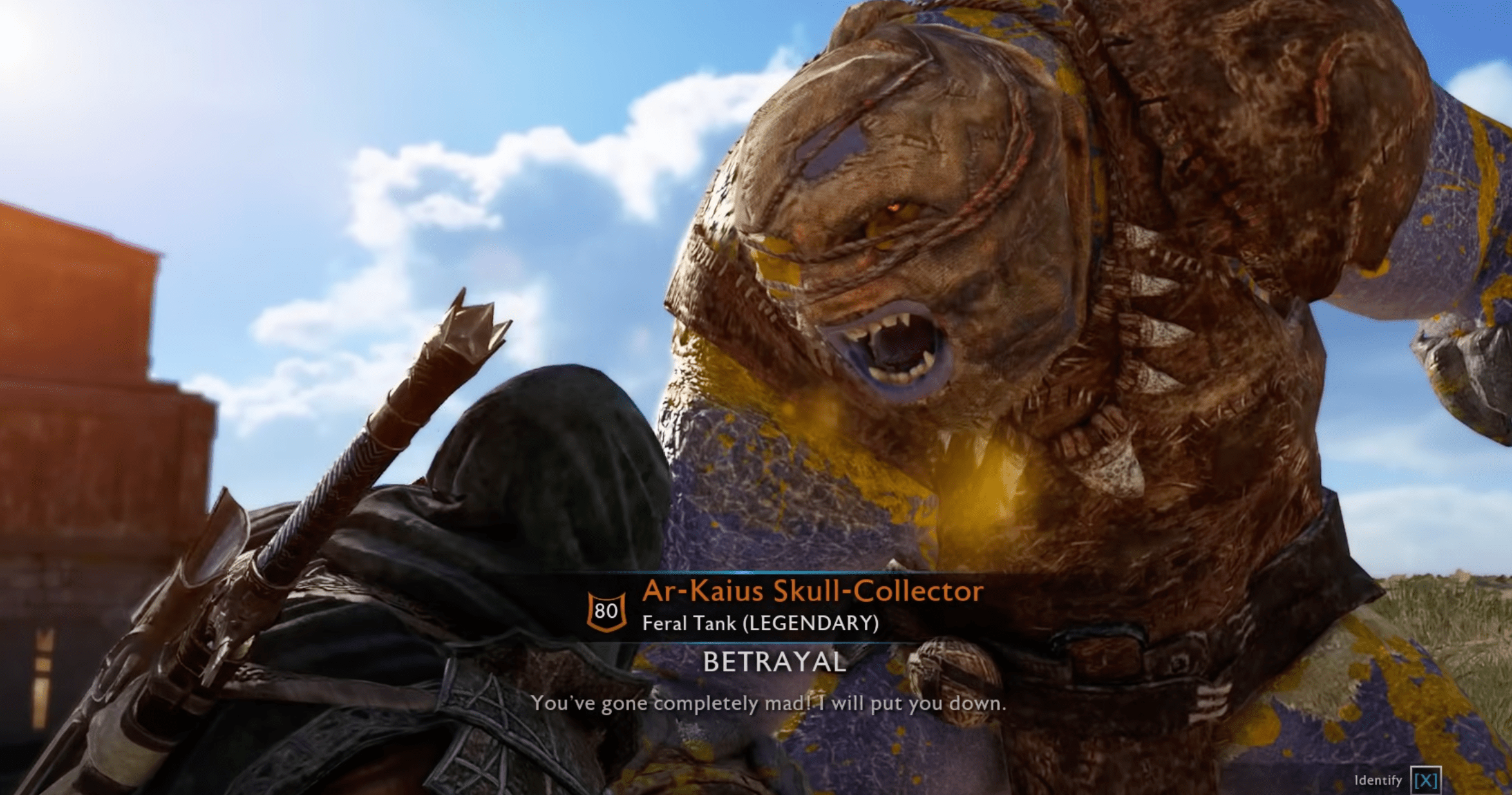
A screenshot from Lord of The Rings: Shadow of War that showcases WB’s patented Nemesis System – YouTube, Shadow-Man
By patenting the Nemesis System, Warner Bros effectively made it impossible for other game developers to use or replicate it, even accidentally. Now, you might argue, “They created it, so they have the right to patent it.”
While that’s true to an extent, the Nemesis System—despite being innovative—was still a gameplay mechanic. There’s always a risk that similar systems could be developed independently by other studios, either intentionally or by coincidence.
But that’s not the real issue here. The problem is that Warner Bros opened the floodgates to one of the most crippling challenges game developers could face: the patenting of gameplay features.
Palworld’s Success and Nintendo’s Patent Power Play
In 2024, a game called Palworld was released, quickly taking the world by storm.
Often referred to as “Pokémon with guns,” it became immensely popular. Certain gameplay aspects were strikingly similar to the Pokémon series, particularly the mechanics for capturing creatures, known in the game as Pals. This process involved defeating the creatures and then capturing them using a ball-like device, much like in Pokémon.
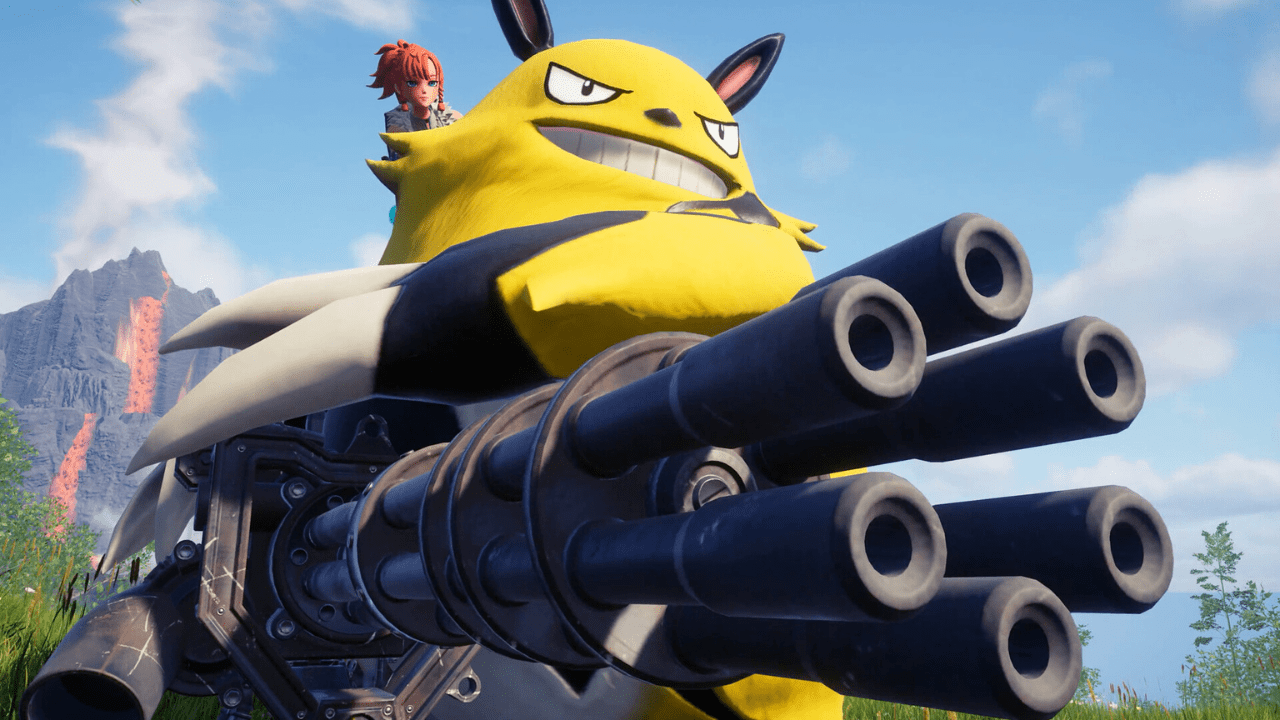
A screenshot from Palworld (2024), Pocketpair
READ: NBC News Implies Video Game ‘Among Us’ May Have Inspired United Healthcare CEO Assassin
To provide some context, Nintendo has been releasing Pokémon games for decades. However, recent titles in the series have faced heavy criticism for being poorly optimized, riddled with bugs, and lacking key features. Many players were yearning for a truly open-world Pokémon game that could meet modern expectations. Palworld filled that gap, delivering an experience that players eagerly embraced. At its peak, the game boasted over 25 million active players, with a record 2 million concurrent players on Steam alone.
Palworld’s success effectively embarrassed Nintendo. In response, Nintendo took a drastic and controversial step. In May 2024, Nintendo and The Pokémon Company filed several patent applications related to gameplay mechanics involving the capture of creatures using spherical objects. These patents were officially approved between May and August 2024.
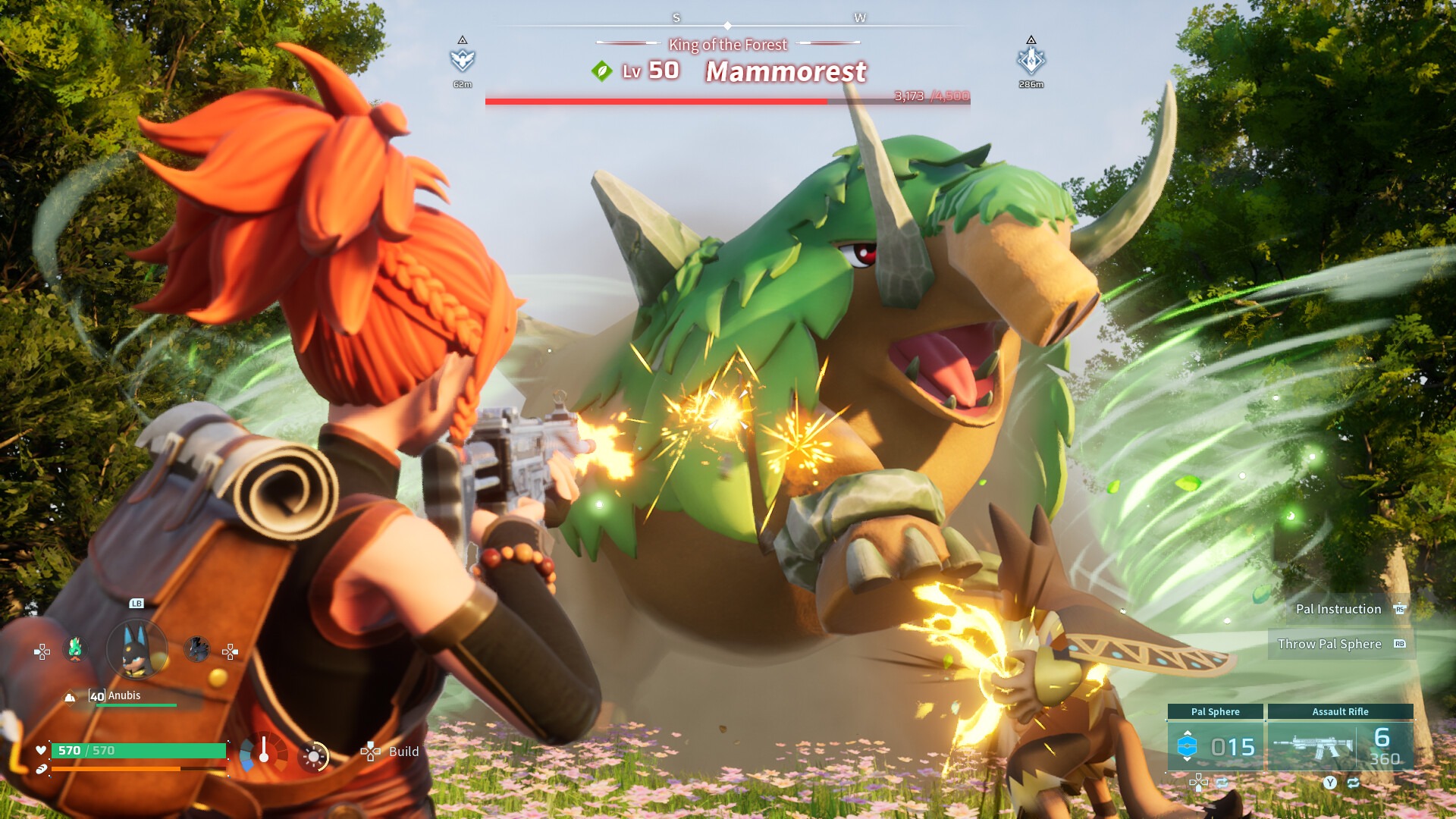
A screenshot from Palworld (2024), Pocketpair
By patenting such a basic gameplay mechanic, Nintendo has further solidified a trend that could stifle creativity across the industry. This action not only undermines the innovative spirit of game development, but also raises the question of how far corporations will go to eliminate competition and protect their intellectual property.
The Patent Crisis: Nintendo’s Impact on the Future of Gaming
Patenting gameplay mechanics will kill creativity in game development. Imagine if a game company patented the third-person perspective or, even worse, the ability to heal yourself with a medkit marked with a red cross. You might think such patents would be too vague or impossible to enforce, but consider what Nintendo has done this year.
Not only has their patent been approved, but it has also been retroactively applied to a game that was already released.
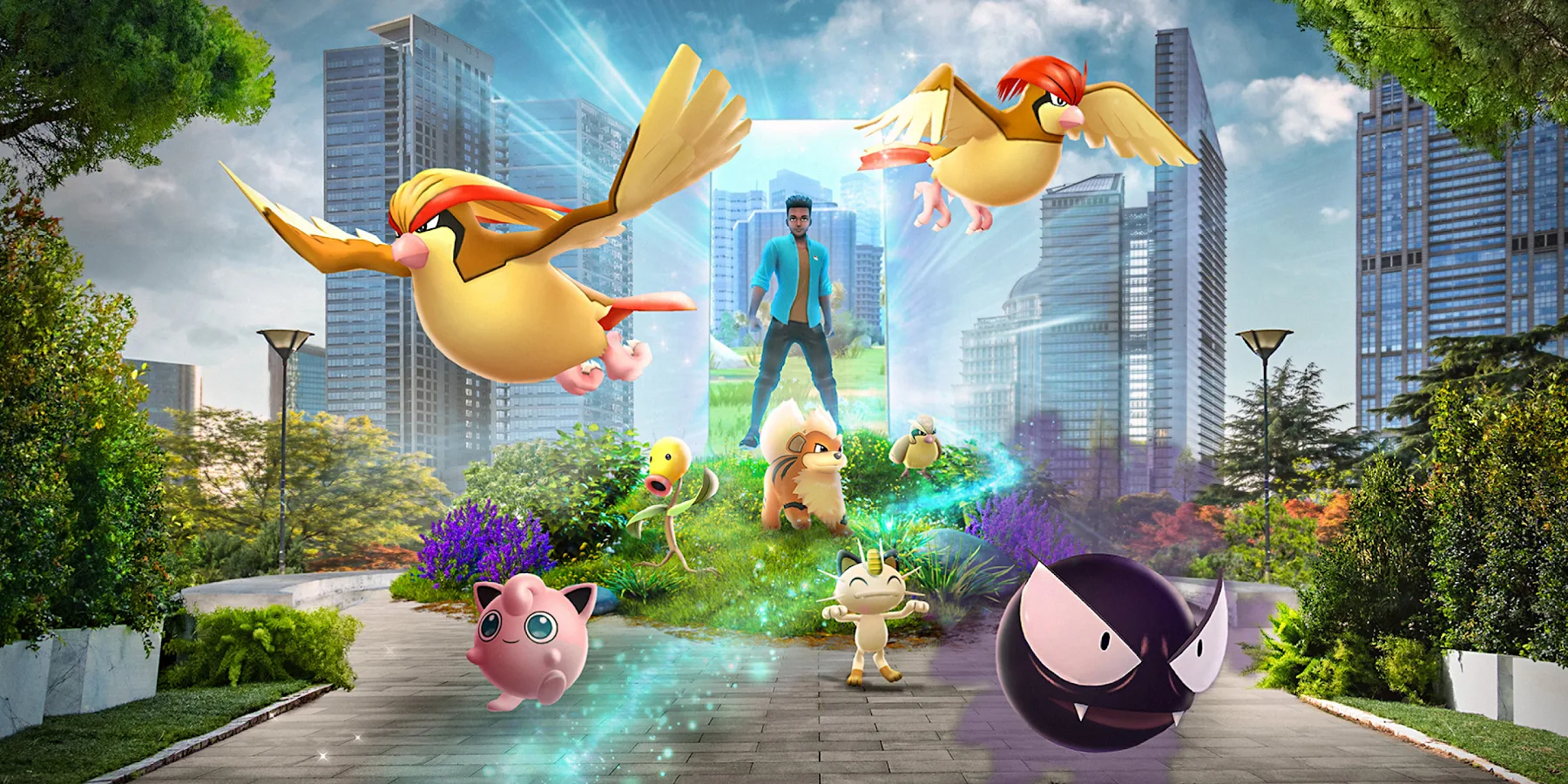
Key art for Pokémon GO (2024), Niantic
READ: Alyssa Mercante Caught in Conflicts of Truth as Gaming Community Rallies Around YouTuber Smash JT
If you still think this is far-fetched, take Palworld as an example. As of today, Palworld has removed the feature that allows players to capture creatures with a spherical ball. If you log in now, you’ll find that the ball-throwing capture mechanic is gone. This Nintendo patent has already had a tangible impact on the gaming world.
While Palworld’s developers were initially in a legal battle with Nintendo over patent infringement, the real concern is how other publishers are now watching this unfold. Competitors see that even established games are being forced to change or modify their mechanics to avoid lawsuits. This is where the danger lies. Nintendo’s actions have set a precedent that goes beyond protecting intellectual property—they’ve created an environment where publishers can weaponize patents to stifle competition.

Screenshot from Pokémon Scarlet and Pokémon Violet (2022), Game Freak
Unlike Warner Bros., whose patent on the Nemesis System could be compared to guarding their own “recipe,” the Nintendo patent essentially grants them sole ownership over a gameplay mechanic widely used in Palworld and many other games. This opens the floodgates for publishers to rush to the patent office, not just to safeguard their own features, but to use these patents as a tool to crush competitors.
And as gamers, we’re letting this happen.
Will they go after smaller games? Probably not—at least not initially. But imagine an indie game becoming immensely popular, like Palworld, Stardew Valley, Minecraft, Among Us, or others that succeeded because they were genuinely good games.
Now picture a larger publisher noticing this indie game’s growth and patenting a gameplay mechanic similar to one used in those games. If the patent is approved, as Nintendo’s was, they could retroactively force the indie developer to change or remove a core feature, effectively crippling the game.
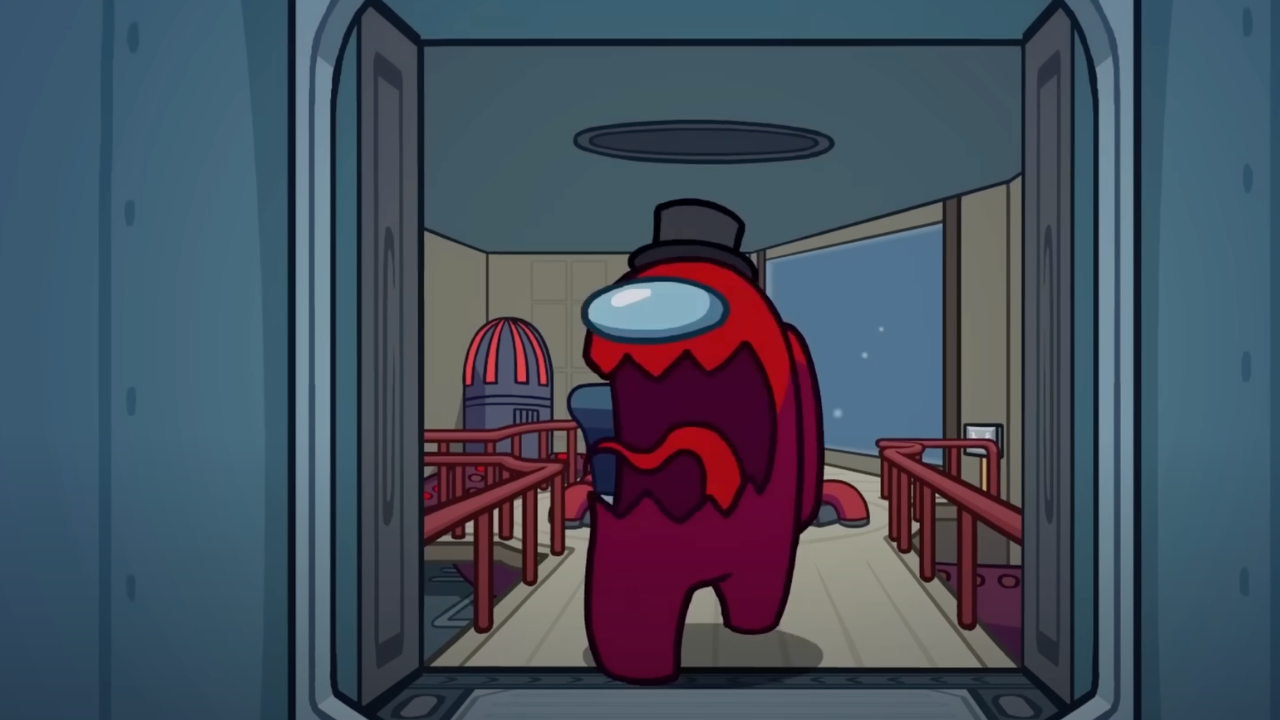
A screenshot from a trailer for Among Us – YouTube, GameSpot
This trend will stifle the creation of new IPs and destroy the innovative process that drives the gaming industry forward. Developers will now have to constantly worry about infringing on patents they might not even know exist, creating an environment of fear and uncertainty.
As a result, the indie gaming landscape, which has been a source of creativity and innovation, will suffer and potentially die due to publishers’ ruthless and shortsighted patent infringement lawsuits.
This is not just a legal issue—it’s a direct threat to the future of gaming as we know it.
A Quiet Surrender: Letting Patents Destroy the Future of Gaming
What started with Warner Bros. and its Nemesis System—the first domino toppled—has cascaded into a disaster, now pushed into overdrive by the Nintendo patent.
This shift in the gaming landscape threatens to choke and destroy creativity, innovation, and hard work. Indie developers and smaller studios will be tied up in corporate legal battles, unable to compete and ultimately crushed by larger publishers.
In the end, we as gamers will suffer the most.
A screenshot from Super Mario RPG (2023), Nintendo
As gamers and consumers, we must ask ourselves: is this what we want to let corporations do in the name of protecting intellectual property?
And if you think, “No, that won’t happen” or “We won’t let it happen,” let me remind you: we already don’t truly own our digital copies of games. In silence, we’ve allowed corporations to get away with this greed. So why wouldn’t we let this happen too—silently, once again?
READ: Disneyland Workers Secure Record $233 Million Wage Theft Settlement in California
