



Despite reportedly forcing platforms like Steam to eliminate legal adult-oriented games, Visa and Mastercard continue to support Roblox, despite numerous reports of predators using it to reach children.
When gamers noticed hundreds of adult titles suddenly vanish from Steam and Itch.io this summer, the explanation didn’t come from Valve or indie developers. It came from the banks. Payment processors Visa and Mastercard, working in tandem with advocacy pressure, forced platforms to eliminate “certain kinds of adult content” or risk losing the ability to process transactions altogether. The move sparked a storm of backlash from developers and free speech advocates, who decried the practice as “financial censorship.”

Roblox Bayside; Courtesy Roblox
READ: 8/15-8/17 2025 Weekend Box Office Report: Weapons Holds Strong as Fantastic Four Sinks Under $10M
Yet even as Visa and Mastercard take a hard line against legal adult-only games designed for consenting players, they continue to process billions in payments for Roblox, a platform that has become the subject of lawsuits, attorney general investigations, and damning media exposés for its child safety failures.
The contrast is stark, and it raises uncomfortable questions about money, morality, and selective enforcement.
The Steam Crackdown
In late July, the Guardian confirmed that “thousands of adult titles” disappeared from Steam and Itch.io after Collective Shout, an Australian lobby group, boasted of persuading Visa and Mastercard to cut off financial support for platforms hosting games with specific themes. Steam updated its rules to prohibit content that might offend payment processors, while Itch.io quickly de-indexed entire swaths of content to keep its storefront alive.
Mastercard has since denied involvement in this purge, but the platforms themselves refute this.
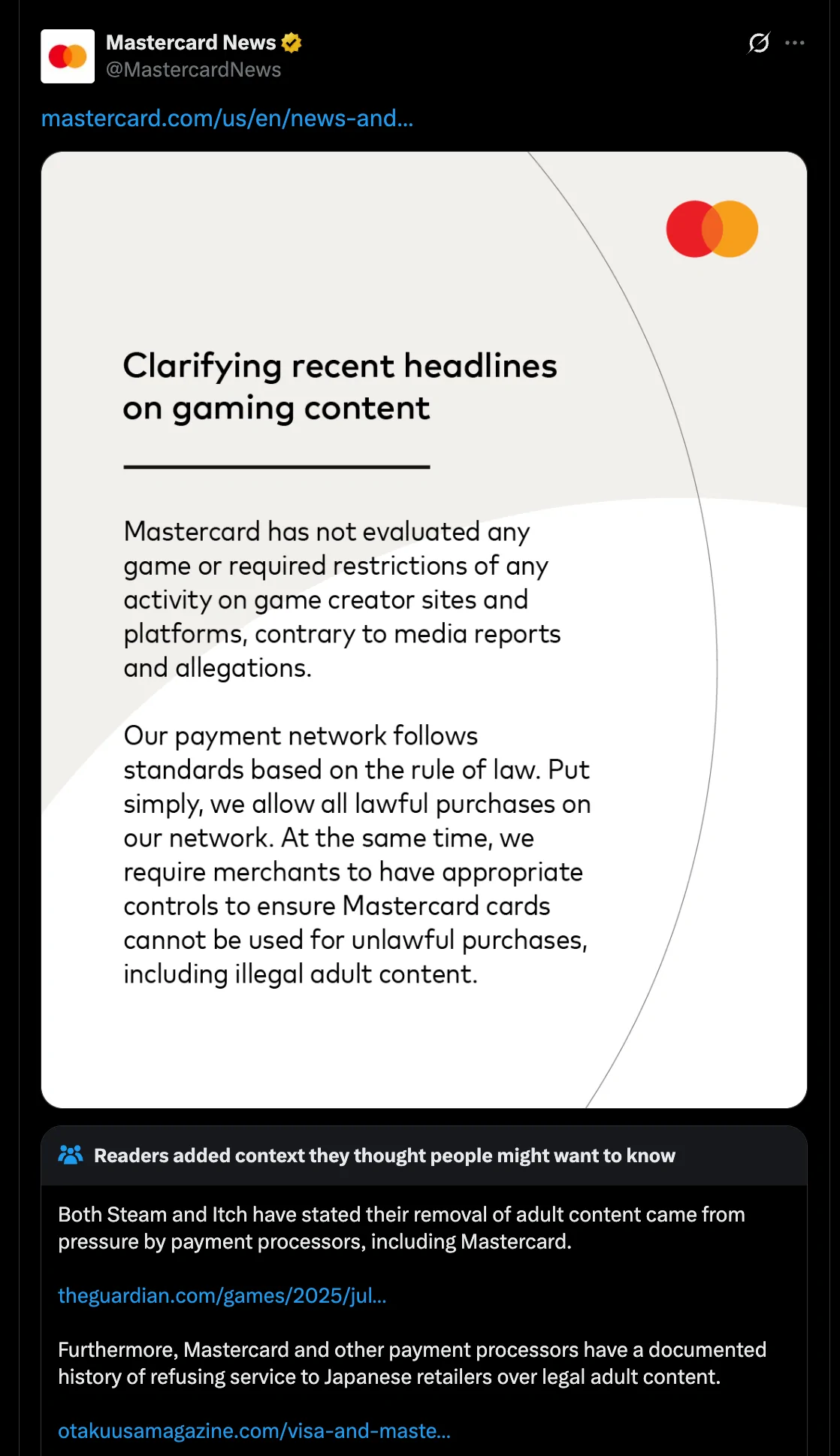
A community note on an X post by Mastercard – X, @MastercardNews
Developers, including PRIDE-centric creators, argued the purge was overly broad. Games with artistic or narrative significance were lumped in with the most extreme material. PC Gamer reported that the rule changes were less about law and more about keeping Visa and Mastercard happy. For smaller studios, the message was chilling: if the banks disapprove, your game may disappear.
Roblox’s Predator Crisis
Contrast that with Roblox. The platform bills itself as a family-friendly creative space, yet lawsuits and investigations paint a much darker reality.
The Louisiana Attorney General sued Roblox in August, citing years of failed moderation and weak age verification. Families across the U.S. are also filing suits, alleging children were groomed, exploited, or even abducted after encounters on Roblox. In one case, a 10-year-old girl in California was kidnapped following contact with a predator she met in the game.
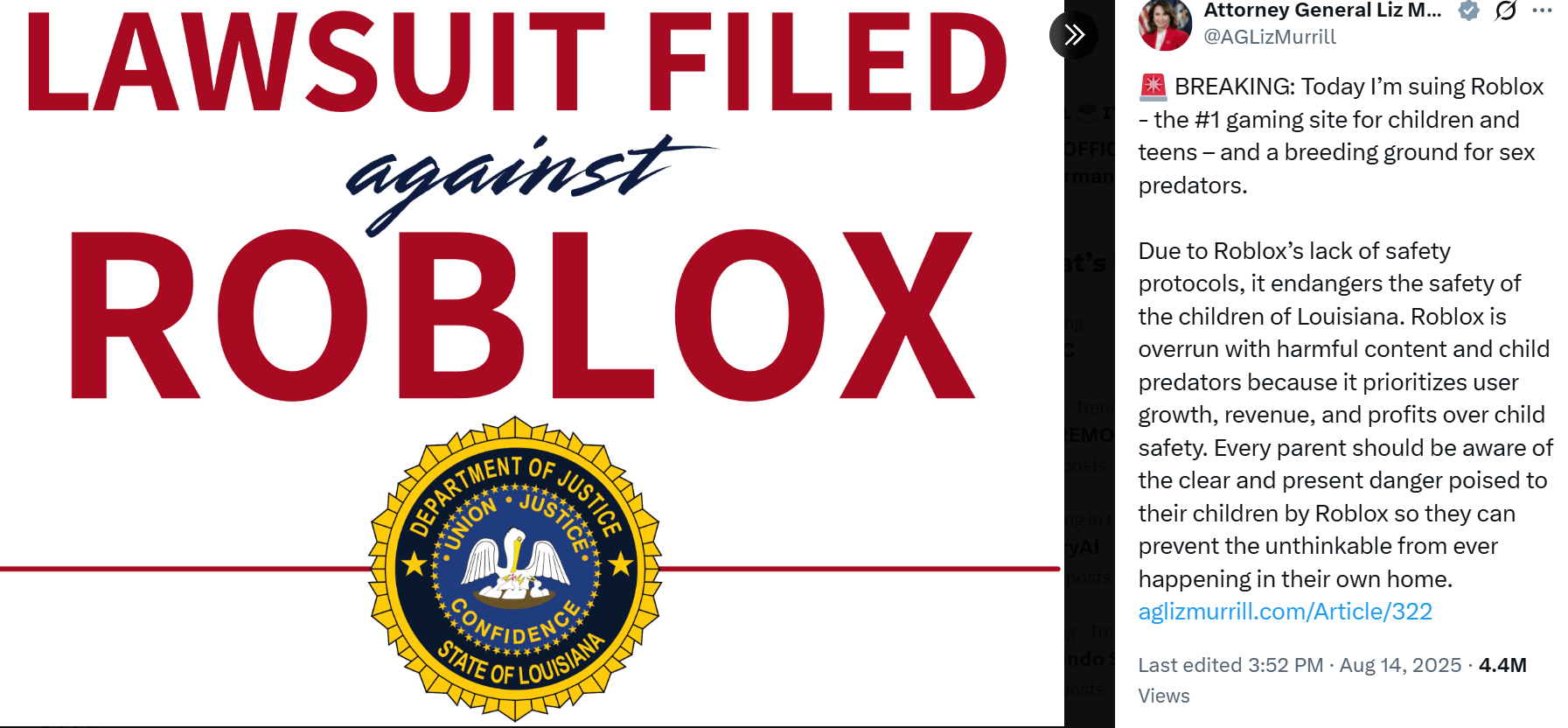
Screenshot of Announcement for Louisiana Lawsuit Against Roblox on X
Wired reported that cases of child exploitation linked to Roblox exploded from 675 in 2019 to more than 24,000 in 2024. The platform’s attempts at reform—AI tools, ID verification, and experience restrictions—have done little to stem the tide. Investigators argue the company prioritizes monetization over safety, while predators continue to exploit loopholes.
It got so bad that users were taking it upon themselves to become vigilante predator hunters to root out these dangerous actors. Roblox responded by banning these vigilantes and claiming in a statement that they’re as bad as the predators they’re trying to stop.
The Double Standard
On Steam, adults buying adult-themed games face financial censorship dictated by payment companies. On Roblox, where systemic failures have allowed real children to be harmed, Visa and Mastercard remain silent. They continue to greenlight every Robux purchase, every Premium subscription, and every branded tie-in, despite lawsuits and attorney general complaints.

A promotional image for Roblox – Photo Credit: Roblox
The inconsistency exposes a dangerous double standard. Adults lose access to legal games because they might offend a credit card company’s brand guidelines, while children remain at risk on a platform that brings in billions.
Why It Matters
The selective enforcement raises pressing questions. Is this really about morality, or is it about money? Steam’s adult games are niche, easy targets. Roblox, by contrast, is one of the most lucrative ecosystems in gaming, with billions flowing through Visa and Mastercard every year. Cutting off Roblox would be financially painful for Visa and Mastercard.

A screenshot from the Roblox trailer – YouTube, Roblox
The result is a system where adult players are censored, but children remain exposed to predators. Visa and Mastercard act as judge and jury for creative expression, yet turn a blind eye when their financial partners face allegations of enabling exploitation on a massive scale.
Conclusion
Visa and Mastercard’s actions reveal more than corporate caution. They expose a moral hypocrisy: clamping down on adult games while continuing to support a platform accused in court of failing to protect children.

A screenshot from the Roblox trailer – YouTube, Roblox
The contrast is indefensible. If payment processors like Visa and Mastercard want to wield the power to police content, then they cannot ignore Roblox. Until they apply the same scrutiny to the platforms where children are genuinely at risk, their interventions will look less like principled oversight and more like selective censorship driven by money.
How do you feel about Visa and Mastercard ignoring the issues with Roblox? Sound off in the comments and let us know!
UP NEXT: NBC Drops Its Name From MSNBC As Ratings Plummet — Network to Become “MS NOW”
