


Netflix’s first-glance victory in the Warner Bros. Discovery auction is not just a colossal entertainment deal, it’s also a supposed, decisive defeat for the Ellison family’s ambitions to take control of CNN. Ultimately, the Netflix acquisition of WBD (not yet final and with major hurdles to go), may be a giant political battle over the future of entertainment.
Today, Netflix and Warner Bros. Discovery (WBD) announced a definitive agreement for Netflix to acquire WBD’s TV and film studios and streaming business, including Warner Bros. Pictures, HBO/HBO Max, DC, and Warner Bros. Games, in a cash-and-stock deal valuing the equity at about $72 billion and the enterprise at roughly $82.7 billion.
Each WBD share will be bought for about $27.75 in a mix of cash and Netflix stock ($0.75 more than Paramount offered after numerous rounds of Paramount offering the highest bid and being denied). The transaction is expected to close after WBD spins off its Global Linear Networks division, soon to be a separate listed company called Discovery Global, in 2026.
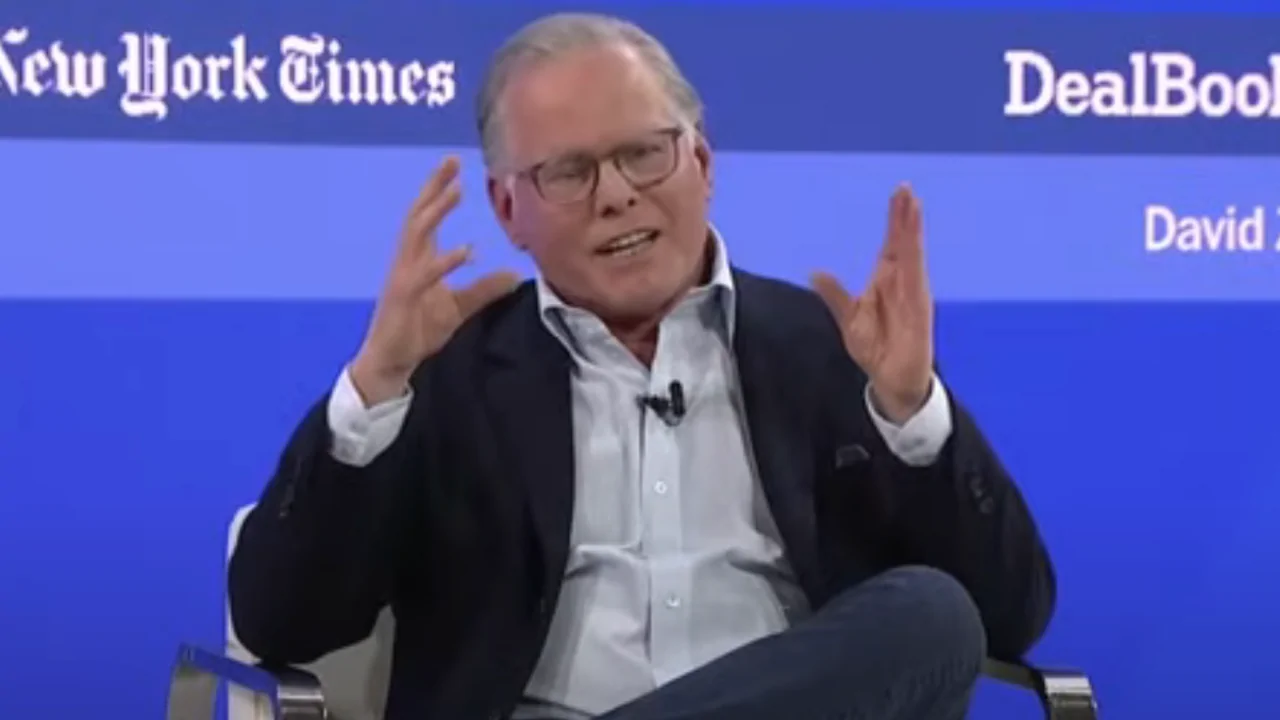
WBD CEO David Zaslav Speaks at a New York Times event – YouTube, New York Times Events
That restructuring is crucial: Discovery Global is the unit that will house CNN and other legacy cable networks. Netflix is explicitly buying the studios and streaming side, not the news and cable bundle.
How Paramount and the Ellisons Lost the Prize
Until this week, conventional wisdom held that Paramount Skydance, controlled by David Ellison and backed by his father, Oracle co-founder Larry Ellison, had the inside track. Fresh off its own $8.4 billion deal to take over Paramount, the Ellison-led group was openly eyeing WBD as its next target, with reporting that a mostly cash offer in the low-$20s per share range was being prepared. If successful, Paramount Skydance would have combined its existing portfolio (Paramount Pictures, Paramount+, CBS, CBS News, Nickelodeon, Comedy Central, Showtime, etc.) with HBO, HBO Max, Warner Bros. Pictures, DC Studios, CNN, Discovery Channel, TNT Sports and more… one of the most sweeping consolidations in modern media.
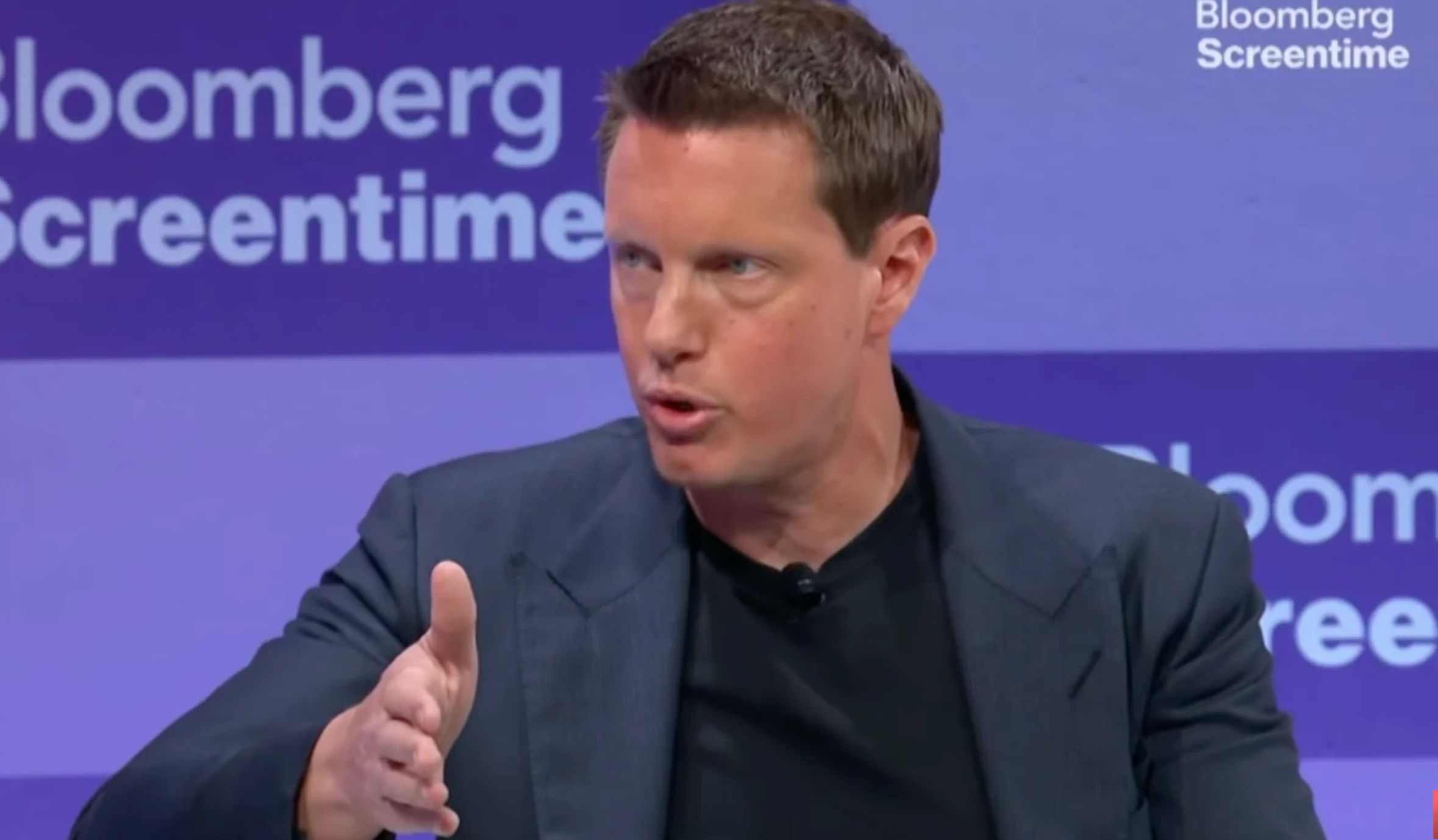
David Ellison in an interview with Bloomberg – YouTube, Bloomberg Podcasts
Instead, Netflix came over the top with a nearly $28-per-share bid focused on studios and streaming, beating out Paramount and a rival offer from Comcast. It was the first time a non-Paramount entity had placed the highest bid… and strangely it was also the exact moment when Warner Bros execs shut down the bidding process and accepted a winner. The timing is peculiar as Charles Gasparino of The New York Post reports Paramount is still considering an appeal directly to shareholders of WBD with the claim that their leadership has essentially hoodwinked them:
Reps for Paramount Skydance say the letter is a warning shot to WBD that it might take its offer above the board and appeal to its shareholders because of the low likelihood of regulatory approval of the Netflix offer.
— Charlie Gasparino, New York Post
What makes this outcome politically charged is just how deeply the Ellison bid had become tied to CNN’s editorial future.
In November, reporting by The Guardian revealed that senior White House officials under President Donald Trump had privately expressed a preference for Paramount Skydance to win the WBD auction. In at least one call, Larry Ellison allegedly discussed potential programming changes at CNN with a White House official, including the idea of axing several CNN hosts Trump is said to “loathe,” such as Erin Burnett and Brianna Keilar, and floating replacement names.
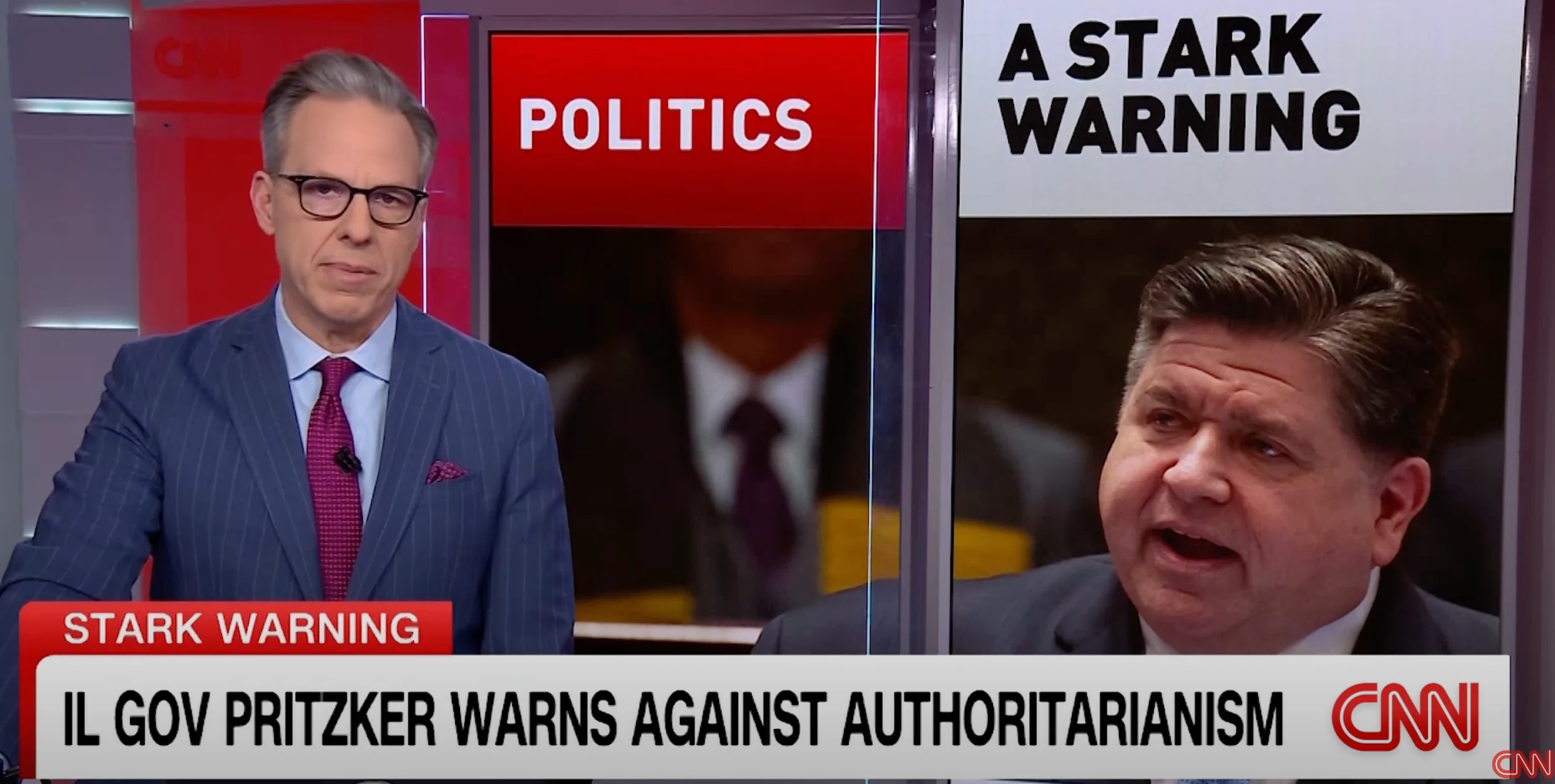
A screenshot from CNN – YouTube, CNN
A follow-up report from People summarized the same set of allegations: Ellison, as Paramount Skydance’s largest shareholder, was said to have talked to Trump-era officials about “restructuring” CNN and firing specific on-air talent disliked by the president, even as Paramount was also winning favor in Washington by settling Trump’s lawsuit over a 60 Minutes interview for $16 million.
At the same time, business press coverage highlighted how a successful Paramount–WBD merger would drop CNN straight into the Ellisons’ growing empire, alongside CBS News and other major news brands. Fast Company described how, if Skydance landed WBD, it would add CNN, DC Studios, HBO/HBO Max, Discovery Channel, TNT, and more to a group already controlling Paramount, CBS, and CBS News.
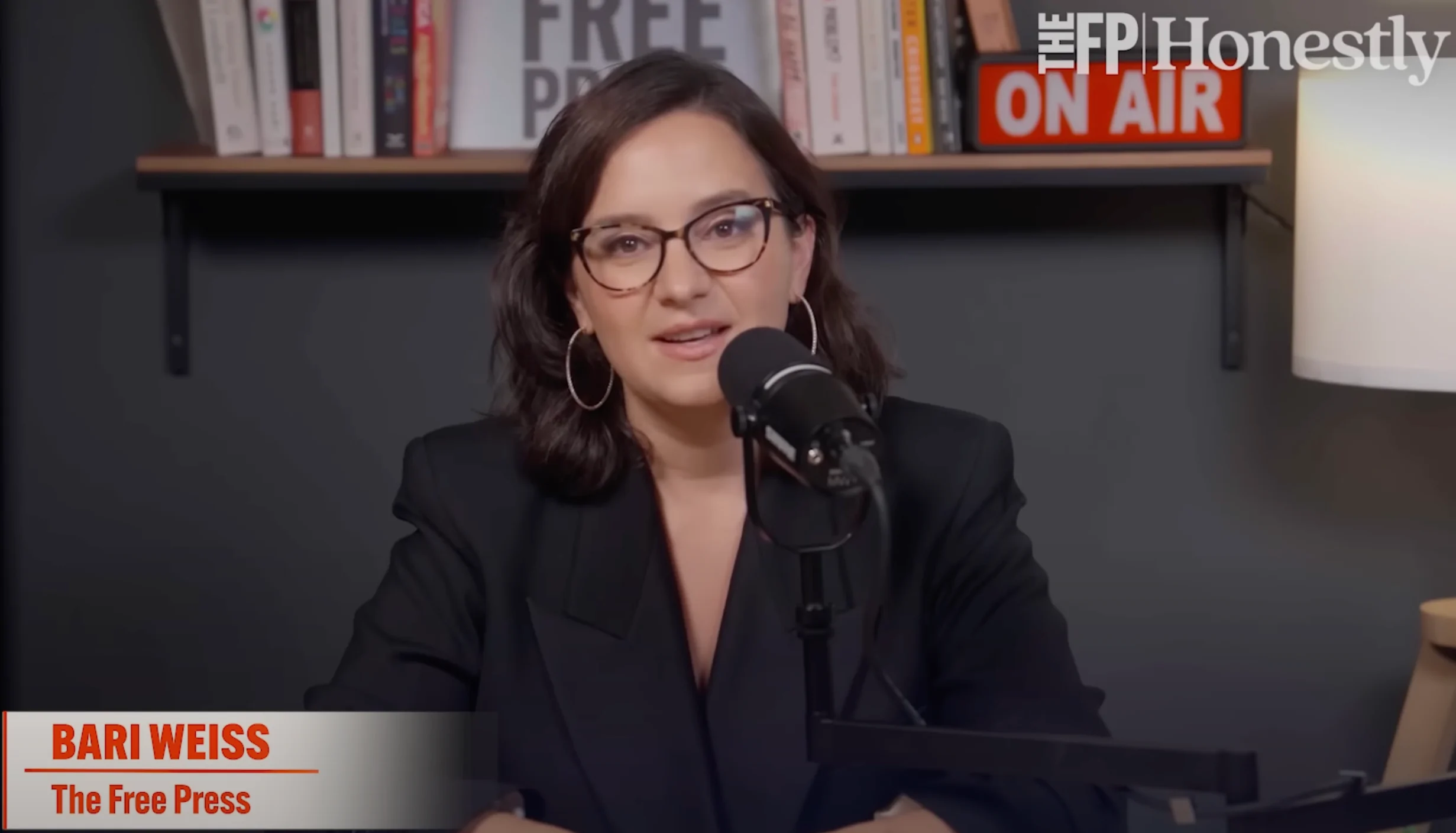
Bari Weiss addresses The Free Press working with Paramount – YouTube, The Free Press
For critics, the prospect of a Trump-aligned billionaire gaining control of both CNN and CBS News was deeply alarming. Some European officials and media watchers began warning about media concentration and the risk to “media diversity” if the Ellison bid prevailed. Instead, with Netflix allegedly winning, they may have sacrificed the entire movie theater industry to stop it from happening. And what they stopped was likely a reorganization of the political machinery of the entertainment empire within the United States.
Warner’s Split Plan Becomes a Political Shield
WBD had already telegraphed that it might separate its businesses. Executives announced plans to split the company into two public entities by 2026… one for streaming and studios (Warner Bros., HBO, Max, DC, etc.) and one for “Global Linear Networks” that would focus on news, sports, and traditional TV: specifically including CNN and TNT Sports.
The structure of the Netflix deal locks that in. Under the announced terms, the Netflix acquisition will not include CNN or other linear cable networks. Instead, those businesses will be spun off into Discovery Global, a separate company, before the Netflix transaction closes.
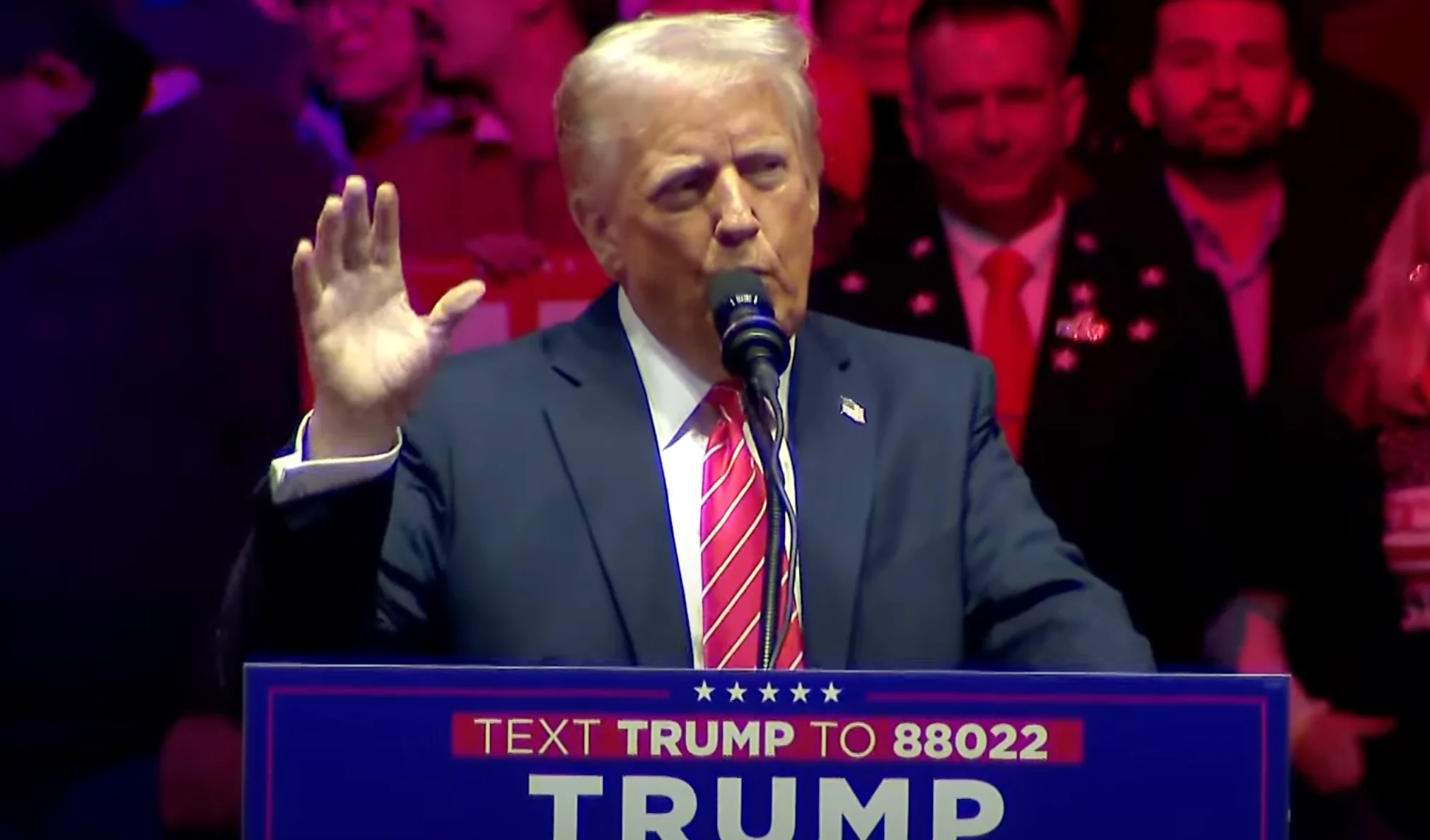
Donald Trump speaks at a rally the night before being inaugurated as the 47th President of the United States of America – YouTube, Washington Post
On its face, this looks like standard financial engineering to isolate declining cable assets from a high-growth streaming and IP powerhouse. But the political context makes it hard to ignore another read: splitting off CNN and then selling everything except CNN to Netflix is the cleanest way to ensure the Ellisons cannot suddenly end up with one of the world’s most influential newsrooms as a side effect of a mega-merger.
Ball’s in your court, Paramount! How messy you wanna get? https://t.co/Bw1ouK704V
— Alex Sherman (@sherman4949) December 5, 2025
Paramount Skydance hasn’t taken the loss quietly. In a blistering letter to WBD CEO David Zaslav — published by Mediaite — Paramount accused WBD of running a “tilted and unfair” process that was “biased towards a potential sale to Netflix” and of pursuing “a predetermined outcome that favors a single bidder.”
Ironically, in trying to make its own case, Paramount’s letter highlights why many regulators and media-diversity advocates were wary of an Ellison-led deal. The letter cites reporting that an EU Commission vice president expressed concern that an Ellison/Paramount acquisition of WBD could create “excessive media concentration” and that both Brussels and Warner representatives had discussed a shared desire to “preserve media diversity.”
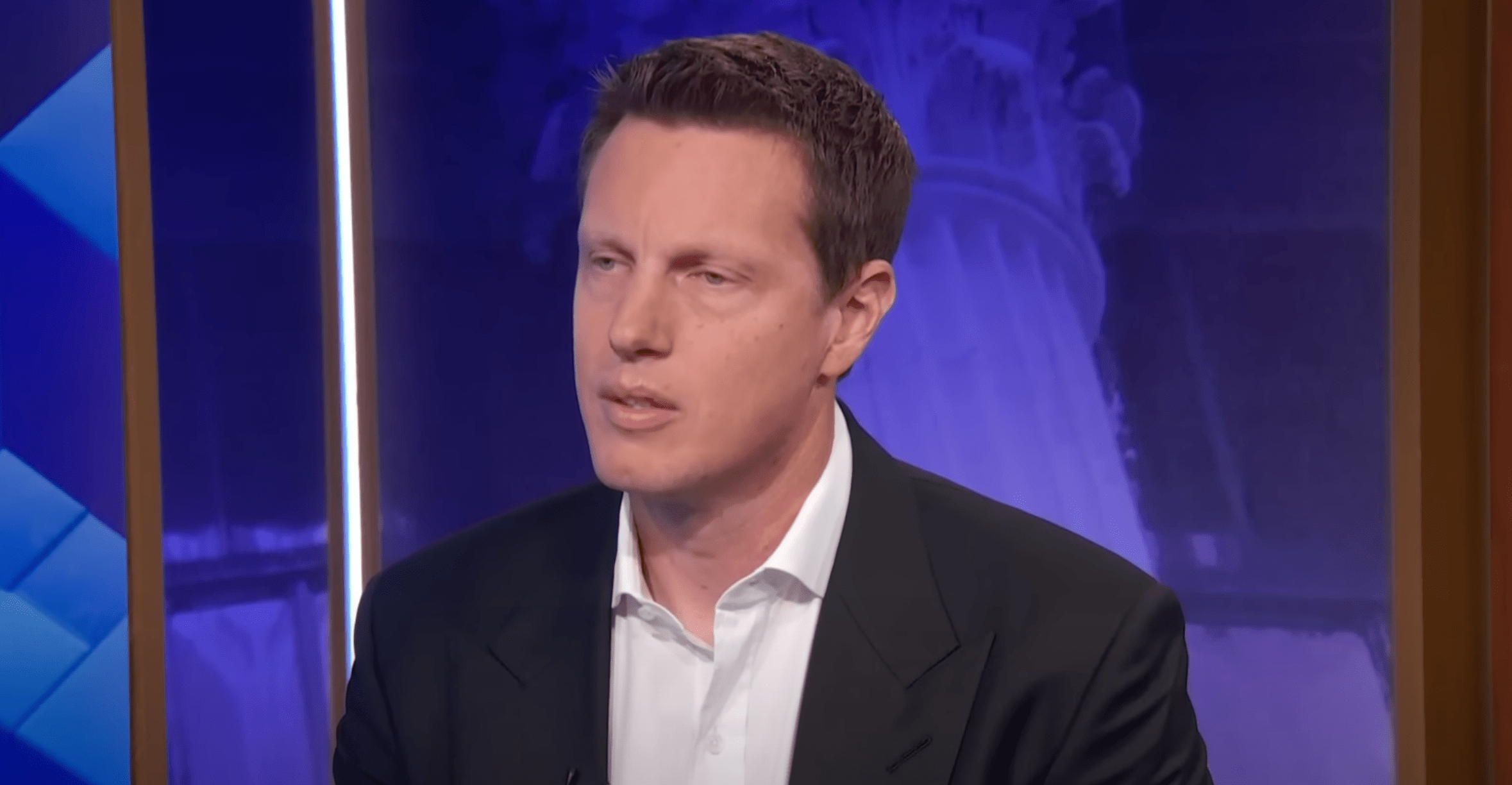
Paramount Skydance CEO David Ellison being interviewed – YouTube, CNBC Television
Put bluntly: Paramount’s own complaint makes clear that European regulators were more worried about the Ellisons rolling up WBD, including CNN, than about Netflix buying the studio and streaming assets.
There’s no smoking-gun document in public saying, “We chose Netflix to stop the Ellisons from getting CNN.” Officially, WBD’s board is framing the deal in classic corporate terms: Netflix offered more cash, cleaner financing, and a structure that maximizes value while limiting antitrust risk by carving off linear networks.
But if you line up the facts, it’s hard not to see the CNN question as a major sub-plot:
-
The White House under Trump privately favored a Paramount Skydance deal and talked with Larry Ellison about firing specific CNN hosts and reshaping the network’s programming.
-
The Ellison family is actively building a right-leaning media empire, now in control of Paramount, CBS, and CBS News, with a long history of political closeness to Trump.
-
European officials and media-diversity advocates signaled worries about exactly that kind of concentration if Paramount took over WBD, according to the Paramount complaint.
-
WBD had already devised a split structure that made CNN a separate, freestanding company… far easier to scrutinize and harder to quietly tuck into a broader Ellison-dominated conglomerate.
- Public records of WBD CEO David Zaslav’s political contributions seem to point to only democratic donations.
From that vantage point, choosing Netflix, the bidder that only wanted studios and streaming, and was structurally incompatible with absorbing CNN, looks like a de-facto veto on folding CNN into the Ellison camp. It also provides political cover: Netflix is not seen as aligned with Trump, and it has no interest in owning a traditional cable news network that doesn’t fit its streaming-first model.
What It Means Going Forward…
For Netflix, the acquisition is a high-risk, high-reward bet that turns it into a vertically integrated studio giant almost overnight. It gains a vast IP library, a proven gaming business (including Hogwarts Legacy), and HBO’s prestige brand, but it also faces years of integration challenges and intense antitrust scrutiny in both the U.S. and Europe.
A graphic showing the Netflix and Warner Bros. Logos – Netflix
For CNN, the immediate outlook is murkier but arguably more independent. As part of Discovery Global, it becomes the flagship of a pure-play linear and news/sports company, with its own board and shareholder base. That doesn’t guarantee editorial insulation, Discovery Global could itself become a takeover target down the line (but not for years to come), but any future buyer will now face a spotlight focused squarely on the implications of buying CNN, not on a sprawling entertainment bundle where the news network is one asset among dozens.
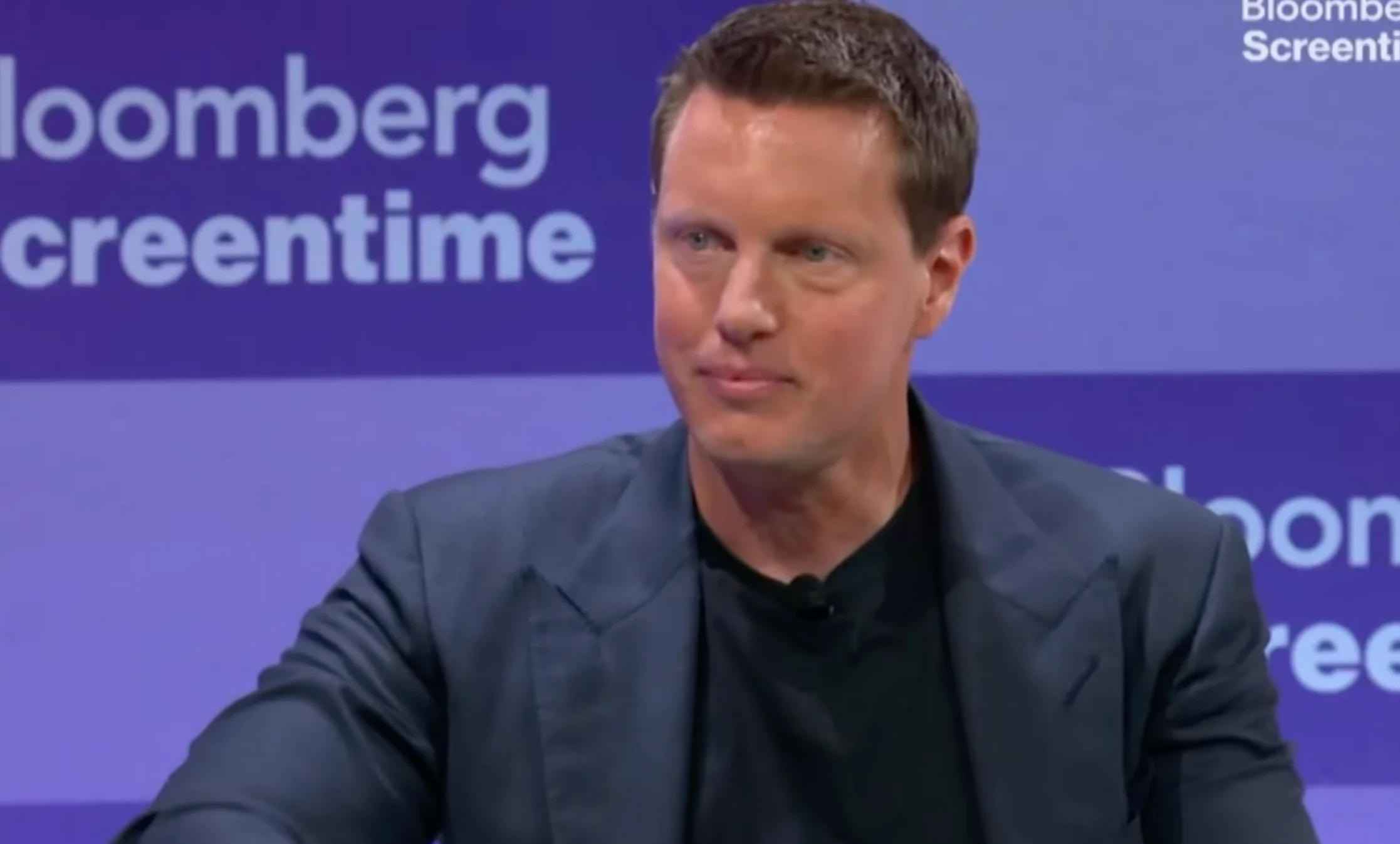
David Ellison talks to Bloomberg – YouTube, Bloomberg Podcasts
For the Ellisons and Paramount Skydance, this is a rare strategic defeat. The dream scenario, owning Paramount, WBD, HBO, DC, and CNN in one swoop, is off the table unless they want to get very, very messy (and they may). Instead, they’re left openly accusing WBD of rigging the process and watching as Netflix walks away with Hollywood’s crown jewels while CNN slips into a separate vehicle that will be harder to quietly capture.
In that sense, Netflix’s triumph over Paramount is about more than who controls Batman, Bugs Bunny, and the Harry Potter universe. It’s also about who doesn’t get to control CNN—and, by extension, who doesn’t get an even bigger lever over how millions of people receive their news.
