


Ron Coleman, counsel at the Dhillon Law Group and a First Amendment legal expert who argued and won the free speech case Matal v. Tam in front of the United States Supreme Court, shared his opinion on The Walt Disney Company’s motion to dismiss Gina Carano’s lawsuit.
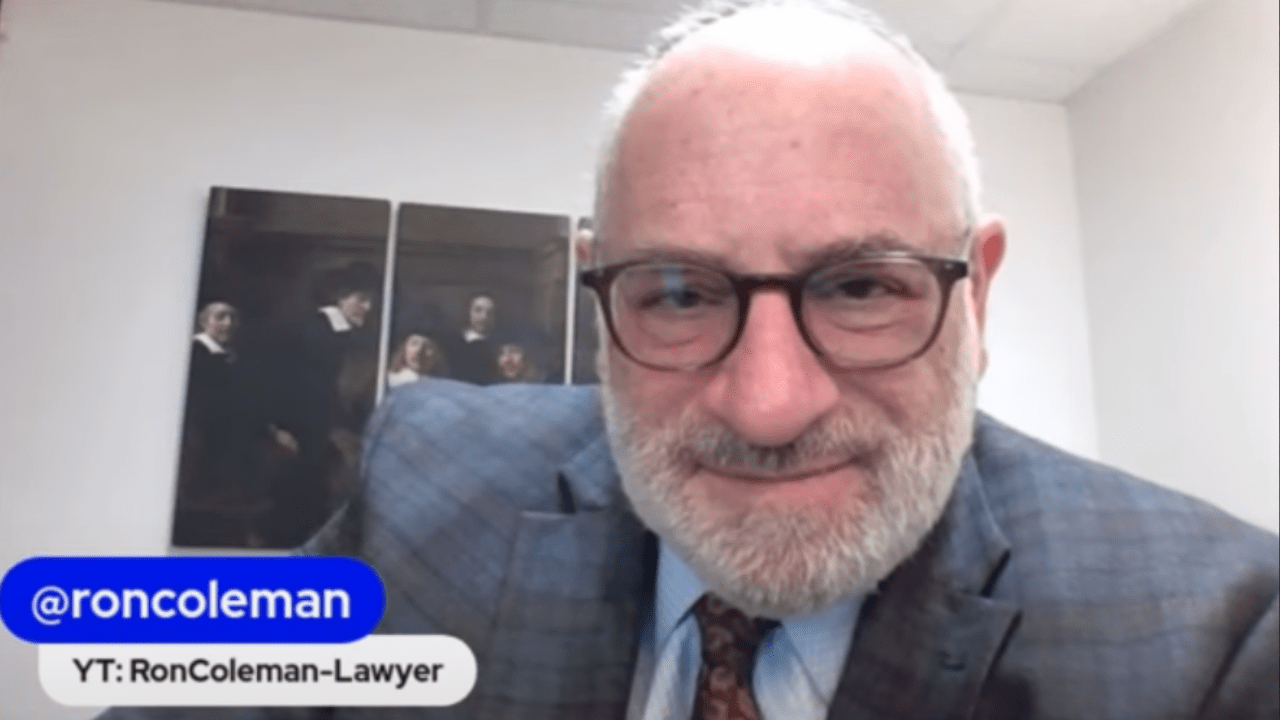
Ron Coleman via WDW Pro YouTube channel
Coleman appeared on the WDW Pro channel and stated, “We have an expression that you learn in law school, which is that hard cases make bad law. And this may very well be an example of a hard case that’s going to make some rather hairy law, or a hard case that’s going to make some bad law.”
He explained, “As a general rule, everything Disney has said is true. On its face it’s true. We have seen many times people on Twitter calling the attention of employers to the online or offline offensive conduct of their employees and those people getting canned. Now, as a general rule you can fire someone for any reason or no reason at all subject to the terms of a written contract or collective bargaining or unlawful discrimination based on sex, creed, national origin, race of course.”
“Here’s where it gets difficult: California has a unique law,” he shared. There’s nothing quite like it anywhere else. New York has a similar law, but not nearly as sharp. It’s the first claim for relief in the complaint. It’s California labor code 1101… but under this California law an employer is prohibited from making, adapting, or enforcing any rule, regulation, or policy that forbids or prevents an employee from engaging or participating in politics or from becoming candidates for public office or controlling, directing, or tending to control or direct the political activities or affiliations of employees.”

Gina Carano speaking at the 2015 San Diego Comic Con International, for “Deadpool”, at the San Diego Convention Center in San Diego, California. Photo Credit: Gage Skidmore from Peoria, AZ, United States of America, CC BY-SA 2.0 <https://creativecommons.org/licenses/by-sa/2.0>, via Wikimedia Commons
He later stated, “There has always been a constitutional question about this law because it does interfere with at-will employment, which is a contractual issue that’s protected under the Constitution. And it arguably interferes with the First Amendment right of association belonging to the employer.”
“So one of the threshold questions here, which may not be amendable to a decision at this stage, at the motion to dismiss stage: Is it reasonable for Disney to assert that as a matter of law an actress that it employs either under a contract as a 1099 contract or as a W2 employer — I don’t know which it is, I’m sure it’s in the complaint, I’m not sure it matters that much — is truly someone that the public associates with Disney. Does anyone think that the things that Gina Carano says are things that Disney itself is associating with. … What Disney is saying is these people we didn’t fire we do choose to associate ourselves with those comments.”

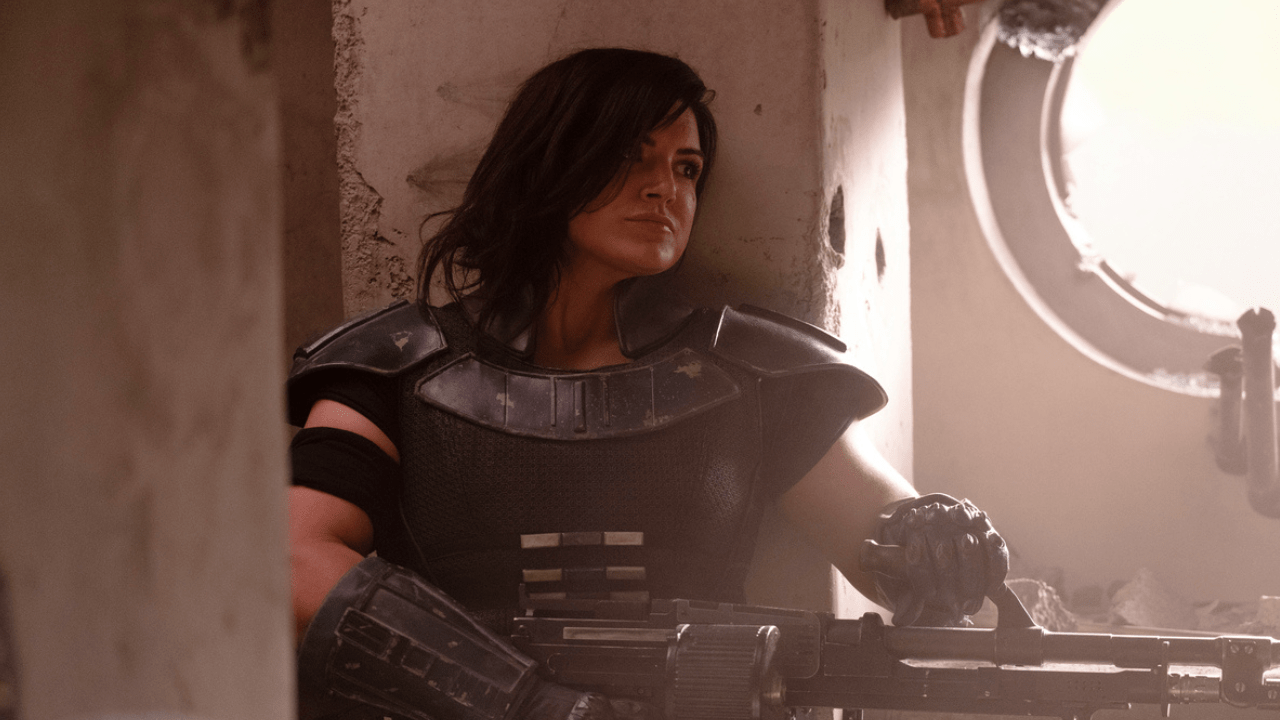
Gina Carano is Cara Dune in THE MANDALORIAN, season two, exclusively on Disney+.
READ: Gina Carano Says Pedro Pascal And Carl Weathers “Did Not Believe What Happened To Me Was Correct”
While discussing the posts and comments made other Lucasfilm actors such as Mark Hamill, Pedro Pascal, and Carl Weathers, Coleman said, “It always comes down to well, is it a distinction with a difference or is there really a material difference? Disney’s saying, ‘Yeah, there is a material difference.’ What’s the material difference? We agree with these things. And that in and of itself in 49 states would be enough. But in California — maybe not New York, there is also a similar law in New York — but in California it isn’t enough. Unless the court is going to rule that the Unruh Act is unconstitutional or at least unconstitutional as applied here it would appear that this raises legitimate questions that might not be able to be resolved on a motion to dismiss.”
“And then there are, of course, the follow-on effects of whether Disney really does adopt the positions of those other people that it has called upon,” he continued. “I do think that the sex [discrimination] claim in a way it has certain strengths to it, but in another way it just doesn’t intuitively ring true. I don’t really know enough about the business to tell you why Carl Weathers would be tolerated and not Gina Carano except that I think Carl Weathers was a bigger star than Gina Carano.”

(L-R): Bo-Katan Kryze (Katee Sackhoff), Cara Dune (Gina Carano), Fennec Shand (Ming-Na Wen) and Koska Reeves (Mercedes Varnado) in Lucasfilm’s THE MANDALORIAN, season two, exclusively on Disney+. © 2020 Lucasfilm Ltd. & ™. All Rights Reserved.
Coleman also noted, “I’m not sure that posting your political opinions is strictly speaking and this is a statute that arguably is going to be read strictly — maybe not and I’ll tell you in a second why not — but on the one hand you have the Constitutional issues that militate against giving a broad interpretation to that statute, and on the other hand this may be deemed what’s called a remedial statute. A remedial statute means where a legislature sees a problem, not merely a regulatory goal, but sees a problem and goes out to solve it. If this were to be construed as re medial statute it might be read more broadly.”
He elaborated, “Depending on how it’s read, it’s possible for a judge to avoid this problem altogether by saying, ‘These aren’t political activities. These are statements of opinion. Yes, we live in politicized times, and yes, everything’s political, but you weren’t running for office, you weren’t raising funds for a political candidate.’ Ironically, if she were raising funds for Donald Trump or some even far right figure, which Donald Trump isn’t that would arguably be more protectable than merely making mean tweets.”
“Then the question is: Did the legislature intend to capture that? To give more protection to someone who does less or less protection to someone who does less? And that’s a really interesting question,” Coleman added.

(L_R): Fennec Shand (Ming-Na Wen) and Cara Dune (Gina Carano) in Lucasfilm’s THE MANDALORIAN, season two, exclusively on Disney+. © 2020 Lucasfilm Ltd. & ™. All Rights Reserved.
Later in the video, Coleman did note, “Disney has a hard burden to overcome here. It would be different if they were suing Jiminy Cricket, or if they were suing someone, some actor who is really closely tied with the Disney business for decades.”
He then posited, “You might require a survey to demonstrate that the public associates the views of the various actors with the company, but, again, if Disney says that then they really are moving into a world where every tweet by everyone they don’t fire for his tweets is endorsed by them. Boy, that’s a crazy world to live in. And in fact, as a matter of policy it seems like a pretty bad one because it’s going to bite them in the behind because there’s going to be another case later where that view is going to or someone’s going to try to ascribe that view to Disney.”
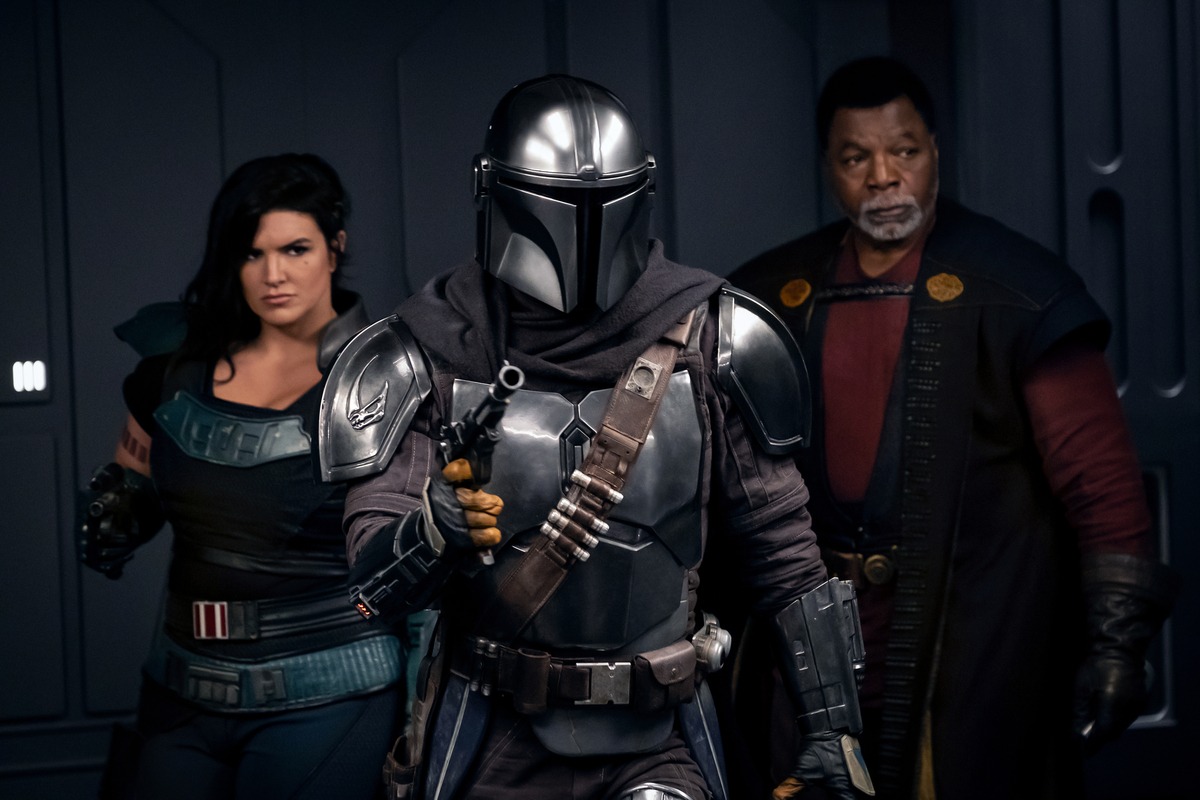
(Left to right) Gina Carano is Cara Dune, Pedro Pascal is the Mandalorian and Carl Weathers is Greef Karga in THE MANDALORIAN, season two, exclusively on Disney+
What do you make of Coleman’s analysis regarding The Walt Disney Company’s motion to dismiss Gina Carano’s lawsuit?
