


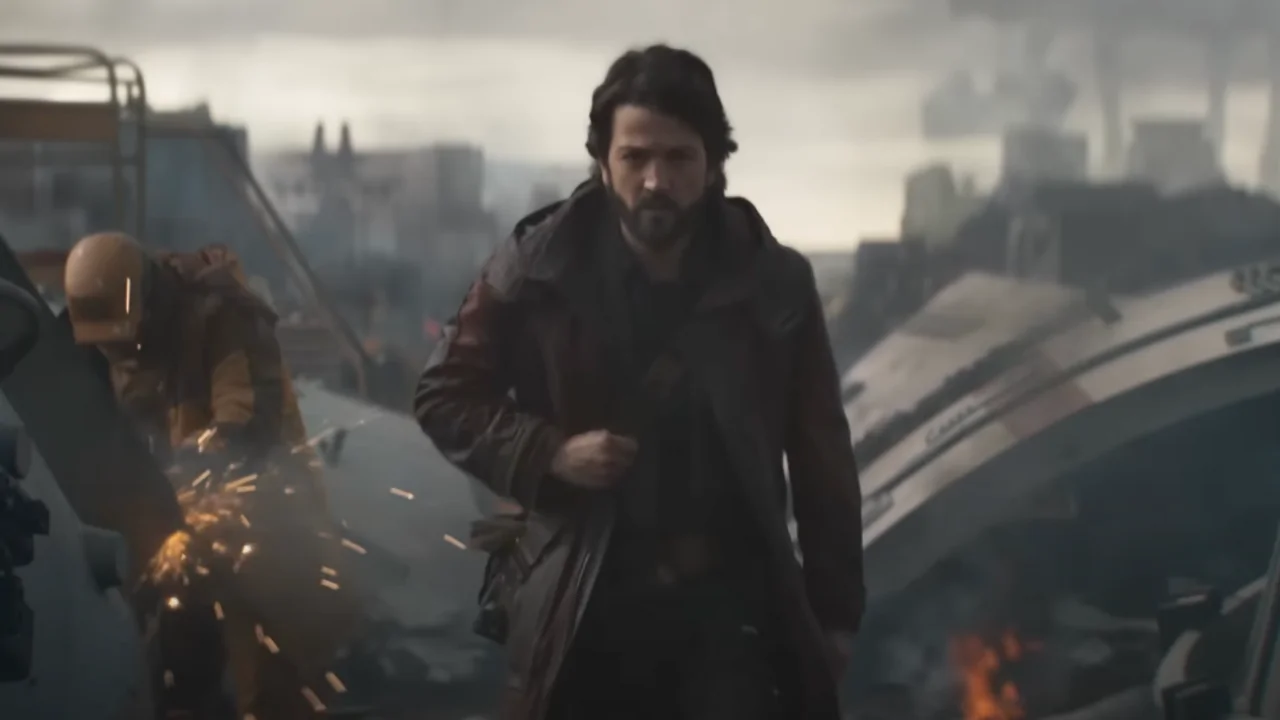
According to a detailed write-up by the BBC, Disney’s gritty Star Wars series Andor may have taken more than just inspiration from history—it may have quietly adapted the early exploits of one of the 20th century’s most infamous political figures: Joseph Stalin. Yes, that Stalin.
The revelation stems from an in-depth BBC feature tracing the real-world origins of Andor’s heist arc, in which Cassian Andor and a ragtag band of rebels steal a massive payroll from an Imperial garrison on the remote planet Aldhani. It turns out that plot is directly inspired by the 1907 Tiflis bank robbery—a brutal, chaotic theft carried out by Bolshevik revolutionaries under the command of a young Ioseb Jughashvili, better known later as Joseph Stalin.
The real robbery occurred in Yerevan Square, in what is now Tbilisi, Georgia. Stalin’s crew detonated explosives, staged diversions, and walked away with a fortune intended for the Russian State Bank. According to the BBC, the operation left devastation in its wake and funded revolutionary efforts for years. The parallels between this event and Andor’s Aldhani arc aren’t subtle. In fact, Tony Gilroy, the creator of Andor, has openly admitted the connection.
“If you look at a picture of young Stalin, isn’t he glamorous? He looks like Diego!” Gilroy said in a 2022 interview with Rolling Stone, referring to actor Diego Luna, who plays Cassian Andor.
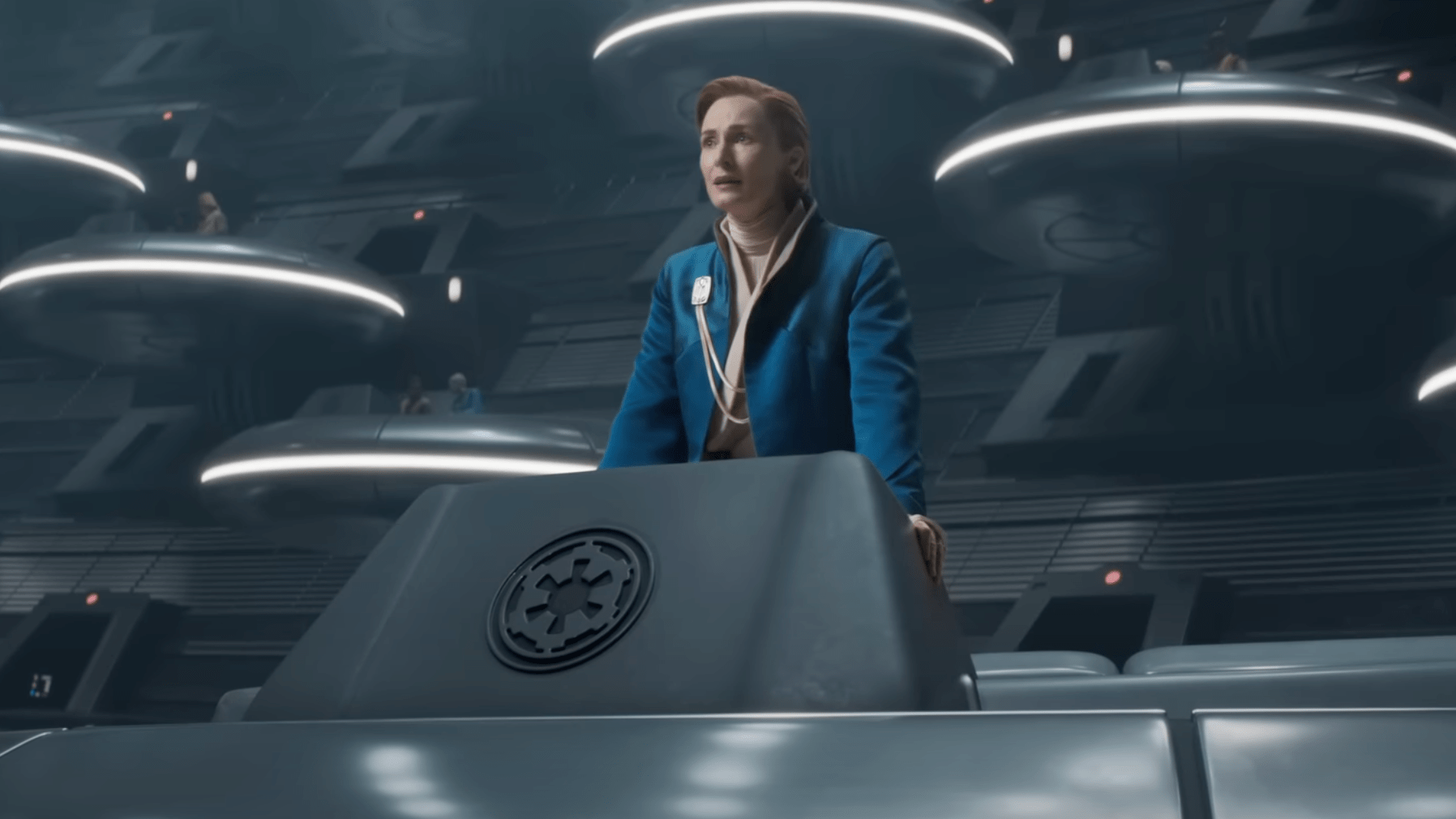
Mon Mothma in Andor – YouTube, Star Wars
But this isn’t just a matter of aesthetic coincidence. Gilroy cites Young Stalin by historian Simon Sebag Montefiore as an influential source, calling the book “amazing” and its depiction of the Tiflis heist an “incredible movie sequence.”
Montefiore himself told the BBC he never expected his historical research would feed into a Star Wars series, but noted the similarities between Stalin and Andor: a young man from nowhere, with a revolutionary mindset and a cause against a sprawling empire.
This raises a much larger question: is Andor functioning as ideological messaging? While the show doesn’t explicitly preach, its creative backbone is rooted in real-world revolutionary tactics and figures. Consider Luthen Rael, played by Stellan Skarsgård. He’s a wealthy collector with an iron will, manipulating rebels and sacrificing lives to achieve his goals. According to the BBC, Luthen serves as an analogue for Vladimir Lenin—the man who empowered Stalin because he was willing to get his hands dirty.
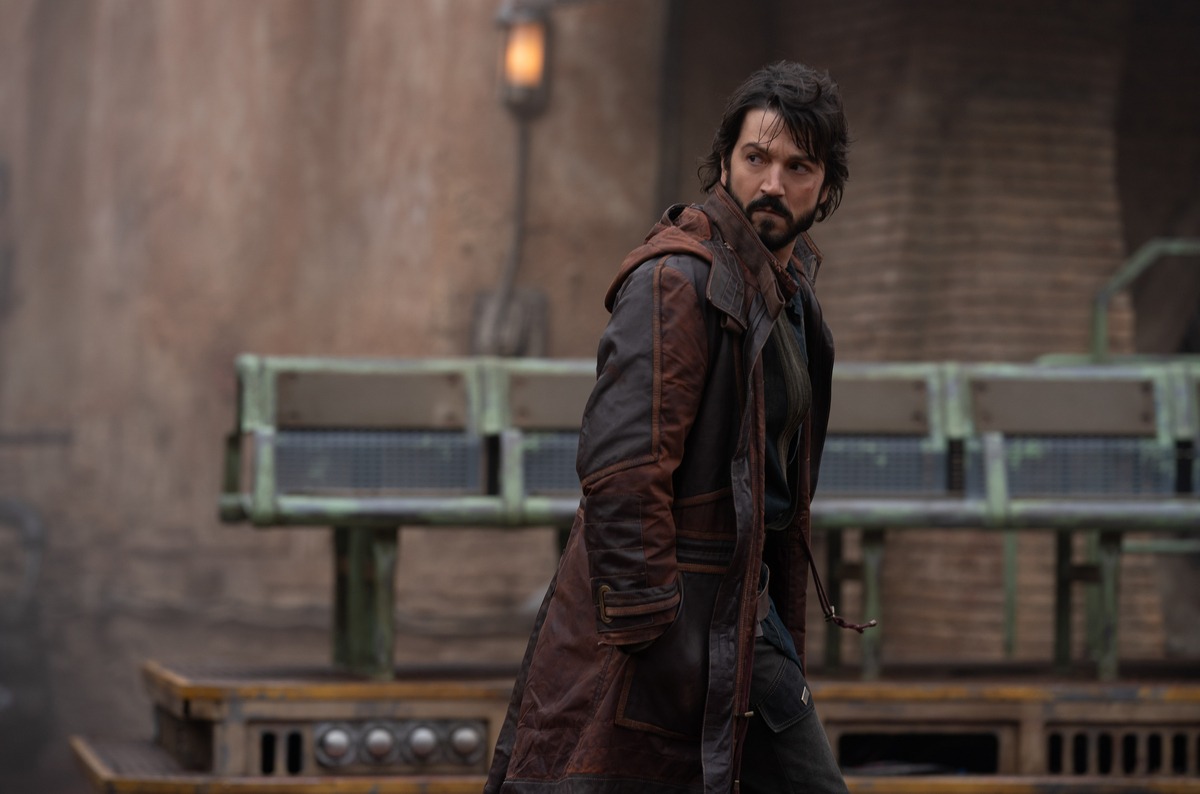
Cassian Andor (Diego Luna) in Lucasfilm’s ANDOR, exclusively on Disney+. ©.
When a Disney+ show wraps such characters in moral ambiguity and downplays their historical inspirations, viewers are left with a version of rebellion that looks an awful lot like the rise of authoritarian revolutionaries. Gilroy’s depiction isn’t subtle: Andor doesn’t just borrow from history—it recasts it, stylizing dangerous methods as noble struggle.
It’s worth asking why the creative team behind Andor and the folks over at Disney and Lucasfilm found Stalin’s story not only usable but inspirational.
This is where selective memory creeps in. Certain historical narratives are treated with nuance and artistic flair, while others would be universally condemned. And when a company like Disney, still branding itself as family-friendly, builds one of its most celebrated adult-oriented stories on the early crimes of a future Soviet dictator, it signals more than just a creative risk—it signals an ideological comfort zone.
The BBC’s investigation is not a hit piece. It lays out the facts. Gilroy himself is enthusiastic about historical research and has read non-fiction almost exclusively for the past 15 years. That passion shows in Andor’s realism, which critics have praised. But that realism has a cost as the show begins to mirror not just the structure of revolution but the mindset that rationalizes it.
Viewers are shown a system so corrupt and exploitative that every act against it becomes justified. Even sabotage, manipulation, and betrayal are reframed as necessary tools of liberation. In the real world, those same tools laid the foundation for totalitarian regimes. Stalin didn’t rise to power in a vacuum—he rose on the back of a revolution built on precisely the kind of tactics Andor lionizes.
The final episodes of Andor’s first season hint at this complexity. Luthen confesses that he’s sacrificed everything—his soul, his life, his decency—for a sunrise he’ll never see. It’s poetic. It’s powerful. But it’s also chilling. Because history tells us what often follows those sunrises. What comes next, after the revolution is won.
Bob Iger | 2019 Disney Legends Awards Ceremony | D23 EXPO 2019. Photo Credit: nagi usano from Tokyo, Japan, CC BY-SA 2.0 <https://creativecommons.org/licenses/by-sa/2.0>, via Wikimedia Commons
And that’s the real question Andor raises: Is rebellion always righteous? Or are we watching the stylish rehabilitation of a story we should be far more cautious about celebrating?
Thanks to the BBC report, we now know the inspiration. The next question is: should we be cheering for it?
Are you surprised at this troubling connection between Andor and Stalin? Sound off in the comments and let us know!
UP NEXT: PlayStation 6 Release Date May Have Accidentally Been Revealed
