


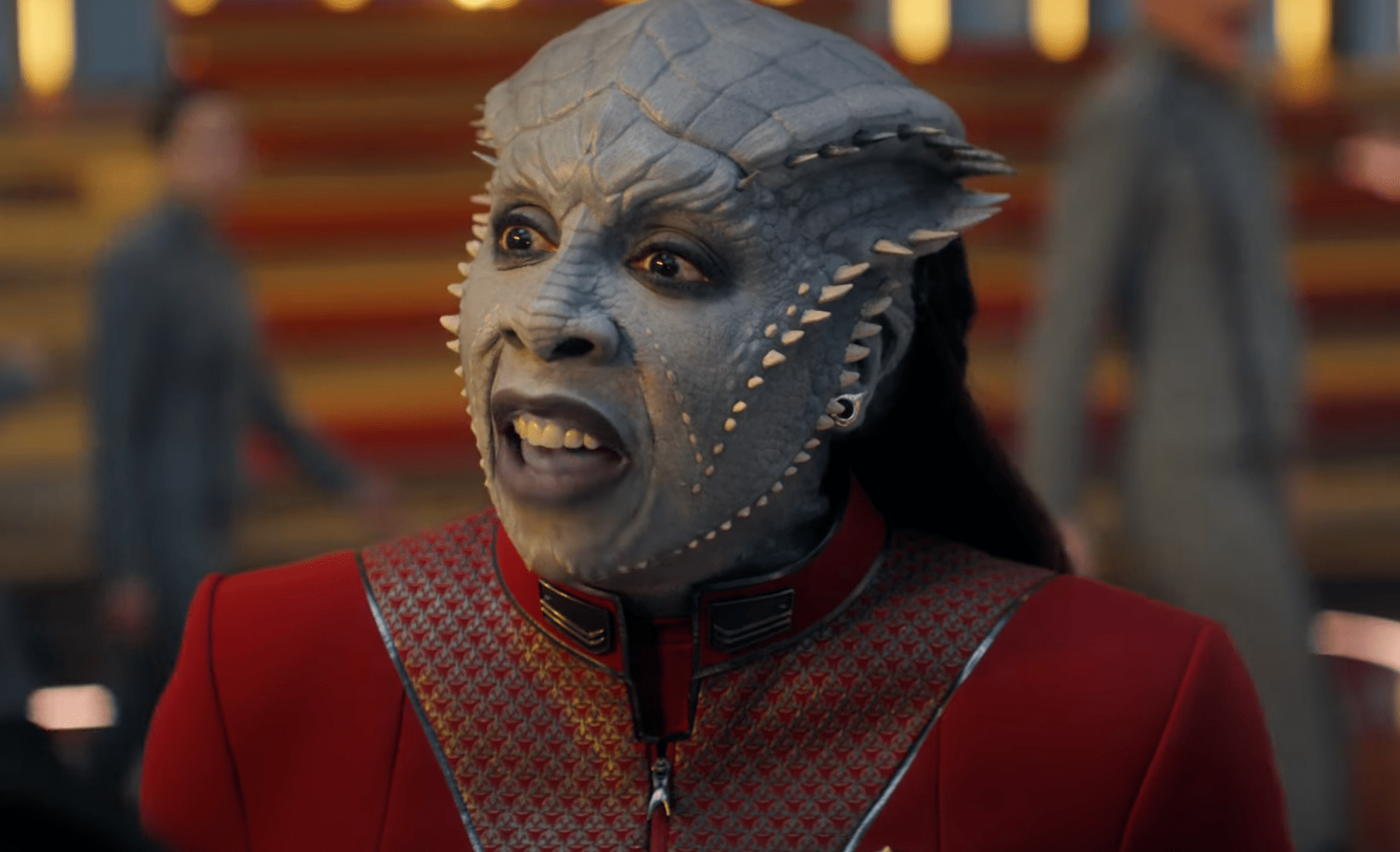
According to a source close to Star Trek: Starfleet Academy, viewership for the streaming series may be far worse than early reports suggested, signaling a troubling trend for the franchise. If accurate, this doesn’t just point to fading interest in an iconic science-fiction brand—it hints at a more decisive rejection of what it has become under Alex Kurtzman’s leadership.
To understand the weight of that claim, it’s worth looking more closely at the numbers.
The Starfleet Academy Reality Check
Speaking on a podcast, YouTuber Mike Stoklasa said, “I heard from my source… The entire first season of Star Trek: Starfleet Academy, not individual episodes, the entire season total views, about 400,000,” he said. “Not per episode. Cumulatively, the entire series. About 400,000 views. Which is an average of maybe 40,000 views per episode.”

A scene from Starfleet Academy – Paramount+
READ: Tim Pool Rejects Animal Farm Promotion Over Film’s “Pro Communism” Messaging
It’s worth noting that Starfleet Academy was positioned as a flagship series on Paramount+, with a marketing budget to match. Anyone opening the app should have been aware of the latest entry—yet audiences appear to have chosen almost anything else.
For comparison, the popular YouTube channel Nerdrotic has a Season 1 review that has accumulated around 286,000 views in just over a week—more than seven times the viewership of an average episode of Starfleet Academy. Many smaller YouTube channels regularly surpass 40,000 views without anything close to the budget or production resources of a network series.
Star Trek isn’t a niche brand, but a genre-defining franchise with generations of fans. If these numbers are accurate, the low viewership for Starfleet Academy doesn’t just reflect a single series struggling—it suggests the franchise’s broader dominance may already be slipping away.
The Shift in Star Trek’s Vision
Under Alex Kurtzman’s leadership, Star Trek has grown increasingly divisive. Many fans point out that the original series balanced philosophical debate with adventure, and above all, offered an optimistic vision of the future. Its science-fiction elements, while imaginative, were grounded in logic—making even the most fantastical moments feel believable.
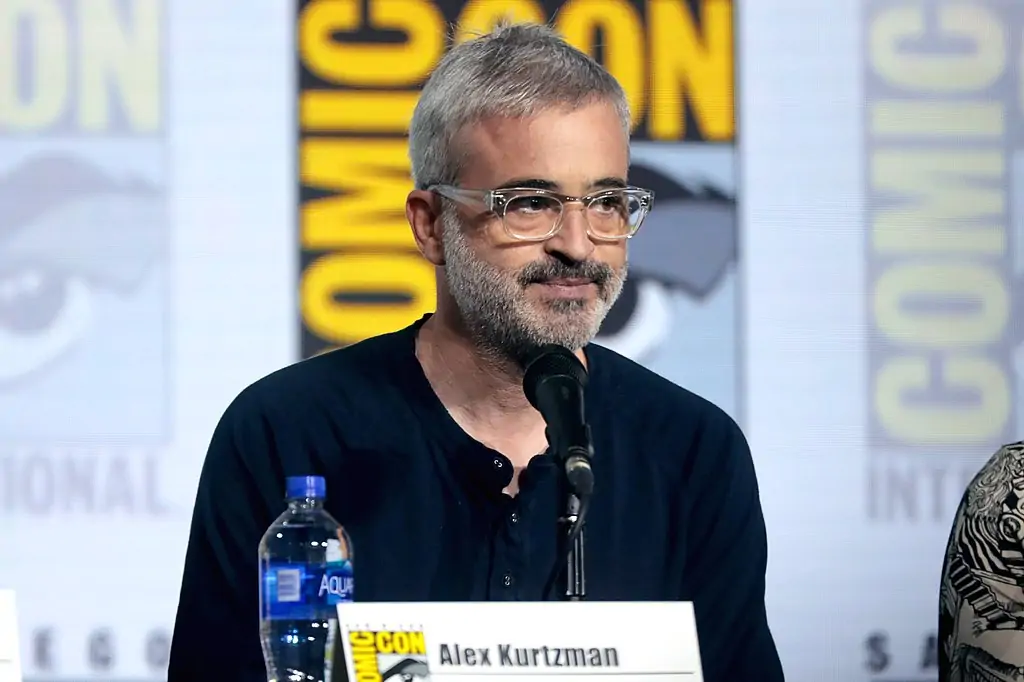
Alex Kurtzman – Wikimedia Commons
READ: Super Mario Galaxy Movie Box Office Soars Past $122M Globally As Audiences Ignore Critics Yet Again
By contrast, more recent series often depict a future weighed down by contemporary social issues. Instead of inviting thoughtful exploration, some viewers feel they’re being lectured to. Starfleet Academy, in particular, appears to lean most heavily into that approach. At the same time, certain storytelling choices push its technology closer to fantasy than science, further distancing it from the grounded tone that once defined the franchise.
With Kurtzman’s contract reportedly set to expire in 2026, some fans are beginning to speculate that Paramount may use the opportunity to place Star Trek in new hands.
Can Star Trek Reclaim Its Legacy?
For the first time in a decade, there are no new Star Trek television series in production. A second season of Starfleet Academy has already been completed and is set for release. At this point, however, it seems unlikely that viewership will grow. With the show already canceled, potential viewers may be hesitant to invest in a series with no future.

Robert Picardo as The Doctor in Star Trek: Starfleet Academy – Paramount Plus
READ: J.J. Abrams Downsizing Production Company Bad Robot
The larger question now is whether Star Trek itself is approaching that same uncertainty. While Paramount has the opportunity to place the franchise under new leadership, that alone won’t suffice. What’s needed is a bold, coherent vision—one that can recapture the optimism, intellectual curiosity, and sense of wonder that once defined the Star Trek brand. Without it, even the most loyal fans may find little reason to return.
Are you surprised by the low viewership for Starfleet Academy? Let us know in the comments!
