



If The Mandalorian and Grogu finishes its worldwide run near $350 million, as projections now seem to point towards, the conversation around the film will move beyond whether it underperformed. It will become a comparison point for some of the most painful modern lows in franchise filmmaking.
That does not automatically mean the movie is an outright financial disaster. Budget matters. Marketing spend matters. Theatrical rentals matter. Merchandise, Disney+ retention, theme park synergy and long-term Star Wars brand value all matter. But as a box office benchmark, a $350 million worldwide finish for a theatrical Star Wars movie would be startlingly low. All of that said, the $600 million break-even reported by THR means that all of the secondary and tertiary revenue sources in the world for Disney are unlikely to pull them out of this hole.
But how does this compare to the other lows experienced by major franchises across the entertainment landscape? Is this unprecedented or is it just another case of legacy brands tarnished by poor stewardship?
Using 2026 dollars, a $350 million global total would put The Mandalorian and Grogu in the same general danger zone as X-Men: Dark Phoenix, Terminator: Dark Fate, The Hunger Games: The Ballad of Songbirds and Snakes, Indiana Jones and the Dial of Destiny, and other franchise entries that either ended a cycle, forced a reset, or exposed severe brand fatigue.
Here is how it compares.
10. Tron: Ares

Jared Leto as Ares in Tron Ares – YouTube, Disney
Estimated worldwide gross: $142.2 million
Adjusted to 2026 dollars: about $146 million
Tron: Ares is the cleanest example of what happens when a studio mistakes brand awareness for audience urgency.
The Tron brand has history. It has theme park relevance. It has visual identity. It has a cult following. What it apparently did not have was a broad theatrical audience willing to turn out for another expensive feature film.
With a worldwide total around $142 million, Tron: Ares sits far below even the projected $350 million finish for The Mandalorian and Grogu. That makes the Star Wars comparison less about direct financial equivalence and more about a shared warning sign. Both properties have passionate fanbases. Both have recognizable iconography. Both are attached to Disney’s larger ecosystem.
But neither could rely on brand name alone.
If The Mandalorian and Grogu lands at $350 million, it will have more than doubled Tron: Ares. Yet for Star Wars, that still may not feel like a win. The standard is simply much higher.
9. Shazam! Fury of the Gods
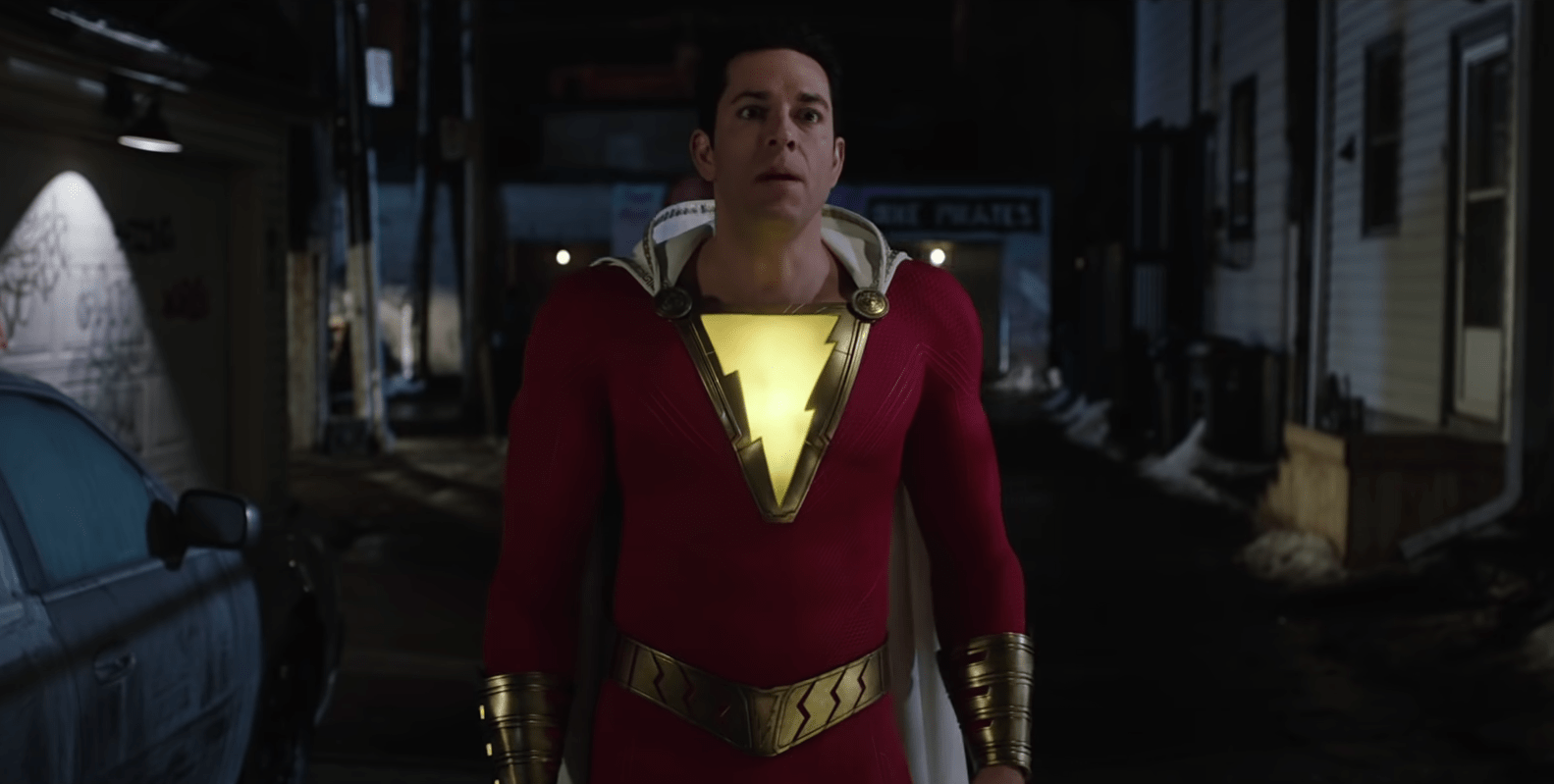
Zachary Levi as Shazam in Shazam! (2019), Warner Bros. Pictures
Worldwide gross: $134.1 million
Adjusted to 2026 dollars: about $146 million
Shazam! Fury of the Gods was not merely a low-grossing superhero sequel. It was a symbol of a cinematic universe audiences had already started emotionally abandoning.
The sequel arrived at a time when DC was preparing for a reboot, which likely made the film feel less essential. If viewers believe a franchise chapter does not matter, many will wait for streaming or skip it entirely.
That is the uncomfortable parallel for The Mandalorian and Grogu. The film is not part of a collapsing continuity in the same way Shazam! Fury of the Gods was, but it does come from a story world that had trained millions of fans to follow Din Djarin and Grogu at home on Disney+.
In other words, the issue may not be that audiences dislike the characters. The issue may be that they did not view the movie as urgent theatrical viewing.
That is a major problem for any studio trying to convert streaming loyalty into box office heat.
8. The Marvels

NEW YORK, NEW YORK – NOVEMBER 10: Brie Larson attends THE MARVELS Movie Theater Pop-In on November 10, 2023 in New York City. (Photo by Jason Mendez/Getty Images for Disney)
Worldwide gross: $206.1 million
Adjusted to 2026 dollars: about $224 million
No modern franchise collapse has been more widely discussed than The Marvels.
This was not an obscure comic book offshoot. It was a sequel to Captain Marvel, which grossed more than $1 billion worldwide in 2019. It was also connected to the broader Marvel Cinematic Universe, historically the most reliable box office machine in Hollywood.
Yet The Marvels finished with just over $206 million worldwide. Adjusted to 2026 dollars, that is only around $224 million.
A projected $350 million for The Mandalorian and Grogu would clear that number comfortably. But that is a low bar. Beating The Marvels is not the standard Star Wars wants to celebrate.
The bigger comparison is structural. Both Marvel and Star Wars leaned heavily into Disney+ expansion. Both brands asked general audiences to keep up with streaming shows. Both saw theatrical enthusiasm weaken as the franchises became more fragmented. And in the case of The Marvels, just like with the Sequel Trilogy, the franchise was taken in a very feminist-first direction for a traditional boy brand.
If The Marvels showed what happens when Marvel loses the casual audience, The Mandalorian and Grogu may show what happens when Star Wars asks too much of its streaming audience while not offering enough of a theatrical event.
7. Lightyear
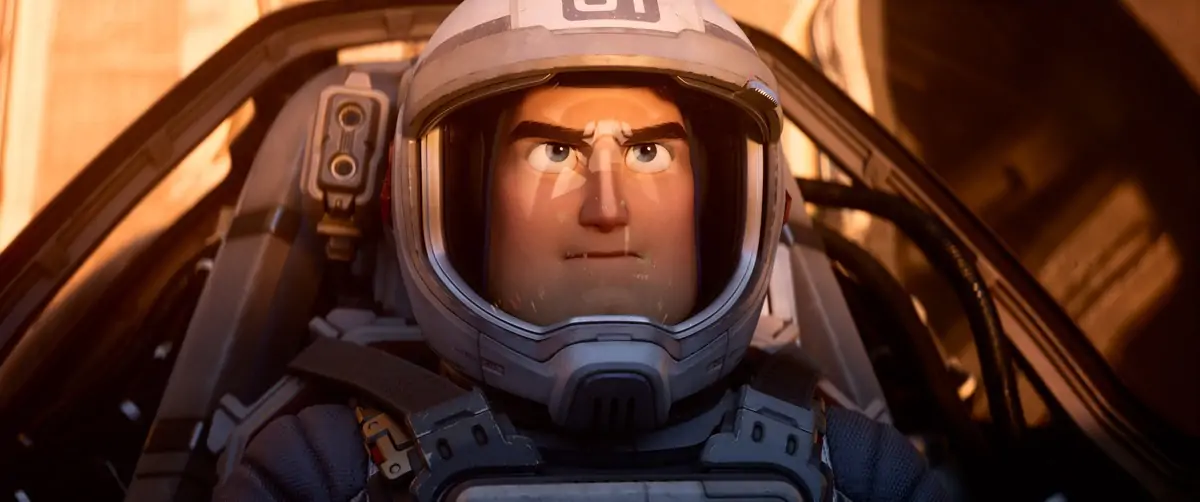
TRIAL AND ERROR – After being marooned on a hostile planet, Buzz Lightyear (voice of Chris Evans) attempts multiple test flights in an effort to recreate the complicated fuel required to reach hyperspeed so he and the whole crew can return to Earth. Directed by Angus MacLane (co-director “Finding Dory”) and produced by Galyn Susman (“Toy Story That Time Forgot”), Disney and Pixar’s “Lightyear” opens in U.S. theaters on June 17, 2022. © 2021 Disney/Pixar. All Rights Reserved.
Worldwide gross: about $226 million
Adjusted to 2026 dollars: about $256 million
Lightyear was not technically a Toy Story 5, but it was still a major extension of one of Pixar’s most valuable brands.
The problem was conceptual. Audiences knew Buzz Lightyear as a toy, a comedic character and part of the emotional ensemble of Toy Story. Lightyear tried to turn that concept into an in-universe sci-fi origin movie. The result confused some moviegoers and failed to replicate the emotional appeal of the mainline franchise.
That matters for The Mandalorian and Grogu because Lucasfilm faced its own translation problem. The characters are popular, but popularity on Disney+ does not automatically translate into a theatrical proposition.
A projected $350 million would put The Mandalorian and Grogu well above Lightyear, even after inflation. But the underlying warning is similar: familiar IP is not enough when the audience is unclear why this particular version needed to be a movie.
6. The Flash
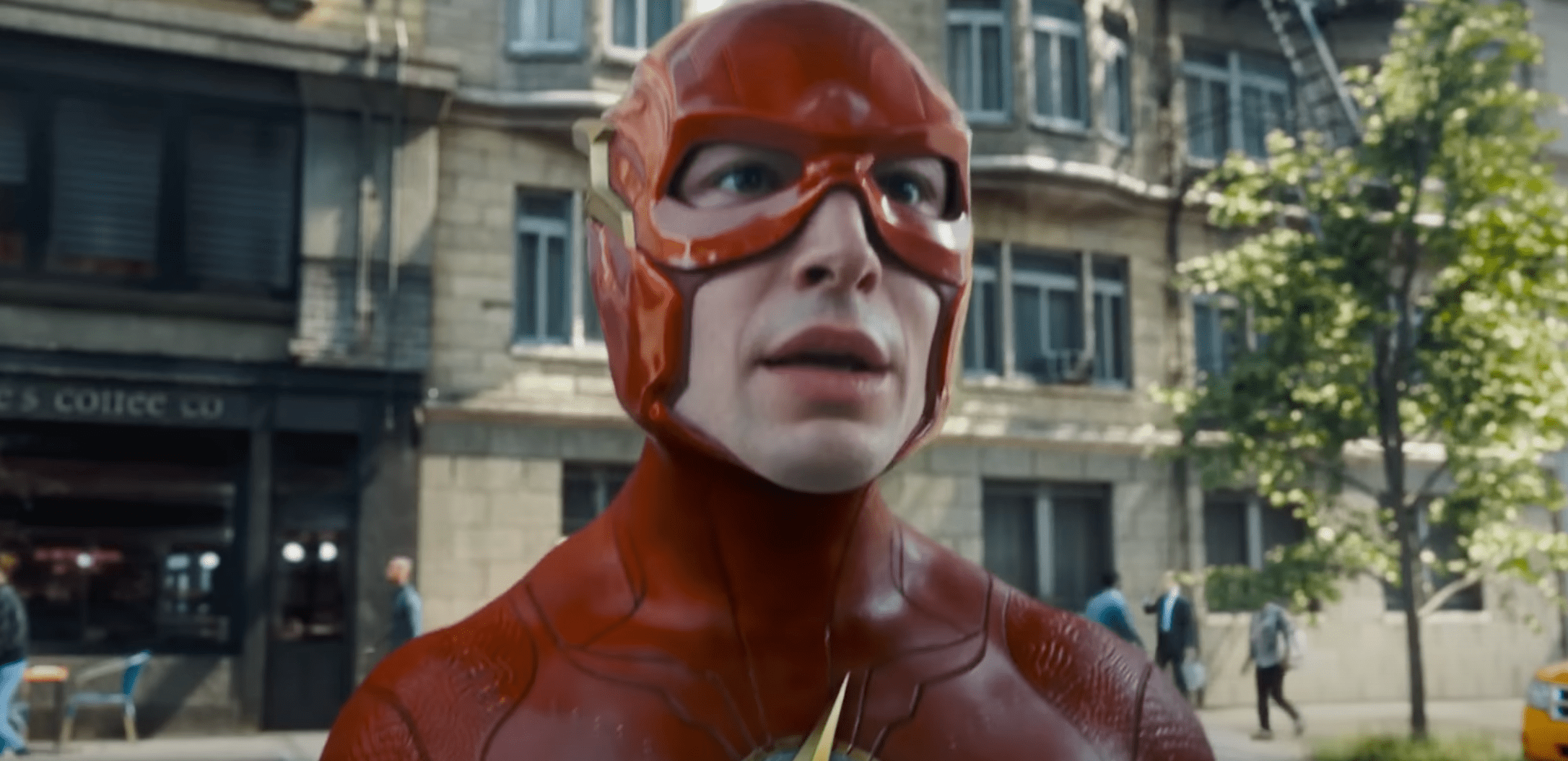
Eara Miller as The Flash in The Flash – YouTube, DC
Worldwide gross: $271.4 million
Adjusted to 2026 dollars: about $295 million
The Flash was supposed to be a major DC event. It had multiverse stakes, Batman nostalgia, huge studio promotion and promises that it was one of the best superhero movies ever made.
Then audiences stayed away. It turns out the weird antics of Ezra Miller, often bordering on illegal behavior, was just too much for the movie to overcome.
Its roughly $271 million worldwide gross, about $295 million in 2026 dollars, made it one of the clearest signs that superhero fatigue was no longer theoretical. The DC brand had become too unstable, too reboot-heavy and too burdened by behind-the-scenes baggage.
A $350 million finish for The Mandalorian and Grogu would beat The Flash after inflation. But again, that is not where Star Wars wants the comparison set.
The troubling part is that both films point to a breakdown in trust. With The Flash, audiences did not trust that the movie mattered. With The Mandalorian and Grogu, the risk is that audiences did not trust that a Disney+ continuation deserved theatrical urgency.
That is less catastrophic than DC’s problem, but it is still serious.
5. X-Men: Dark Phoenix
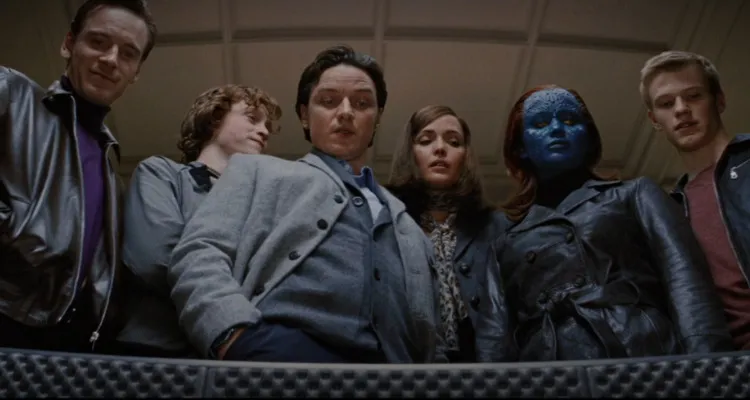
Michael Fassbender as Magneto, Caleb Landry Jones as Banshee, James McAvoy as Charles Xavier, Rose Byrne as Moira MacTaggert, Jennifer Lawrence as Mystique, and Lucas Till as Havok in X-Men: First Class (2011), 20th Century Fox
Worldwide gross: $252.4 million
Adjusted to 2026 dollars: about $327 million
X-Men: Dark Phoenix effectively ended Fox’s mainline X-Men franchise with a whimper.
The film arrived after years of uneven continuity, declining enthusiasm and uncertainty surrounding the Disney-Fox merger. It also revisited the Dark Phoenix storyline after X-Men: The Last Stand had already attempted it in 2006.
Adjusted to 2026 dollars, Dark Phoenix lands around $327 million worldwide. That is only slightly below the hypothetical $350 million finish for The Mandalorian and Grogu.
That is a grim comparison for Star Wars.
The X-Men brand at that moment was exhausted, transitional and waiting for Marvel Studios to eventually reboot it. Star Wars is not in the same exact position, but if a theatrical Star Wars film ends up barely above Dark Phoenix after inflation, it suggests the theatrical side of the franchise is in need of significant repair.
It would not mean Star Wars is dead. It would mean the box office floor has fallen dramatically.
4. Terminator: Dark Fate
Worldwide gross: about $261 million
Adjusted to 2026 dollars: about $338 million
Terminator: Dark Fate was marketed as a legacy sequel that brought back Linda Hamilton and restored James Cameron’s creative presence as producer. It was designed to wipe away some of the franchise’s weaker sequels and restore the old magic.
Audiences did not buy it.
Adjusted to 2026 dollars, Dark Fate sits around $338 million worldwide, putting it just under the $350 million projection for The Mandalorian and Grogu.
That is one of the most concerning comparisons on this list because Terminator: Dark Fate was also a legacy nostalgia play. It leaned on familiar iconography, familiar faces and the promise of getting back to what audiences once loved.
Star Wars has more cultural power than Terminator. It has a larger fanbase, a broader merchandising operation and a more active streaming ecosystem. But if a modern Star Wars theatrical film ends up only slightly ahead of Dark Fate after inflation, that tells us the brand’s theatrical ceiling may be lower than Disney expected.
3. The Mandalorian and Grogu

Pedro Pascal unmasked in The Mandalorian – YouTube, Star Wars
Projected worldwide gross: $350 million
Adjusted to 2026 dollars: $350 million
At $350 million worldwide, The Mandalorian and Grogu would occupy a very strange position.
It would not be as disastrous as The Marvels, Tron: Ares, Shazam! Fury of the Gods or The Flash. It would probably look healthier than Solo: A Star Wars Story from a budget perspective if the reported production costs are significantly lower than Solo’s famously expensive reshoot-driven price tag.
But by Star Wars standards, $350 million would still be a profound disappointment.
This is the same brand that once treated $1 billion as attainable, not miraculous. Disney’s sequel trilogy entries all crossed $1 billion. Rogue One crossed $1 billion. Even Solo, widely regarded as the first Star Wars theatrical bomb, finished near $393 million unadjusted in 2018.
Adjusted for inflation, Solo sits far above $350 million.
That means The Mandalorian and Grogu would not merely be underperforming compared with the Skywalker Saga. It would be underperforming compared with the movie that became shorthand for Star Wars theatrical failure.
That is the key issue.
A $350 million finish would likely be survivable. It might even be profitable if costs were controlled. But it would still suggest that Disney has a theatrical Star Wars problem, not just a one-movie problem.
2. The Hunger Games: The Ballad of Songbirds and Snakes

Honor Gillies as Barb Azure, Konstantin Taffet as Clerk Carmine and Rachel Zegler as Lucy Gray Baird in The Hunger Games: The Ballad of Songbirds and Snakes. Photo Credit: Murray Close
Worldwide gross: about $361.8 million
Adjusted to 2026 dollars: about $393 million
The Ballad of Songbirds and Snakes is one of the more interesting comparisons because it was not a humiliating failure. At the same time, Star Wars returning after seven years and losing to Rachel Zegler probably wasn’t something the industry largely saw coming.
The prequel did not reach the heights of the original Jennifer Lawrence-led Hunger Games films, but it performed respectably for a story without Katniss Everdeen as the central draw. It also carried a more controlled budget than many modern tentpoles.
Adjusted to 2026 dollars, its worldwide gross comes in around $393 million. That would put it ahead of a projected $350 million finish for The Mandalorian and Grogu.
That matters because The Hunger Games is a franchise that had been dormant for years and returned with a prequel built around a less commercially obvious premise. Star Wars, by contrast, is one of the most famous entertainment brands in the world and never really left the cultural conversation.
If a Hunger Games prequel can outgross a theatrical Star Wars movie after inflation, the Star Wars brand managers should be asking difficult questions.
Was the movie too tied to Disney+? Did the marketing fail to communicate scale? Was the theatrical absence too long? Did Star Wars lose too much casual audience goodwill? Or has the franchise become so available on streaming that the big screen no longer feels special?
The answer may be all of the above.
1. Indiana Jones and the Dial of Destiny

(L-R): Teddy (Ethann Isidore), Indiana Jones (Harrison Ford) and Helena (Phoebe Waller-Bridge) in Lucasfilm’s INDIANA JONES AND THE DIAL OF DESTINY. ©2023 Lucasfilm Ltd. & TM. All Rights Reserved.
Worldwide gross: $384 million
Adjusted to 2026 dollars: about $417 million
Indiana Jones and the Dial of Destiny was a painful result for Disney and Lucasfilm. It brought back Harrison Ford for one last adventure, carried a massive budget and still finished with just under $384 million worldwide.
Adjusted to 2026 dollars, that is roughly $417 million.
That means Dial of Destiny, widely viewed as a major franchise underperformer, would still stand well above a $350 million finish for The Mandalorian and Grogu.
This is arguably the most damaging comparison.
Indiana Jones was an aging legacy franchise with a star in his 80s and a long gap since the previous installment. Star Wars is supposed to be more flexible, more expandable and more evergreen. It can introduce new heroes, new eras, new planets and new conflicts. It should not be boxed into the same commercial limitations as Indiana Jones.
Yet at $350 million, The Mandalorian and Grogu would fall short of Dial of Destiny even before adjusting the Indiana Jones total for inflation.
That would be a staggering symbolic reversal for Lucasfilm.
The Bigger Ranking
When adjusted to 2026 dollars, the rough comparison looks like this:
- Tron: Ares — about $146 million
- Shazam! Fury of the Gods — about $146 million
- The Marvels — about $224 million
- Lightyear — about $256 million
- The Flash — about $295 million
- X-Men: Dark Phoenix — about $327 million
- Terminator: Dark Fate — about $338 million
- The Mandalorian and Grogu — projected $350 million
- The Hunger Games: The Ballad of Songbirds and Snakes — about $393 million
- Indiana Jones and the Dial of Destiny — about $417 million
- Fantastic Beasts: The Secrets of Dumbledore — about $460 million
- Solo: A Star Wars Story — roughly $500 million-plus in 2026 dollars
That is the problem in one list.
A $350 million finish would keep The Mandalorian and Grogu out of the absolute basement, but it would still place the film below several widely discussed franchise disappointments after inflation. It would trail The Ballad of Songbirds and Snakes. It would trail Dial of Destiny. It would trail Secrets of Dumbledore. Most damaging of all, it would trail Solo on an adjusted basis.
For Star Wars, that is not just soft. That is historically soft.
____
If The Mandalorian and Grogu finishes around $350 million worldwide, Disney may be able to argue that the film is not a financial catastrophe. The budget is reportedly lower than some of Lucasfilm’s most expensive misfires, and the characters still have value across streaming, toys, games and theme parks.
But box office perception is a different matter.
The theatrical Star Wars brand was once the gold standard for cinematic event status. A $350 million global finish would place its newest movie closer to the modern franchise danger zone than to the old Star Wars standard.
That does not mean Star Wars is finished.
It means Star Wars needs to become special again.
The next theatrical entry cannot feel like a Disney+ bonus episode. It cannot rely on affection for existing characters alone. It cannot assume that brand loyalty will do the work of cinematic urgency. And it likely cannot exist in a world in which all roads lead to the destruction of beloved characters as we saw in the Sequel Trilogy.
If The Mandalorian and Grogu lands near $350 million, the lesson is clear: Star Wars still has fans, but Disney has to give those fans a reason to leave the couch.
