


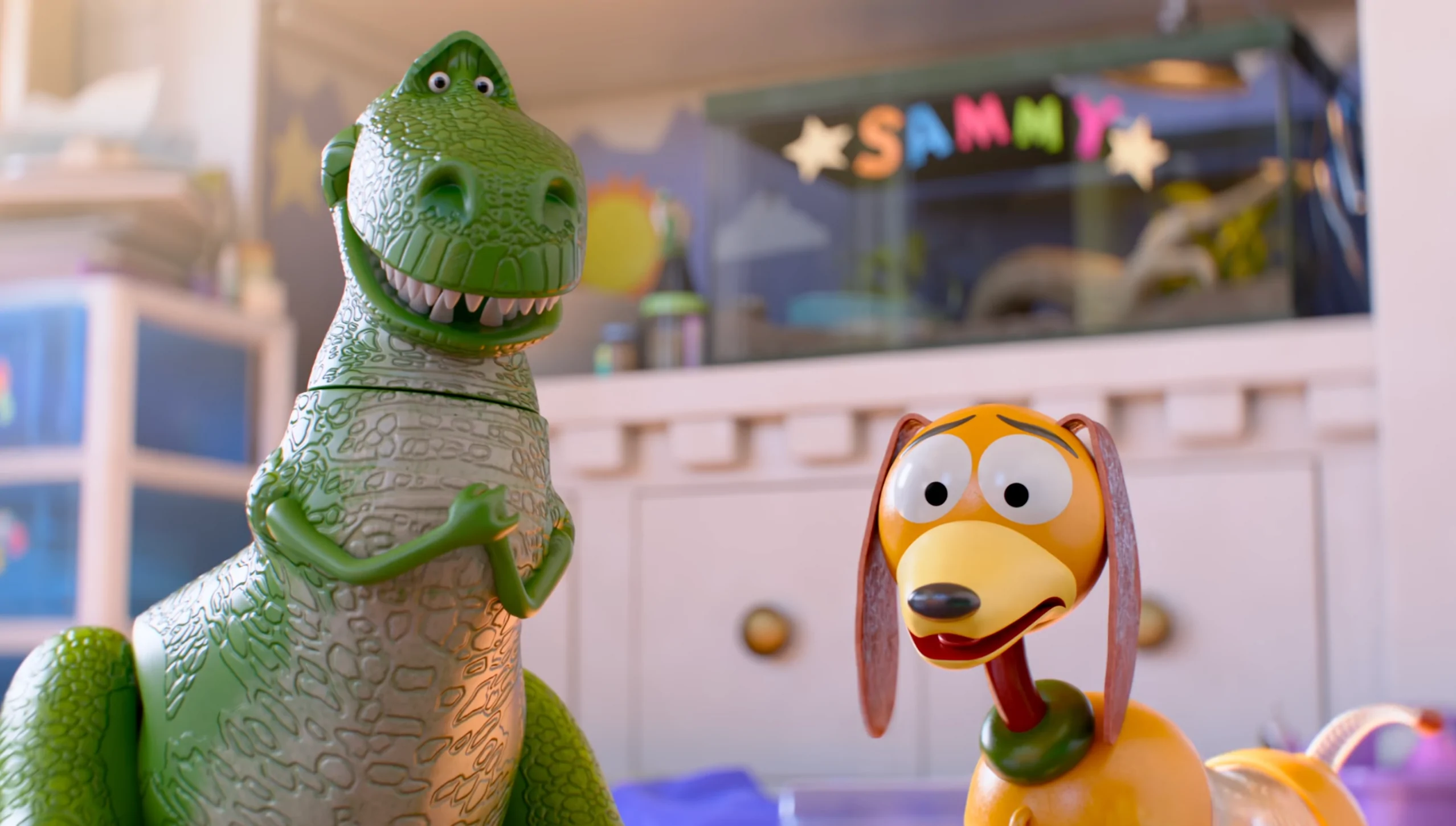
Get ready for a story you’re unlikely to hear anywhere else. While most major publications are singing the praises of Toy Story 5, which they certainly should from a business standpoint, there’s a bigger story here that is just as important. It turns out, the fifth film in the franchise is the second-in-a-row to miss the number of tickets sold in a domestic opening weekend. That signals that all of the record-breaking headlines are actually just reporting on movie ticket prices rising dramatically… and hoping you won’t notice they’re silent on the actual number of butts in seats.
With Toy Story 5 arriving to a reported $160 million domestic opening weekend, the obvious headline is that Pixar has just delivered the biggest raw opening weekend in the history of the Toy Story franchise.
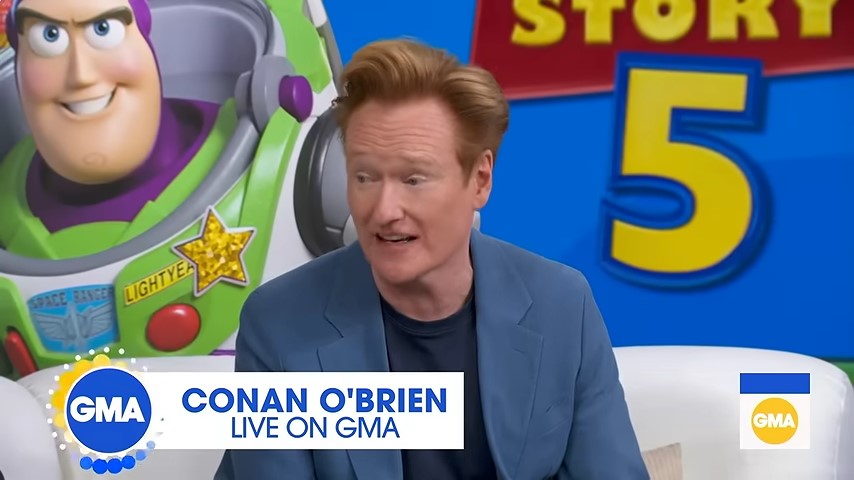
Conan O’Brien promoting Toy Story 5 – Good Morning America, YouTube
But raw dollars can be deceptive. A dollar in 1995, 1999, 2010 or even 2019 bought much more than a dollar does in 2026. When the opening weekends for all five mainline Toy Story films are adjusted for inflation, the franchise race becomes far more interesting.
The Inflation-Adjusted Toy Story Opening Weekend Ranking
| Rank | Film | Release Year | Original Domestic Opening | Approx. 2026 Dollars |
|---|---|---|---|---|
| 1 | Toy Story 3 | 2010 | $110.3M | $167.4M |
| 2 | Toy Story 5 | 2026 | $160.0M | $160.0M |
| 3 | Toy Story 4 | 2019 | $120.9M | $156.5M |
| 4 | Toy Story 2 | 1999 | $57.4M | $114.0M |
| 5 | Toy Story | 1995 | $29.1M | $63.3M |
By unadjusted dollars, the ranking is simple: Toy Story 5 is the franchise champion. At $160 million domestic, it beats Toy Story 4’s $120.9 million, Toy Story 3’s $110.3 million, Toy Story 2’s roughly $57 million wide opening, and the original Toy Story’s $29.1 million debut. However, that has little bearing on how many people went to see the movie; and isn’t that the most important stat for cultural relevance?
Once inflation is factored in, Toy Story 3 still appears to have the strongest domestic opening weekend in franchise history.
That is the key takeaway: Toy Story 5 is the biggest Toy Story opening ever in nominal dollars, but Toy Story 3 remains the stronger launch in inflation-adjusted terms.
Toy Story: The Modest Beginning That Changed Hollywood
The original Toy Story opened in November 1995 with $29.1 million domestically. That may look small compared with modern franchise numbers, but adjusted to 2026 dollars, it comes out to roughly $63 million.
For a brand-new animated property, that was a powerful launch. More importantly, it introduced audiences to the first fully computer-animated feature film and effectively created the modern Pixar brand. In context, Toy Story was not a small opening; it was the start of a new era.
Still, compared with the sequels, the original film played more like a long-legged discovery title than a front-loaded blockbuster. Families found it, word of mouth carried it, and Pixar became a household name after opening weekend rather than before it.

The Disney World Toy Story Magnet artwork – Disney
Toy Story 2: A Huge Leap Forward
Toy Story 2 is tricky to compare because it technically opened first in a limited release before expanding wide. For a fair comparison, the better number is its wide three-day Thanksgiving weekend, generally reported around $57.4 million.
Adjusted for inflation, that becomes roughly $114 million in 2026 dollars.
That is an enormous jump from the first film and a much-needed win for a Pixar that was only on its third film overall. The franchise had gone from promising new property to major family-event cinema. Toy Story 2 did not merely benefit from affection for the original; it confirmed that Woody and Buzz had become marquee characters. And ahead of Monsters Inc, it solidified Pixar as a studio that was worthy of purchase for a company like Disney.
Even so, its adjusted opening still lands below the later sequels. That reflects how dramatically the theatrical marketplace changed as Pixar grew, premium formats expanded, and opening weekends became more concentrated.
Construction continues on the Toy Story Land Popcorn Bucket snack kiosk – Photo Credit: Follow The Bradleys’ Fun
Toy Story 3: The Inflation-Adjusted Champion
The most impressive number in the franchise may still belong to Toy Story 3.
The 2010 sequel opened to $110.3 million domestic, which adjusts to about $167.4 million in 2026 dollars. That places it slightly ahead of Toy Story 5’s $160 million reported opening.
This makes sense culturally. Toy Story 3 arrived after an eleven-year gap, and it was sold not just as another animated sequel but as an emotional generational event. Children who grew up with the first two films were now teenagers or young adults, while a new generation of kids had discovered the characters at home.
That dual-audience appeal made Toy Story 3 feel bigger than a children’s movie. It was a nostalgia event before Hollywood became completely saturated with nostalgia events.
Additionally, it should be said that Toy Story 3 remains as the most-beloved film in the franchise. And that means it will likely sell more tickets overall at the end of its run in comparison to Toy Story 5 at the end of its box office run.
Toy Story 3 is the undisputed champ. Don’t let the access media confuse you.

Tim Allen as Buzz Lightyear flies through the sky carrying Tom Hank as Woody in Toy Story (1995), Pixar
Toy Story 4: Bigger Than It Looked, But Not Quite the Peak
Toy Story 4 opened in 2019 to $120.9 million domestic, a number that adjusts to roughly $156.5 million in 2026 dollars.
That means Toy Story 4’s adjusted opening was very close to Toy Story 5’s reported $160 million launch. In raw numbers, Toy Story 5 clearly surpasses it. In real purchasing-power terms, however, the two openings are much closer than the unadjusted comparison suggests.
Toy Story 4 also had a different challenge than Toy Story 3. The third film had been widely treated as a perfect emotional conclusion, so the fourth installment had to justify its existence. That it opened so strongly anyway showed the durable appeal of the brand, even if it did not quite reach Toy Story 3’s adjusted level.
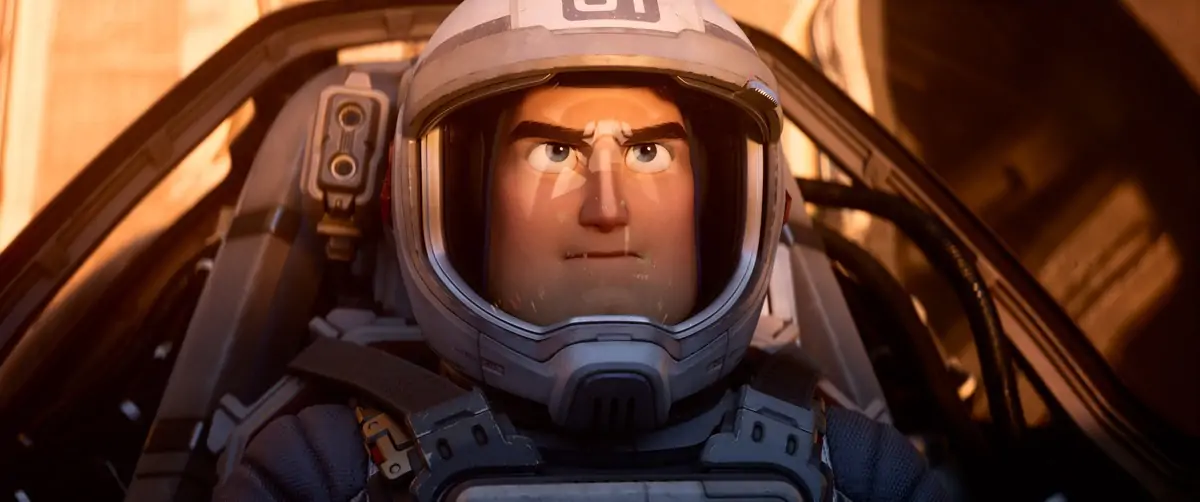
TRIAL AND ERROR – After being marooned on a hostile planet, Buzz Lightyear (voice of Chris Evans) attempts multiple test flights in an effort to recreate the complicated fuel required to reach hyperspeed so he and the whole crew can return to Earth. Directed by Angus MacLane (co-director “Finding Dory”) and produced by Galyn Susman (“Toy Story That Time Forgot”), Disney and Pixar’s “Lightyear” opens in U.S. theaters on June 17, 2022. © 2021 Disney/Pixar. All Rights Reserved.
Toy Story 5: A Raw-Dollar Record, But Not Quite the Real-Dollar Record
With a reported $160 million domestic opening, Toy Story 5 has delivered the franchise’s biggest unadjusted debut. That is a major theatrical win for Pixar and Disney, especially in a marketplace where family films have become more uneven and streaming habits have changed how parents decide what is worth seeing in theaters.
But the inflation-adjusted comparison slightly tempers the victory lap.
Toy Story 5 appears to beat Toy Story 4 by a small real-dollar margin, but it does not quite catch Toy Story 3. The gap is not huge — about $7 million in 2026 dollars — but it is enough to matter.
So the fairest way to put it is this:
Toy Story 5 has the largest domestic opening weekend in franchise history by the numbers on the ticket receipts. Toy Story 3 still has the largest opening when adjusted for inflation.

A screenshot from the Toy Story 5 Teaser Trailer – YouTube, Pixar
The Real Story: Toy Story Has Remained Shockingly Consistent
What stands out most is not simply which film ranks first. It is how strong the franchise has remained across three decades.
The original Toy Story opened to the equivalent of about $63 million today. Toy Story 2 nearly doubled that adjusted opening. Then Toy Story 3, Toy Story 4 and Toy Story 5 all landed in a remarkably tight modern blockbuster range, from roughly $156 million to $167 million in 2026 dollars.
That is an extraordinary level of consistency for a franchise that began in 1995.
However, also key to understanding what is going on, we must remember that after Toy Story 3, the franchise is not growing anymore. And that’s a problem. Yes, it’s one of the most popular film series on the planet. But with so many characters either changed or downsized in Toy Story 4 and 5, one might wonder if the changes may damage future plans. Are we at the point where a lack of Woody and Buzz acting like their original trilogy selves will cause audiences to go from stagnant to declining? It’s a question Disney surely needs to ask.
Still, most long-running series either burn out, reboot, or become heavily dependent on nostalgia. Toy Story has certainly used nostalgia, but it has also maintained enough family appeal to keep bringing new audiences into theaters.
The inflation-adjusted data shows that Toy Story 5 is not quite the biggest domestic opener the franchise has ever had in real terms. But it is close enough to prove something nearly as important: after thirty years, Woody, Buzz and the Pixar brand are still capable of opening at the very top tier of animated cinema. They should do everything in their power, then, to protect the characters and keep audiences interested. Toy Story remains at the top of audience care. It would be unwise to follow a Star Wars path and diminish the personalities portrayed by the toys. After all, even the biggest franchises can fall… and stagnation of ticket sales is the first sign it could be happening.
At the end of the day, however, any company would love to have that concern with a franchise performing as well as Toy Story over the decades.
Box Office numbers derived from The-Numbers.
