



Just weeks after the Trump administration’s Department of Justice cleared Paramount’s proposed acquisition of Warner Bros. Discovery, a coalition of 12 state attorneys general has launched what could become the biggest legal challenge facing the deal.
Led by California Attorney General Rob Bonta, the states filed a federal antitrust lawsuit seeking to block Paramount’s planned $110 billion acquisition of Warner Bros. Discovery, arguing that the transaction would create an entertainment giant with too much control over theatrical film distribution and cable television, ultimately leading to higher prices, less content, and fewer choices for consumers.
The lawsuit also threatens to derail David Ellison’s ambitious plan to reshape Hollywood through the merger, potentially delaying the transaction for months while the case works its way through federal court.
States Say the Deal Would Create a “Media Behemoth”
According to the complaint, the states argue the combined company would wield unprecedented power across multiple entertainment markets.
The lawsuit states: “After this merger, for every dollar generated by wide-release theatrical films and basic cable channels in this country, the combined company will pocket more than a quarter. This merger, in short, would create a media behemoth.”
READ: Supergirl Loses to Obsession in Third Weekend Box Office as James Gunn’s DC Disaster Continues
Among the concerns raised by the attorneys general are allegations that the combined company would:
- Control roughly 27% of wide theatrical film distribution revenue.
- Control more than 30% of major tentpole theatrical releases.
- Hold more than a quarter of basic cable television revenue.
- Gain significantly greater leverage over movie theaters and cable distributors.
The lawsuit argues those costs would ultimately be passed along to consumers through higher ticket prices, increased cable bills, and reduced competition throughout the entertainment industry.
Rob Bonta: Consumers Will Pay the Price
California Attorney General Rob Bonta issued an unusually forceful statement announcing the lawsuit.
“The unlawful merger of these two entertainment behemoths would lead to higher prices, lower quality, and less content for film and television, harming movie theaters, basic cable distributors, and ultimately, audiences on every sofa and movie theater seat in the U.S.,” he said.
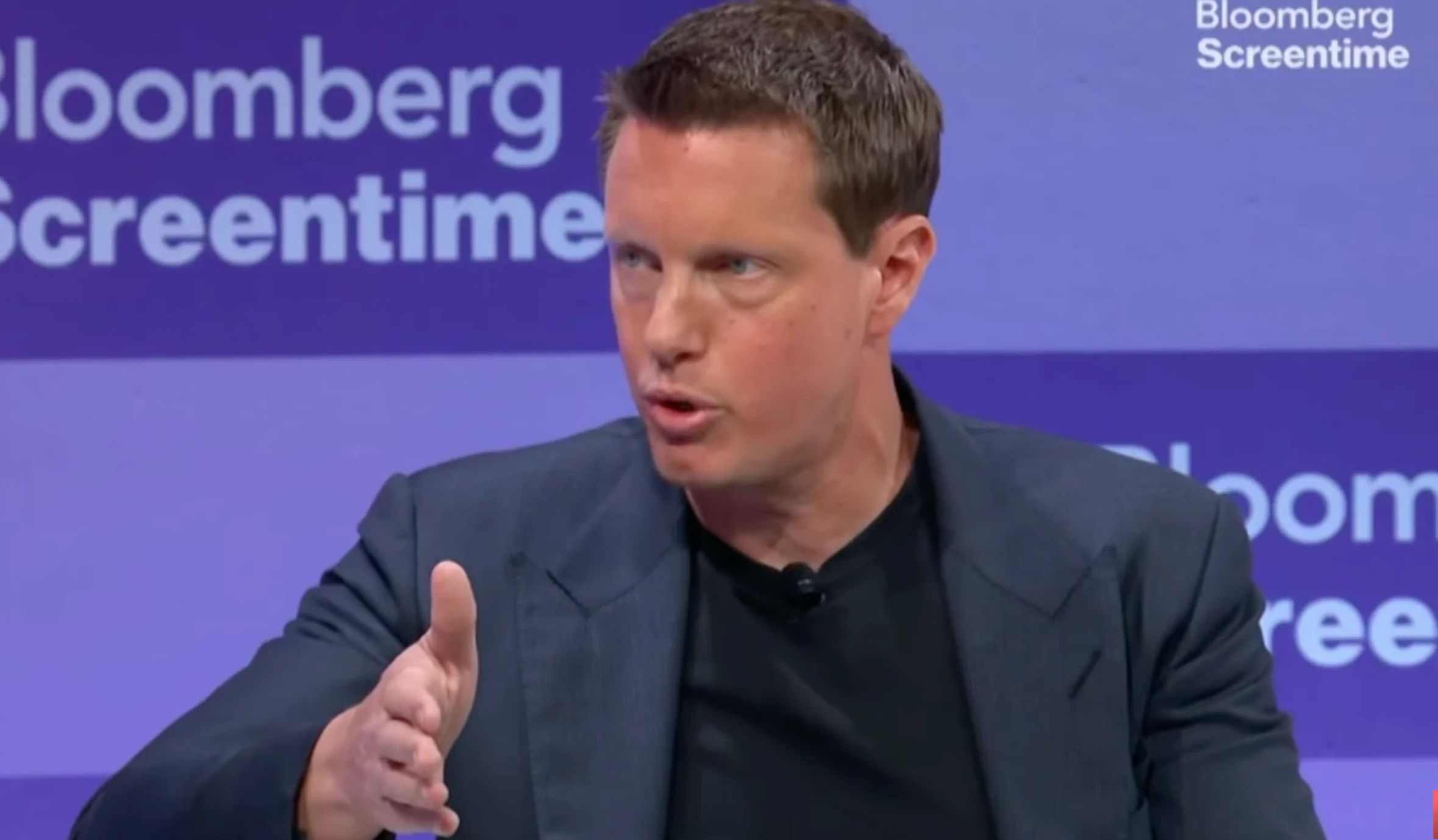
David Ellison in an interview with Bloomberg – YouTube, Bloomberg Podcasts
According to Deadline’s reporting, the states are particularly focused on theatrical distribution and cable television rather than streaming, arguing that the combined company would possess enormous negotiating leverage over exhibitors and television providers.
The complaint argues that distributors would risk losing major brands simultaneously—including CNN, TNT, TBS, Cartoon Network, Nickelodeon, HGTV, Food Network, and others—making it far more difficult to negotiate carriage agreements without accepting higher fees.
Paramount Fires Back
Paramount wasted little time responding.
A company spokesperson blasted the lawsuit, saying: “The lawsuit filed by the state attorneys general, in the most generous light, reflects a fundamentally flawed application of the antitrust laws and is wrong on both the facts and the law. We will vigorously defend the transaction and demonstrate that this challenge is inconsistent with sound competition policy and the competitive realities of the media marketplace.”
Paramount Pictures Logo – YouTube, ClosingLogosHD
The company continued: “Delaying this transaction will only harm entertainment workers who have already suffered over recent years as technology has disrupted their livelihood and cost California tens of thousands of entertainment jobs.”
That response reflects Paramount’s central argument throughout the approval process—that the merger is necessary for legacy Hollywood studios to compete against streaming giants like Netflix, Amazon Prime Video, and Disney+.
Twelve States Join the Challenge
Joining California in the lawsuit are:
- Arizona
- Colorado
- Connecticut
- Massachusetts
- Minnesota
- Nevada
- New Jersey
- New Mexico
- New York
- Oregon
- Washington
According to the filing, the coalition first asked Paramount and Warner Bros. Discovery to delay closing the transaction voluntarily until the litigation concludes.
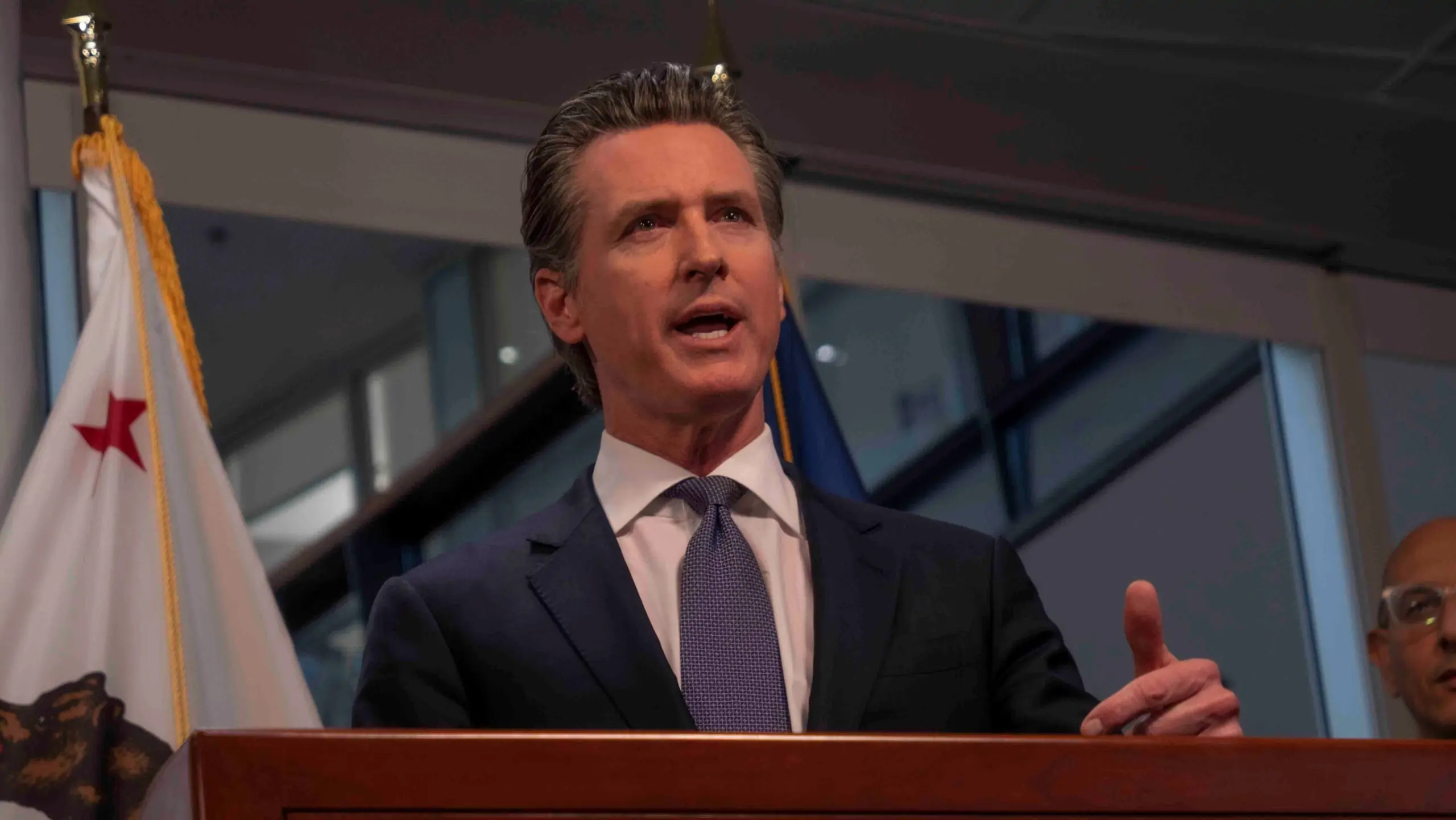
Gavin Newsom giving a speech – Office of the Governor of California, Public domain, via Wikimedia Commons
READ: Longtime James Bond Casting Director Says Next 007 Shouldn’t Be a Person of Color or Woman
If the companies refuse, the states say they intend to seek a temporary restraining order that would prevent the merger from closing while the case proceeds.
All 12 States Are Democrat-Led
The lawsuit is also likely to fuel political debate over antitrust enforcement in Hollywood.
All 12 states participating in the case are led by Democratic governors and Democratic attorneys general. Their challenge comes just weeks after President Trump’s Justice Department cleared the transaction, creating a direct conflict between federal regulators and a coalition of Democratic state governments.
Critics of the lawsuit have also pointed to what they see as an inconsistency in enforcement. Disney’s 2019 acquisition of most of 21st Century Fox dramatically reshaped the entertainment landscape, reducing the number of major Hollywood studios from six to five. Yet none of the states now suing Paramount challenged that transaction in court.

A CNN Report on President Trump – YouTube, CNN
The comparison is likely to become even more prominent because the Paramount-Warner Bros. Discovery merger would give the combined company ownership of CNN alongside CBS News—two of the country’s largest legacy news organizations. Although the states’ complaint does not raise concerns about editorial control or media influence, focusing instead on theatrical film distribution and basic cable markets, critics are already questioning why this merger has prompted an aggressive legal response while Disney’s acquisition of Fox did not.
Whether that difference reflects changing antitrust priorities, differences in the structure of the two transactions, or broader political considerations will almost certainly become part of the public debate as the litigation moves forward.
Timing Could Become Paramount’s Biggest Problem
Even beyond the legal merits of the case, the lawsuit creates an immediate financial headache for Paramount.
The acquisition agreement reportedly includes a $7 million-per-day “ticking fee” if the transaction has not closed by September 30. Any lengthy court battle could therefore cost Paramount hundreds of millions of dollars before a final ruling is ever reached.
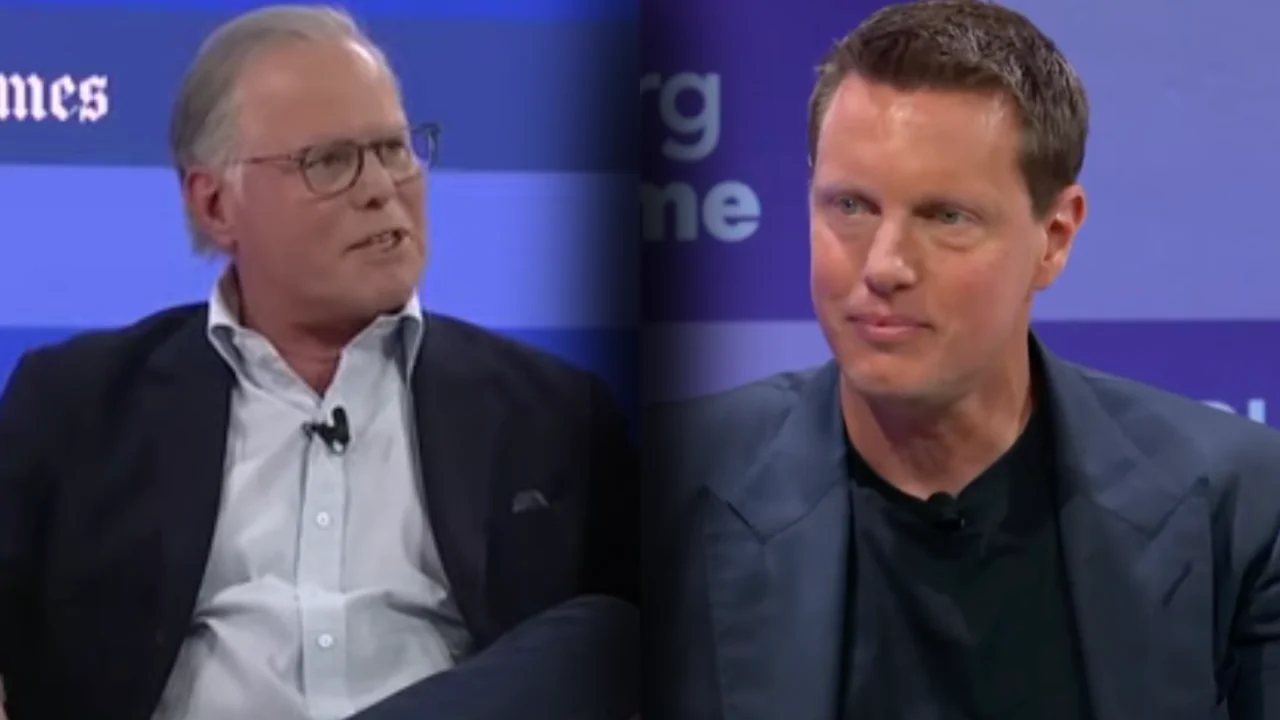
Source Photo Credit: YouTube, New York Times Events; YouTube, Bloomberg Podcasts
The situation bears similarities to California’s successful effort to delay Nexstar’s acquisition of Tegna, where state attorneys general secured an injunction despite federal approval already having been granted. That litigation significantly delayed the transaction and serves as a roadmap for opponents hoping to achieve the same result here.
Another Major Obstacle
The lawsuit represents perhaps the most significant challenge yet to David Ellison’s vision of combining Paramount and Warner Bros. Discovery into one of Hollywood’s largest entertainment companies.
Although federal regulators under the Trump administration declined to block the merger, state attorneys general retain independent authority to pursue antitrust enforcement, and this latest filing ensures the deal’s future will now be decided in court rather than solely by federal regulators.

The logo for Paramount Skydance – Paramount
Whether the states ultimately succeed remains to be seen, but one thing is now clear: the road to completing one of Hollywood’s biggest mergers just became considerably more complicated.
How do you feel about this lawsuit against the Paramount Warner Bros. merger? Sound off and let us know!
