


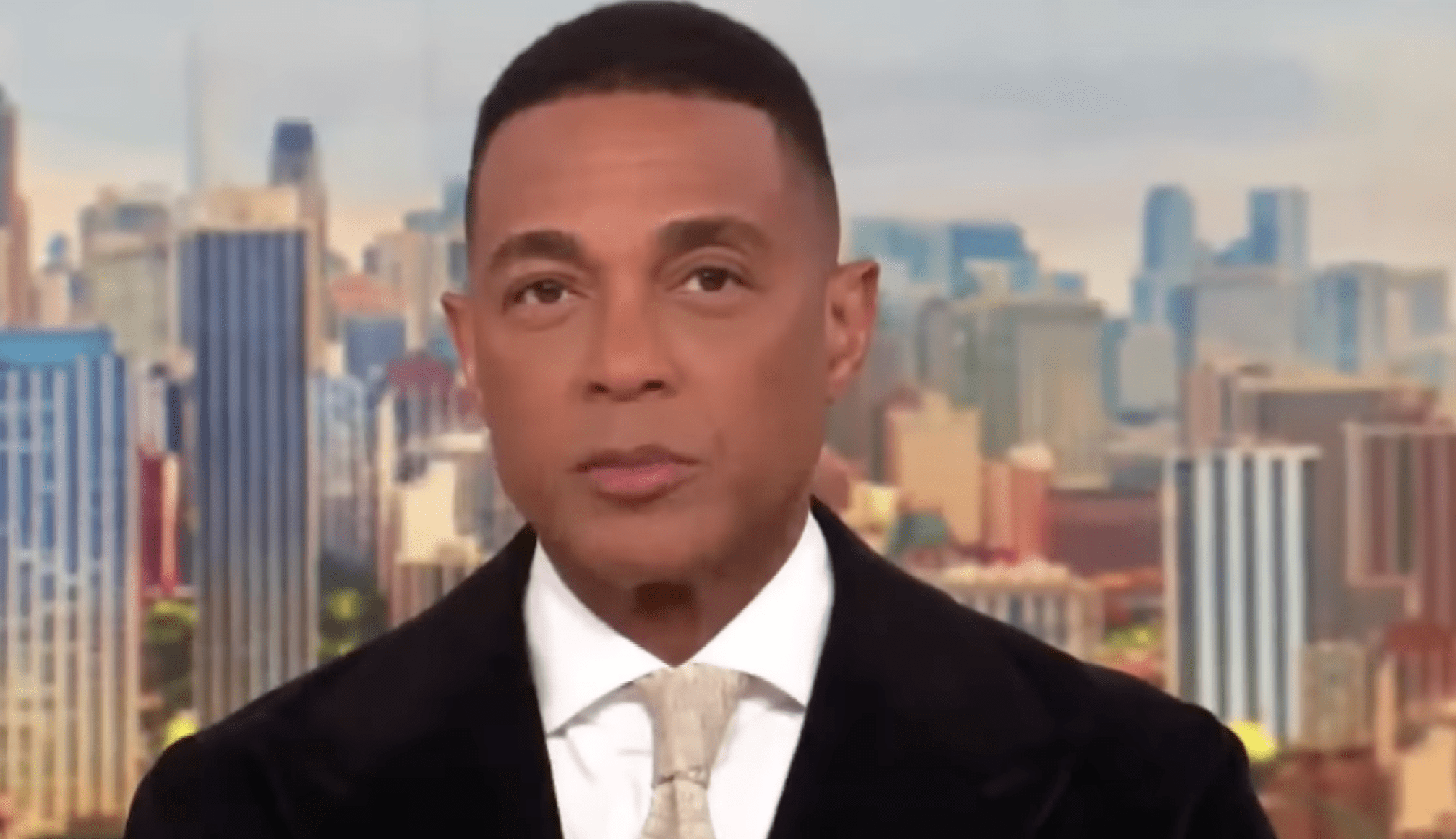
Don Lemon wants a federal judge to throw out the criminal charges against him stemming from an anti-ICE demonstration that disrupted a church service in Minnesota, with the former CNN anchor arguing that the prosecution is politically motivated because of President Donald Trump’s longstanding dislike of him.
Lemon’s attorneys filed a motion seeking dismissal of the federal civil-rights charges, claiming his prosecution violates the First Amendment and is the product of President Trump’s alleged “animus” toward the journalist.
“The record could not be more clear that Mr. Lemon has been a persistent target of President Trump’s ire before the events in Minnesota,” Lemon’s attorneys wrote, according to Variety.
The filing further alleges that the Justice Department “acted on the President’s animus by filing unprecedented charges against a journalist for doing his job.”
That’s Lemon’s argument. Federal prosecutors have alleged something considerably different: that Lemon’s conduct went beyond simply observing and reporting on a demonstration that entered a church while congregants were attempting to worship.
What Happened Inside Cities Church
The case stems from a January 18 demonstration at Cities Church in St. Paul, Minnesota.
Demonstrators targeted the church because one of its pastors, David Easterwood, also served as an ICE official. Protesters entered the church while a Sunday worship service was underway and disrupted the proceedings.
The Justice Department subsequently brought federal charges against numerous people connected to the incident.
Lemon was among them.

Don Lemon at the infamous Church protest – YouTube, SkyNews Australia
According to the Justice Department, Lemon was charged with conspiracy against the right of religious freedom at a place of worship under 18 U.S.C. § 241 and injuring, intimidating, or interfering with the exercise of religious freedom at a place of worship under 18 U.S.C. § 248.
The latter statute is part of the Freedom of Access to Clinic Entrances Act, or FACE Act, which also contains protections for people exercising their religious rights at places of worship.
The DOJ eventually charged dozens of people in connection with the incident.
Lemon has pleaded not guilty.
His defense now hinges heavily on the contention that, regardless of what the demonstrators themselves were doing, he was present solely as an independent journalist covering their actions.
Lemon Claims He Was Reporting, Not Participating
Lemon has maintained since his arrest that he did not participate in the demonstration and instead accompanied protesters into the church to document what happened.
“The government should not be permitted to use criminal prosecutions to chill journalism disfavored by the President,” Lemon’s attorneys wrote in the new motion. “The law has long recognized that bearing witness is not the same as taking part.”
His lawyers also directly dispute the government’s description of Lemon’s conduct.
According to Variety, Lemon’s attorneys accused the government’s case agent of falsely claiming in sworn affidavits that Lemon joined protesters by “chanting with agitators and obstructing parishioners’ path of travel.”
But Lemon identifying himself as a journalist does not, by itself, resolve the case.
The First Amendment provides substantial protections for journalists and newsgathering. It does not provide journalists with blanket immunity from generally applicable criminal laws if they participate in illegal conduct while covering an event.
Assistant Attorney General Harmeet Dhillon made that distinction explicit following the church demonstration.
“Journalism is not a badge or a shield that protects you from criminal consequences when you are part of a crime,” Dhillon said in January.
The central dispute is therefore not simply whether Lemon is a journalist. It is whether he was merely documenting the actions of the protesters or participating in conduct that prosecutors allege interfered with the rights of the worshippers inside Cities Church.
Lemon Had Advance Connections to the Protest Organizers
Lemon’s contention that he was simply an independent journalist documenting a demonstration becomes more complicated when considering how he came to be covering the event in the first place.
Lemon did not randomly encounter the demonstration after activists had already entered Cities Church. He had advance contact with people connected to the group and knew that activists were planning an action before it occurred.
One of the central figures involved was activist Nekima Levy Armstrong, who was subsequently charged by federal authorities in connection with the Cities Church demonstration. Lemon was with the group covering its activities before protesters entered the church and interviewed people involved with the demonstration.

Don Lemon at the Church Protest in Minnesota – YouTube, New York Post
That does not, by itself, establish criminal participation. Reporters routinely develop relationships with activists, political organizations, government officials, and other sources who provide advance notice of demonstrations and other newsworthy events.
The critical question is how much Lemon knew about the activists’ plans and whether his conduct remained limited to newsgathering once the demonstration began.
Lemon’s own livestream has consequently become an important part of the government’s case.
According to reporting from ABC News, prosecutors repeatedly cited Lemon’s video when laying out their allegations against him. The indictment alleges that Lemon was aware the activists intended to disrupt the church’s operations and uses statements made during his livestream as evidence supporting the government’s contention that his role went beyond that of a detached observer.
Lemon’s defense disputes that characterization.
Levy Armstrong has also defended Lemon, maintaining that he did not know beforehand that the activists intended to enter the church. That distinction is significant because there is a substantial difference between knowing activists are planning a demonstration and knowing they intend to enter and disrupt an ongoing religious service.
But Lemon’s advance relationship with people involved in the demonstration nevertheless provides important context that is missing when the incident is described simply as a journalist entering a church to document protesters.
He was following a group whose planned action he knew about in advance. He had access to individuals involved in organizing the demonstration. And he was positioned to livestream the group’s actions as the event unfolded.
The government must still prove that Lemon did something criminal with that knowledge.
Advance knowledge alone is not enough. Journalists are routinely tipped off about demonstrations specifically so they can be present when they occur, and treating that normal newsgathering practice as evidence of a criminal conspiracy would create obvious First Amendment concerns.
But the same principle cuts both ways.
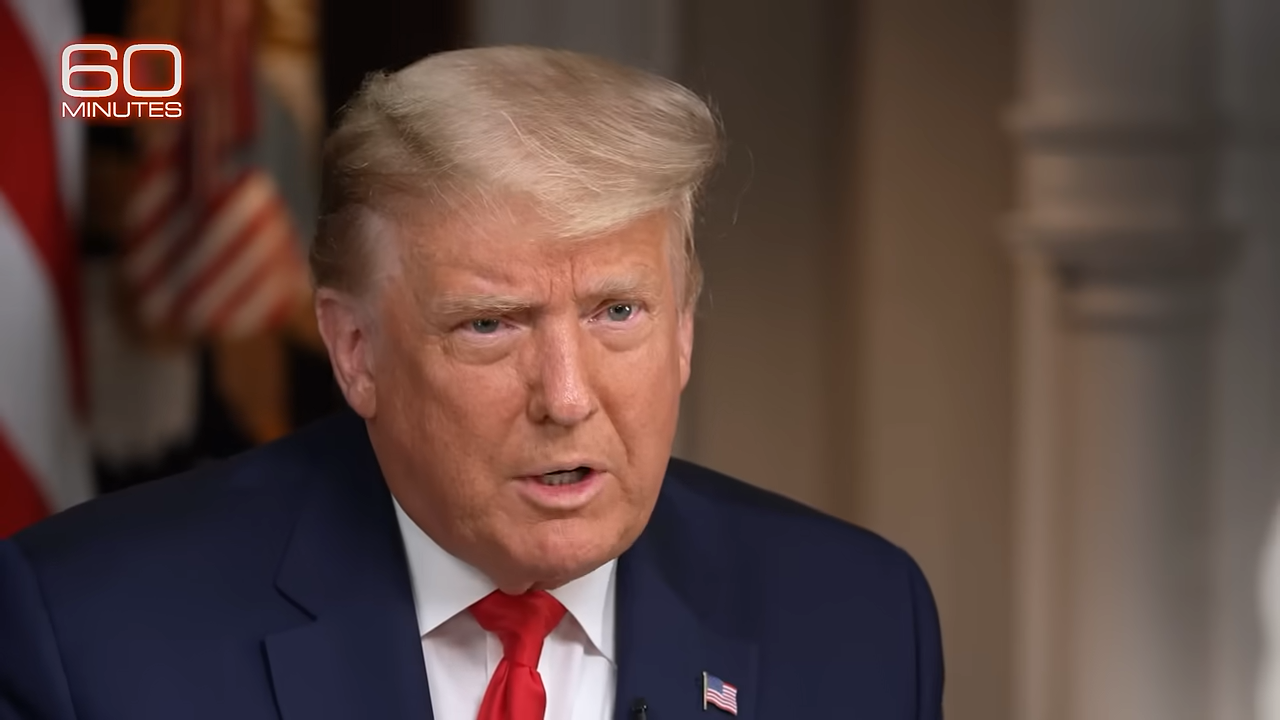
President Donald Trump in a 2020 interview – 60 Minutes, YouTube
Calling an activity journalism does not automatically transform every action taken alongside sources into protected newsgathering. If prosecutors can establish that Lemon knew the specific plan, agreed to assist it, or actively participated once protesters entered the church, his professional status would not necessarily shield that conduct.
That makes Lemon’s relationship with the organizers, what they told him before arriving at Cities Church, and what he subsequently did inside the building potentially central questions in the case.
Lemon’s defense wants the court to draw a bright line between the protesters and the journalist covering them.
The Justice Department’s case is built, at least in part, around the allegation that the evidence shows that line was not nearly so clear.
The Congregation Has First Amendment Rights Too
Much of Lemon’s new filing is built around his First Amendment rights as a journalist.
But those are not the only constitutional rights at issue.
The First Amendment also expressly protects the free exercise of religion, and federal prosecutors contend that the demonstration interfered with churchgoers attempting to exercise that right.
That distinction matters because Lemon’s defense cannot simply establish that covering protests is protected journalism. His attorneys must contend with the government’s allegation that his specific conduct crossed the line from reporting into participation.
Likewise, criticism of the protesters themselves does not establish Lemon’s guilt. The government ultimately has to prove its allegations against Lemon individually.
Lemon argues it cannot. The Justice Department believes it can.
A Grand Jury Indicted Lemon
Lemon’s attorneys can point to an unusual development that occurred before his eventual indictment.
The Justice Department initially attempted to obtain an arrest warrant for Lemon, but a federal magistrate judge refused to approve it.
The government subsequently went to the U.S. Court of Appeals for the Eighth Circuit seeking to force the approval of warrants against Lemon and several others. The appeals court declined to do so, although one judge on the three-judge panel concluded that probable cause existed.
That was not the end of the government’s case.
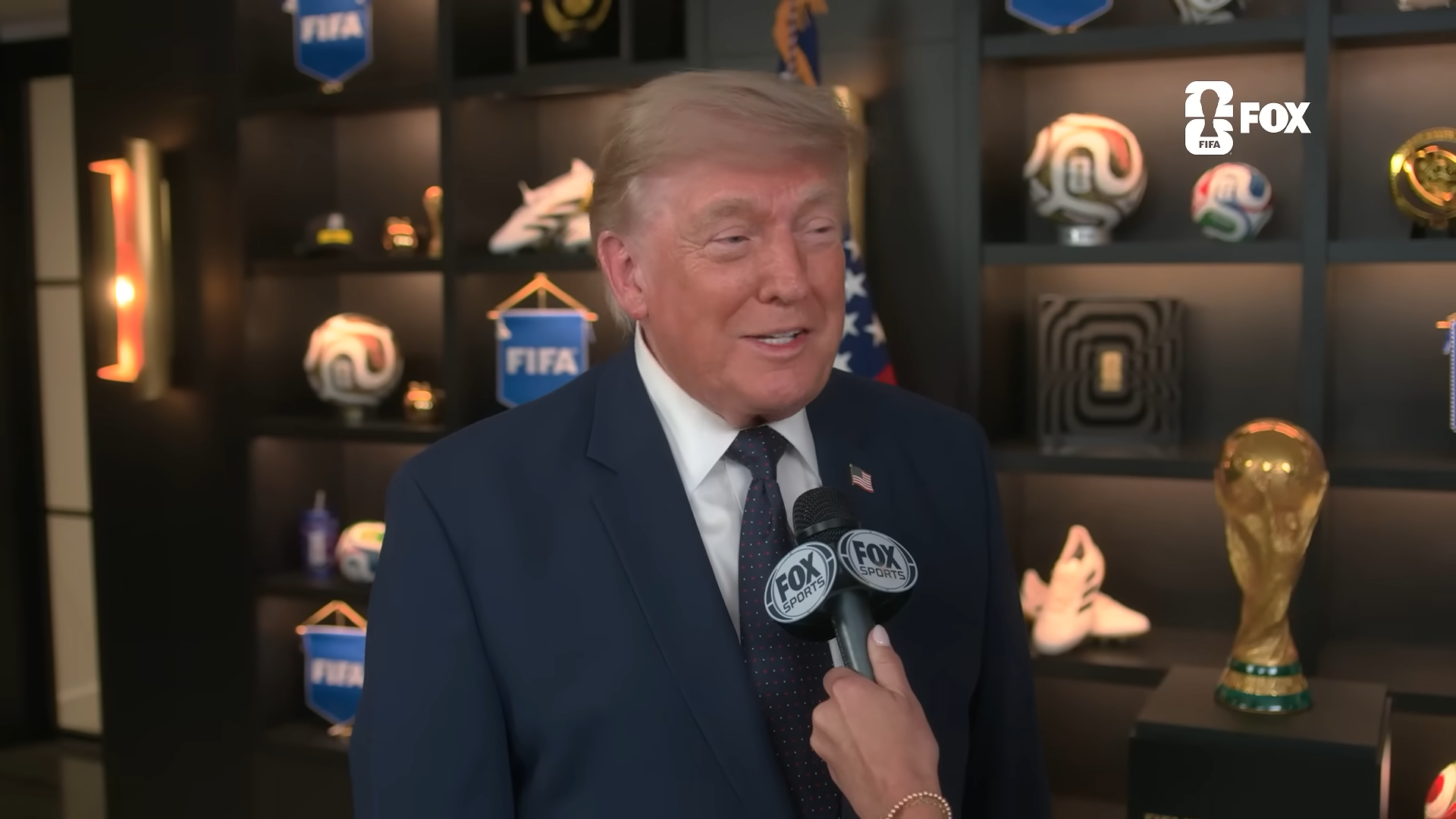
President Trump before the 2026 World Cup final – Fox Sports, YouTube
READ: Stephen Colbert’s Daughter Resigns From 60 Minutes…Where She Apparently Worked
Federal prosecutors subsequently presented the matter to a grand jury, which returned an indictment against Lemon and eight other defendants.
The earlier refusal to approve a warrant raised questions about the government’s initial case, but Lemon was ultimately indicted by a federal grand jury. His attorneys must now convince the court that the resulting prosecution should nevertheless be dismissed before the government can present its case at trial.
Lemon was arrested in Los Angeles on January 29 while covering the Grammy Awards. He was released the following day after pleading not guilty.
Lemon Says His Arrest Was Designed to Humiliate Him
Lemon’s attorneys are also pointing to the manner of his arrest as evidence of what they characterize as politically motivated treatment.
His legal team, led by attorney Abbe Lowell, claims it contacted the Justice Department after learning that Lemon might be indicted and offered to coordinate a voluntary surrender.
According to the defense, the government instead sent agents to arrest Lemon at his Los Angeles hotel around midnight.
“Instead of arranging the normal self-surrender after a charge would be filed,” Lemon’s attorneys wrote, the government “chose to deputize agents to his Los Angeles hotel — where he was covering the music industry’s annual awards show — to arrest him at midnight.”
His attorneys characterize the decision as an effort “to punish and humiliate Mr. Lemon.”
That accusation is now part of a much broader attempt by Lemon’s defense to portray virtually the entire prosecution as an extension of his long-running feud with President Trump.
Lemon Blames President Trump
President Trump’s dislike of Lemon is hardly a secret.
The two have publicly feuded for years, dating back to Lemon’s time at CNN, where he frequently criticized Trump and his administration.
Lemon’s attorneys are now attempting to turn that political hostility into a legal argument that the prosecution itself is unconstitutional.
Trump’s animosity toward Lemon “is well documented, stretching back over a decade,” his attorneys argued, claiming the Justice Department charged Lemon “as punishment for his First Amendment protected reporting on protests related to Operation Metro Surge in Minnesota.”
The defense also points to the White House’s reaction following Lemon’s arrest.

President Trump deliver the 2026 State of the Union Address – Fox News, YouTube
The official White House account on X posted an image declaring, “Don Lemon Arrested for Involvement in the St. Paul Church Riots,” accompanied by the caption, “When life gives you lemons…” and a chains emoji.
President Trump also continued publicly insulting Lemon after his arrest, including during last month’s rescheduled White House Correspondents’ Association Dinner.
None of that establishes that the criminal case was brought because President Trump ordered the Justice Department to target Lemon, however.
That is the leap Lemon’s attorneys are asking the court to make.
There is a significant legal difference between demonstrating that President Trump personally dislikes Lemon and demonstrating that federal prosecutors brought criminal charges against Lemon because of that hostility rather than the evidence arising from the church incident.
Lemon Wants the Case Stopped Before It Reaches a Jury
Lemon’s motion ultimately asks the court to accept a sweeping premise: that the Trump administration’s hostility toward him tainted a prosecution that otherwise resulted in a federal grand jury indictment.
Whether President Trump dislikes Don Lemon is hardly in dispute.
Whether that dislike makes the criminal charges against Lemon unconstitutional is an entirely different question.
Nor does Lemon’s status as a journalist automatically settle what happened inside Cities Church.
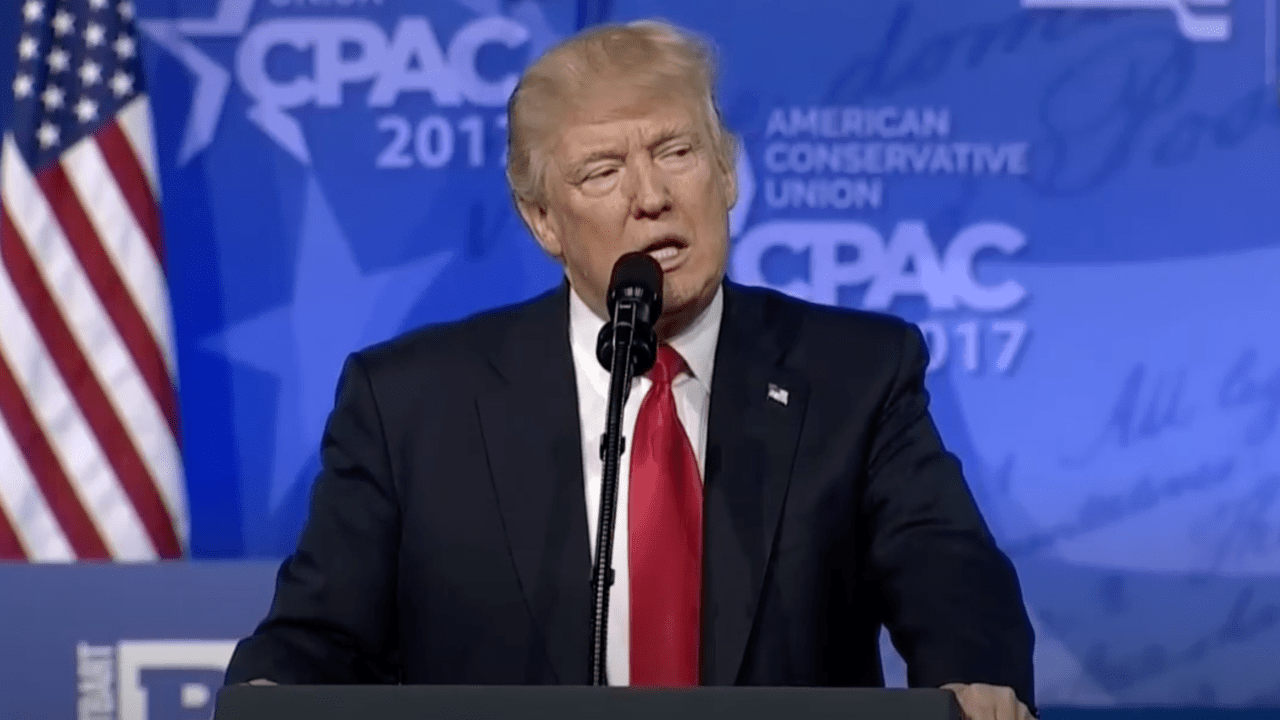
President Donald Trump speaks at CPAC in 2017 – YouTube, The New York Times
The First Amendment protects freedom of the press, but it also protects the free exercise of religion. Journalists have broad protections to observe, investigate, and report on controversial events, but those protections do not provide immunity if a journalist actually participates in conduct that violates federal law.
That leaves the central factual dispute intact.
Lemon says he entered Cities Church to document activists disrupting a worship service and did not join them.
Federal prosecutors allege his conduct went further.
Now Lemon wants a federal judge to conclude that the prosecution itself is constitutionally tainted and dismiss the charges before the Justice Department ever gets the opportunity to put its evidence before a jury.
How do you feel about Don Lemon and the charges brought against him by the federal government? Sound off and let us know!
