


Mark Ruffalo spent months fighting to stop Paramount Skydance’s acquisition of Warner Bros. Discovery. Now, in a remarkable twist, a new report claims the actor’s crusade may have actually helped Paramount get the deal across the finish line.
The New York Post reports that California Attorney General Rob Bonta faced mounting political pressure to settle his antitrust lawsuit against Paramount, with Gov. Gavin Newsom, Los Angeles Mayor Karen Bass, and others pushing toward a resolution as concerns grew about the potential economic consequences of continuing the fight.
But according to people cited by the Post, Ruffalo’s increasingly vocal involvement became another problem for Bonta.
The report describes Ruffalo as a “constant opponent” of a settlement and says the actor made what sources characterized as a damaging mistake when he connected his opposition to the Ellison family with Oracle’s contracts involving Israel.
One person familiar with the situation told the Post that Ruffalo’s comments “hurt Bonta’s effort” and created political problems for the attorney general among fellow Democrats.
If accurate, the irony is difficult to miss.
Ruffalo Spent Months Fighting the Merger
Ruffalo had become one of Hollywood’s most visible opponents of David Ellison’s proposed acquisition of Warner Bros. Discovery.
The actor helped spearhead an opposition campaign that collected signatures from thousands of entertainment industry workers. Earlier in the fight, Bonta even publicly acknowledged Ruffalo’s concerns, writing in February, “Mark, I hear you,” while saying he was speaking with fellow attorneys general about the transaction.
But Ruffalo’s campaign eventually expanded beyond traditional antitrust concerns.
In August, Paramount accused Ruffalo of employing antisemitic tropes after he criticized the Ellisons and Oracle’s business relationship with Israel. Ruffalo vehemently rejected that characterization, arguing that criticism of the Israeli government, corporate contracts, or executives doing business with Israel was not criticism of Jewish people.

Mark Ruffalo speaking at the 2017 San Diego Comic Con International, for “Thor: Ragnarok” Photo Credit: Gage Skidmore from Peoria, AZ, United States of America, CC BY-SA 2.0 <https://creativecommons.org/licenses/by-sa/2.0>, via Wikimedia Commons
READ: Alan Ritchson Claims Reacher Season 5 Was Canceled Because of Trump
The controversy nevertheless became entangled with the merger fight, with National Jewish Advocacy Center head Mark Goldfeder publicly questioning Bonta about Ruffalo’s influence on the case.
The Post now reports that the episode proved politically damaging to Bonta’s efforts.
That doesn’t mean Ruffalo single-handedly caused Bonta to settle. Far from it. The reporting points to a much broader pressure campaign involving California political leaders, Hollywood jobs, Paramount’s threat to potentially move operations out of California, and legal and financial pressure surrounding the lawsuit.
But according to the Post’s sources, Ruffalo apparently wasn’t helping his own side.
Ruffalo Was Still Demanding Bonta Reject a Deal
That makes Ruffalo’s behavior immediately before the settlement particularly notable.
As reports emerged that Paramount and Bonta were closing in on an agreement, Ruffalo publicly demanded that the attorney general refuse to compromise.
“Do not cave,” Ruffalo wrote in a message to Bonta, pointing to thousands of filmmakers and tens of thousands of petition signatures opposing the merger.
“You work for the people,” Ruffalo continued, arguing that those people would be harmed if Bonta allowed the deal to proceed.

(L-R): Mark Ruffalo as Smart Hulk / Bruce Banner and Tatiana Maslany as Jennifer “Jen” Walters/She-Hulk in Marvel Studios’ She-Hulk: Attorney at Law, exclusively on Disney+. Photo courtesy of Marvel Studios. © 2022 MARVEL.
Ruffalo and the Block the Merger coalition continued applying pressure as negotiations entered their final stages.
It didn’t work.
Bonta and the coalition of 12 attorneys general ultimately reached a settlement with Paramount, removing one of the biggest remaining obstacles to Ellison’s Warner Bros. Discovery acquisition.
And while Ruffalo was telling Bonta that “the people” wanted him to keep fighting, several major Hollywood labor organizations ultimately supported or welcomed provisions of the settlement.
IATSE President Matthew Loeb thanked Bonta for obtaining worker protections. The Directors Guild of America said the agreement contained “important binding and enforceable commitments.” The Teamsters supported the settlement, while SAG-AFTRA said it addressed some of the union’s concerns regarding production and investment.
That complicates Ruffalo’s attempt to present opposition to the merger as speaking for Hollywood workers as a whole.
Newsom and California Jobs Were a Much Bigger Problem
Ruffalo, however, was only one piece of a considerably larger puzzle.
The Los Angeles Times reports that Newsom privately advocated for a settlement and took Paramount’s threat to leave California “seriously.”
That threat had become increasingly important as negotiations dragged on.
Paramount made clear that Nashville, Tennessee, or Austin, Texas, were potential alternatives if California continued fighting the acquisition, according to the Post. Ellison reportedly reinforced the seriousness of that possibility directly to Bonta during a meeting late last week.
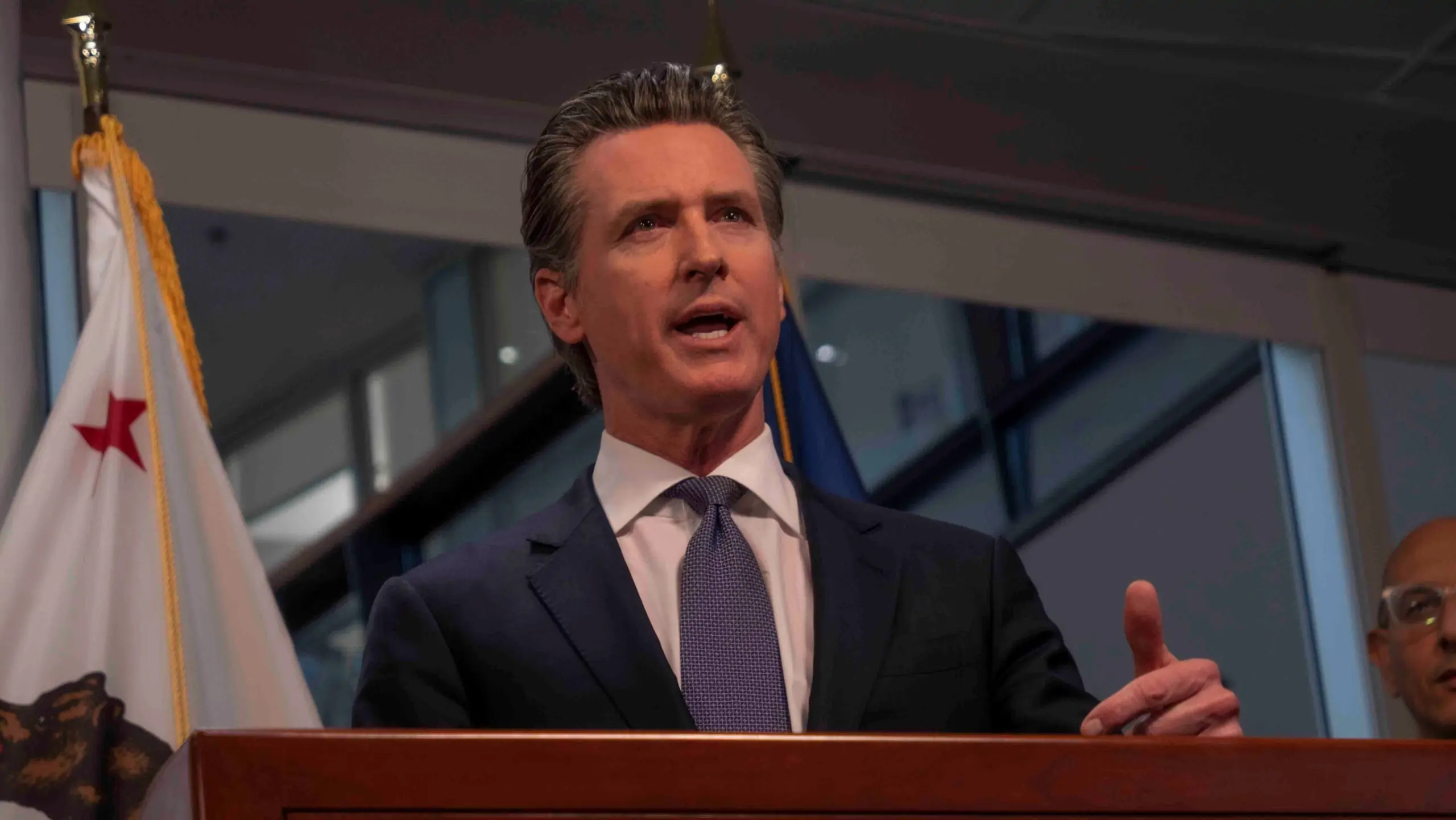
Gavin Newsom giving a speech – Office of the Governor of California, Public domain, via Wikimedia Commons
READ: Spike Lee Refuses to Comment on Paramount Warner Bros. Merger – “I Gotta Make Some More Movies”
Meanwhile, Paramount faced its own pressure to resolve the dispute before an October 1 deadline that would trigger millions of dollars per day in additional payments to Warner Bros. Discovery shareholders.
The settlement ultimately produced substantial concessions from Paramount.
Under the five-year, court-enforceable agreement, the combined company must release at least 30 movies annually during its first two years and 32 annually during years three through five. Paramount also agreed to at least $1.5 billion in additional domestic film-production spending, a $47.5 million workforce fund, requirements concerning independent films, protections involving cable negotiations, and an editorial independence board covering CNN and CBS.
Failure to meet the annual film-output requirements could even trigger financial penalties and force Paramount to divest Miramax.
Bonta stressed that the settlement should not be interpreted as his endorsement of the merger, but said the agreement resolved the antitrust concerns raised in the states’ lawsuit.
Ruffalo’s Campaign Appears to Have Backfired
Ruffalo isn’t responsible for all of the political, economic, and legal forces that ultimately pushed the parties toward settlement.
But the Post’s reporting presents an extraordinary possibility: one of the loudest celebrity voices trying to stop the Paramount-Warner Bros. Discovery merger became a political liability for the very effort he was attempting to support.
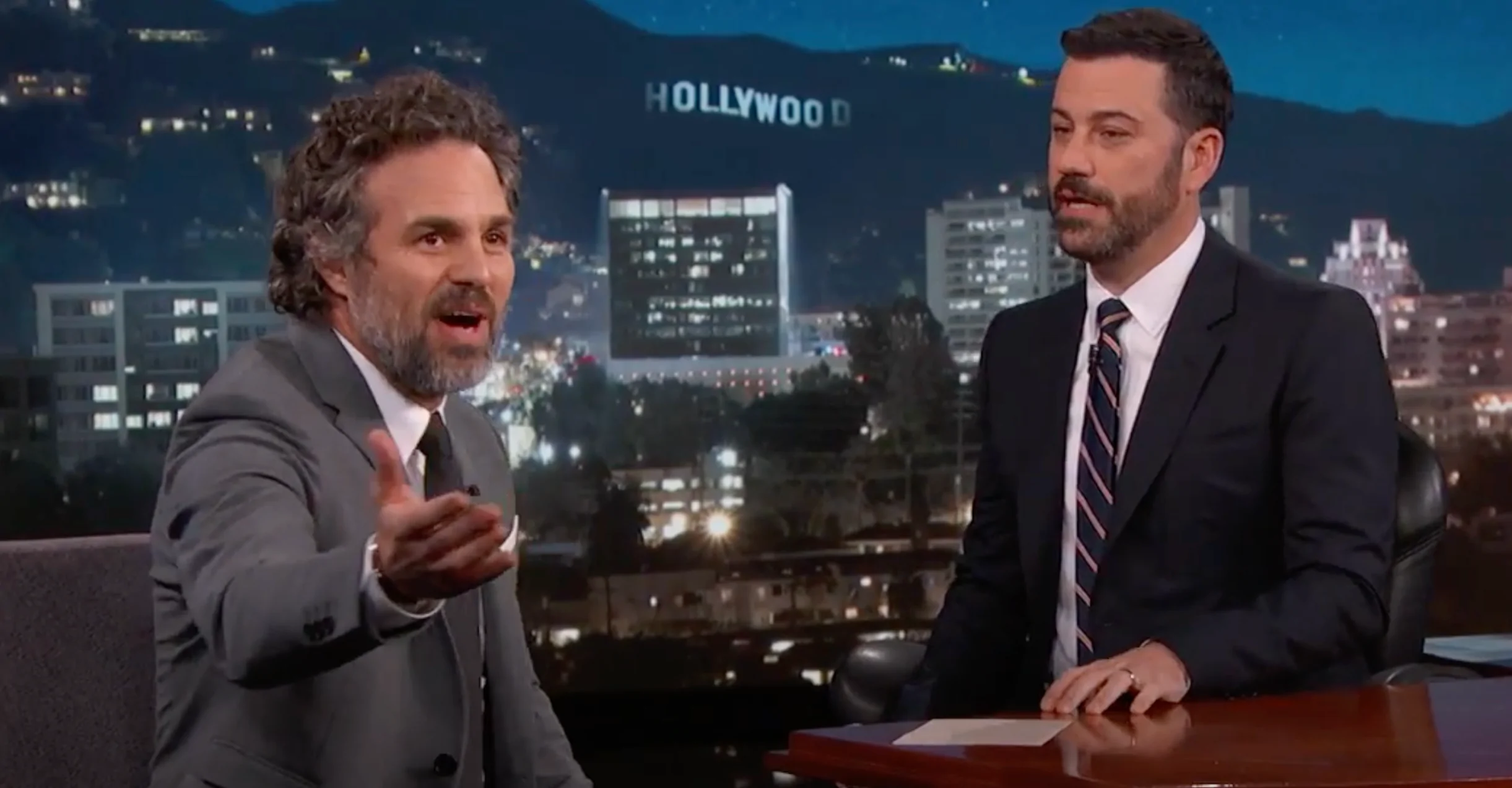
Mark Ruffalo being interviewed by Jimmy Kimmel – Youtube, Jimmy Kimmel Live
For months, Ruffalo demanded that Bonta fight Ellison, rallied Hollywood celebrities and entertainment workers against the merger, and publicly pressured Bonta right up until the final weekend.
But, according to people familiar with the negotiations cited by the Post, some of Ruffalo’s rhetoric instead damaged Bonta politically while Ellison was simultaneously applying pressure over jobs, California production, litigation costs, and the possibility of Paramount leaving the state.
Now Bonta has settled, Paramount has secured a pathway past the biggest remaining obstacle to its Warner Bros. Discovery acquisition, and Mark Ruffalo may have inadvertently helped make the outcome he spent months fighting considerably easier to achieve.
How do you feel about Mark Ruffalo and his battle against Paramount? Sound off and let us know!
UP NEXT: Bungie Claims It’s “Not Done With Destiny” and Vows to Restore Vaulted Destiny 2 Content
