


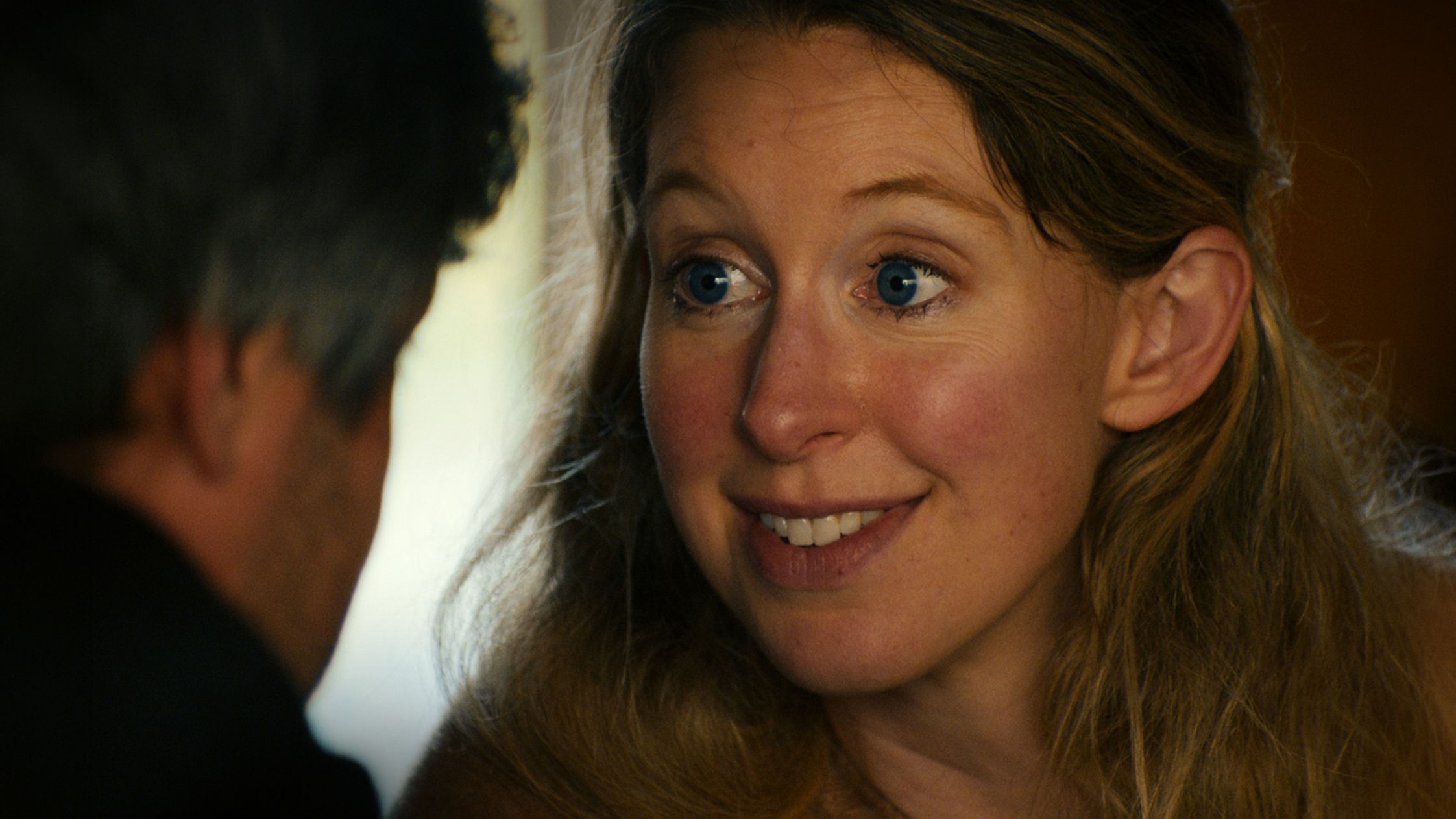
Can a psychological thriller and meta-documentary starring Nathan Fielder and Elizabeth Holmes really be one of the year’s best films? The premise sounds absurd, yet You Can See Everything makes a strong case that it can.
The film follows Elizabeth “Liz” Holmes, the convicted fraudster and founder of the health-tech firm Theranos, and her husband, Billy Evans, during the final 34 days leading up to her imprisonment and the strange aftermath that follows. In a unique and effective stylistic choice, comedian Nathan Fielder appears on screen as the documentarian, bluntly asking the couple questions to better understand the inner workings of Liz’s psyche. However, as Nathan delves deeper, he and the audience are left with more questions than answers.
Co-directors Nathan Fielder and Lance Oppenheim never treat this as a vindication story—clearing her name of her crimes is never on the table—and the three-hour character study stays compelling because the filmmakers keep luring you with a new hook that keeps you invested in this enigmatic, wide-eyed woman.

Photo Credit: You Can See Everything (A24, To Be Formed, Blow Out Productions)
The first half of the film locks onto the transfixing Elizabeth—freshly postpartum, trying to continue a normal family life in a rented Del Mar beach house while also bracing for an eleven-year incarceration and attempting to spin up Theranos 2.0. Fielder’s deadpan style and uncanny ability to prompt, ask questions, and dig further allow him to build a strange rapport with his subjects. He prods gently, then goes deeper: Is she lying? Does she even know she’s lying? Has she ever recognized a lie as a lie? We never really know because, just like Fielder in one of his reality-bending comedy bits, the cracks never show. The gap between his perception of her and how she sees herself grows wider with every exchange.
One of the film’s most revealing moments occurs after a frustrating conversation in which Nathan and Liz talk past one another, when Fielder pulls up the iconic “Who’s on First” comedy sketch. The bit draws a few half-smiles from her, and when Fielder presses her, it becomes apparent the joke went completely over her head—she genuinely thought the two men simply didn’t know the players’ names. Horrified, Fielder turns to Evans who confirms that her mind works in a different, beautiful way that others can’t comprehend. This brief exchange unlocks another quiet clue about the strange mechanics of their relationship and how she operates.
Two-thirds through the film, Liz reports to a federal prison in Bryan, Texas and, for a moment, it feels like the end of the story. Access vanishes overnight, Billy abruptly tells them not to bother with any more interviews, and Nathan’s requests to the warden for an on-camera interview exception go completely unanswered.
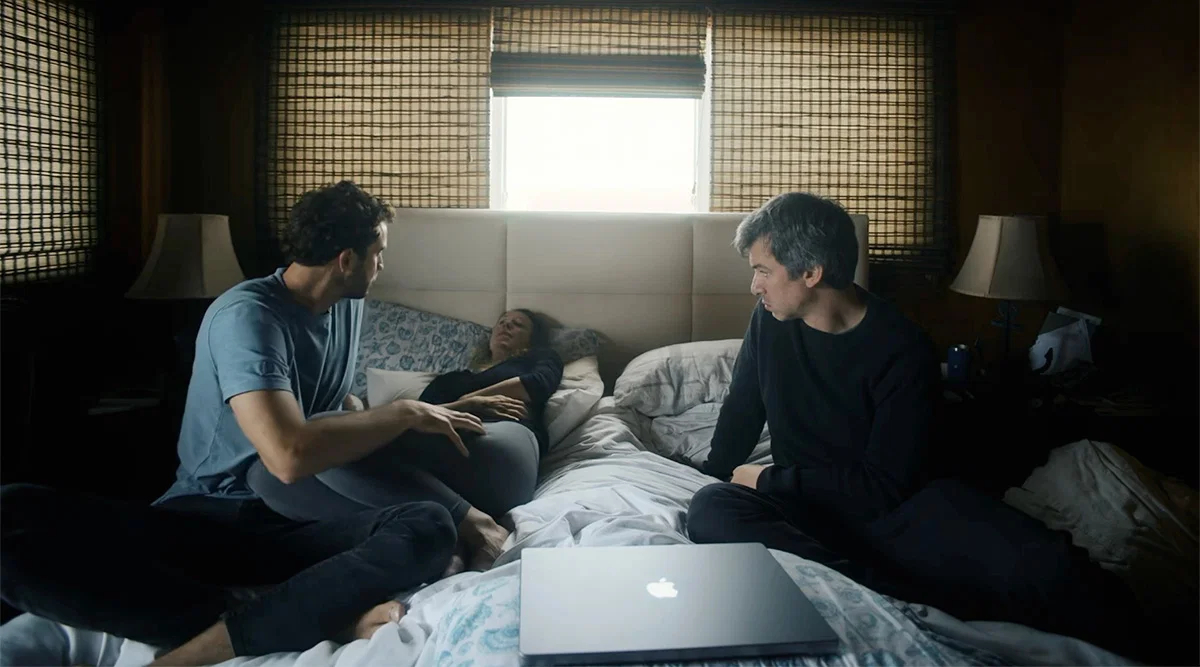
Photo Credit: You Can See Everything (A24, To Be Formed, Blow Out Productions)
Then the film takes a strange turn: Amanda Seyfried, the actress who portrayed Liz in the Hulu miniseries The Dropout (a performance that earlier brought Liz to tears), is enlisted to portray Holmes in re-created scenes for the documentary, from early studio negotiations to monitored phone calls and a prison visit between Nathan and Liz. Even when Seyfried and Fielder talk in seemingly real-life moments, their exchanges feel deliberately performed, creating a meta layer in which everything you see is “real life” being acted out. You’re left mulling over the themes of perception, intention, manipulation, and the blurred lines between performance and reality.
In a year when horror is dominating at the box office, Fielder and Oppenheim have made something that operates as an unconventional thriller. Cinematographer David Bolen works within the limits of verité, using table lamps for warm hard sidelight that carve deep shadows onto the subjects. Ari Balouzian’s eerie score reinforces this feeling with recurring wind-chime motifs that emphasize the unsettling aspects of Liz’s detachment and aloofness.
Just as 1988’s The Thin Blue Line redefined the genre, You Can See Everything is another watershed moment for documentaries. Its three-hour runtime is earned and you’re left pondering the questions of perception, performance, and self-deception right alongside Fielder
You Can See Everything opened in theaters on October 23, 2026.
Rating: 8.5/10
What’s your review of ‘You Can See Everything’? Sound off and let us know!
UP NEXT: Red Baron Pizza Shows Support for Employee From Viral Video Confrontation
