



Video game publisher and developer Capcom is being accused of race swapping one of their psychopath bosses in Dead Rising from “Asian to white likely due to racial stereotype.”

Larry Chiang in Dead Rising (2006), Capcom
X user Pirat_Nation shared a pair of screenshots of Larry Chiang from the original game and an unnamed white man wearing glasses and a baseball hat that appears to be a replacement for Chiang.
The user wrote, “Capcom’s Dead Rising Remake Race Swaps Psychopath Boss ‘Larry Chiang’ From Asian to White Likely Due to Racial Stereotype.”
Capcom’s Dead Rising Remake Race Swaps Psychopath Boss “Larry Chiang” From Asian to White Likely Due to Racial Stereotype pic.twitter.com/RivVu8aeuE
— Pirat_Nation 🔴 (@Pirat_Nation) July 5, 2024
The heavy set white man seen in the screenshot was recently featured in the Dead Rising Deluxe Remaster announcement trailer from Capcom USA. The game’s protagonist Frank West is seen in what looks to be a meat packing building and the fat white man greets him saying, “A customer?” This is a line that Chiang uses in the original game.
In the original game, Chiang is one of the game’s many psychopaths, or individuals who have lost their minds in the wake of a zombie outbreak and have become a violent threat to the survivors. He is clearly depicted as an Asian man and he also happens to be a butcher who is located in the Meat Processing Area in the Maintenance Tunnels during Case 8-4: The Butcher.
The character fits the bill as a psychopath given he believes zombies are “spoiled meat” and people are “fresh meat.” In fact, players first encounter him when they see him dragging Carlito Keyes into the meat processing area through a security camera. When players arrive at the scene, Chiang is hanging Carlito onto a meat hook and is preparing to butcher him to eat.
As West arrives, Chiang leans down over Keyes and says, “Ah! A customer.” He then turns around and confronts West with a maniacal laugh.
The accusation does indeed have merit given Capcom announced its localization team was altering video games for “cultural adaptation, preserving context, and inclusive storytelling” back in April.
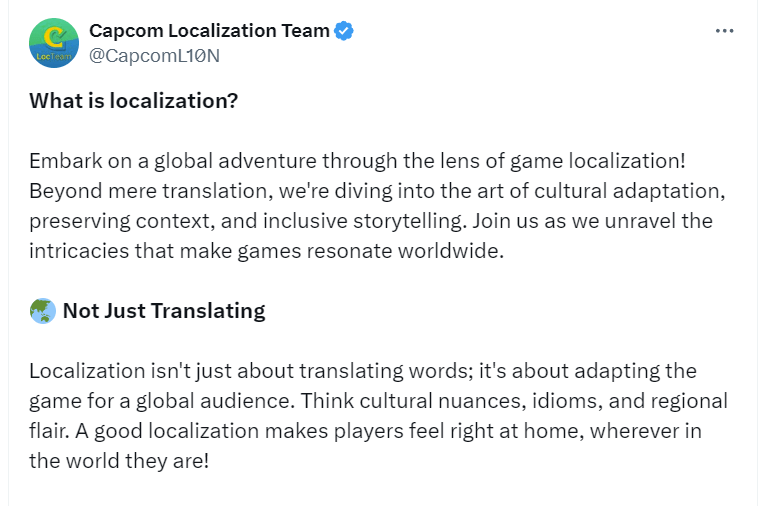
The company posted to X, “What is localization? Embark on a global adventure through the lens of game localization! Beyond mere translation, we’re diving into the art of cultural adaptation, preserving context, and inclusive storytelling. Join us as we unravel the intricacies that make games resonate worldwide.”
The account added, “Localization isn’t just about translating words; it’s about adapting the game for a global audience. Think cultural nuances, idioms, and regional flair. A good localization makes players feel right at home, wherever in the world they are!”
Capcom Localization Team on X
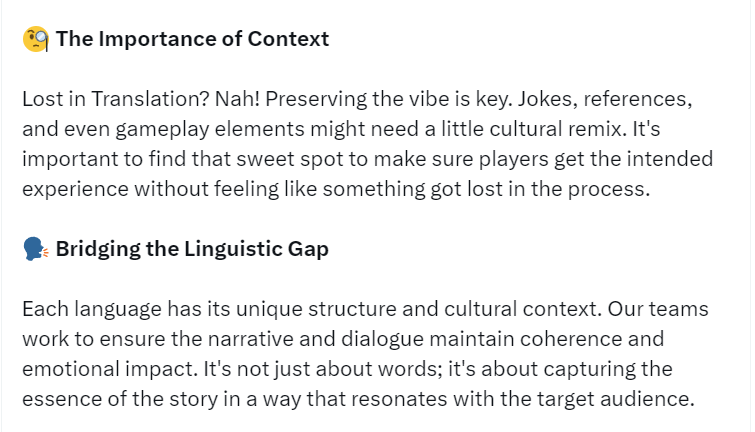
Next, they stated, “Lost in Translation? Nah! Preserving the vibe is key. Jokes, references, and even gameplay elements might need a little cultural remix. It’s important to find that sweet spot to make sure players get the intended experience without feeling like something got lost in the process.”
“Each language has its unique structure and cultural context. Our teams work to ensure the narrative and dialogue maintain coherence and emotional impact. It’s not just about words; it’s about capturing the essence of the story in a way that resonates with the target audience,” the Capcom Localization Team wrote.
Capcom Localization Team on X
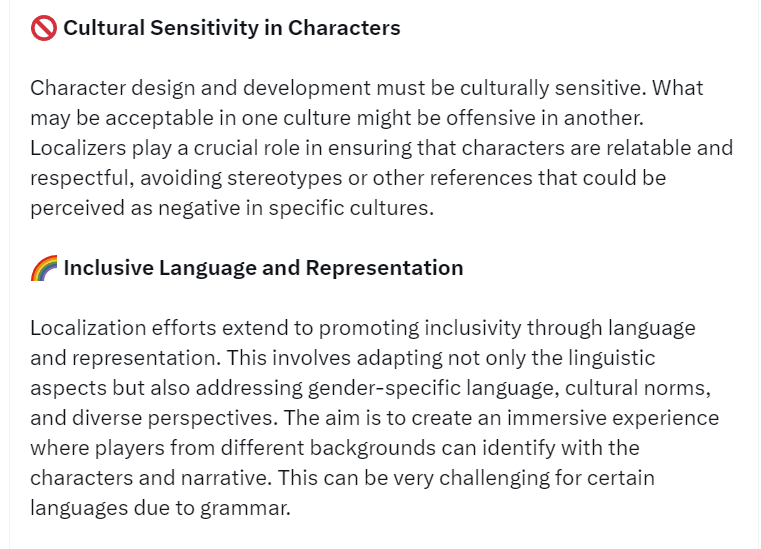
The team then announced cultural sensitivity changes in characters and inclusive language and representation.
For cultural sensitivity in characters the company wrote, “Character design and development must be culturally sensitive. What may be acceptable in one culture might be offensive in another. Localizers play a crucial role in ensuring that characters are relatable and respectful, avoiding stereotypes or other references that could be perceived as negative in specific cultures.”
As for inclusive language and representation it said, “Localization efforts extend to promoting inclusivity through language and representation. This involves adapting not only the linguistic aspects but also addressing gender-specific language, cultural norms, and diverse perspectives. The aim is to create an immersive experience where players from different backgrounds can identify with the characters and narrative. This can be very challenging for certain languages due to grammar.”
Capcom Localization Team on X
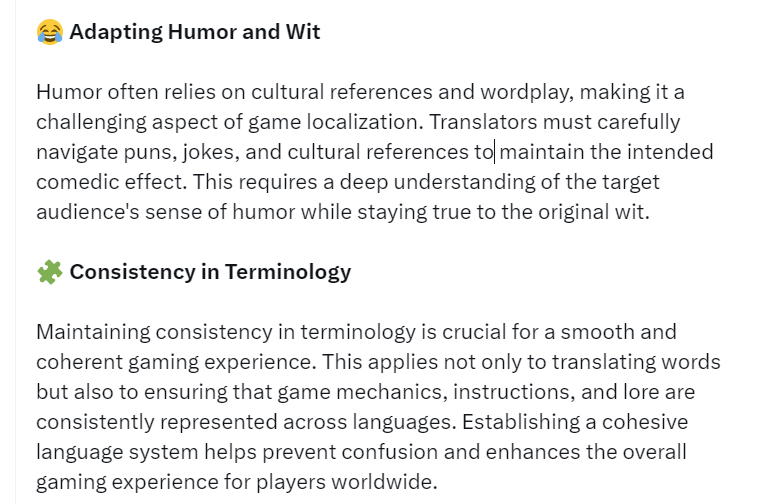
Capcom continued the post, “Humor often relies on cultural references and wordplay, making it a challenging aspect of game localization. Translators must carefully navigate puns, jokes, and cultural references to maintain the intended comedic effect. This requires a deep understanding of the target audience’s sense of humor while staying true to the original wit.”
The post concludes with “Consistency in Terminology.” The section reads, “Maintaining consistency in terminology is crucial for a smooth and coherent gaming experience. This applies not only to translating words but also to ensuring that game mechanics, instructions, and lore are consistently represented across languages. Establishing a cohesive language system helps prevent confusion and enhances the overall gaming experience for players worldwide.”
Capcom Localization Team on X
What do you make of race swapping Larry Chiang from an Asian man to a white man?
