


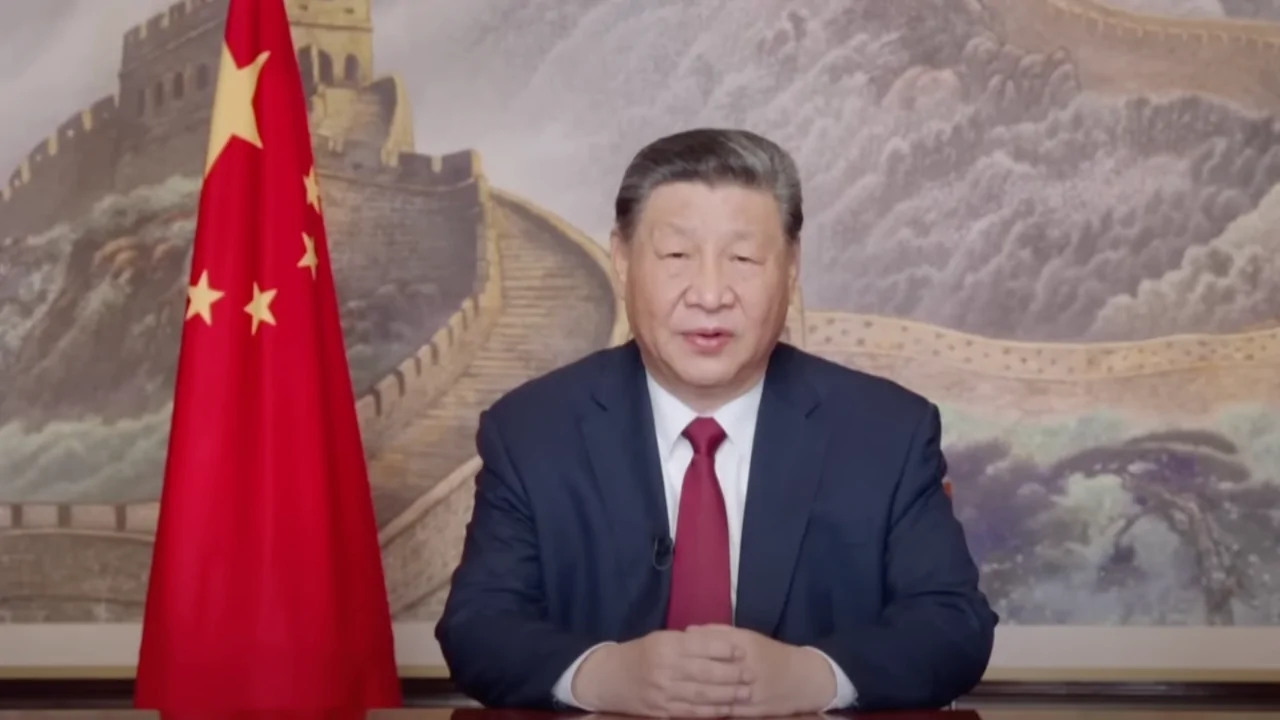
With President Donald Trump enacting a sweeping 125% tariff on Chinese imports, Beijing is rattling its own saber with talk of a potential ban on American movies making waves across state media. But the real story? That China Hollywood ban wouldn’t pack much of a financial punch for U.S. studios. At least not anymore.
Donald Trump sits down at an interview with Sean Hannity – YouTube, Fox News
For all the drama, China’s contribution to Hollywood’s bottom line has quietly eroded over the last several years. What once might have triggered panic in studio boardrooms now registers as little more than a headline. The numbers prove it: China just doesn’t matter like it used to.
Trump Resets the Global Playing Field
President Trump this week implemented a new tariff structure that redefines the United States’ trade posture. Imports from most countries were dropped to a flat 10% rate, effective immediately, as part of a 90-day reset window for trade negotiation.
China, however, was hit hard—with a 125% tariff placed on all goods entering the U.S., effective April 9.
Donald Trump clasps hands with Sylvester Stallone – YouTube, SkyNews Australia
Beijing has pushed back with tariffs against the U.S., with state-aligned outlets also hinting at retaliation through cultural restrictions—including the removal of American movies from the country’s theaters.
Ten years ago, such a move might have sent shockwaves through the industry. In 2025, however, the mood should be more skeptical than scared—and one widely circulated chart helps explain why.
Alan Ng’s Box Office Breakdown Tells the Real Story
Alan Ng, Editor-in-Chief of Film Threat, compiled a data-driven chart that puts the China-Hollywood relationship in stark perspective.
I got some of the China box office numbers wrong. Here’s an updated chart. Godzilla outperformed every other US film. Avatar and Jurassic Park will be the only winners in China this year. pic.twitter.com/i3xg5e9Nwm
— Alan Ng @ Film Threat (@mypalal) April 10, 2025
READ: Black Power Ranger Controversy Ignites Hollywood Media Spin—But the Original Actor Isn’t Having It
Ng tracked the Chinese box office performance of 10 major American films from the last year—including Deadpool & Wolverine, Moana 2, Dune Part 2, and Inside Out 2—and compared it to each film’s global total.
His findings were definitive:
- Combined global box office: $8.86 billion
- Combined China earnings: $429 million (just 5% of total)
- Studio take-home after China’s revenue split: $107.3 million total
That’s not per film. That’s across all ten films combined. That $107 million is split between Disney, Universal, WBD, and Paramount. So how much would these studios actually be losing if a China Hollywood ban went into place?

JOY AND ANXIETY — Disney and Pixar’s “Inside Out 2” returns to the mind of freshly minted teenager Riley just as a new Emotion shows up unexpectedly. Much to Joy’s surprise, Anxiety isn’t the type who will take a back seat either. Featuring the voices of Amy Poehler as Joy and Maya Hawke as Anxiety, “Inside Out 2” releases only in theaters Summer 2024.© 2023 Disney/Pixar. All Rights Reserved.
Several films earned so little in China, they barely register:
- Wicked: $2.1 million
- Sonic 3: $6 million
- Moana 2: $15 million
- Mufasa: $16 million
Only Godzilla vs. Kong broke into meaningful territory, with $134 million from Chinese theaters—but even that accounted for just 23% of its global total, and it’s the exception, not the rule.
Hollywood Still Bows to Beijing—Even as the Numbers Fade
Despite China’s shrinking value to American studios, Hollywood hasn’t stopped trying to please Beijing.
Throughout the 2010s and into the mid-2020s, U.S. studios have repeatedly altered content, changed promotional materials, and removed politically sensitive elements—not because it paid off, but because they feared being locked out of the Chinese market.
That behavior hasn’t gone away. In fact, it continues even as Chinese audiences increasingly ignore imported films.
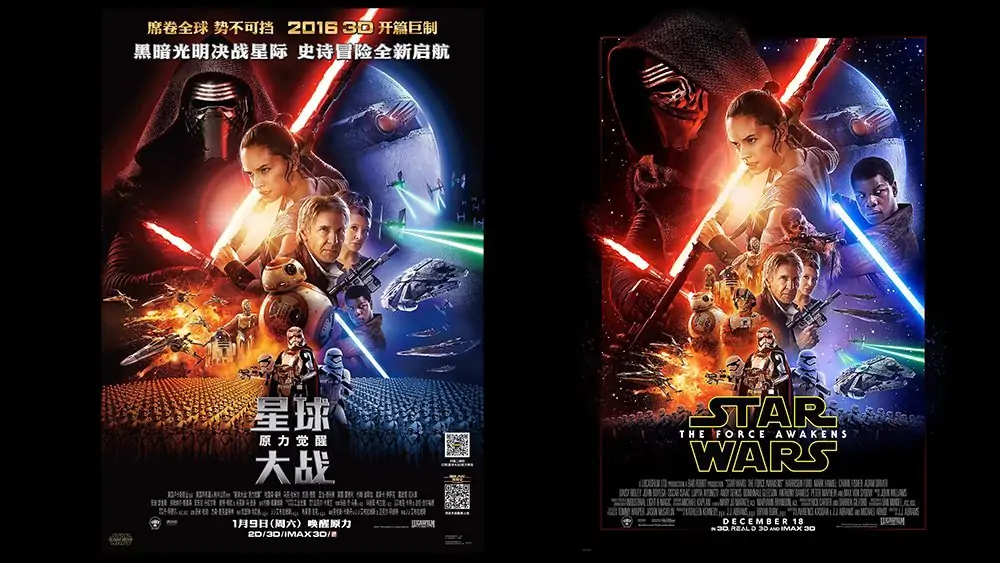
A comparison of the American and Chinese Posters for Star Wars Episode VII: The Force Awakens – X, @knightsofmelvin
Disney remains the clearest example:
- In 2020, Mulan was filmed in Xinjiang, and the credits openly thanked Chinese regional authorities, including those linked to global controversy.
- Black Panther’s promotional art masked Chadwick Boseman entirely in the Chinese market despite the same poster showing his face everywhere esle.
- Star Wars minimized John Boyega’s character on Chinese posters, reducing one of the film’s leads to the background.
And the trend hasn’t reversed. As recently as this past year, studios have adjusted trailers, cut scenes, and added dialogue just to satisfy Chinese censors—even though many of these films ultimately earned less than 5% of their global take from China.
Black Panther isn’t going to do well in China. pic.twitter.com/ZXlhzZSvyU
— Ian Miles Cheong (@stillgray) January 30, 2018
READ: Baby Giraffe Born at Disney’s Animal Kingdom, Can be “Spotted” Now at Kilimanjaro Safaris
Hollywood is still chasing approval from a country that no longer delivers box office success—and that signals a deeper issue: fear has replaced strategy.
Even as data shows diminishing returns, the industry’s posture hasn’t changed. It continues compromising creative decisions for a market that now barely registers at the global level.
A Ban Now Would Be Symbolic, Not Substantial
If China moves forward with banning U.S. films, it will likely be more about messaging than money. It’s a declaration of cultural distance, not a major economic blow. And the U.S. media will inevitably blow the issue up as some major issue that cripples the U.S. film industry, but the numbers just don’t support such a claim.
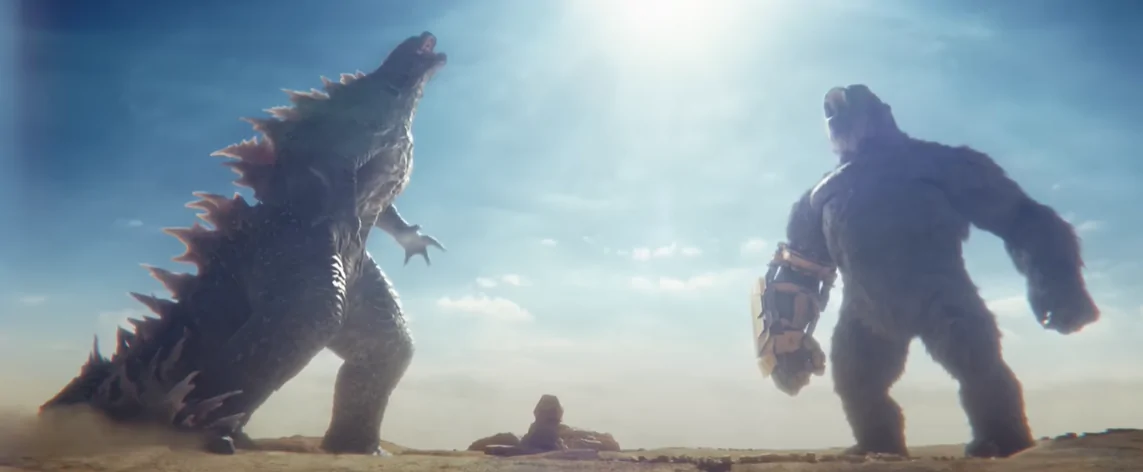
Godzilla and Kong in Godzilla x Kong: The New Empire (2024), Legendary Pictures
At most, a China Hollywood ban would remove a small percentage of revenue from an already struggling source. The latest box office numbers show that few films even exceed 6% of their worldwide total from China. In many cases, that number sits closer to 1% or less.
Alan Ng’s Work Clarifies the Shift
Ng’s chart has become the clearest summary of the changing landscape. It takes the narrative of China as Hollywood’s financial lifeline and shatters it.
His research shows not only how limited the financial impact really is, but also how outdated the industry’s old assumptions have become. For years, executives have treated access to China as a non-negotiable necessity. Today, it’s a bonus at best—and one with rapidly declining value. A China Hollywood ban won’t break the film industry despite what the media might tell you.

President Xi Jinping, leader of the Chinese Communist Party – YouTube, The Telegraph
Ng’s contribution reminds studios and audiences alike that the numbers don’t lie. And those numbers now point to one conclusion.
Losing China isn’t a crisis—it’s a rounding error.
Do you think the China Hollywood ban will go into effect? Sound off in the comments and let us know!
UP NEXT: Universal’s Halloween Horror Nights Trademark in UK Could Hint at Spooky Future for New Theme Park
