


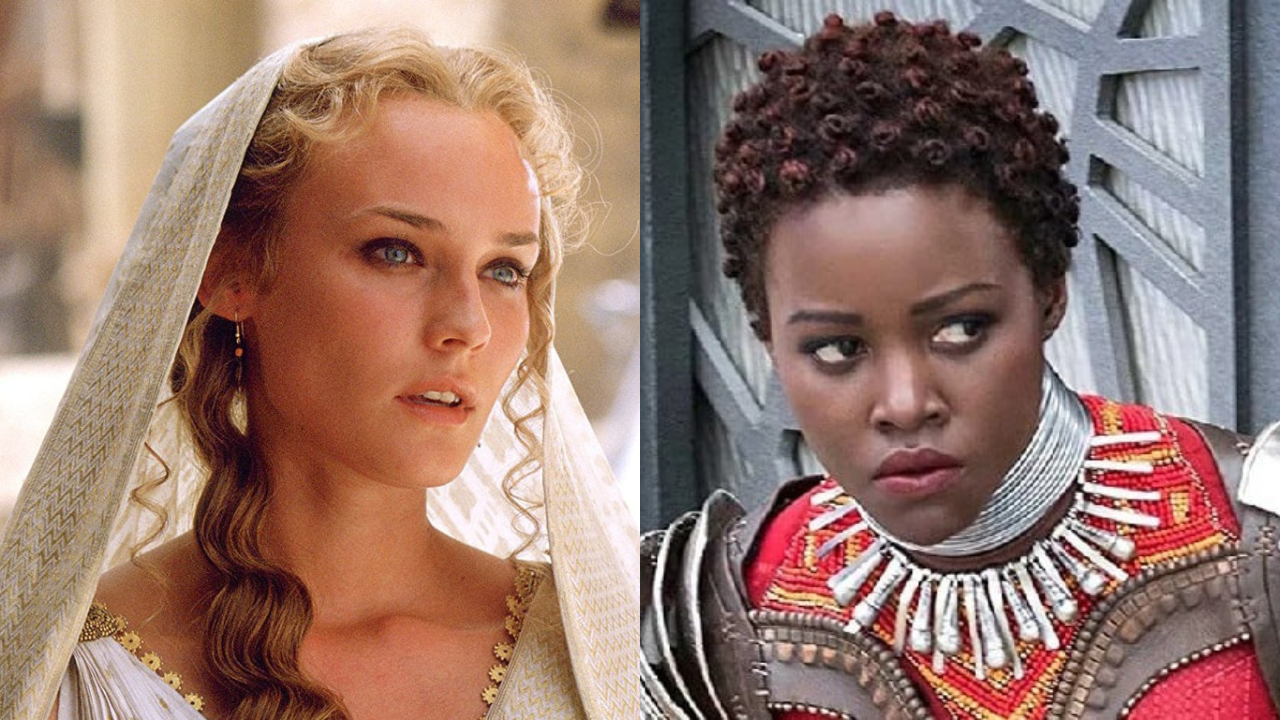
Christopher Nolan has officially confirmed one of the biggest rumors surrounding The Odyssey: Oscar winner Lupita Nyong’o will portray Helen of Troy in the upcoming adaptation, while also taking on the role of Helen’s sister, Clytemnestra.
The revelation came through a new TIME feature covering Nolan’s ambitious adaptation of Homer’s legendary epic. According to the article, Nyong’o will portray “the most beautiful woman in the world” while also playing the wife of Agamemnon.
The confirmation immediately reignited online debate surrounding the film’s casting choices and how closely Nolan’s adaptation intends to adhere to classical Greek descriptions of its iconic characters.
Homer’s Description of Helen Has Long Been Discussed by Scholars
Helen of Troy is one of the most famous women in all of Western literature, and ancient Greek texts repeatedly describe her physical appearance using specific poetic language.
One of the most notable descriptors appears throughout Homer’s works: “λευκώλενος” (leukōlenos), commonly translated as “white-armed.”
The word combines:
- λευκός (leukos) — “white,” “bright,” or “light”
- ὠλένη (ōlenē) — “arm” or “forearm”

Diane Kruger as Helen of Troy in the movie Troy – Warner Bros.
READ: Today, You Cannot Buy Alcohol At Disney Cruise Line’s Private Caribbean Islands
Classical translations by scholars such as Richmond Lattimore, Robert Fagles, and A. T. Murray consistently render the phrase as “white-armed.”
The term appears throughout both The Iliad and The Odyssey, often attached to elite women and goddesses including Hera, Andromache, Penelope, and Helen herself.
In Book 3 of The Iliad, Homer directly refers to “white-armed Helen” during the sequence in which Iris visits her chambers.
Ancient Greek Beauty Standards Were Tied to Class and Status
Historians and classicists have long noted that descriptions such as “white-armed” carried social and symbolic meaning in ancient Greek literature.
In Homeric society, pale skin in women was associated with nobility, refinement, and indoor life, while darker or tanned skin was more commonly associated with laborers and warriors who spent significant time outdoors.

Matt Damon as Odysseus in the trailer for The Odyssey – YouTube @UniversalPictures
Ancient Greek art frequently reflected this distinction, often depicting women with lighter complexions and men with darker reddish-brown tones.
The phrase also carried connotations of radiance and divine beauty, especially when used for goddesses like Hera or Aphrodite. Scholars generally agree that the description conveyed an idealized appearance associated with aristocratic beauty in ancient Greece.
Ancient Sources Also Frequently Described Helen With Light or Golden Hair
The debate surrounding the casting has intensified further because multiple ancient Greek writers also associated Helen with light or golden hair.
In Homer’s Iliad and Odyssey, Helen is repeatedly described as “lovely-haired” or “beautiful-haired,” emphasizing her appearance as central to her legendary reputation.
Later Greek writers became more direct.
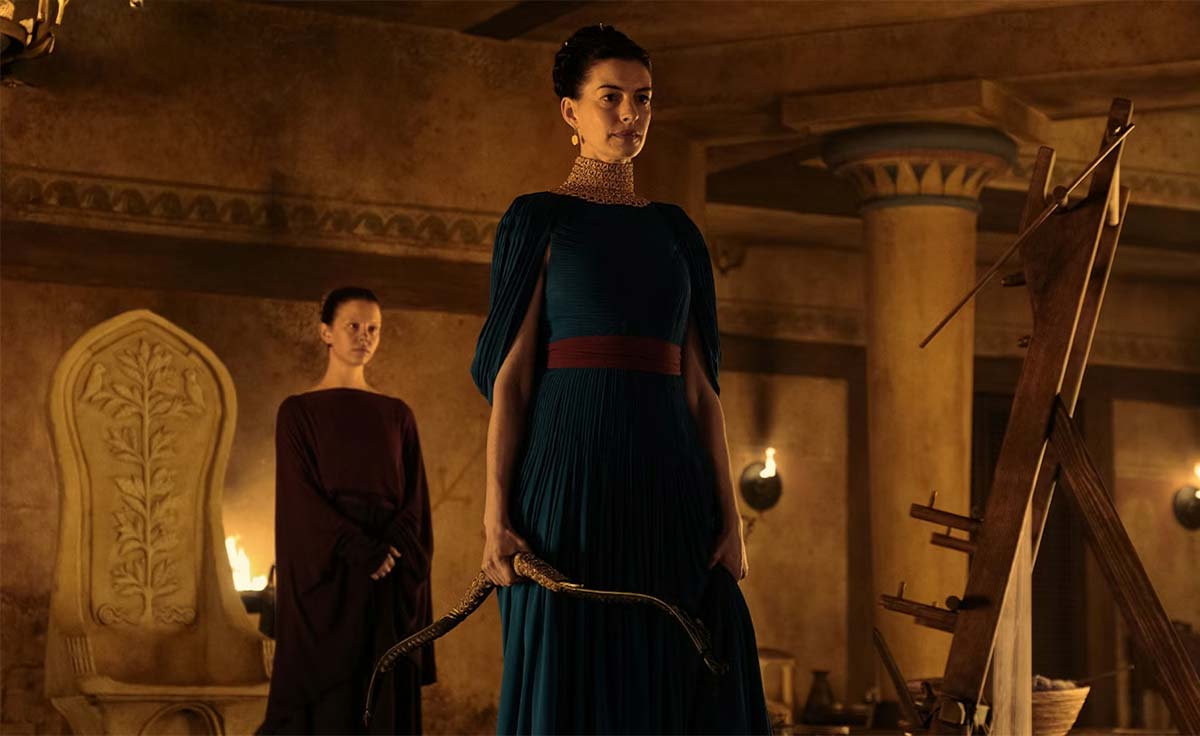
Mia Goth as Melantho and Anne Hathaway as Penelope in the trailer for The Odyssey – YouTube @UniversalPictures
READ: Nate Bargatze Wants Movie Tickets for ‘The Breadwinner’ to Cost Less
In Hesiod’s Works and Days, Helen is explicitly referred to as “ξανθὴν Ἑλένην” (“xanthḗn Helénēn”), commonly translated as “fair-haired Helen.”
Poet Sappho similarly used the term “xanthē,” a word associated with golden, blonde, reddish-blonde, or otherwise light-colored hair. Comparable descriptions also appear in works tied to Stesichorus and Ibycus.
Euripides later referenced Helen’s “golden curls,” continuing the long-established literary tradition.
Scholars have noted that lighter or radiant hair in Greek mythology was often associated with gods, heroes, and figures of extraordinary beauty. Apollo, Aphrodite, and Demeter were all connected at times to similar language.
While these descriptions do not map neatly onto modern racial categories, many observers argue they collectively paint a remarkably consistent picture of how Helen was imagined across centuries of Greek literature.
Elliot Page’s Role Has Also Sparked Speculation
Another point of discussion surrounding the film involves actor Elliot Page, a biological woman who identifies as male and is also part of Nolan’s cast.
Nolan has not publicly confirmed which role Page will play in The Odyssey, but rumors have circulated online for months suggesting the actor could portray Achilles, one of the most iconic warriors in Greek mythology.

Jon Bernthal as King Menelaus in the teaser for The Odyssey – Universal Pictures
Other reports claim Page may instead portray Hermes, the messenger of the gods.
At this stage, none of those rumors have been confirmed by the studio or Nolan himself. However, the speculation has added to broader discussions surrounding the adaptation and whether Hollywood is increasingly willing to reinterpret classical mythology in ways that depart significantly from the original source material.
Nolan Faces Growing Pressure as Expectations for The Odyssey Rise
For years, Christopher Nolan has largely avoided the type of controversy that has surrounded many major Hollywood productions in recent years.
Films like The Dark Knight, Inception, Interstellar, and Oppenheimer helped establish Nolan as one of the industry’s most respected directors, with a reputation for prioritizing practical filmmaking, ambitious storytelling, and large-scale theatrical spectacle.
That reputation is now facing increased scrutiny.

Christopher Nolan in an interview – YouTube, BAFTA Guru
While Nolan still maintains enormous goodwill with audiences, the casting controversies surrounding The Odyssey have already become a major point of discussion online — particularly among viewers who believe Hollywood often treats European mythology and historical source material differently than stories rooted in other cultures.
With The Odyssey shaping up to be one of the biggest films of 2026, the debate surrounding accuracy to Homer’s text, mythological interpretation, and modern Hollywood casting philosophies is unlikely to fade anytime soon.
How do you feel about Lupita Nyong’o playing Helen of Troy in The Odyssey? Sound off in the comments and let us know!
UP NEXT: FCC Commish: ‘The View’ Must Follow Equal Time Rules To Qualify as a News Program
