



The financial fallout from Disney’s live-action Snow White remake flop is finally coming into focus — and the numbers are nothing short of catastrophic.
According to new reporting from Forbes star contributor Caroline Reid, the studio’s controversial remake didn’t just underperform… it cratered. After ballooning production costs, weak box office returns, and mounting controversies surrounding its lead star, the Snow White flop has resulted in an estimated $170 million loss for Disney from theatrical revenue alone.
Add marketing into the mix and this catastrophe becomes a box office apocalyptic event.
And when you start digging into how this happened, the story gets even worse.
A Budget That Spiraled Out Of Control
Per financial filings tied to the film’s U.K. production entity, Snow White racked up a staggering $336.5 million production cost — putting it in the same spending tier as major franchise tentpoles like Star Wars and Avengers films.
While the newly surfaced filings shocked casual observers, the ballooning cost didn’t catch everyone off guard.
In fact, Reid highlighted that industry analyst and YouTube commentator Valliant Renegade had already forecast the film’s runaway spending years earlier — estimating that Disney’s Snow White remake would land near the $300 million mark.
As Reid noted, that projection wasn’t exaggerated for shock value — it was actually conservative when faced with the actual cost. The final production filings ultimately rounded down to a number strikingly close to the estimate he made a year before the film ever reached theaters.
Reid also pointed out an important distinction often lost in online debate: Renegade referred to the film’s total costs — not just its internal production budget or post-incentive net spend. That nuance matters, especially on a project plagued by setbacks.
Problems started for Snow White long before the movie ever hit theaters.
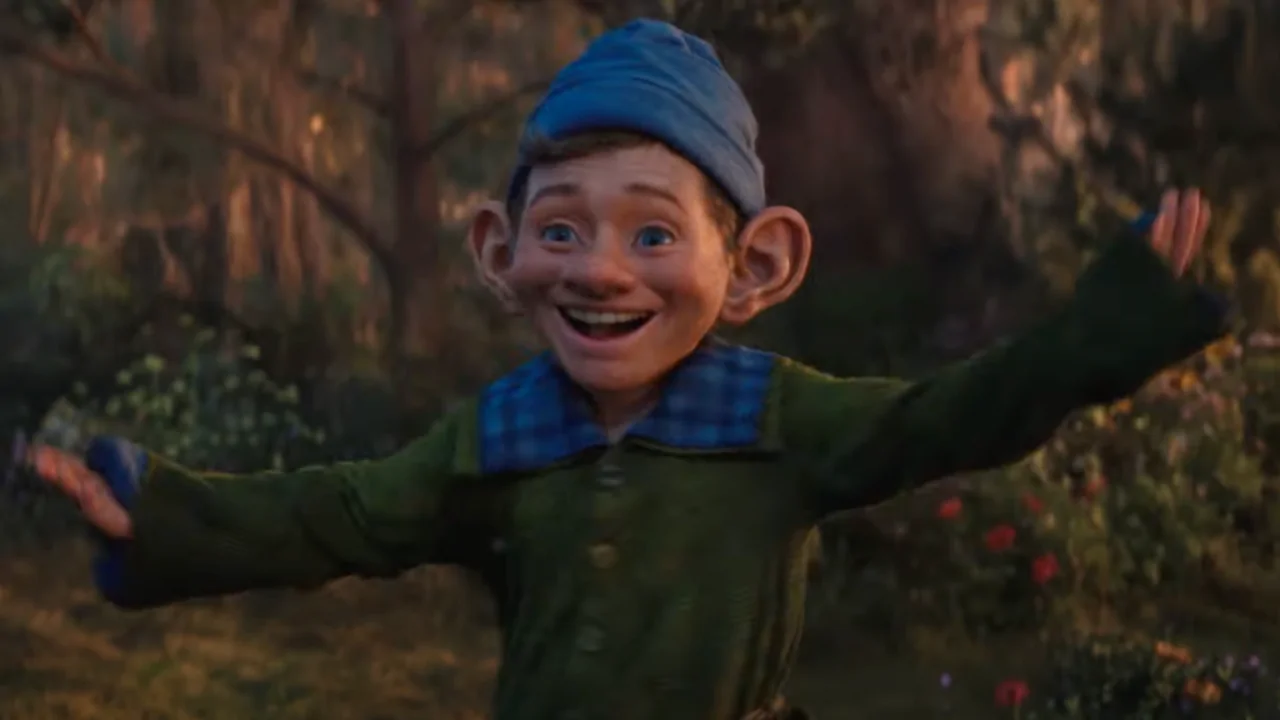
Dopey in the Live Action Snow White movie – YouTube, Disney
READ: The Mandalorian and Grogu Super Bowl Spot Was a Monumental — and Expensive — Marketing Fumble
The production was plagued by setbacks, including a destructive set fire during filming at Pinewood Studios and extensive reshoots that drove costs even higher. By mid-2022 — before filming had even fully wrapped — Disney had already spent over $183 million.
Even after receiving roughly $64.9 million in U.K. tax reimbursements, Disney’s net production spend still landed at approximately $271.6 million.
That meant the film needed to perform at blockbuster levels just to break even.
It didn’t come close.
Box Office Collapse Seals The Film’s Fate
Despite the massive investment, audiences simply didn’t show up.
The live-action remake opened to about $87.3 million globally — already below studio projections — and finished its theatrical run with just $205.7 million worldwide.
That places it among the lowest-grossing of Disney’s modern live-action remakes.

Rachel Zegler singing the original song “Waiting on a Wish” from Disney’s Snow White live action remake – YouTube, Disney
And here’s where the math turns brutal.
Studios don’t keep all box office revenue. Theater chains typically retain about half of ticket sales, meaning Disney’s actual return from the film’s theatrical run lands around $102.9 million.
Stack that against the $271.6 million net production cost, and you’re staring at a theatrical loss of roughly $168–170 million.
Hence the headline reality: the Snow White flop cost Disney dearly.
Marketing Costs Could Push The ‘Snow White’ Flop Even Deeper Into The Red
If the estimated $170 million theatrical loss wasn’t damaging enough, the full financial picture surrounding the Snow White flop becomes even more dire once marketing expenses are factored in.

Gal Gadot as the Evil Queen in Disney’s live-action SNOW WHITE. Photo courtesy of Disney. © 2024 Disney Enterprises Inc. All Rights Reserved.
READ: Amazon’s God of War Series Reveals Callum Vinson as Kratos’ Son Atreus
Blockbuster films of this scale don’t just carry massive production budgets — they require equally aggressive global promotional campaigns. Industry tracking routinely places marketing and distribution costs for major Disney tentpoles in the $100 million to $150 million range, depending on the breadth of the rollout.
That spend typically covers:
- Worldwide trailer placement
- Television advertising buys
- Digital and social media campaigns
- Brand partnerships and cross-promotions
- Red carpet premieres and press tours
- International localization and dubbing promotion
Given the controversy surrounding Snow White, Disney arguably had to spend even more on damage control and visibility — attempting to reframe the narrative and drive audience interest despite the growing backlash. There were even reports of the company hiring social media gurus to keep an eye on star Rachel Zegler after a series of explosive political postings.

Rachel Zegler as Snow White in Disney’s live-action SNOW WHITE. Photo courtesy of Disney. © 2024 Disney Enterprises Inc. All Rights Reserved.
And here’s the crucial financial reality: marketing costs are not included in the U.K. production filings that revealed the film’s $336.5 million gross production spend.
That means the previously outlined $168–170 million theatrical loss only reflects the gap between box office returns and net production costs.
Once an estimated $100–150 million global marketing push is layered on top, the true financial damage tied to the Snow White flop could climb substantially higher — potentially pushing Disney’s total exposure on the film well beyond a quarter-billion dollars (potentially over $300 million) before ancillary revenue is even considered.
In other words, the box office loss may only be the opening chapter of the film’s financial fallout.
Controversy Followed The Film From Day One
Financial misfires alone don’t explain the film’s collapse. The project was mired in backlash long before release.
Lead actress Rachel Zegler repeatedly sparked headlines after publicly criticizing the 1937 animated classic the remake was based on — calling the original story “dated” and taking aim at Prince Charming’s character.
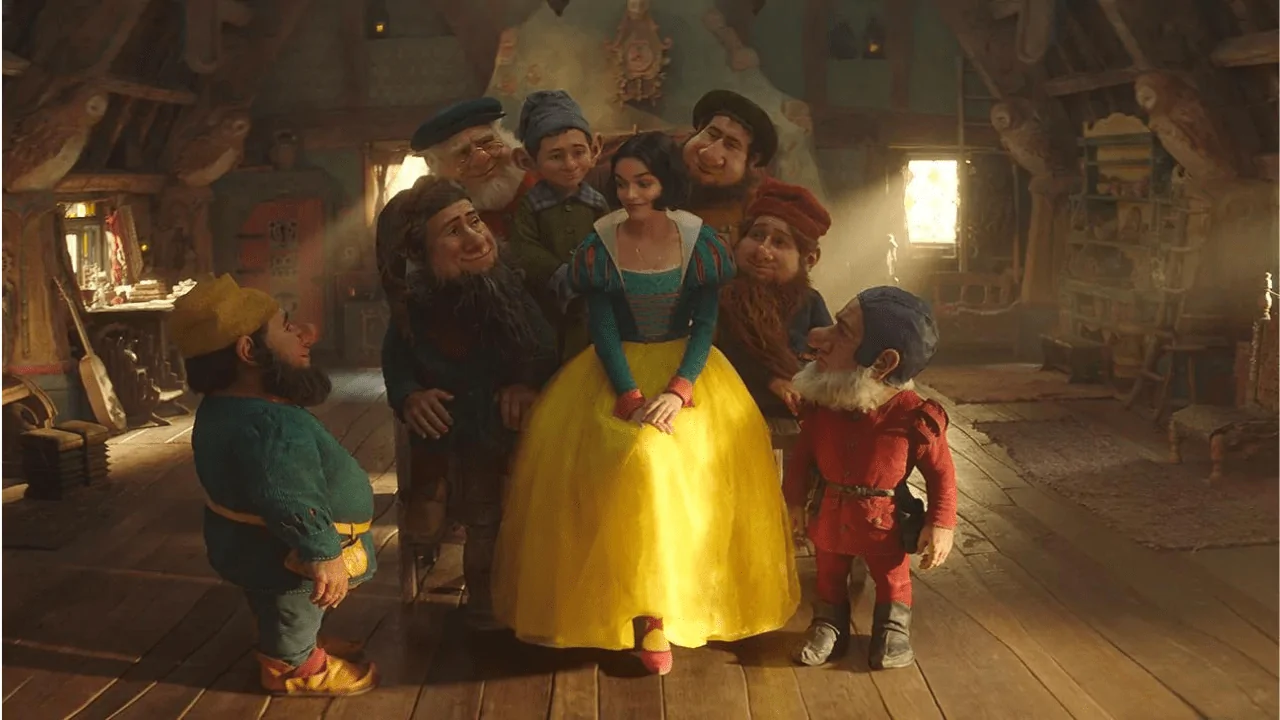
Rachel Zegler as Snow White in Snow White (2025), Walt Disney Studios
That commentary didn’t sit well with longtime Disney fans.
The backlash intensified when early trailers revealed the film’s CGI dwarfs — a design choice widely mocked online and described by critics as unsettling.
The trailer itself became one of the most disliked promotional videos ever tied to a Disney release.
Political Commentary Added Fuel To The Fire
Zegler’s off-screen commentary only deepened the divide.
Social media posts, including politically charged messaging tied to global conflicts and U.S. politics, reportedly created internal concern within Disney and the film’s production team. In a blistering Instagram barrage, Zegler actually expressed hope that President Trump and his supporters “never know peace.”

A screenshot of Rachel Zegler’s Incendiary tweets about Donald Trump and his supporters – Photo Credit Steph Anie, @MyNerdyHome Via X
At one point, producers allegedly attempted to intervene regarding her online activity, fearing brand damage ahead of the film’s release.
By that stage, however, the reputational impact was already baked in.
The film wasn’t just facing audience skepticism — it was battling full-blown consumer rejection.
A Historic Low For Disney Remakes
When stacked against Disney’s other live-action adaptations, the numbers paint a grim picture.
Adjusted for inflation, even older remakes like 102 Dalmatians and Christopher Robin outperformed Snow White financially.

Rachel Zegler via Good Morning America YouTube
READ: Gay Days Event at Disney World Paused for 2026 Amid Sponsorship Loss and Event Challenges
You’d have to go back decades — outside of pandemic-era releases — to find a comparable underperformer.
For a studio that once treated live-action remakes as guaranteed billion-dollar plays, the Snow White flop represents a dramatic reversal of fortune.
Can Ancillary Revenue Save It?
Disney will still collect revenue from home media sales, streaming licensing, and merchandise — but those revenue streams come with their own marketing and distribution costs.
In other words, theatrical loss may only be part of the damage.
The Bigger Picture For Disney
The failure hasn’t slowed Disney’s remake strategy — the studio’s follow-up live-action release, Lilo & Stitch, crossed $1 billion globally.
But that success only illustrates how sharply Snow White deviated from expectations.

(L-R): Gal Gadot as the Evil Queen and Rachel Zegler as Snow White in Disney’s live-action SNOW WHITE. Photo courtesy of Disney. © 2024 Disney Enterprises Inc. All Rights Reserved.
When a remake tied to one of Disney’s most iconic princesses loses nearly $170 million theatrically (and more than $300 million in all), it raises serious questions about brand management, audience trust, and escalating production budgets.
Because if this level of spending can’t guarantee success anymore… the risk calculus for Disney’s remake machine just changed overnight.
Are you surprised that Snow White was such a monumental flop? Sound off in the comments and let us know!
Article Updated: Feb 12, 2026 at 8:42 a.m.
