



When Ridley Scott — the man behind Alien, Blade Runner, and Gladiator — declares that “most modern movies are sh*t,” you’d expect the internet to light up. And it did. In an interview with Variety, the 86-year-old director claimed today’s cinema is “drowning in mediocrity,” saying he often re-watches his old work because new films “just aren’t very good.”
On one level, he’s right. Ridley Scott isn’t wrong about the decline of modern filmmaking. Studios have traded storytelling for sermonizing. Too many movies are built to check ideological boxes instead of connecting with audiences. Even casual viewers can sense the difference between art and agenda.
But here’s the twist: Ridley Scott’s own modern movies are Exhibit A for the very problem he’s describing.
Disclaimer: The views expressed in this editorial are those of the author and do not necessarily reflect those of That Park Place or its partners.
The Director Who Lived Long Enough to Become His Own Critic
There was a time when Scott’s name meant instant prestige — a guarantee of world-building, gravitas, and grand spectacle. But the longer he’s worked, the more his output mirrors the same flaws plaguing today’s industry: massive budgets, gorgeous visuals, and stories that collapse under their own ambition.

Ridley Scott talks about directing – YouTube, BAFTA Guru
Let’s take a look at the man’s recent track record.
Prometheus (2012) — Pretentious and Puzzling
Prometheus was supposed to reignite the Alien franchise with cosmic mystery and philosophical weight. Instead, it became a case study in style over substance.
Critics loved the look — every shot could hang in a museum — but audiences were left asking what it all meant. Scientists acted like fools, logic went out the window, and the film raised questions it never bothered to answer.
For a director complaining about the “dumbing down” of modern movies, Prometheus felt like the intellectual version of fast food — pretty packaging, no nourishment.
Alien: Covenant (2017) — More of the Same
Scott doubled down with Covenant, another return to the Alien universe that tried to combine horror thrills with deep questions about creation. The result? A confused hybrid that satisfied neither camp.
READ: Paramount Shakes Up CBS News, Appoints Bari Weiss Editor in Chief After Acquiring The Free Press
Some fans enjoyed the familiar creature chaos, but many felt like they’d seen it all before. Covenant made enough money to be respectable, but not enough to be remembered.
If mediocrity is the disease, Covenant was a symptom.
House of Gucci (2021) — A Tonal Trainwreck
With House of Gucci, Scott traded spaceships for shoulder pads, and the result was… uneven.
Critics were split. Lady Gaga and Adam Driver turned in committed performances, but the movie itself couldn’t decide what it wanted to be — serious drama or campy satire. Some moments played like Shakespeare; others like a Saturday Night Live sketch that wouldn’t end. Pretty much everything that involved Jared Leto was cringe-worthy, as are most things that involve Jared Leto…
In the end, House of Gucci was a reminder that celebrity casting and lavish sets can’t replace direction and focus.
Napoleon (2023) — Grandeur Without Greatness
Then came Napoleon, Scott’s $200 million Apple Studios epic starring Joaquin Phoenix. On paper, it had everything: a powerful lead, historical stakes, and a director known for battle scenes that could make your jaw drop.
READ: Amazon Removes Guns from James Bond Images Then Puts Them Back After Fan Backlash
Instead, audiences got a beautiful but soulless highlight reel. Critics panned it for racing through history without depth, insight, or emotion. French reviewers were especially brutal, calling it “lazy,” “anti-French,” and “pointless.”
And when questioned about the backlash, Scott didn’t offer reflection or humility — he fired back, “The French don’t even like themselves.”
That’s not the voice of a master frustrated with mediocrity. That’s the voice of a man who’s stopped listening.
Gladiator II (2024) — Nostalgia on Autopilot
If Scott’s early masterpiece Gladiator represented everything right about Hollywood, its sequel feels like the opposite. Gladiator II has spectacle, sure — Denzel Washington commands the screen, and the action scenes are operatic — but storywise, it’s déjà vu all over again. Also, he put Pedro freaking Pascal in a Gladiator film! Gross…
Reviewers called it “technically impressive but emotionally vacant,” with many noting that it “slips through the fingers” the moment you leave the theater. It’s another film that looks expensive and feels empty — the cinematic equivalent of a luxury car with no engine.
When even Forbes and The Independent describe a Gladiator sequel as “pointless,” it’s time for a little self-awareness.
The Irony of Ridley Scott
Ridley Scott isn’t wrong about modern movies being mediocre. He’s wrong about who’s responsible.
The problem isn’t just TikTok culture, streaming bloat, or ideological pandering. It’s filmmakers like Scott himself — veterans who confuse scope for soul and scale for story.

Paul Mescal as Lucius and Pedro Pascal as Marcus Acacius in Gladiator II (2024), Paramount Pictures
He’s right that too many films are created by committee, not conviction. But his late-career catalog feels exactly like that: art by autopilot, big budgets with no heart.
What This Says About Hollywood
There’s a lesson here for the entire industry — one they will predictably never learn.
When a living legend like Ridley Scott is falling into the same creative traps he warns us about, it proves how deep the rot goes. Studios keep chasing “safe bets” instead of good scripts. Directors keep expanding runtimes instead of refining meaning. Everyone wants to make a masterpiece, but few want to take the risks that real storytelling requires.
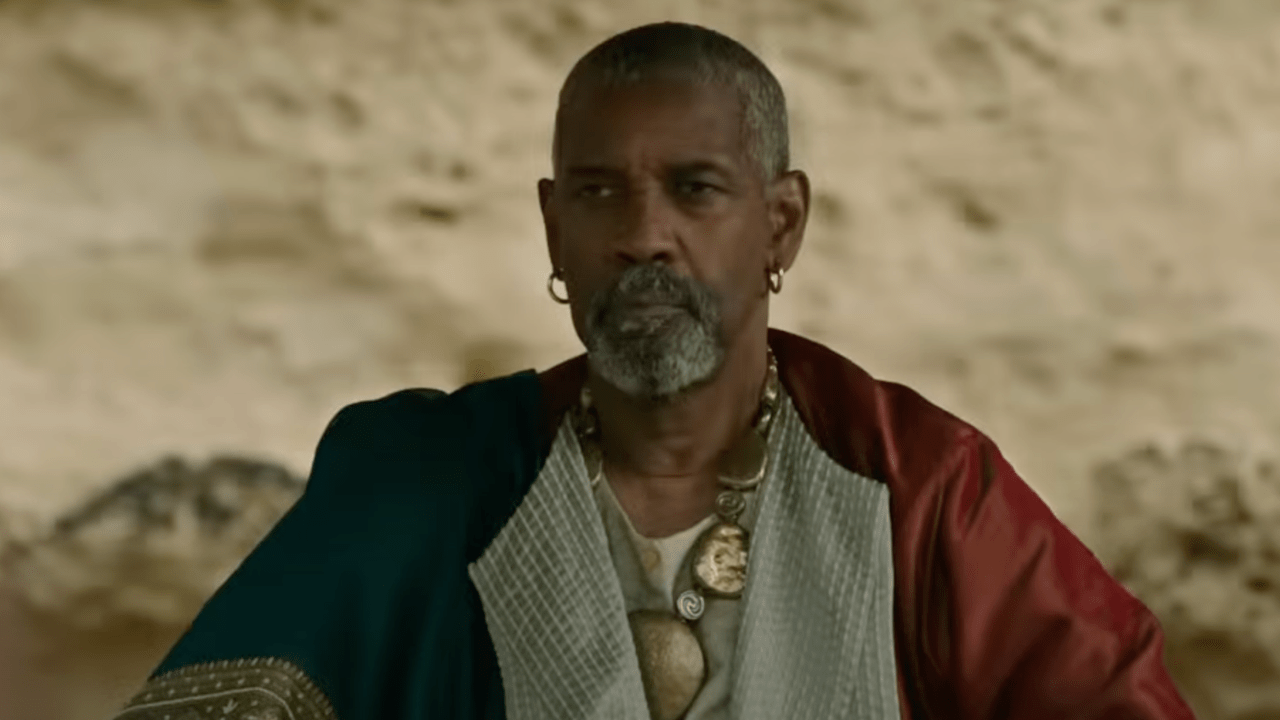
Denzel Washington in the trailer for Gladiator 2 – YouTube, Paramount Pictures
Scott’s words hit a nerve because we all feel it — the creative spark that once defined Hollywood is dimming. But if he wants to point fingers at mediocrity, he needs to look in the mirror first.
Closing Thought
Maybe Ridley Scott re-watches his old movies because, deep down, he misses who he used to be: the man who made Alien with a tenth the budget and ten times the imagination. That filmmaker pushed limits. The modern one just pushes spectacle.

Ridley Scott being interviewed by GQ – YouTube, GQ
If Hollywood truly wants to rise above mediocrity, it doesn’t need more money or more ideology — it needs more honesty.
And that starts with directors who can admit when the problem might just be them.
How do you feel about Ridley Scott and his comments on modern movies? Is he throwing stones in a glass house? Sound off in the comments and let us know!
UP NEXT: Surprise Live Debut of “Golden” from KPop Demon Hunters Hits on SNL Season Premiere
