


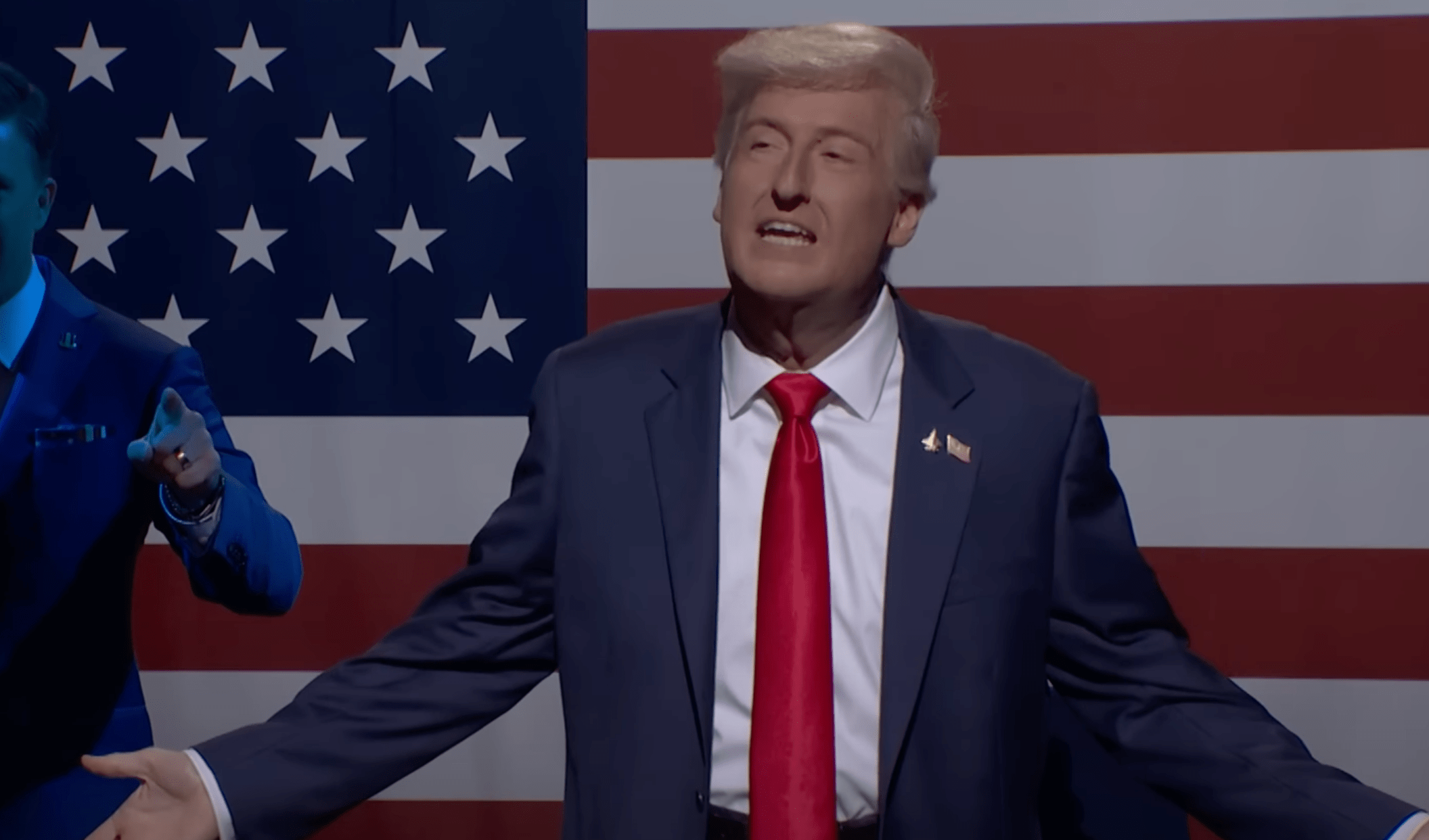
It’s not every day that the White House fires a shot across Saturday Night Live’s bow — but that’s exactly what happened this weekend after the NBC comedy opened its new season with an SNL cold open mocking President Trump and FCC Chairman Brendan Carr.
In the sketch, SNL’s James Austin Johnson reprised his well-known Trump impression, this time taking aim at accusations of government pressure on late-night shows. Portraying the President as half-menacing and half-bumbling, the routine suggested the administration was eager to silence critics in comedy, with Carr shown as the smiling enforcer.
READ: Peacemaker Ratings are Tanking: James Gunn’s DC Experiment Is Losing Viewers—and Respect
The scene ended on a darkly comedic note: Trump leaning toward the camera and delivering the line, “Remember… Daddy’s watching.”
That one line was enough to spark headlines — and a rare, pointed response from the White House itself.
“I Have More Entertaining Things to Do — Like Watch Paint Dry”
When asked for comment by Entertainment Weekly, White House spokesperson Abigail Jackson didn’t mince words.
“Reacting to this would require me to waste my time watching it,” Jackson said. “And like the millions of Americans who have tuned out from SNL, I have more entertaining things to do — like watch paint dry.”
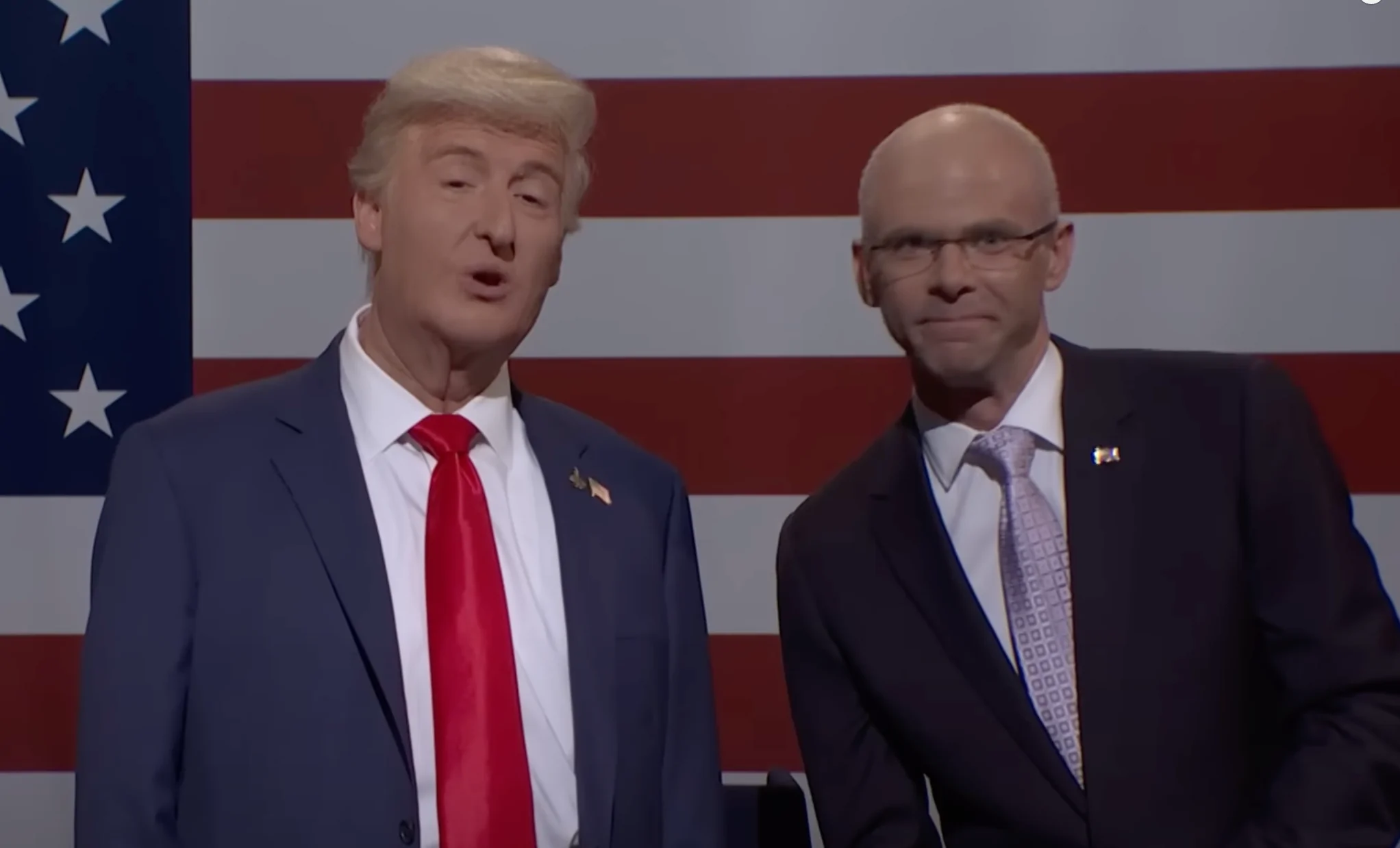
A SNL cold open sketch mocking President Trump and FCC Chair Brendan Carr – YouTube, Saturday Night Live
It was an unmistakably sharp retort — one that dismissed the show’s relevance and mocked its shrinking audience.
The implication was clear: SNL isn’t dangerous to the Trump White House’s image, because SNL no longer matters.
But whether or not that’s true, the timing of the comment couldn’t be more politically charged.
The Broader Context: Late-Night in the Crosshairs
The entertainment press has rushed to paint this as proof of an administration “at war” with comedy. The truth is a lot simpler — and far less flattering to Hollywood.
Jimmy Kimmel Live! wasn’t suspended because of political pressure. It happened because Kimmel lied about a national tragedy. His monologue following the assassination of Charlie Kirk repeated false details that were quickly debunked, sparking public outrage.
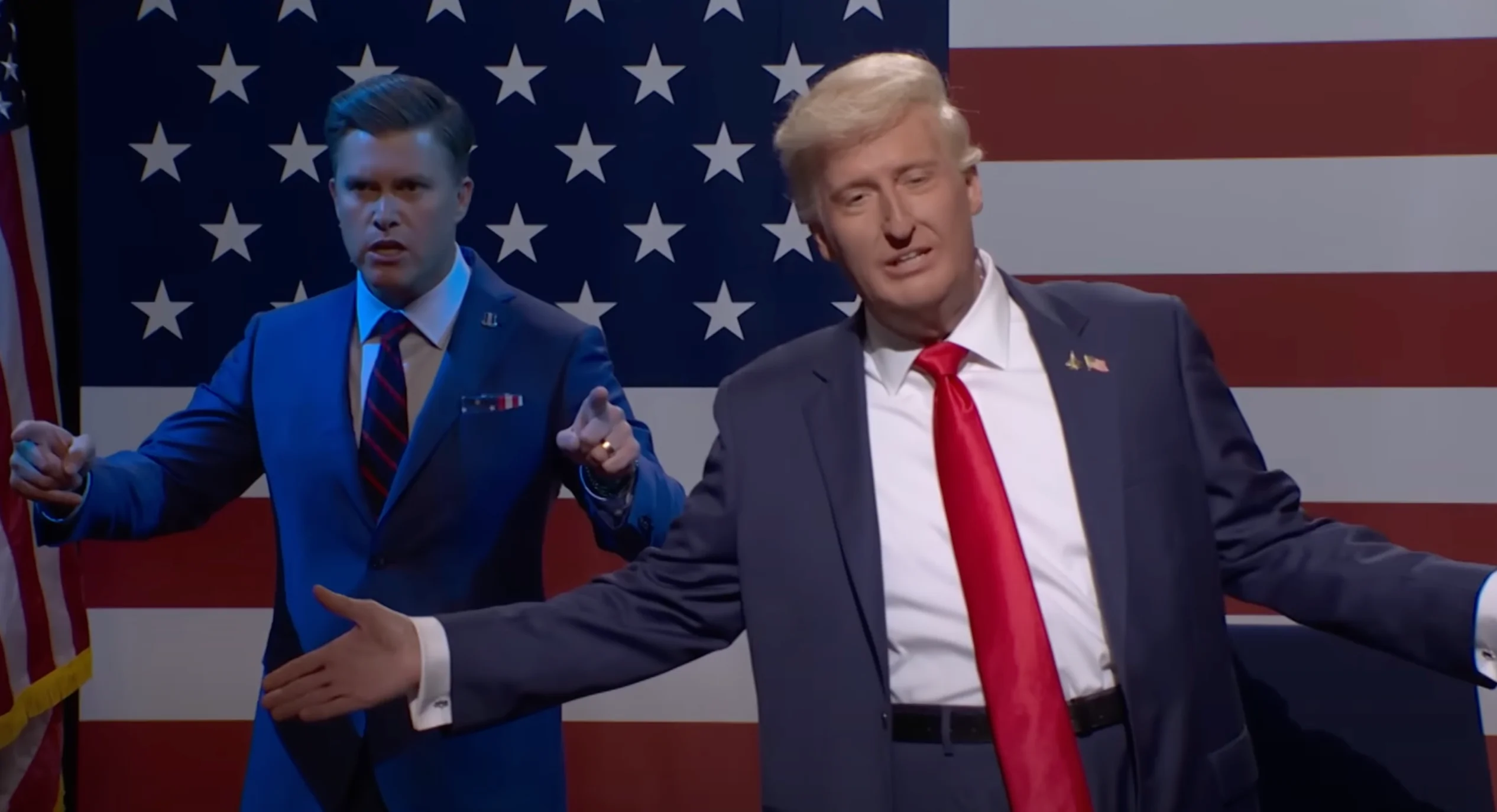
An SNL sketch featuring President Trump and Pete Hegseth – YouTube, SNL
ABC and Disney had little choice but to pull him from the air after a major breach of standards and ethics. That’s not censorship; that’s consequences.
Stephen Colbert’s The Late Show isn’t ending because of government intimidation. It’s ending because it’s bleeding money. Industry insiders estimate CBS loses roughly $40 million per year keeping the program afloat as audiences continue to vanish. When viewership collapses and ad revenue dries up, even legacy shows eventually face the axe. That’s business — not politics.
FCC Chairman Brendan Carr, portrayed in the SNL sketch as a censorship enforcer, has explicitly denied claims that his office has intimidated broadcasters. Carr has been one of the few federal regulators pushing for freer expression online and in media, not against it.
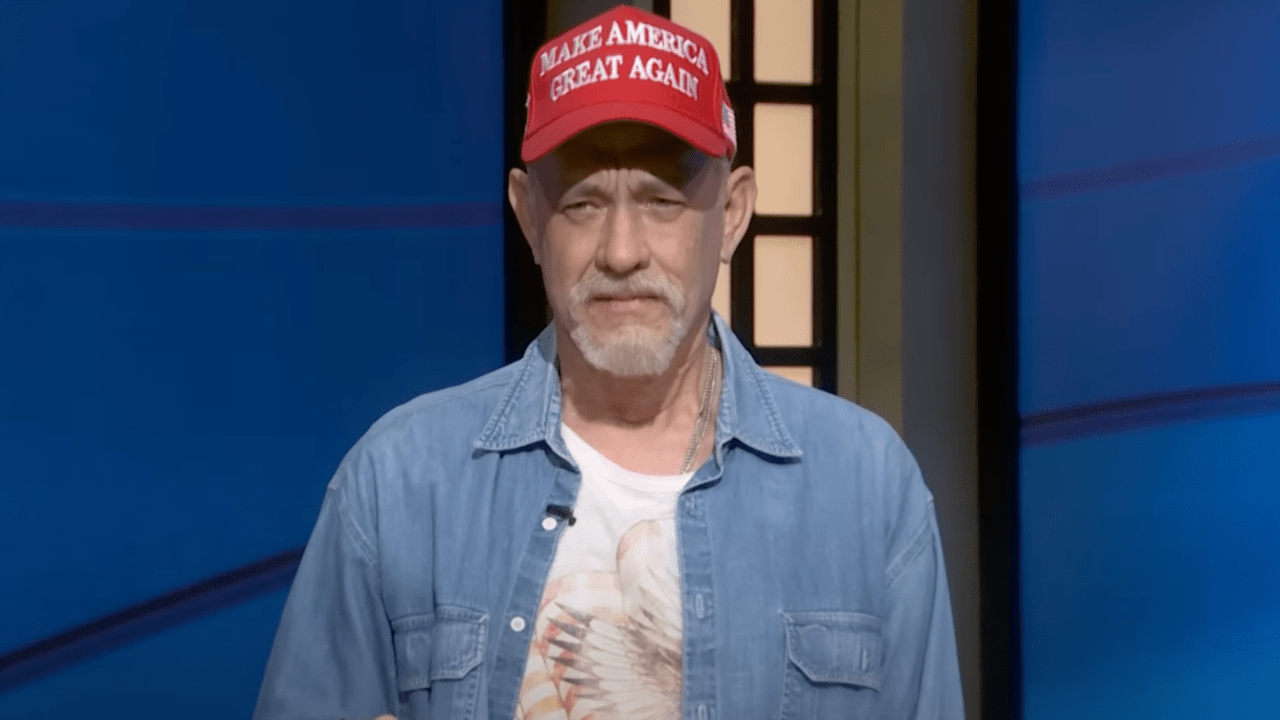
Tom Hanks on SNL doing a parody of a MAGA supporter – YouTube, Saturday Night Live
READ: AI Actress Tilly Norwood Isn’t Real — But Hollywood Might Sign Her Anyway
In short: this isn’t a story about the Trump administration silencing dissent. It’s a story about an entertainment industry losing relevance and blaming everyone but itself.
Saturday Night Live’s parody wasn’t a bold act of defiance — it was damage control for a Hollywood class that can’t admit its own failures.
The Power of Dismissal
For decades, Saturday Night Live has thrived on political satire — from Chevy Chase’s bumbling Gerald Ford to Dana Carvey’s George HW Bush, Will Ferrel’s George W Bush, and Alec Baldwin’s infamous Trump impersonation. Usually, politicians play along. But this time, the White House’s approach was different — and arguably more effective.
Rather than take the bait, the administration simply mocked SNL’s decline. Calling the show “a waste of time” and comparing it to “watching paint dry” did more than just throw shade — it reframed the entire narrative.
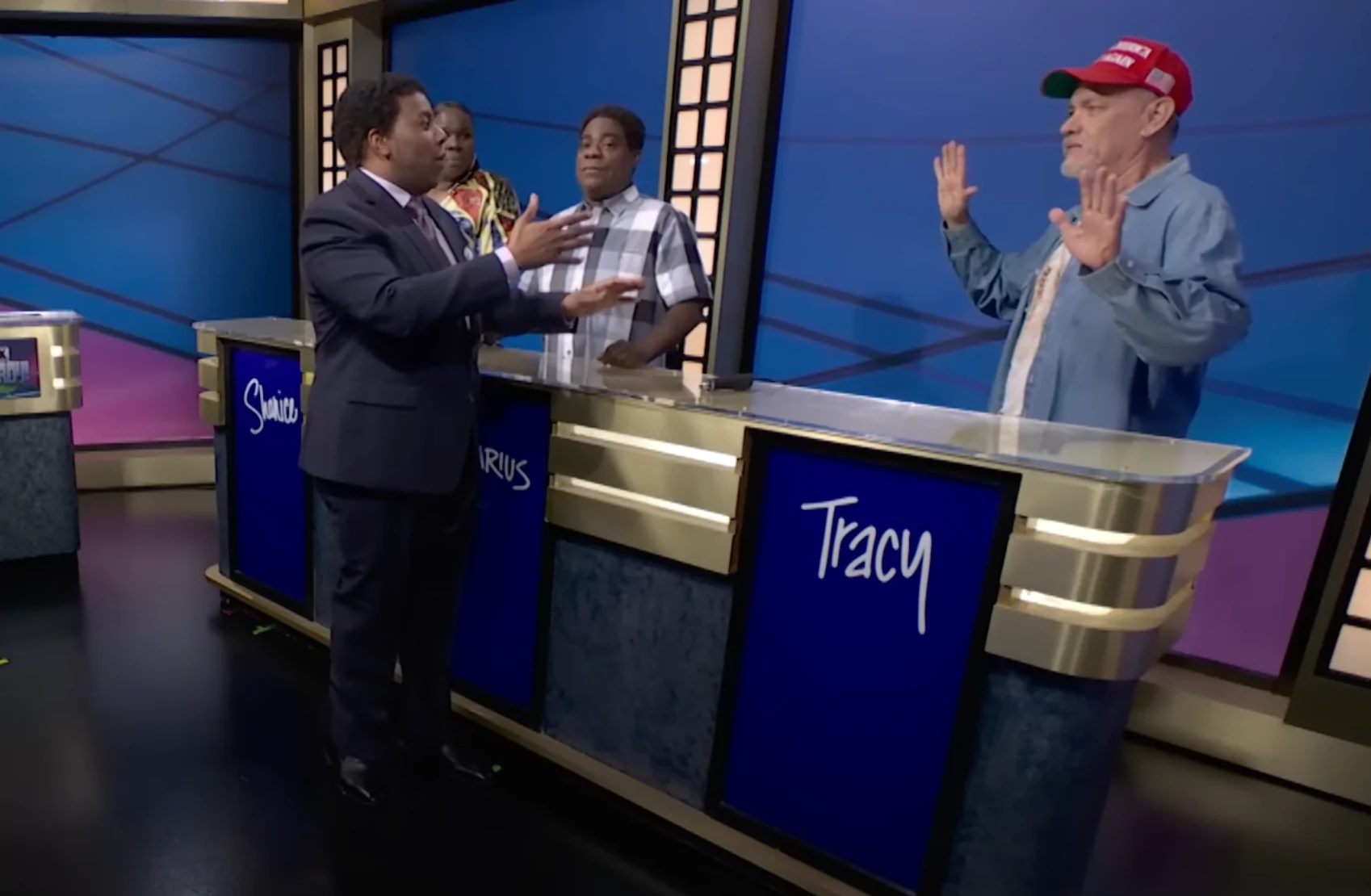
Tom Hanks and Keenan Thompson in the controversial Black Jeopardy segment on SNL – YouTube, Saturday Night Live
By refusing to engage seriously, the White House denied SNL what it wanted most: attention from Trump. It’s a media strategy that flips the script — one that treats outrage as comedy’s last remaining marketing plan.
And it’s hard to argue with that logic when SNL’s ratings and influence have cratered. At this point, the show’s most viral moments come from headlines about its audience loss, not its punchlines.
A Show in Decline
For all the noise about SNL’s cultural importance, the hard numbers tell a different story. NBC may talk about “cross-platform engagement,” but that doesn’t pay the bills. The real money — and the real measure of success — comes from live network broadcast ratings, and by that metric, Saturday Night Live is barely treading water.
Most episodes from spring 2025 pulled just over 4 million total viewers on NBC. The March 29th episode, hosted by Mikey Madison with musical guest Morgan Wallen, drew only 4.26 million — with 692,000 in the 18–49 demographic, marking one of the weakest demo performances for SNL since the early 1990s.

Pedro Pascal on SNL – YouTube, Saturday Night Live
READ: Disney Favorability Plummets Among Both Democrats and Republicans After Kimmel Fiasco, Study Finds
Two weeks later, the April 12th episode with Jon Hamm and Lizzo managed 4.29 million viewers, with 777,000 in the 18–49 demo.
Those figures are devastating for a show that once averaged 7 to 9 million live viewers at the height of its political parodies. When numbers fade to such an extent, advertisers typically pay less for airtime. It would appear as though the network now leans on streaming metrics to disguise how much ground it’s lost on linear TV.
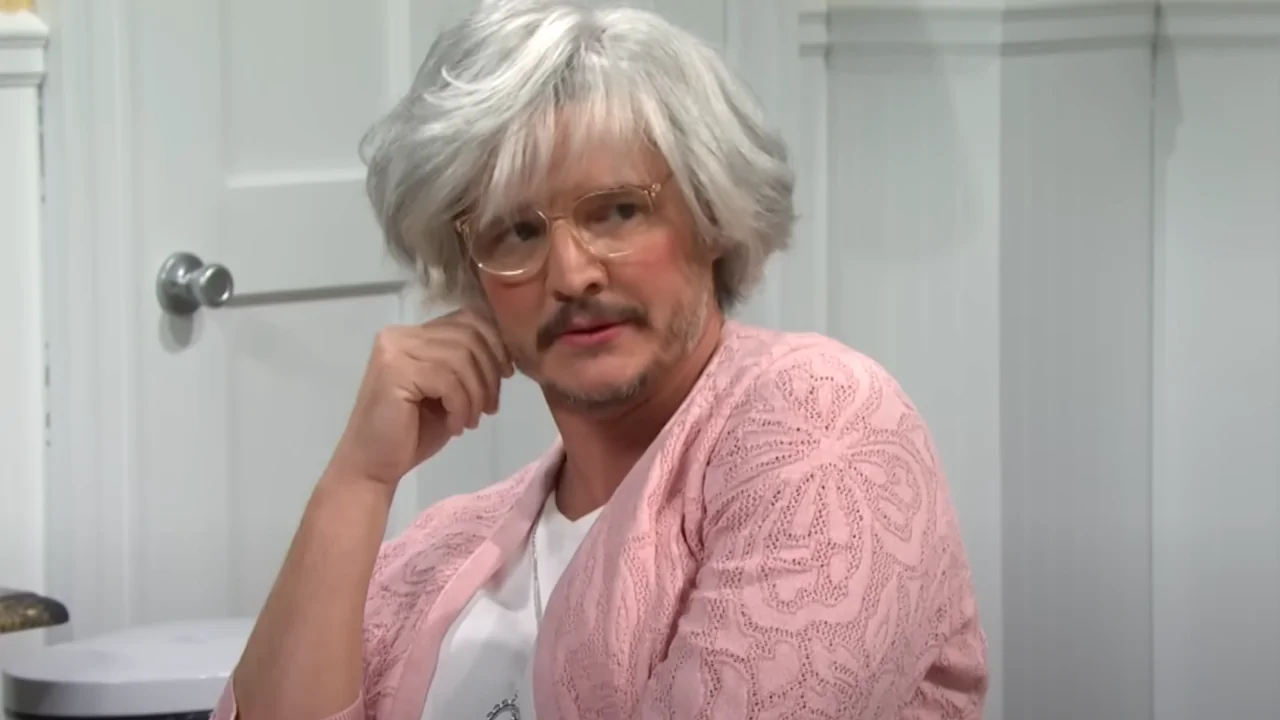
Pedro Pascal on SNL – YouTube, Saturday Night Live
In other words, when the White House said that “millions have tuned out,” it wasn’t spin — it was math. SNL’s reach is shrinking, its influence is fading, and its loudest applause now comes from the media covering it, not the viewers watching it.
At this point, the real satire may be NBC pretending this is still appointment television.
When Comedy Meets Consequences
The irony is that SNL’s sketch mocked supposed censorship at a time when late-night comedy’s biggest problems are entirely self-inflicted.
Shows like Kimmel, Colbert, and now SNL have spent years lecturing viewers instead of entertaining them. The result? Shrinking audiences, collapsing ad revenue, and an ever-widening disconnect between Hollywood and the public.
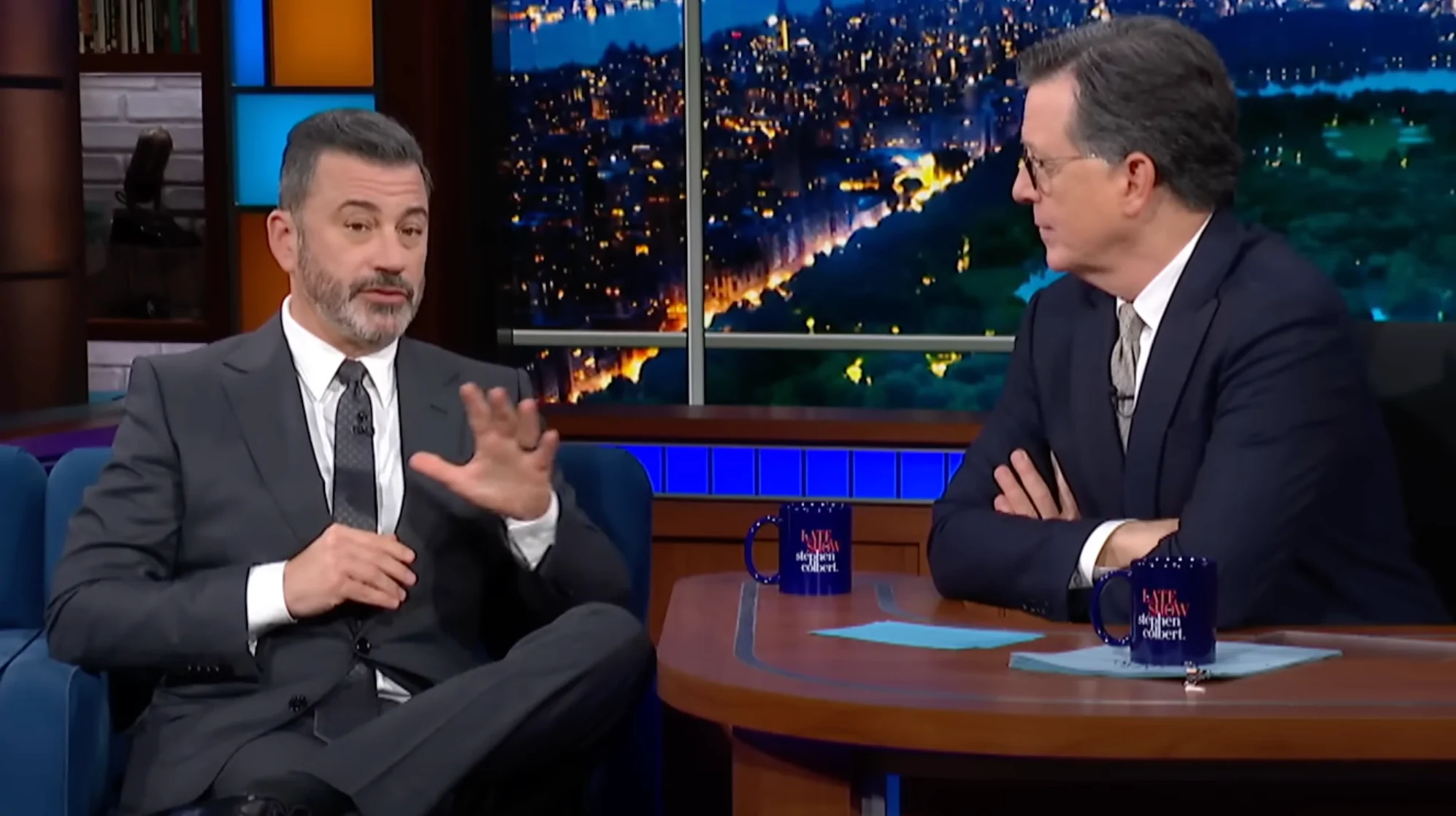
Jimmy Kimmel speaking with Stephen Colbert – YouTube, The Late Show With Stephen Colbert
Meanwhile, conservative comedians and independent creators on YouTube and Rumble are thriving — doing what SNL used to do best: poke fun at everyone, not just one side.
When the White House dismissed SNL’s sketch with a one-liner, it wasn’t censorship. It was catharsis. Millions of Americans who’ve tuned out of traditional late-night likely felt the same way — they’ve moved on.
Conclusion
Comedy used to punch up. Now it just punches in one direction and wonders why the audience left.
The White House and Trump didn’t “attack” SNL. It ignored it — and that might be the most devastating response of all.
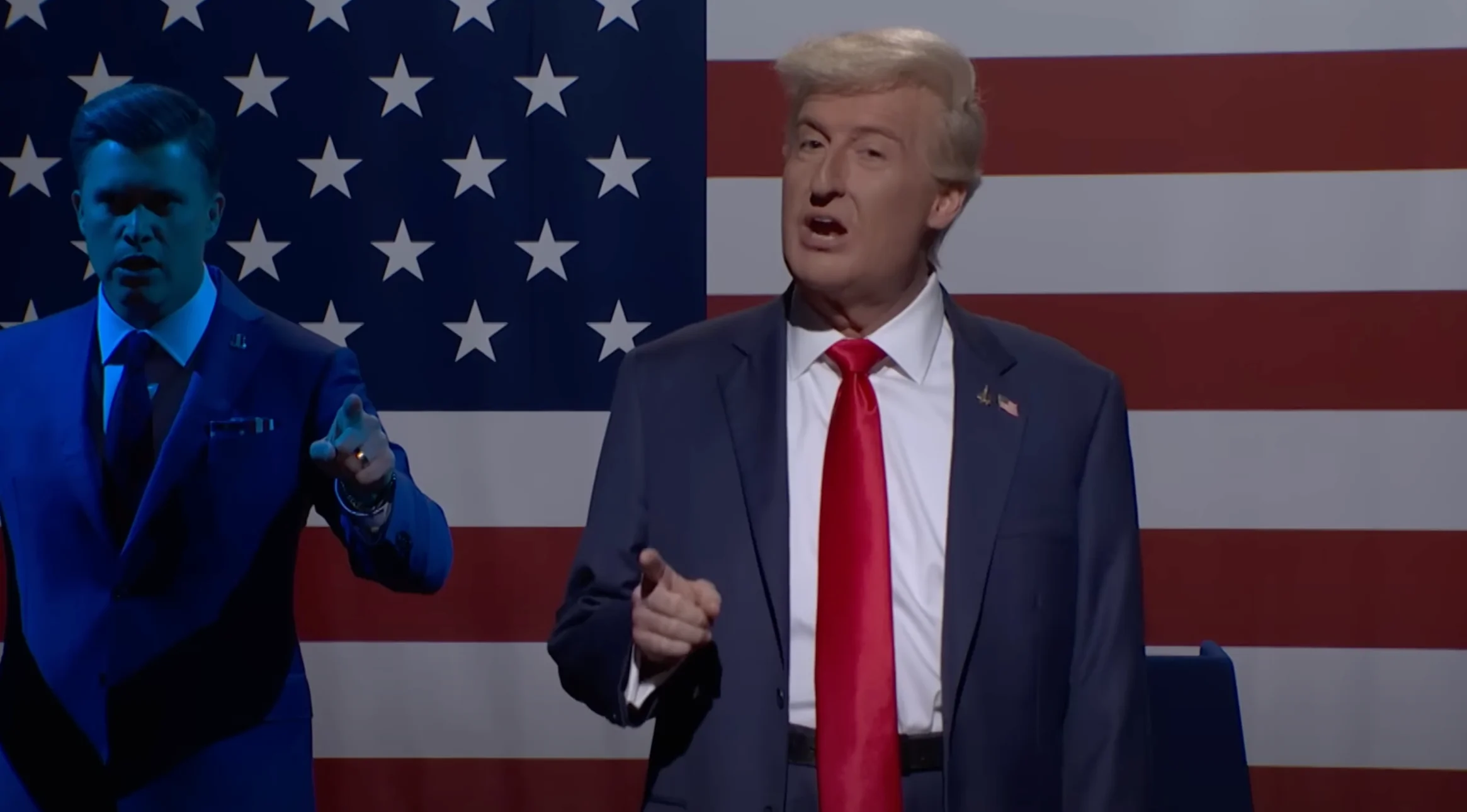
A cold open sketch on SNL about President Trump – YouTube, Saturday Night Live
For a show built on political relevance, there’s no worse fate than being called boring. And if the reaction from both viewers and the administration is any indication, SNL may have finally reached the one thing satire fears most: irrelevance.
How do you feel about the Trump White House’s response to SNL? Sound off in the comments and let us know!
