



Variety recently published research from the Center for the Study of Women in Television and Film at San Diego State University on female directors. The research showed that “women accounted for just 16% of directors working on the 250 highest-grossing domestic releases” of 2024, noting further that “women directed just 11% of the 100 most popular films, down three percentage points from 2023.”

(L-R): Director Sharmeen Obaid-Chinoy and Iman Vellani as Ms. Marvel / Kamala Khan on the set of Marvel Studios’ MS. MARVEL, exclusively on Disney+. Photo by Chuck Zlotnick. ©Marvel Studios 2022. All Rights Reserved.
READ: Cybertruck Madness: The Mainstream Media Failed Badly with Anti-Tesla Stories After the Explosion
At first glance, that suggests a glaringly low rate of female representation in the top tiers of box-office success. But it also raises the question of whether Variety’s argument, which seems to interpret these statistics as proof of ongoing bias, is glossing over the most obvious reason for who gets tapped to direct big-budget theatrical releases:
Money.
The top 250 is strictly a performance metric that measures how much cash a film pulled in. So, if female-directed films didn’t rise to that level, it might be because they didn’t resonate with audiences, not because studios conspired to leave out women.
Below, I’ll address some of Variety’s points in turn and share my perspective on how they appear to challenge merit-based hiring in Hollywood in favor of a DEI system based on gender politics.
Variety’s Statistic on Female Directors
“Women accounted for just 16% of directors working on the 250 highest-grossing domestic releases … That was even with the percentage of films directed by women in 2023. And the situation didn’t improve as you climb up the box office chart — women directed just 11% of the 100 most popular films.”
–Variety
The top 250 or top 100 films is a performance metric based on how much money they earned, not on whether the film was directed by a man or woman. You can’t hire someone specifically to direct one of the highest-grossing movies of the year.
If a film (male or female-directed) didn’t make enough money to reach these metrics, it’s simply not in the top 250 or top 100 regardless of who directed it. The audience votes with their wallets.

Director Wes Ball on the set of 20th Century Studios’ KINGDOM OF THE PLANET OF THE APES. Photo by Jasin Boland. © 2024 20th Century Studios. All Rights Reserved.
When a film doesn’t connect with audiences, that lack of connection is not a reflection of the director’s gender. Rather, it’s a reflection of their talent and the talents of those around them on their crew or cast. It shows how audiences responded to the story, performances, marketing, and overall quality in their film.
Most moviegoers don’t even know who directed a film when they decide to buy a ticket. If they leave the theater feeling disappointed, it’s usually about the film itself (script, pacing, characters)—not the gender of the director.

A screenshot from Venom: The Last Dance (2024), Sony Pictures
If Variety is implying that studios should mandate female directors hit a statistical quota, then the conversation shifts away from the question of directorial talent or storytelling quality into some kind of nonsense argument that would in some way game the system.
Merit-based filmmaking, especially for big-budget projects, tends to revolve around track records, audience interest, and the feasibility of turning a profit. It shouldn’t revolve around identity markers like gender or race.
Martha Lauzen’s Statements on Visibility vs. Employment
“The stunning successes enjoyed by high-profile women in the last few years — including Greta Gerwig, Jane Campion and Chloé Zhao — have not translated into opportunities for greater numbers of women. Visibility for a few has not generated employment for many,”
-Martha Lauzen
Yes, these women have had high-profile success (Barbie, The Power of the Dog, Nomadland). Good for them. So what?
Success in Hollywood—whether for a male or female director—doesn’t automatically guarantee a wave of identical opportunities for everyone else with that demographic marker.
For every James Cameron or Martin Scorsese success, it doesn’t suddenly create opportunities for every male director on earth or every director named James or Martin. It creates opportunities for the individuals who deliver proven hits and build strong industry relationships. Again, Variety and Ms. Lauzen appear to argue that because people like Gerwig, Campion, and Zhao had big successes, that in turn says something about the talent of every other female on the planet.

Lo’ak (Britain Dalton) in 20th Century Studios’ AVATAR: THE WAY OF WATER. Photo courtesy of 20th Century Studios. © 2022 20th Century Studios. All Rights Reserved.
Additionally, studios, particularly the major ones, are notoriously risk-averse, especially right now after a swell of astounding box office flops for heavy hitters like Warner Bros., Disney, and Sony. They rely on proven creatives (be they male or female) who’ve delivered hits in the past.
The argument that “visibility for a few has not generated employment for many” is just another way of saying that Hollywood is conservative in its hiring because of the immense financial stakes, not because of blatant gender bias. They’re supposed to pick directors they believe will deliver box-office success—or at least reduce the risk of a flop.
That’s why directors come up through the indies. It’s like playing college sports and trying to make your way into the majors.
The Broader Statistics on Women in Key Roles
Variety noted a number of Statistics in its article, such as:
- Women made up 12% of all cinematographers working on the top 250 films of 2024, up 5%.
- 20% of writers, up 3%.
- 27% of all producers, up 1%.
- Fewer women worked as composers (9%), editors (20%), executive producers (22%).
- 70% of films employed 10 or more men in key roles, while 8% employed 10 or more women.
The data actually shows women are making gains in some fields (cinematography, screenwriting, producing). So it’s not all doom and gloom. If Variety is making the case that fields like cinematography, screenwriting, and producing are some how “lesser” positions than directors, then they simply get an exasperated sigh and shake of the head from this exhausted author.
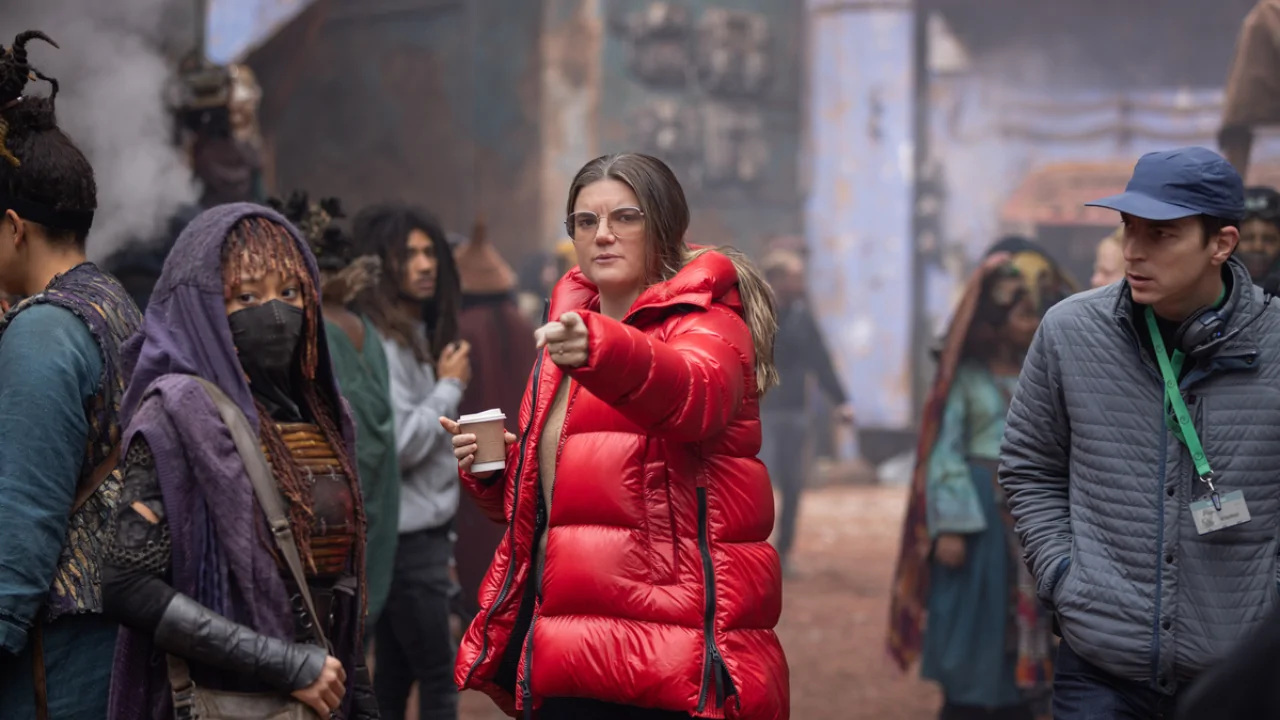
(L-R): Amandla Stenberg , set PA Taylor Young, director Leslye Headland and director of photography Chris Teague on the set of Lucasfilm’s THE ACOLYTE, exclusively on Disney+. ©.
The shift in these fields can be due to any number of factors, including the pipeline of talent, union rosters, budget constraints, or personal choices. But again, the audience doesn’t typically track or demand who composes the score or edits the film. Audiences are more interested in the overall final product.
If The Fire Inside (directed by Rachel Morrison) doesn’t shoot up the charts, it likely has less to do with the director’s or composer’s gender and more to do with whether or not viewers felt compelled to watch it in theaters.
Is ‘Variety’ Advocating for DEI Over Merit?
It sounds like Variety is framing the conversation around how few women get these top 250 spots, insinuating an industry-wide bias. But there’s no clear proof in their article that studios are turning down female directors strictly because of gender. The top 250 list is a reflection of box-office performance.
Ultimately, when Variety bemoans the lack of “improvement” in the overall percentage of female directors in top-grossing films, it flirts with an argument that suggests studios must hire women directors simply to push the percentages higher.
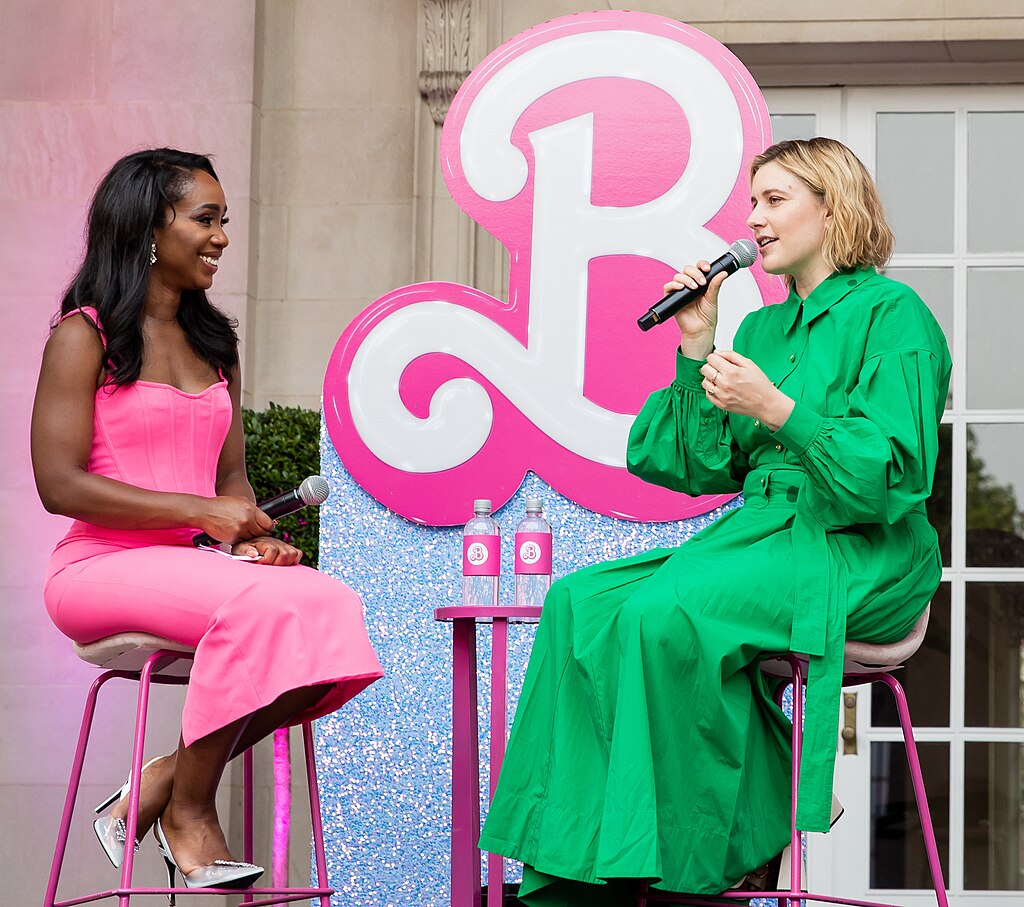
Director Greta Gerwig and Abby Phillip at an event for Barbie. Photo Credit: UKinUSA, CC BY-SA 2.0 <https://creativecommons.org/licenses/by-sa/2.0>, via Wikimedia Commons
That’s a DEI mandate rather than a merit-based approach—and implies that, once those films hit the market, audiences should feel some obligation to see them specifically because a woman directed them.
The industry’s job, however, is to make profitable films that fulfill audience expectations, and that typically should be blind to identity. We can blame “the current environment” of consolidation and changing business models for a lot of things, but the matter boils down to whether the product sells.

George Lucas, Lucas Films award winning director/filmmaker receives an award from the Tuskegee Airman Inc. committee during the 2012 Tuskegee National Convention, Las Vegas, NV., Aug. 3, 2012. Lucas was recognized for his contributions and recent film, Red Tails, which was the first major movie created about the Tuskegee Airmen. TAI is a non-profit organization dedicated to honoring the accomplishments of the Army Air Corps African-American air, ground and operations crew members during World War II. (U.S. Air Force photo by Airman 1st Class Colville McFee)
READ: The Acolyte Creator Leslye Headland Planned for 3 Seasons & a Movie, According to Star
A handful of recent female-directed blockbusters didn’t spawn a slew of copycat opportunities for other women because that’s simply not how the industry should work for anyone. Its why directors cut their teeth on smaller budget indie films until they become undeniable. Then they’re given the call up to the big leagues to direct a blockbuster.
At that point, if a film resonates and rakes in cash, you’ll get another shot, regardless of gender. If it doesn’t, you won’t.
Should Audiences Feel Pressured to Support Certain Films?
The bottom line is that moviegoers vote with their wallets, and if a film fails to attract an audience, the director’s demographic is irrelevant to the bean counters in the studio offices.
Ultimately, Variety’s focus on top-grossing figures as proof of systemic sexism conflates an outcome of lower returns on certain female-directed projects as proof of supposed exclusion or bias. A closer look reveals that the marketplace is largely indifferent to who sits in the director’s chair; as long as the product is good and the marketing connects, audiences show up.
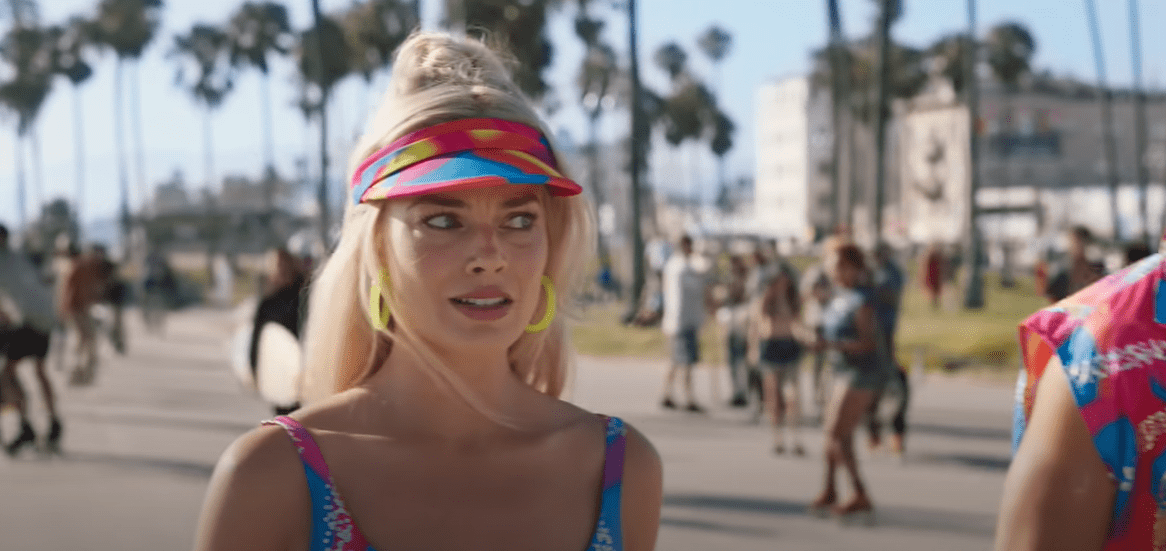
Margot Robbie as Stereotypical Barbie in Barbie (2023), Warner Bros. Pictures
If Variety suggests we force quota-driven hiring or that viewers owe female-directed films their money just because they’re female directors, that becomes a patronizing stance that ignores fundamental consumer behavior. And consumer behavior is something that, in Hollywood, should always carry more weight than any statistics about director demographics.
I keep italicizing the word should in this article because, as we all know, it doesn’t always work like that. Especially now with the Academy of Arts and Sciences issuing diversity mandates for a film to be considered for Academy Awards.
In Conclusion
What Variety’s article interprets as a systemic shortcoming can also be seen as the inevitable outcome of a market-driven system where audience interest (and spending) reigns supreme. It might indeed be unfortunate that more women directors aren’t occupying the top spots, but it isn’t necessarily evidence of sexism in and of itself.

Sydney Sweeney as Julia Carpenter in Madame Web (2024), Sony Pictures
Ultimately, Variety seems to advocate—directly or indirectly—for DEI-driven hiring practices. This perspective can overlook the fact that film is a business first and foremost. If a movie doesn’t resonate with audiences, it loses money. Gender doesn’t magically solve that problem. Studios, at the end of the day, will continue to bet on projects they believe will yield the best return. If female directors do gangbuster business, we should be able to trust that Hollywood will double down on them—just as they should with any proven director, regardless of demographic.
Moviegoers typically don’t care about the gender of the director; they care about enjoying the final product. The industry’s pass-fail system is cold, objective, and often quite brutal. Variety would be better served examining why certain female-directed projects don’t connect at the box office, rather than using the top 250 list as proof of systemic bias.
But I want to hear your thoughts now. Do you care about how many female directors are in Hollywood? How often do you know who the director is when you walk into a theater? Is it a factor for you? Sound off in the comments and let me know!
UP NEXT: Marvel Rivals Leak: Fantastic Four Reportedly Joining the Roster Next Week
