


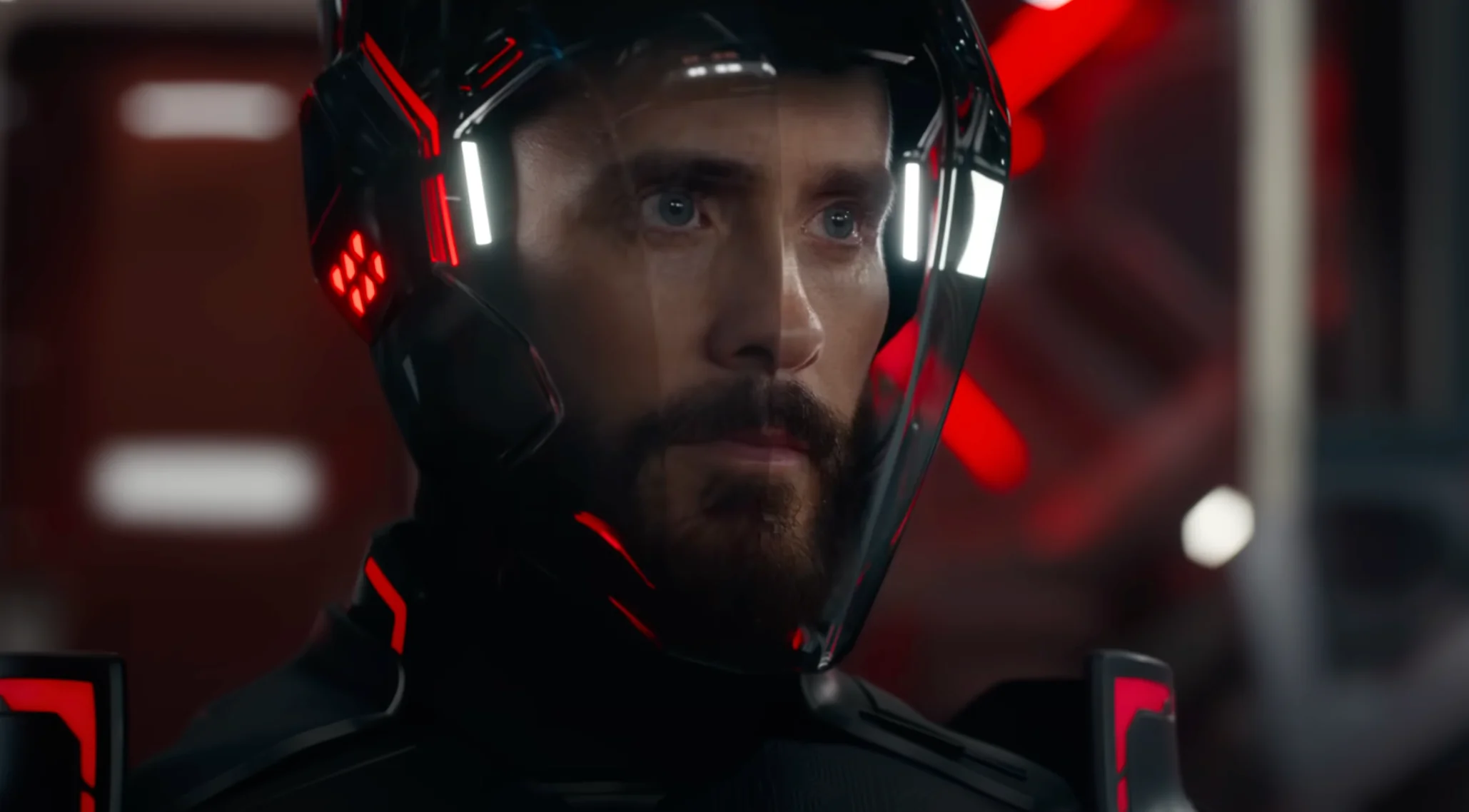
When Tron: Ares stumbled out of the gate, the entertainment press wasted no time finding its culprit. Forget Disney’s overstuffed release calendar, creative stagnation, or a year of record-breaking box office failures. No—the problem that led to Tron: Ares’ box office failure, according to outlets like The Hollywood Reporter, is Jared Leto.
The trades have turned on the Oscar-winning actor with a vengeance, painting him as the problematic and egocentric architect of Ares’ downfall. But while Leto certainly didn’t help matters, the bigger story here isn’t about one actor—it’s about a studio in creative freefall.
Jared Leto: The Convenient Tron Box Office Villain
In its October 14th feature, The Hollywood Reporter framed Tron: Ares as the moment Leto’s star power “ran out.” The piece—titled “No One Asked for This Reboot: ‘Tron’ May Mark End of Jared Leto’s Franchise-Leading Days”—isn’t subtle.
It opens by mocking his flamboyant promotional stunts, revisits past personal controversies, and details how Leto allegedly strong-armed Ares into production through his charisma and persistence.

Tron Lightcycle Run lit in red for the Tron: Ares Overlay – X, @Dr_GrantSeeker
The article details Leto being “elevated to producer” and claims that “the movie’s narrative was reframed so that the protagonist became Ares, his character” instead of being a straight up Tron: Legacy sequel.
It concludes that “With Ares flopping, the insider says Leto’s currency in town has run colder than Morbius’ vampire blood.”
That’s not balanced journalism—it’s the Hollywood version of a hit job.

The digital world in Tron Ares – Youtube, Disney
Once one major trade runs a narrative like this, others tend to follow. Agents and executives read the coverage and start repeating its claims as fact: that Leto is “over,” that his “currency” has run out, that he can’t open a movie. In reality, Tron: Ares is being used to cleanse Disney’s own record of failure by pinning it on the most colorful target available.
A Rotten Year Inside Disney
Let’s be honest—Jared Leto didn’t wreck Disney’s 2025 theatrical slate. The company did that all by itself.
As That Park Place previously reported, Disney is enduring what may go down as its worst box office year in modern history. From Snow White to Elio to Thunderbolts, the studio has stacked up disappointment after disappointment. Even Captain America: Brave New World and Fantastic Four—supposed to be sure things—underperformed. By the time Tron: Ares opened with a dismal $60 million global debut, Disney had already shattered its own record for annual flops.
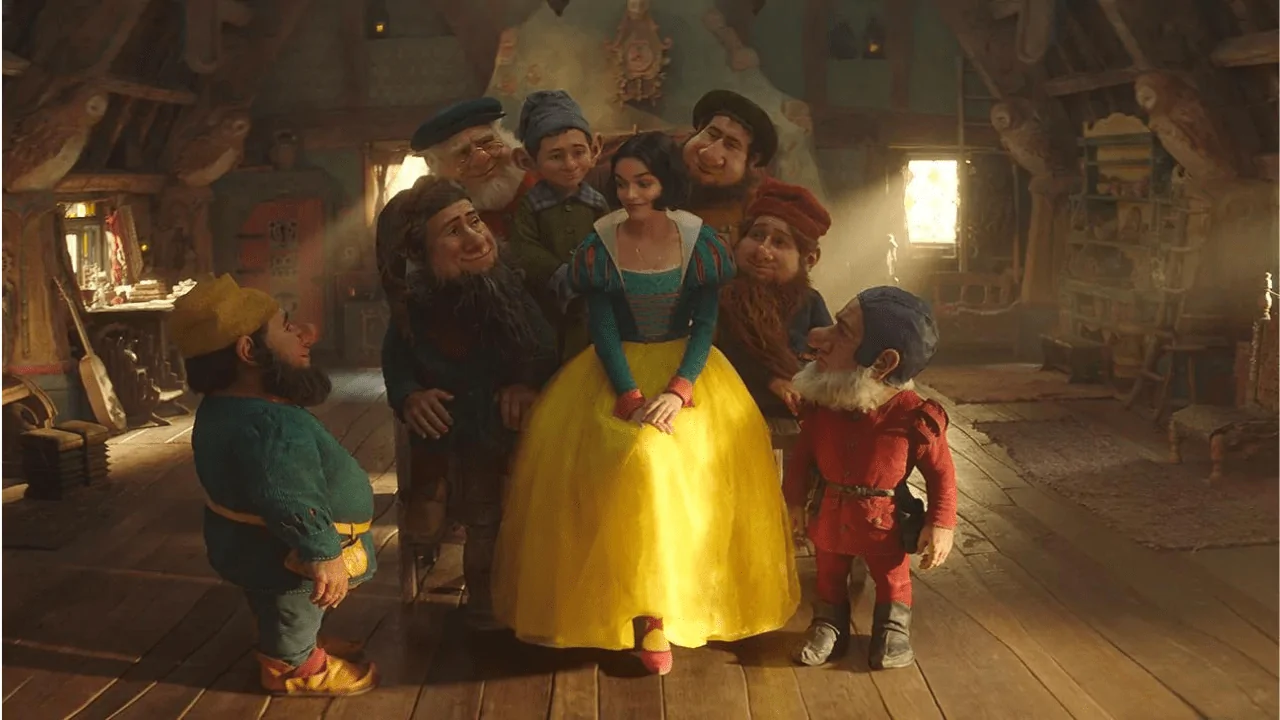
Rachel Zegler as Snow White in Snow White (2025), Walt Disney Studios
Consider the list:
- Snow White – a $240–270 million production (with many outlets claiming more than $300 million after extensive reshoots) that topped out near $205 million worldwide.
- Elio – Pixar’s latest original, which also flopped after a ballooning budget ran up a hefty price tag.
- Thunderbolts and Fantastic Four – each failed to meet break-even thresholds once marketing was factored in.
- Freakier Friday and Captain America: Brave New World – modest box offices with no profit margin.
- Tron: Ares – the final nail, with a big budget and a global debut nearly 70% below projections.
And the year isn’t done. Even with Lilo & Stitch performing above expectations and Avatar: Fire and Ash still to come, analysts doubt the studio’s profits will offset its theatrical losses.

Experiment 626 in the Live Action Lilo & Stitch movie – YouTube, IGN
Yet instead of dissecting what’s gone wrong at the corporate and creative levels—overreliance on remakes, inconsistent leadership, risk-averse storytelling—the trades are pointing fingers at Leto.
Disney’s Problem Runs Deeper
This isn’t about one film. It’s about a company that no longer understands its own audience.
The Tron franchise was never mainstream, and the decision to reboot it for 2025 already looked like a stretch. But Disney’s marketing failed to sell a reason for casual moviegoers to care. The visuals dazzled, the story didn’t, and Leto’s otherworldly persona couldn’t make up for creative emptiness.

Bob Iger via CNBC Television YouTube
Inside the company, executives continue chasing safe nostalgia over innovation. Creative divisions are siloed, and marketing departments are stretched across too many simultaneous releases. Under Bob Iger’s leadership, Disney’s theatrical division has become a patchwork of panic and indecision—a far cry from the confident brand that once dominated multiplexes.
When The Hollywood Reporter blames Jared Leto for the Tron box office, it lets Disney off the hook. That’s convenient for a corporation that still controls ad buys and access for much of Hollywood media.
Leto’s Controversial Past — and Why He’s an Easy Target
None of this is to suggest that Jared Leto is an innocent bystander. The actor has a long history of polarizing behavior that makes him an easy lightning rod whenever things go wrong.
Leto is infamous for his extreme approach to method acting. On the set of Suicide Squad, co-stars described bizarre “gifts” he sent in character as the Joker—items ranging from live rats to used adult items—actions meant to “stay in character” but widely condemned as unprofessional. During Morbius, reports surfaced that his commitment to walking with crutches even off-camera slowed production to the point that crew members had to wheel him to the restroom just to keep the shoot on schedule.

Jared Leto as The Joker in Suicide Squad – YouTube, Warner Bros. Pictures
Beyond his on-set eccentricities, Leto has been the subject of serious allegations over the years. As The Hollywood Reporter noted, Air Mail published nine accounts from women describing “disturbing conduct,” including alleged advances toward minors. His representatives have denied all allegations, but the stories contributed to a growing perception that Leto’s off-screen persona carries baggage that studios would rather avoid.
That reputation, combined with his self-styled image as a creative visionary—musician, actor, producer, director—makes him both fascinating and frustrating for Hollywood. He’s the kind of personality executives love when things go right and abandon the moment they go wrong.

Jared Leto as Ares in Tron Ares – YouTube, Disney
So yes, Jared Leto is part of the problem. His theatrical self-promotion, method excesses, and controversy magnetism didn’t help Tron: Ares. But to imply that his quirks alone tanked a $180 million Disney tentpole ignores the larger truth: this was a studio-driven failure.
Disney greenlit it. Disney marketed it. Disney released it in the middle of an already disastrous year filled with costly underperformers.
And now the same Hollywood ecosystem that props up Disney’s image seems eager to throw Jared Leto under the light cycle and lay the Tron: Ares box office flop at his feet.
The Takeaway
If Jared Leto’s career takes a hit, it won’t be because Tron: Ares bombed—it will be because Hollywood’s gatekeepers needed a scapegoat. Disney’s machine continues to spin, and the trades continue to protect it by sacrificing whoever stands closest to the wreckage.

The Disney logo with a Tron Ares Overlay – YouTube, Disney
Even The Hollywood Reporter seemed to realize in the end how harsh its own takedown was. The piece closes with an anonymous insider insisting, “You could have had Ryan Gosling, it wasn’t going to work… No one asked for this reboot.” That line reads less like insight and more like insurance—a way to soften the blow after spending paragraphs dismantling Leto’s reputation. It’s the trades’ version of a shrug: deliver the hit, then pretend it was balanced all along.
But when a company racks up more flops than hits in a single year, the problem isn’t the star. It’s the system.
And right now, Disney’s system looks broken.
Do you think the media is blaming Jared Leto for the Tron box office flop? Sound off in the comments and let us know!
