


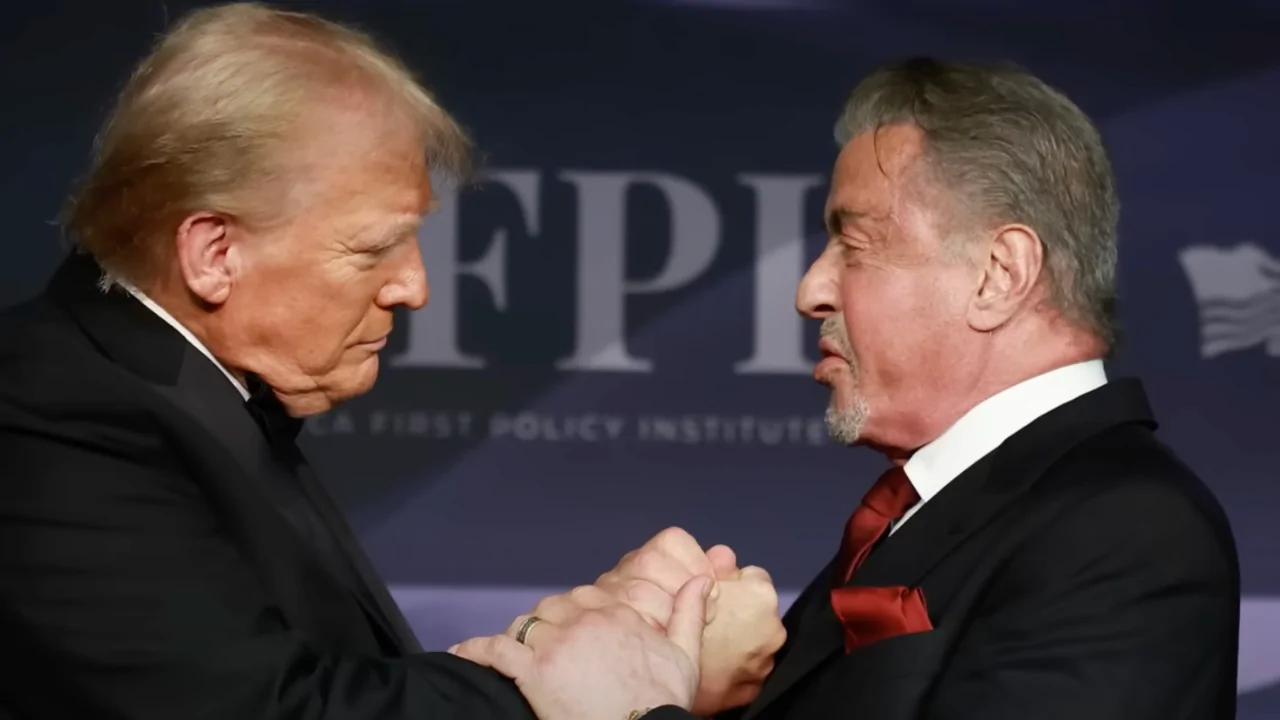
Is Hollywood about to get a taxpayer funded government bailout?
Hollywood has spent years lecturing its audience, alienating longtime customers, producing increasingly expensive movies and television shows, and watching an enormous amount of production leave the United States.
Now, the struggling entertainment industry may have found a solution.
The American taxpayer.
President Donald Trump has thrown his support behind the creation of a federal film and television production incentive, and according to TheWrap, congressional insiders say legislation could be introduced in the House Ways & Means Committee as soon as the week of September 14.
READ: New HBO Harry Potter Trailer Reveals Sorting Hat, Hogwarts, and More Snape
The current proposal being discussed would establish a 20% federal tax credit on labor costs for productions shot in the United States.
Supporters say it could bring thousands of entertainment jobs back to America after years of productions fleeing to countries such as Canada and the United Kingdom.
But there’s another question worth asking.
After years of Hollywood telling significant portions of its audience that their values, politics, and opinions were outdated, offensive, or simply unwelcome, are those same Americans now going to be asked to help subsidize the industry?
President Trump Backs Federal Hollywood Incentive
Trump announced his support after meeting with actor Jon Voight, one of the president’s Hollywood ambassadors and a longtime advocate for bringing film production back to the United States.
“I am going to suggest that Republicans and Democrats get together, and immediately craft Legislation to save the Movie, Television, and Entertainment Business in America,” Trump wrote, according to Reuters. “Congress should approve, immediately, a Federal Production Incentive to create Entertainment Jobs in America.”
Trump argued that the resulting economic activity would ultimately generate far more revenue than the incentive costs.
And Hollywood is enthusiastically lining up behind him with its hands out.

President Trump deliver the 2026 State of the Union Address – Fox News, YouTube
The Motion Picture Association supports the effort. So does SAG-AFTRA. The Directors Guild of America has called a “stackable federal tax incentive” critical to keeping the United States competitive, while IATSE praised Trump’s announcement and said it has been working with Voight and lawmakers to advance such a plan.
That makes this one of the stranger political coalitions Washington has produced in recent memory.
Trump, Hollywood studios, entertainment unions, Republicans, and California Democrats may have finally discovered something they can agree on.
Hollywood needs help.
There’s a Real Problem Here
To be fair, supporters aren’t inventing the problem.
American film and television production has been increasingly moving overseas as countries offer lucrative incentives that individual states struggle to match.
Canada established a nationwide incentive decades ago, while the United Kingdom has become an increasingly important production center for major American franchises.
Georgia production spending has fallen to a 10-year low, while Marvel Studios moved production of its Avengers films to England.
California has faced similar difficulties despite recently expanding its own incentive program.

Avengers Doomsday Art – X, @andyparkart
READ: YouTube TV App Now Includes ESPN Unlimited
Republican Rep. Brian Jack framed the proposal not as assistance for Hollywood celebrities but as protection for the ordinary Americans employed behind the scenes.
“My Congressional District is home to Trilith Studios, and I proudly represent the craftsmen, electricians and carpenters who work hard to create movies that inspire generations of Americans,” Jack told TheWrap.
That’s a legitimate argument.
The overwhelming majority of people who make a movie aren’t millionaire actors or studio executives. They’re camera operators, drivers, carpenters, electricians, costume designers, makeup artists, caterers, construction workers, and countless other people earning ordinary paychecks.
If foreign governments are subsidizing production to lure those jobs away from America, there’s a reasonable debate to be had about whether the United States should respond.
But that doesn’t mean taxpayers shouldn’t scrutinize what they’re being asked to support.
Is This a Hollywood Bailout?
Technically, this isn’t a bailout in the traditional sense.
Disney isn’t declaring bankruptcy and asking Congress for emergency cash. Warner Bros. isn’t receiving a TARP-style rescue package.
This would instead be an industry-specific subsidy administered through the federal tax code.
But the distinction may feel considerably less meaningful to taxpayers watching Washington attempt to improve Hollywood’s economics on its behalf. Particularly because the proposed federal incentive could be stacked on top of state incentives already offered to productions.
The Hollywood Sign – Photo Credit: Thomas Wolf, www.foto-tw.de, CC BY-SA 3.0 <https://creativecommons.org/licenses/by-sa/3.0>, via Wikimedia Commons
The Directors Guild of America specifically celebrated that possibility.
That means Hollywood could potentially receive state-level assistance and then receive another federal benefit for qualifying production costs.
At some point, Americans have every right to ask how much government assistance one private industry requires to make its products economically viable. And Hollywood’s problems haven’t exclusively been caused by Canada or Britain offering better tax credits.
Hollywood Has a Customer Problem Too
That’s the part of this conversation Washington shouldn’t ignore.
For years, Hollywood studios have repeatedly found themselves embroiled in political and cultural controversies that have little to do with making entertaining movies.
Audiences have watched beloved franchises become vehicles for contemporary political messaging. Actors and filmmakers have publicly denounced large portions of the country. Studios have increasingly marketed projects around representation, activism, and social importance while dismissing criticism from longtime fans.
Again and again, consumers who objected were told they were the problem.

Ironheart in the trailer for Ironheart – YouTube, Marvel Entertainment
Don’t like the new direction of a franchise?
You’re toxic.
Don’t appreciate being lectured by your entertainment?
Don’t watch.
Don’t agree with Hollywood’s politics?
The industry often seemed perfectly happy to tell those people that its movies weren’t for them.
Millions apparently took the advice.

Teyonah Parris as Captain Monica Rambeau in Marvel Studios’ THE MARVELS. Photo courtesy of Marvel Studios. © 2023 MARVEL.
Hollywood’s current difficulties obviously can’t be attributed entirely to politics. Streaming shattered the traditional television business, COVID accelerated changes in moviegoing habits, production costs exploded, and foreign tax incentives attracted American jobs overseas. The 2023 strikes created additional disruption.
But Hollywood’s damaged relationship with its audience belongs in that discussion too.
An industry can’t spend years behaving as though customers are an inconvenience and then expect those customers to unquestioningly support government policies designed to protect it from the consequences of a deteriorating business model.
Maybe Hollywood Should Win Audiences Back First
There’s something deeply ironic about where the entertainment industry now finds itself.
Hollywood executives have spent years approving movies costing $200 million or more. Studios poured billions into streaming services chasing subscriber growth while established franchises were repeatedly reinvented despite fan objections and increasingly expensive productions failed to generate the audiences necessary to justify their costs.
And now Washington is discussing changing the tax code to make producing those movies cheaper.

A clip from Episode 3 of Lanterns – HBO Max
Perhaps there’s another solution.
Make better movies.
Control budgets.
Respect the properties audiences already love.
Stop treating half the country like an enemy.
And, of course, give consumers entertainment worth paying for.
If Hollywood does those things and American production still can’t compete because Britain and Canada are effectively purchasing jobs through government subsidies, then Congress has a much stronger case for intervention.
But Americans should be extremely wary of allowing a federal production incentive to become a mechanism through which studios avoid confronting their own failures.
Hollywood Wants Its Audience Back — As Taxpayers
The most compelling argument for the federal incentive isn’t about Hollywood executives at all. It’s about keeping American jobs in America.
That’s why this proposal deserves serious consideration rather than immediate dismissal. If a carefully structured incentive brings productions home, creates jobs, generates additional economic activity, and ultimately returns more money to taxpayers than it costs, supporters will have a strong case.
Congress should demand evidence that it actually will.
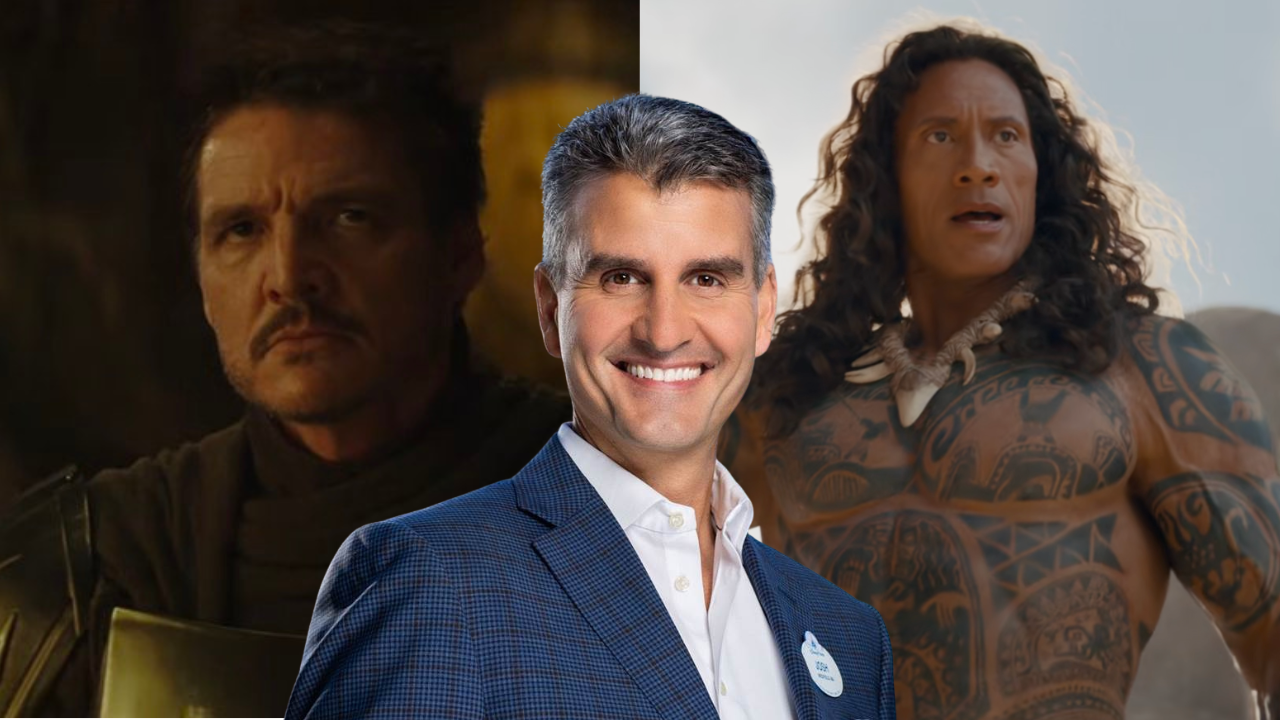
Pedro Pascal as The Mandalorian, Dwayne The Rock Johnson as Maui, and Disney CEO Josh D’Amaro – Disney
There should be strict eligibility requirements, transparency about which companies receive benefits, limits preventing runaway subsidies, and measurable requirements demonstrating that the program actually creates American jobs rather than simply improving studio profit margins.
Because Hollywood has spent years telling audiences that entertainment doesn’t have to cater to them.
Fine.
But if that’s the industry’s position, it shouldn’t expect those same Americans to automatically subsidize it.
Hollywood was perfectly willing to tell dissatisfied customers to stop buying tickets. It shouldn’t be surprised when those customers ask why they’re now expected to pick up part of the bill anyway.
Do you think Trump is giving Hollywood a bailout? Sound off and let us know!
UP NEXT: George Clooney Defends Mark Ruffalo and Takes Aim at Paramount-Warner Bros. Merger
