


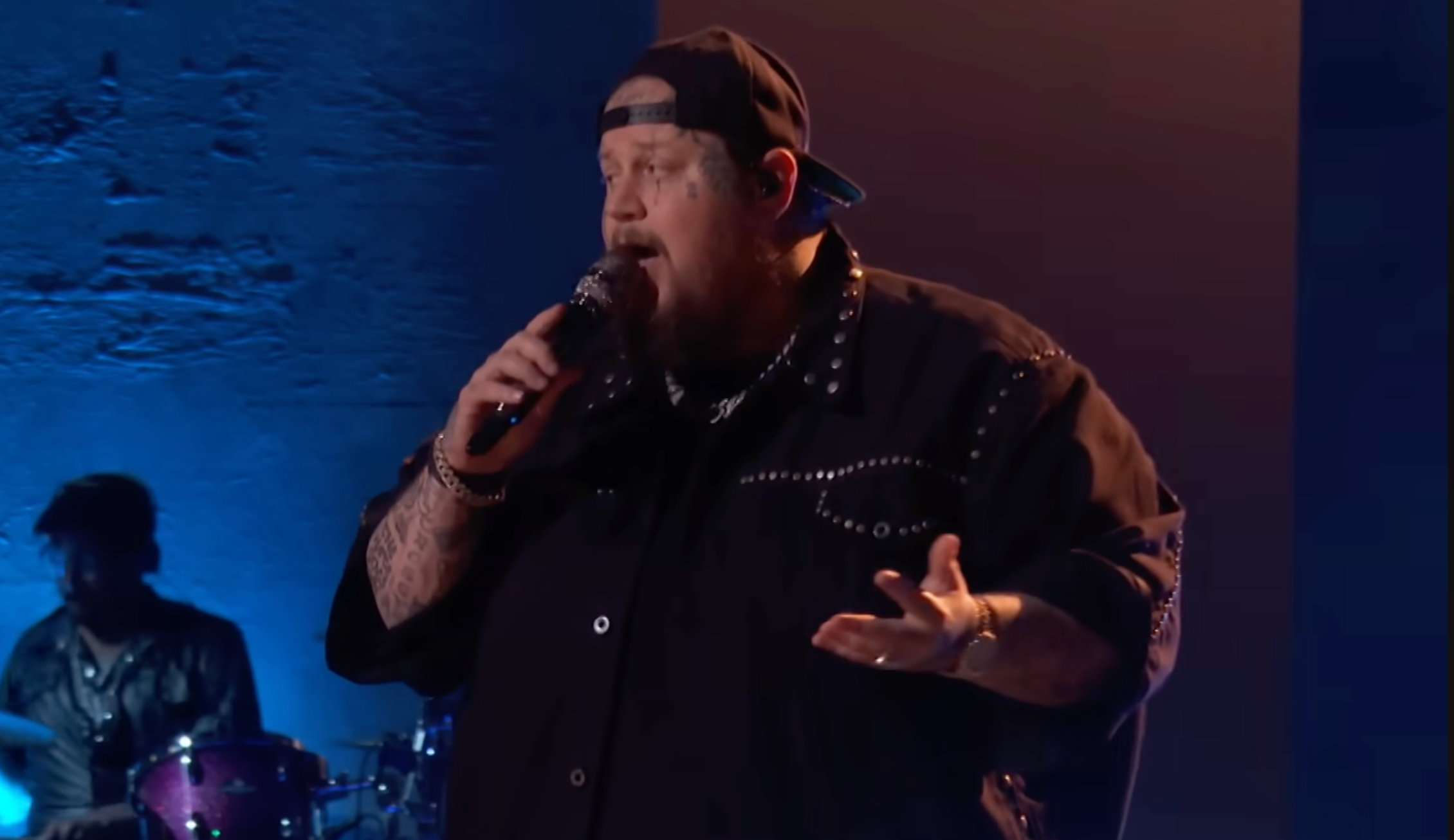
Jelly Roll wants Americans to believe he’s a simple, politically homeless country singer being unfairly labeled by extremists on both sides.
Unfortunately for him, Americans have eyes, ears, and memories longer than six months.
In February, when the singer was asked about the political climate following a Grammy ceremony filled with denunciations of Immigration and Customs Enforcement (ICE), he pleaded ignorance. People shouldn’t care about his opinion, he suggested, because he was merely a “dumb redneck” who had spent months without a phone.
It was a tactful response. It was also apparently temporary.
Give that same “dumb redneck” Jimmy Kimmel’s desk, a team of Hollywood writers, and a national television audience, and he becomes a swaggering progressive political commentator with strong opinions about Donald Trump’s weight, approval ratings, trade policies, and fitness for office while telling the president’s supporters to stop listening to his music (he’s a country singer by the way…).
READ: Apple TV Raises Its Price Again, Tripling Its Monthly Cost Since Launch
Then, after conservative fans reacted exactly as anyone could have predicted, Jelly Roll wiped away tears, disavowed his previous Grammy restraint, adopted the moral vocabulary of the anti-ICE Left, and claimed he was still “pretty down the middle.”
That isn’t centrism. It’s cowardice dressed as compassion.
Jelly Roll Suddenly Found His Political Voice on Jimmy Kimmel’s Stage
Jelly Roll’s week guest-hosting Jimmy Kimmel Live! began with a succession of attacks on Trump.
He mocked the president’s weight and joked that, after losing hundreds of pounds himself, he had shed the equivalent of an entire Trump. He replayed old footage of Trump insulting other people’s bodies and delivered the line, “If that ain’t the pot calling the kettle fat.”
When viewers objected, Jelly Roll didn’t moderate his approach. He doubled down.
He later declared that Trump was not physically fit, mocked his appearance, ridiculed his trade conflict with Canada, and participated in a fake advertisement for a Trump-specific weight-loss drug called “Donjaro.”
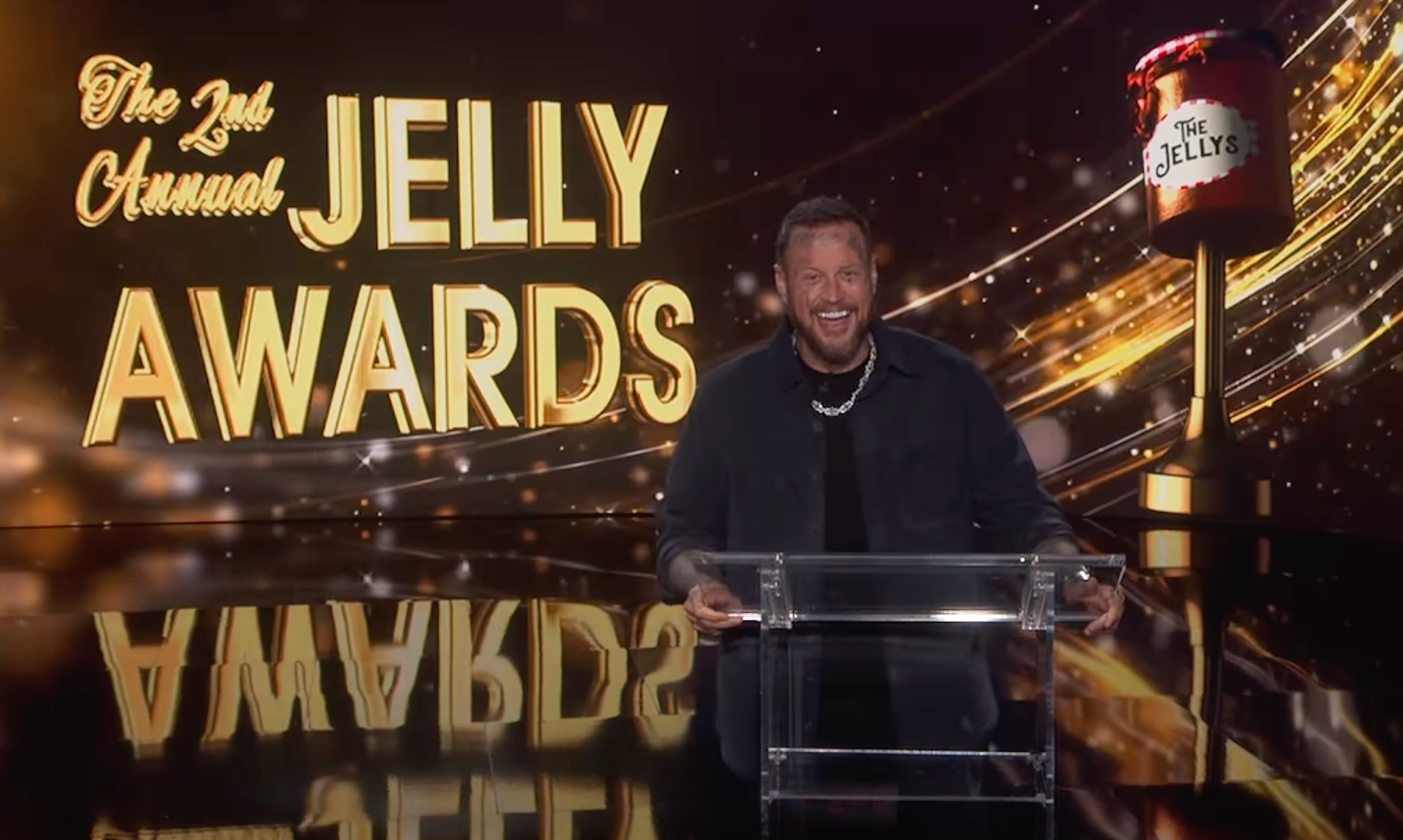
Jelly Roll on Jimmy Kimmel Live! – YouTube, Jimmy Kimmel Live!
This was not one stray punchline buried inside an otherwise balanced monologue. Trump remained a recurring target throughout Jelly Roll’s stint behind Kimmel’s desk. ABC has published the opening monologue that launched the controversy, as well as Jelly Roll’s subsequent response to the backlash.
There is nothing inherently illegitimate about a comedian or celebrity mocking a president. Trump is a public figure, presidents have always been targets of satire, and the First Amendment protects Jelly Roll’s right to say every word.
But freedom of speech doesn’t protect a celebrity from criticism, boycotts, or the consequences of insulting the political loyalties of his own audience.
Jelly Roll wanted the freedom to ridicule Trump. His fans possessed the same freedom to decide that they no longer wanted to finance him.
He Told Angry Conservative Fans to “Go Right Ahead” and Leave
Rather than acknowledging that conservative country music listeners might feel blindsided, Jelly Roll treated their surprise as ridiculous.
He insisted he was only fulfilling the traditional responsibilities of a late-night host. He then addressed those threatening to stop listening to his music and told them to “go right ahead.”
Some of them accepted the invitation.
Newsmax host Carl Higbie deleted Jelly Roll’s music from his phone during his broadcast. Florida Republican Rep. Jimmy Patronis declared that the singer was no longer welcome in the state’s Panhandle. Social media filled with former listeners announcing that they were finished supporting him. TheWrap documented Higbie’s on-air deletion, which turned one angry listener’s boycott into part of the national story.
Those reactions don’t yet demonstrate that Jelly Roll’s career is over. Cable-news theatrics and angry posts are not substitutes for ticket, streaming, or radio data.
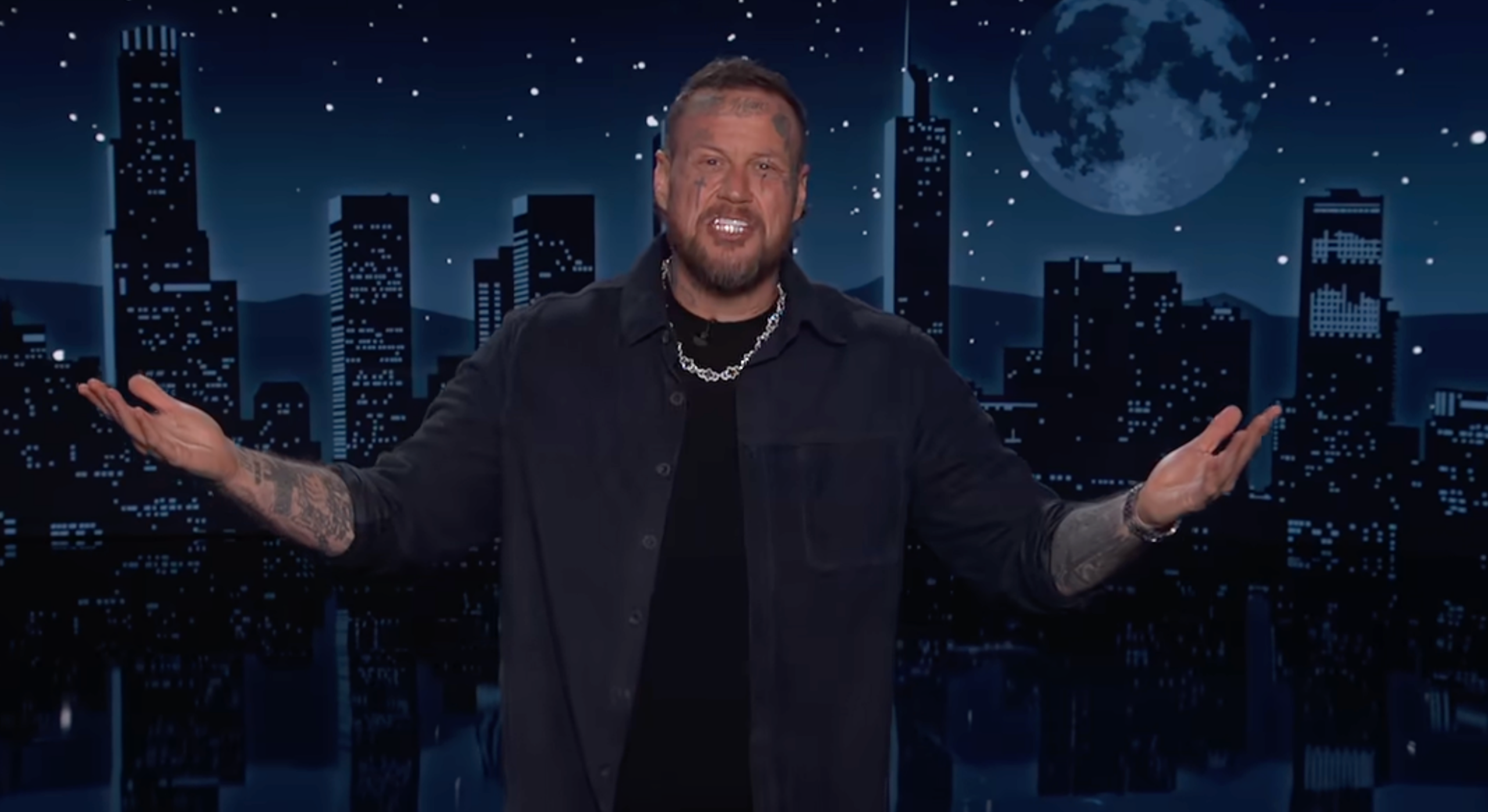
Jelly Roll on Jimmy Kimmel Live! – YouTube, Jimmy Kimmel Live!
They do, however, expose the recklessness of his decision.
Jelly Roll built an image around redemption, faith, rural identity, addiction recovery, and solidarity with ordinary Americans. His success depended in part on convincing listeners that he understood people who felt ignored or despised by the cultural establishment.
Then he walked onto one of Hollywood’s most reliably anti-Trump programs, joined its usual political routine, and laughed at the customers who questioned him.
That isn’t courageous truth-telling. It’s a wealthy celebrity demonstrating that he now values applause from a Kimmel audience more than the trust of the people who helped make him wealthy.
The Grammy Reversal Makes the Act Even Worse
The most revealing portion of Jelly Roll’s final monologue concerned his appearance at the 2026 Grammy Awards.
That ceremony became an anti-ICE showcase, with performers condemning the agency and Trump’s immigration policies. Asked backstage whether he wanted to comment on the state of the country, Jelly Roll declined to participate.
“People shouldn’t care to hear my opinion,” he said, describing himself as a “dumb redneck” disconnected from politics and social media.
That answer was perfectly defensible. Entertainers are not elected officials, policy specialists, or moral authorities simply because they can sing. Refusing to deliver a half-informed political declaration immediately after receiving an award was arguably one of the most responsible things Jelly Roll had done publicly.
He now apparently regrets it.
Jelly Roll BURSTS Into Tears On LIVE TV, Rages at Fans for Abandoning Him After Anti-Trump Betrayal
Jelly Roll has now tripled down by giving a political speech on Jimmy Kimmel — walking back his earlier choice not to comment on ICE and law enforcement when he was asked.
To… pic.twitter.com/AcMZbxw2ud
— Benny Johnson (@bennyjohnson) August 28, 2026
READ: Gal Gadot Signals She Won’t Return as Wonder Woman, Hasn’t Heard From James Gunn or DC Studios
On Kimmel’s program, Jelly Roll said he had “fumbled” his words at the Grammys. Although he claimed not to regret asking for more time, he lamented that he had possessed a microphone and had failed to use it “the right way.”
He said he should have spoken for those who were “scared, hurting, and felt like nobody was speaking for them.” Quoting the Gospel of Matthew, he emphasized welcoming strangers and insisted that loving one’s neighbor carried no exception based on birthplace. He added that there were “no boundaries or borders for broken families.”
Jelly Roll didn’t explicitly demand the abolition of ICE. He didn’t explain which deportations he opposes, what immigration laws he supports, or how the United States should distinguish between lawful immigrants, illegal immigrants, asylum seekers, criminals, and other categories routinely collapsed by celebrity activists.
His contribution remained emotionally extravagant and substantively empty.
But its political direction was obvious. Jelly Roll was apologizing for declining to join the Grammys’ anti-ICE chorus. He was recasting his previous restraint as a failure of moral courage.
He didn’t merely clarify his old answer. He repudiated the neutrality behind it.
“Down the Middle” Does Not Mean Attacking Only One Side
Having spent the week attacking Trump and revising his response to an anti-ICE controversy, Jelly Roll then delivered the most insulting line of the entire performance.
“Sure, I lean left on some things,” he said, “but like most folks, I’m pretty down the middle.”
As evidence, he listed his Christian faith, country-music career, farm, and enthusiasm for bow hunting.
None of those things establishes political centrism. They establish that Jelly Roll possesses surface-level cultural characteristics commonly associated with rural conservatives. That makes his pivot more commercially complicated; it doesn’t make his commentary balanced.
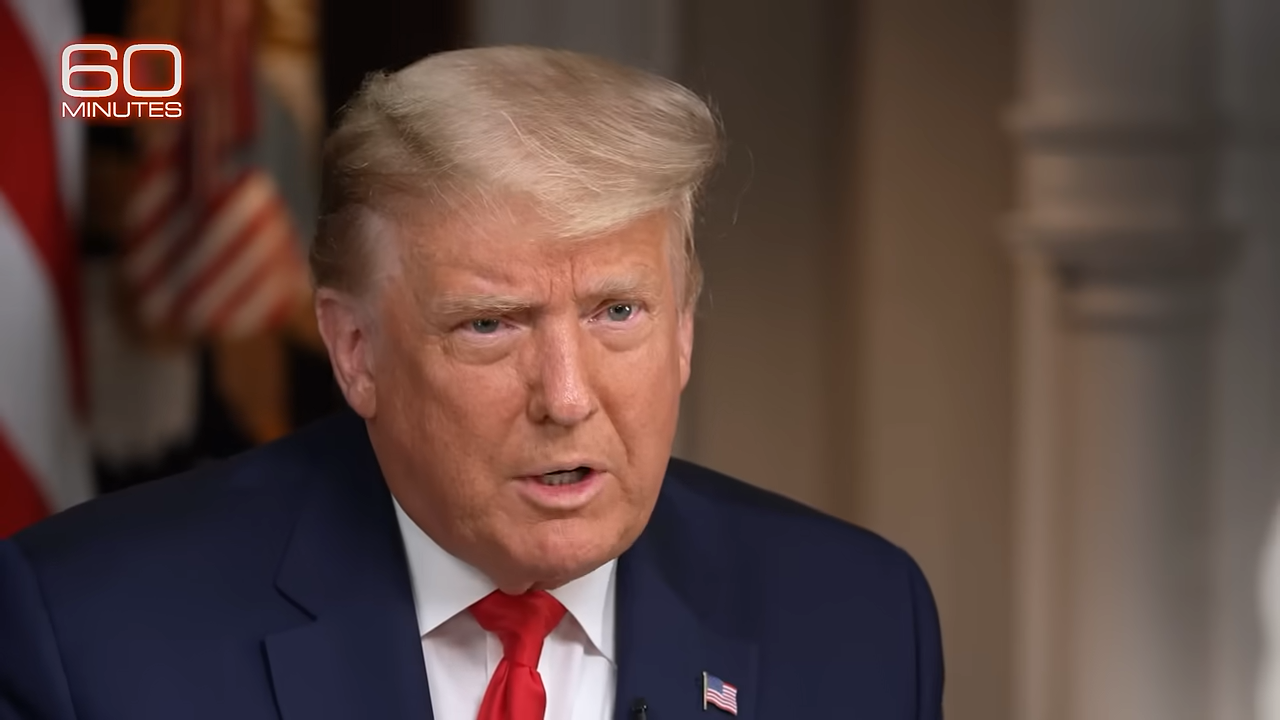
President Donald Trump in a 2020 interview – 60 Minutes, YouTube
A man can hunt, farm, sing country music, invoke Jesus, and still advance every fashionable Hollywood liberal sentiment placed before him. Cultural branding isn’t a political philosophy.
More importantly, Jelly Roll offered no corresponding criticism of Democrats or the anti-ICE activists whose message he had just embraced. He didn’t spend his hosting stint mocking prominent Democrats, illegal immigration, progressive prosecutors, gender ideology, or any other subject that might have complicated the applause inside Kimmel’s studio.
His harshest words were reserved for Trump. His moral regret concerned his failure to speak during an anti-ICE campaign. His criticism of the Left was reduced to a joke about Kimmel’s “communist” staff and a generic complaint that leaders on both sides were failing to unite the country.
That’s the oldest trick in celebrity politics: attack the Right specifically, excuse the Left abstractly, and then retreat behind a mist of “both sides” platitudes when customers become angry.
Jelly Roll’s Newly Discovered Moral Authority Deserves More Scrutiny
Jelly Roll’s sermon about compassion might carry more weight if his carefully rehabilitated public image weren’t already surrounded by serious, largely unanswered questions.
The clearest example is a secretly recorded January 2023 conversation involving Jelly Roll and country rappers Ryan Upchurch and Adam Calhoun. In the footage, Jelly Roll can be heard using the N-word during a private discussion. At least one use of the slur is reasonably clear, although two additional alleged instances are more difficult to decipher.
The remark was not shouted at a Black person or delivered as an explicitly racist attack. Context matters—but context did not spare Morgan Wallen when footage captured him using the same slur in 2021. Nor did it get a pass for Hulk Hogan who was taped secretly in a private moment and despite frequent apologies was vilified until his death.
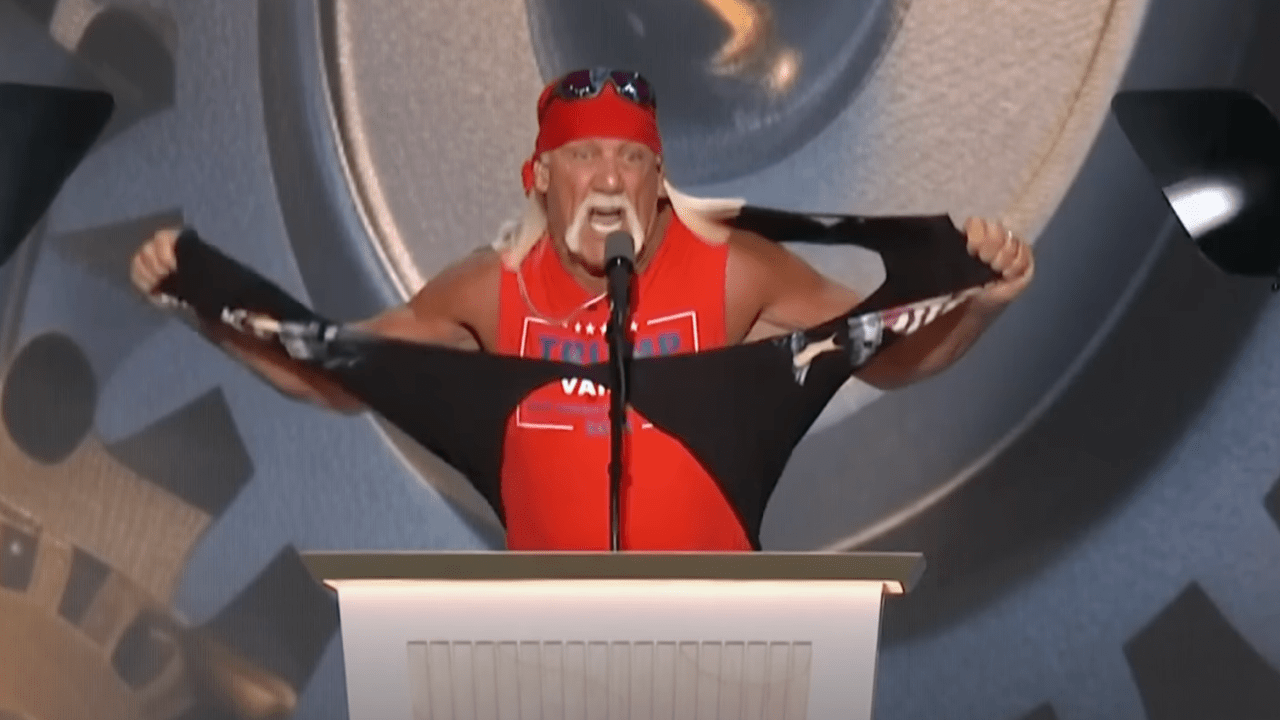
Hulk Hogan speaks at the RNC in support of Donald Trump – YouTube, Bloomberg Television
Wallen was suspended by his record label, removed from major radio playlists, disqualified from awards, and forced into a prolonged public reckoning. Jelly Roll’s recording, by contrast, circulated for months without attracting remotely comparable attention from the entertainment press.
Saving Country Music investigated the recording, identified one clearly audible use at approximately 7:42 in the longer video, and reported that Jelly Roll’s publicist didn’t respond to a request for comment or clarification. The singer who now considers himself morally obligated to lecture the country about compassion apparently hasn’t felt equally compelled to explain to his new progressive Hollywood friends why he was casually using a racial slur two years after the Wallen scandal.
That discrepancy doesn’t prove Jelly Roll is a racist. It does, however, expose the selective morality of a celebrity culture that appears willing to forgive—or simply ignore—almost anything once an entertainer begins repeating politically fashionable messages.
The questions surrounding Jelly Roll don’t end with that recording.
Comedian and online personality Nicole Arbour accused him of threatening to kill her if he saw her filming at a Nashville charity event. According to TMZ’s account of an incident report, Arbour supplied footage that deputies reviewed, and authorities identified Jelly Roll and another man in the video. The Metropolitan Nashville Police Department nevertheless told the outlet that no charges had been filed and that no investigation was underway.
Arbour has made additional, considerably broader allegations involving intimidation, people associated with Jelly Roll, reported drink-drugging incidents in Nashville, and an alleged attempt to pressure her into signing what she characterized as a “hush money” agreement. She presented those claims during an April 2026 appearance on the Investigate Earth Conspiracy Podcast.
Those claims remain contested and largely unproven. They shouldn’t be presented as established facts, nor do they currently substantiate the sweeping online theory that Jelly Roll or his businesses participated in trafficking. In that interview, Arbour encouraged listeners to look for possible correlations but did not publicly establish a trafficking operation involving Jelly Roll.
Was Jelly Roll simply another person who jumped on the Christian bandwagon for money and clout? pic.twitter.com/PF71uQXyKR
— Sally (@TalkWithSally) August 27, 2026
There has also been at least one public accusation of sexual misconduct and disgraceful security behavior at Jelly Roll’s Goodnight Nashville bar. In a March 2025 Reddit post, an anonymous woman alleged that male patrons physically and verbally harassed her and two friends inside the establishment. She said one man grabbed her inappropriately and that a security guard laughed when she reported what had happened before insulting her for warning women waiting outside.
That account has not been established through a court judgment, police finding, or independent investigation. It accuses patrons of committing the alleged assault and venue security of responding reprehensibly—not Jelly Roll of personally assaulting anyone. Nevertheless, an allegation that women were groped inside a celebrity-branded establishment and mocked when seeking help by said celebrity’s staff deserves a more serious response than silence.
Before lecturing Americans about dignity, mercy, and the proper use of a microphone, Jelly Roll might consider using his own microphone to answer the questions surrounding his behavior and business.
Hollywood may be willing to treat a tearful anti-Trump monologue as proof of moral courage. The public is not obligated to extend the same unquestioning indulgence.
The Tears Cannot Repair the Contradiction
Jelly Roll became visibly emotional while talking about addicts, former prisoners, struggling mothers, broken families, mercy, faith, and second chances.
Those subjects are central to his public identity, and the emotion may have been genuine. Genuine emotion, however, doesn’t make an argument coherent.
The central question wasn’t whether Jelly Roll cares about hurting people. It was why a man who considered himself too uninformed to address ICE in February became confident enough to lecture the country from Jimmy Kimmel’s stage in August.
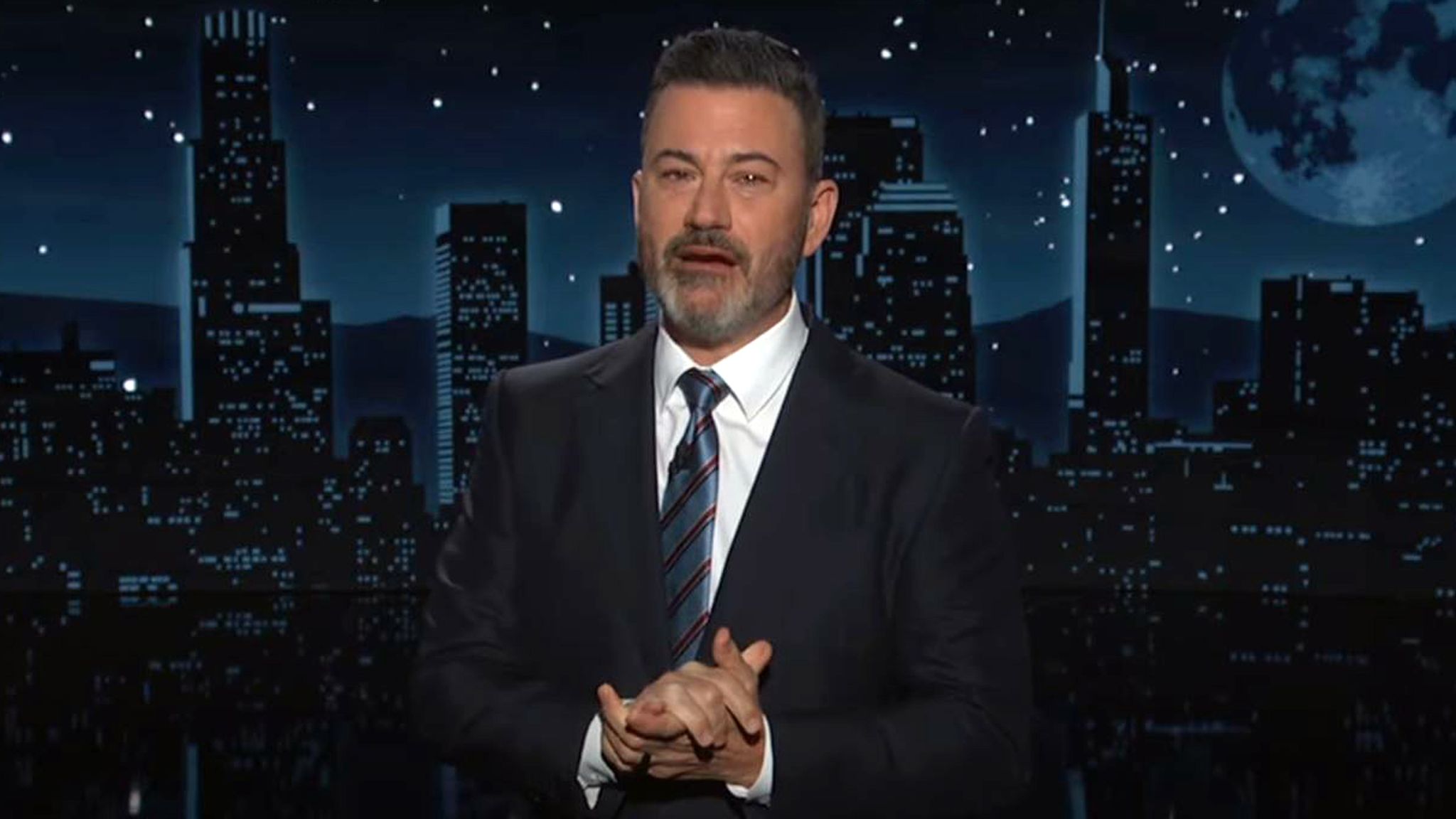
Jimmy Kimmel Crying – YouTube, Jimmy Kimmel Live!
He never answered it.
Instead, he substituted tears for an explanation and biography for consistency. He invoked his father, his faith, his criminal past, his restored voting rights, and his concern for marginalized people. All of that may explain why political questions affect him personally. None of it explains why his newly discovered courage runs almost exclusively in the direction celebrated by Hollywood.
Jelly Roll Chose Hollywood Approval Over Audience Trust
Jelly Roll is free to become a liberal activist, a centrist, a Republican, or something else entirely. What he can’t reasonably demand is that the public ignore the evidence and accept whichever label remains most commercially convenient.
If he believes Trump deserves ridicule, he should say so without pretending his monologues were politically neutral. If he believes he failed immigrants by declining to condemn ICE, he should articulate the policy he now supports. If he believes conservative fans are dispensable, he should accept their departure without crying about being misunderstood.
Instead, Jelly Roll attempted to occupy every position simultaneously.
He was apolitical when taking a position carried risk. He became outspoken when surrounded by a friendly Hollywood audience. He told offended fans they could leave, then became emotional while describing the pain of being categorized. He echoed the anti-ICE movement, attacked Trump repeatedly while calling jokes apolitical, and invoked hunting and farming as proof that he remained in the center.
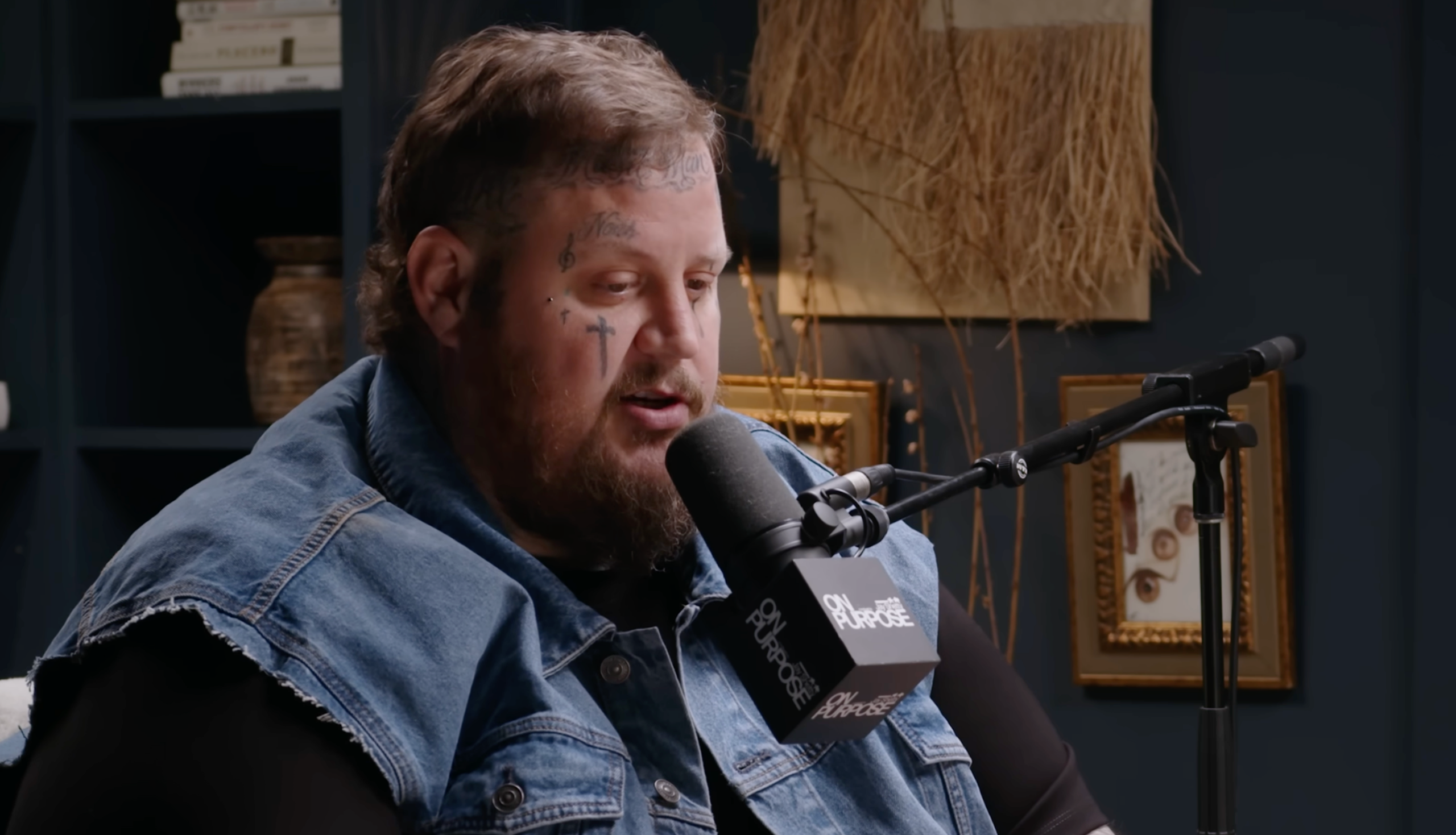
Jelly Roll in an interview – YouTube, Jay Shetty Podcast
It wasn’t brave or even coherent. And it was certainly not “down the middle.”
Jelly Roll may survive the controversy. Celebrity careers frequently outlast political outrage, particularly when the entertainment press is eager to recast hypocrisy as personal growth.
But something important has changed.
The singer who marketed himself as a voice for forgotten Americans has revealed how quickly he will sneer at some of those Americans when Hollywood offers him a bigger microphone. His listeners now know that his carefully cultivated authenticity has limits—and apparently those limits begin at the edge of Jimmy Kimmel’s stage.
How do you feel about Jelly Roll on Jimmy Kimmel? Sound off and let us know!
