



Christopher Nolan’s The Odyssey has inspired passionate reactions from audiences, critics, and scholars alike, but perhaps no exchange has been stranger than the latest clash between acclaimed novelist Joyce Carol Oates and feminist Homer translator Emily Wilson.
After Wilson published a blistering review of Nolan’s blockbuster, Oates leapt to the director’s defense, accusing Wilson of speaking “in the crude language of MAGA folks” instead of engaging in a “collegial” discussion about Homer’s epic.
The accusation immediately stood out—not only because it injects American partisan politics into a debate over a Greek epic, but because Wilson herself is one of the last people anyone would reasonably associate with the MAGA movement.
Emily Wilson Didn’t Hold Back
Wilson, whose 2017 feminist translation of The Odyssey became a bestseller and was publicly praised by Nolan during the development of the film, offered one of the harshest reviews the movie has received.
Among other criticisms, she wrote that Nolan’s adaptation suffered from “grandiosity and superficiality,” criticized the script and characterization, and even remarked that she “would be ashamed to have written any part of this script.”
Whether readers agree with Wilson or not, the review was unmistakably a critique of the film itself. She explained why she believed Nolan’s adaptation failed as both cinema and as an interpretation of Homer.
That is, after all, what critics do.
Joyce Carol Oates Turns It Into Politics
Rather than directly rebutting Wilson’s arguments, Oates focused on the tone of the review.
Writing on X, Oates said: “Rather than disagreeing with interpretations of Homer in a collegial manner, this person, who has benefited enormously from Nolan’s film, speaks in the crude language of MAGA folks attacking someone with ideas that differ from hers.”
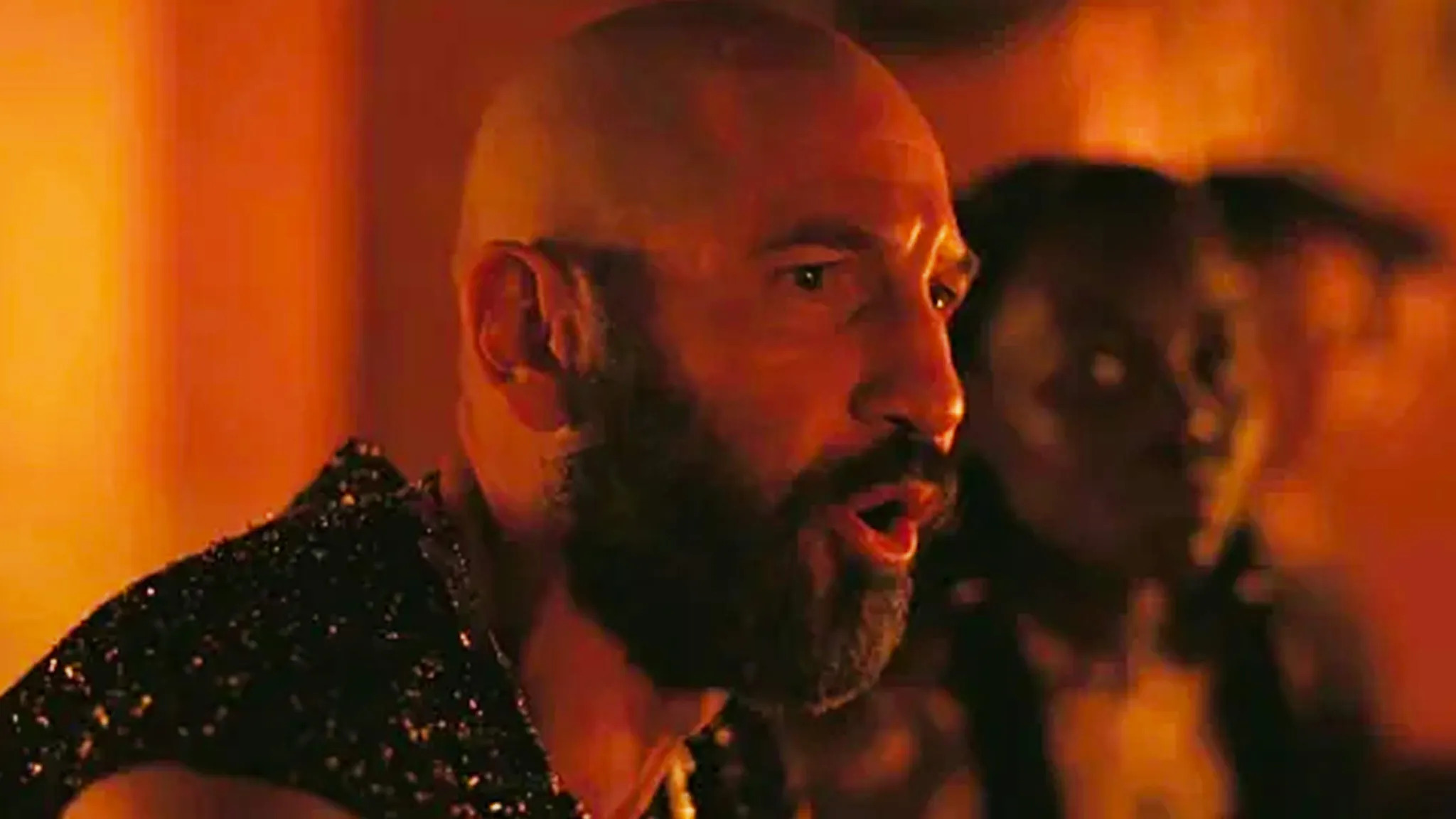
Jon Bernthal as King Menelaus in the teaser for The Odyssey – Universal Pictures
She continued: “One would expect a translator, of all people, beholden to a text, in service to a text, to be just a wee bit more thoughtful & respectful of others who are acting in good faith just as (she would claim) she is.”
Instead of explaining why she believed Wilson misunderstood Nolan’s artistic choices or Homer’s themes, Oates framed the very act of forceful criticism as resembling political rhetoric.
The Irony Is Hard to Ignore
The comparison is especially odd given Wilson’s own reputation.
Wilson is not known as a conservative commentator. Quite the opposite.
She has built her academic career around feminist scholarship and progressive interpretations of classical literature. Her translation of The Odyssey famously opened with “Tell me about a complicated man,” a deliberate departure from more traditional translations and one that sparked years of discussion about gender, language, and interpretation.
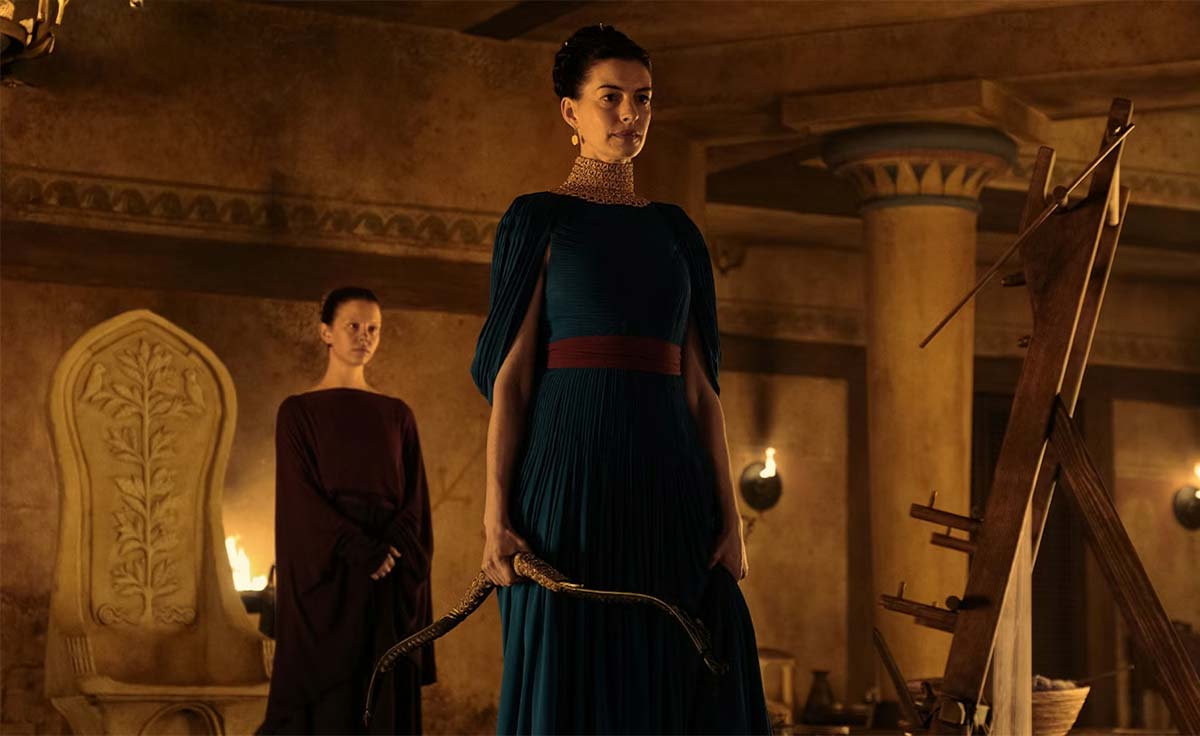
Mia Goth as Melantho and Anne Hathaway as Penelope in the trailer for The Odyssey – YouTube @UniversalPictures
She has frequently written and lectured about women in Greek literature, gender dynamics, and the cultural assumptions embedded in classical texts.
In other words, Joyce Carol Oates was using “MAGA folks” as shorthand for someone whose criticism she considered too harsh.
That raises an uncomfortable question.
If someone as progressive as Emily Wilson can suddenly be likened to “MAGA folks” simply for criticizing Christopher Nolan’s film, what does that say about the boundaries of acceptable criticism?
Criticism Doesn’t Require Permission
Wilson’s review is undeniably severe, dismissive, and at times, almost merciless.
None of that makes it illegitimate.
Film criticism has never been required to be polite. Some of the greatest critics in history built their reputations on devastating reviews of films they believed failed artistically.

Matt Damon as Odysseus in the trailer for The Odyssey – YouTube @UniversalPictures
The proper response to criticism is to challenge the arguments being made. It’s not to imply the critic sounds like one’s political opponents.
Yet that increasingly appears to be the instinct surrounding major prestige projects.
Rather than engaging with Wilson’s points about characterization, dialogue, pacing, or Nolan’s interpretation of Homer, the conversation shifts toward whether she was sufficiently respectful in expressing those opinions.
A Prestige Shield Around Christopher Nolan?
There is another irony in Oates’ response.
Christopher Nolan is arguably the most celebrated filmmaker working today. The Odyssey has been both a critical darling and an enormous commercial success, rapidly climbing toward the billion-dollar mark at the global box office.
Despite that success, some supporters appear remarkably uncomfortable with the idea that one of the world’s foremost Homer scholars simply didn’t like the movie.

The Cyclops in the trailer for The Odyssey – YouTube @UniversalPictures
Wilson’s review has become controversial not because she offered an unusual opinion, but because she refused to temper it.
Instead of treating that as part of the normal exchange of artistic ideas, Oates effectively suggested Wilson’s rhetoric resembled that of a political movement she clearly intended as a pejorative.
Hollywood’s Elite Circle Often Seems Uncomfortable With Dissent
The broader episode speaks to a pattern that has become increasingly familiar in entertainment.
Prestige projects are often celebrated as bold artistic achievements while criticism is expected to remain measured, respectful, and deferential.
When criticism becomes too sharp, the conversation often shifts away from the substance of the critique and toward the character, motives, or tone of the critic.
That’s exactly what happened here.
Travis Scott in The Odyssey – YouTube, Universal Pictures
Emily Wilson offered an uncompromising review of Christopher Nolan’s The Odyssey. Readers are free to agree with every word she wrote, reject it entirely, or fall somewhere in between.
What they shouldn’t have to accept is the idea that honest criticism somehow becomes suspect simply because it’s blunt.
If one of the world’s best-known feminist scholars can suddenly be compared to “MAGA folks” for disliking one of Hollywood’s most celebrated films, it suggests the real issue isn’t politics.
It’s that, in some corners of the entertainment world, prestigious filmmakers are increasingly expected to be insulated from harsh criticism.
How do you feel about Joyce Carol Oates and her comparing Emily Wilson to “MAGA folks?” Sound off and let us know!
UP NEXT: Halo: Campaign Evolved’s LGBTQ+ Steam Tag Vanishes Less Than 24 Hours After Appearing on Store Page
