


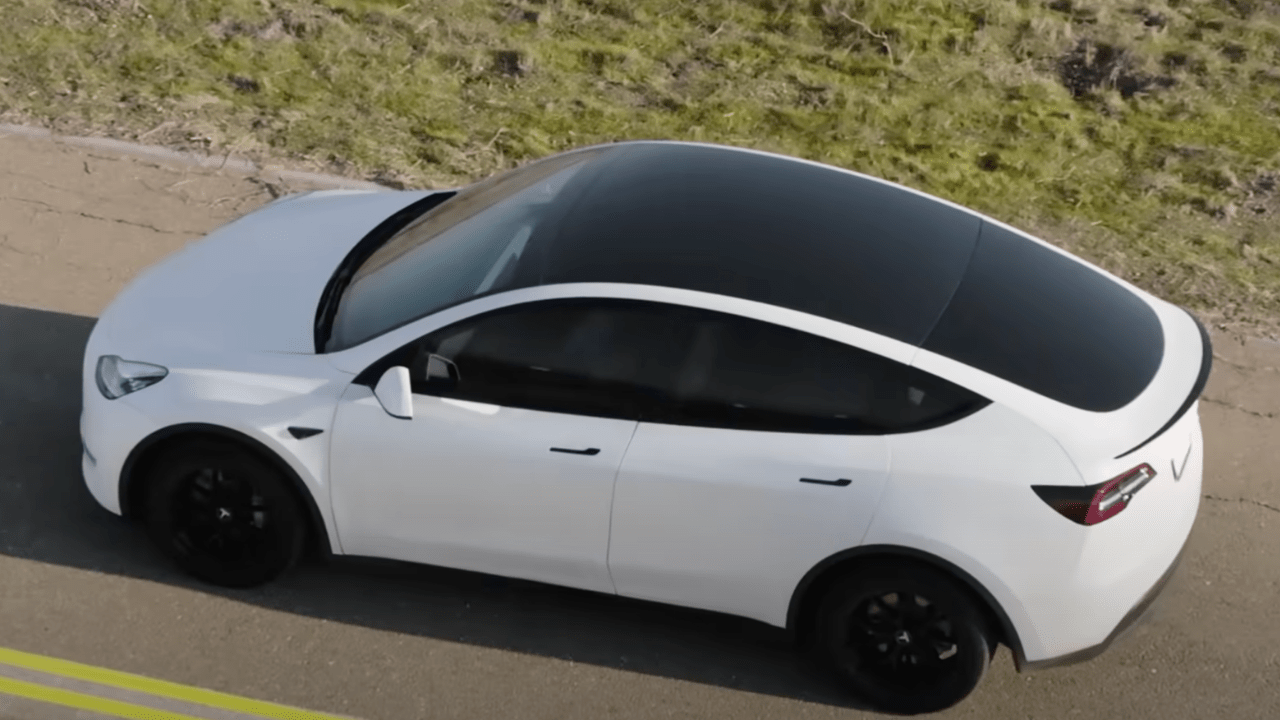
A recent YouTube video from former NASA engineer and popular content creator Mark Rober has left many viewers questioning not only his methods, but also the true intent behind his latest experiment targeting Tesla’s autopilot technology. What started as an attempt to map Disneyland’s Space Mountain by sneaking a LiDAR camera into the park through security turned into something far more controversial, with critics calling out inconsistencies and misleading presentation in Rober’s subsequent Tesla tests.
Sneaking High-Tech Gear into Disneyland
The first half of Mark Rober’s video is framed as a personal quest, but on closer inspection, it exposes something far more calculated. What appears to be a lighthearted attempt to map Disneyland’s Space Mountain ride is, in reality, a meticulously orchestrated violation of Disneyland’s policies—a deliberate breach that raises serious ethical questions.
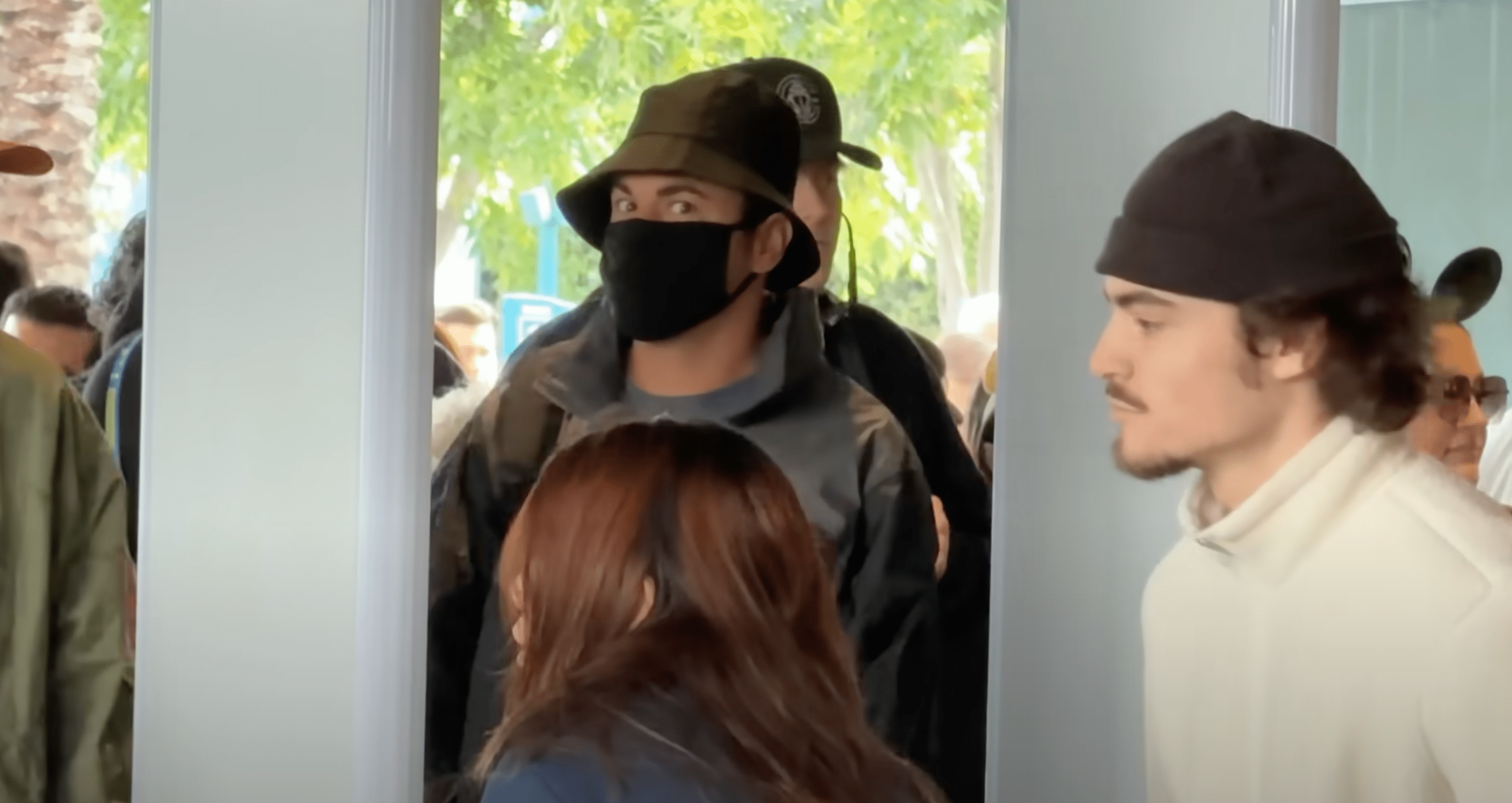
Mark Rober attempting to sneak equipment through Disney security – YouTube, Mark Rober
Rober lays out the plan openly: sneak a LiDAR scanner, disguised under a specially modified oversized jacket, through Disneyland’s notoriously strict security systems. He spends considerable effort explaining how he bypasses metal detectors, hides the scanner in his camera bag, and blends in among parkgoers to avoid drawing attention from Disney’s plainclothes security officers. It’s not a spontaneous, spur-of-the-moment decision—it’s a well-planned operation, complete with decoys and contingency steps.
He even jokes about the “slight limp shuffle walk” he employs to sell his act, acknowledging how much thought he’s put into evading detection. But while the video frames this as quirky mischief, the reality is he knowingly smuggled advanced, unauthorized scanning equipment into a high-security, family-oriented theme park.
Disneyland, like most major parks, has clear rules in place about prohibited items. These rules aren’t arbitrary. They’re there to ensure guest safety, protect intellectual property, and control the park environment. Rober’s defense hinges on a technicality—that LiDAR scanners aren’t explicitly listed among the banned items. But that misses the bigger point: no recording or scanning equipment of this nature is ever allowed, period.
What’s more, Disneyland’s rides—especially indoor, dark rides like Space Mountain—are carefully designed experiences. They rely on lighting, timing, and safety protocols finely tuned over decades. Introducing unauthorized tech, particularly a scanner emitting hundreds of thousands of laser pulses per second, introduces variables Disney hasn’t accounted for. It’s reckless, regardless of whether an incident occurred.
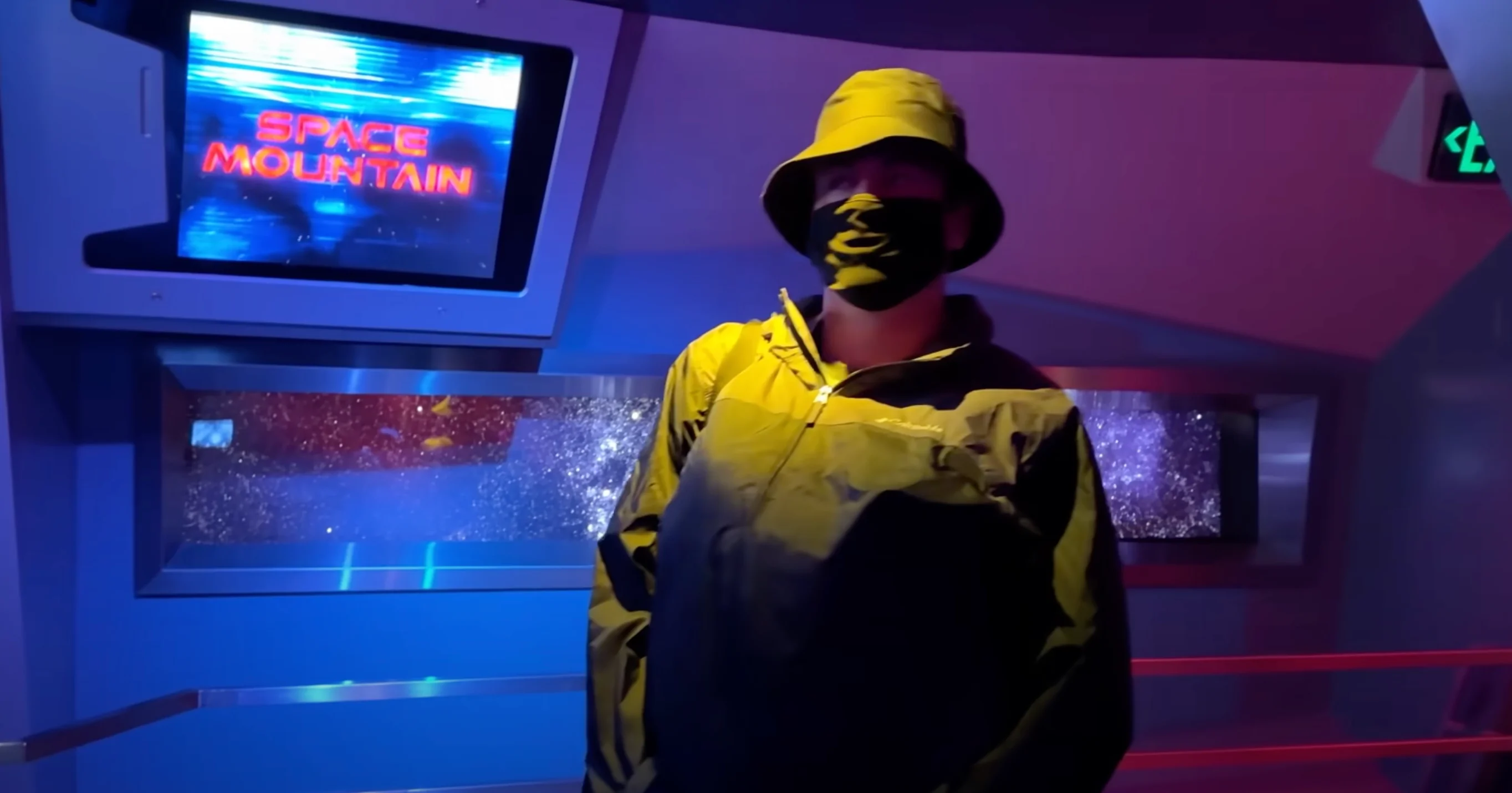
Mark Rober with a LiDAR camera under his jacket in the queue for Space Mountain at Disneyland – Youtube, Mark Rober
What stands out even more is the casual disrespect Rober shows toward Disneyland’s security staff throughout the video. He frames them as mere obstacles to outwit, not as people responsible for guest safety. Security’s entire purpose is brushed off as something to “beat” for the sake of content. When asked not to record at the security checkpoint, he ignores it. When he references being kicked out of amusement parks in the past, it’s said with a smirk, as though the rules and those enforcing them exist solely to be circumvented by someone clever enough.
This isn’t just a fun engineering challenge—it’s a public display of disregard for a company’s security protocols and the employees tasked with upholding them.
But beyond breaking park rules, there’s the broader issue of encouragement. Rober’s audience isn’t just hobbyist engineers—they’re young, impressionable viewers. By glamorizing his ability to outwit Disney’s security and boasting about avoiding detection, he sets a troubling precedent: if the rules don’t explicitly forbid something, and you can get away with it, it’s fair game.
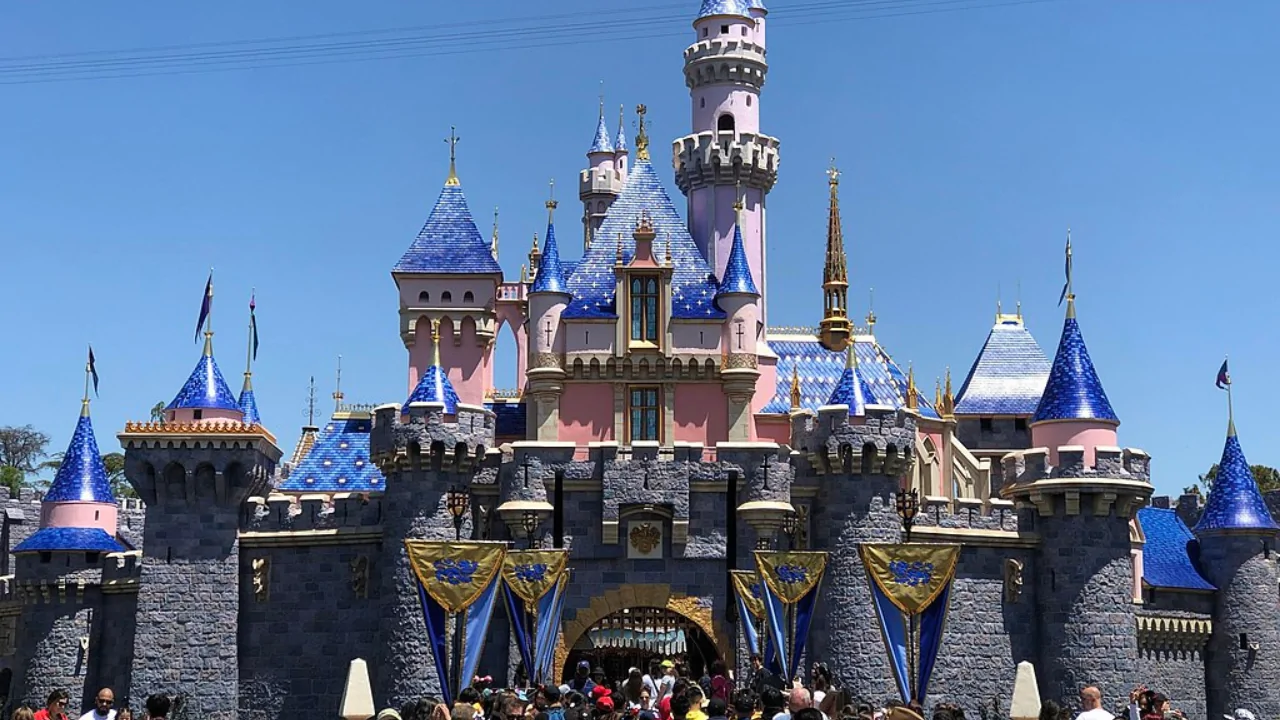
Sleeping Beauty Castle in 2019 after refurbishment. Photo Credit: CrispyCream27, CC BY-SA 4.0 <https://creativecommons.org/licenses/by-sa/4.0>, via Wikimedia Commons
That sense of calculated disregard lays the groundwork for what follows. The video transitions from this Disney stunt into a supposed head-to-head safety test involving Tesla and LiDAR-equipped cars. But by the time viewers arrive at his so-called “scientific” Tesla comparison, they’ve already seen Rober meticulously bend rules and manipulate circumstances for dramatic effect. It’s no surprise that the integrity of the second half of his video is now being questioned just as heavily.
Pivoting to Tesla’s Autopilot
The second half of the video abruptly shifts focus. After completing his mapping of Space Mountain and producing a 3D-printed model of the ride, Rober pivots to testing Tesla’s autopilot system against LiDAR-equipped vehicles, prominently featuring Luminar’s LiDAR technology.
What followed was a series of staged driving scenarios designed to pit Tesla’s camera-based system against LiDAR-equipped cars in extreme conditions—including fog, bright lights, and simulated obstacles. Rober framed the video as a fair, scientific comparison, culminating in a dramatic test where a Tesla drives toward a fake Wile E. Coyote-style painted wall.
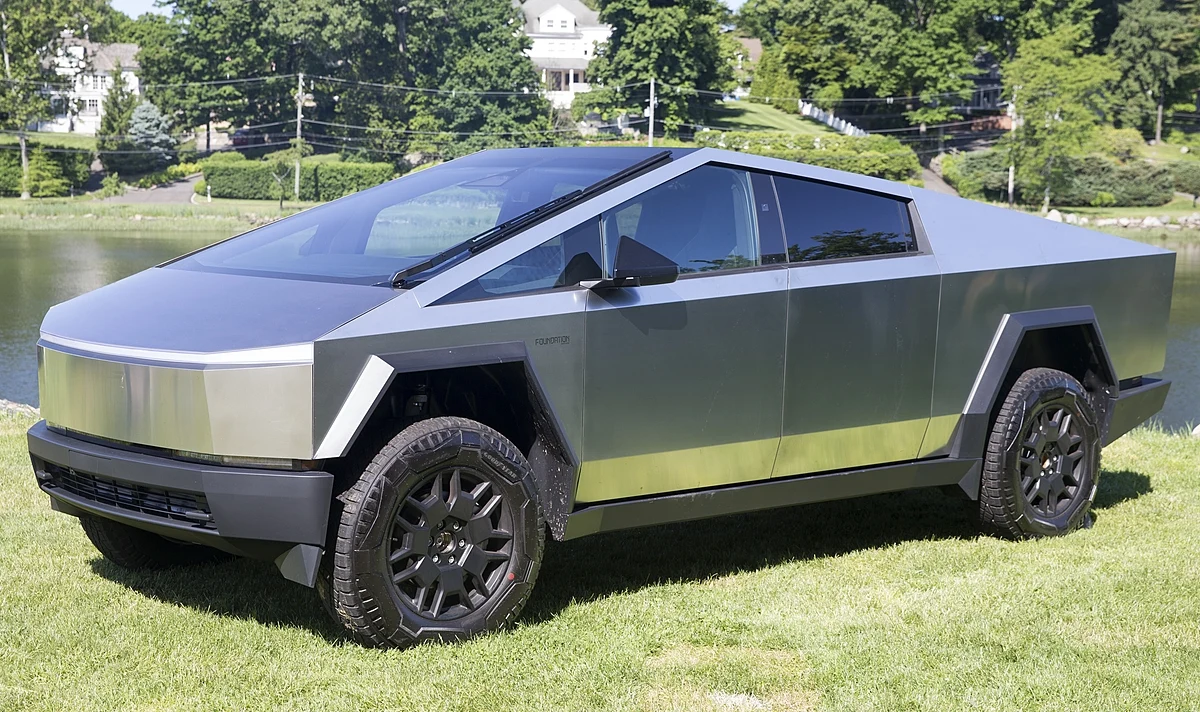
2024 Tesla Cybertruk; Courtesy Wikipedia
And it’s here where things grow even more questionable. The Tesla portion centers around a series of escalating tests meant to compare Tesla’s camera-based system to Luminar’s LiDAR technology in challenging driving scenarios. One of the most attention-grabbing elements involves placing a child-sized dummy behind a fake painted wall—a recreation of a cartoon-style “trap” where a road abruptly ends.
The premise? Rober wanted to see whether the Tesla autopilot would stop before plowing through the wall, and whether it can somehow detect the child dummy placed directly behind it.
Here is the raw footage of my Tesla going through the wall. Not sure why it disengages 17 frames before hitting the wall but my feet weren’t touching the brake or gas. pic.twitter.com/ddmeyqO3ww
— Mark Rober (@MarkRober) March 17, 2025
However, this entire setup rests on a flawed, even misleading foundation. No vehicle system—LiDAR or camera-based—is designed to recognize objects obscured by solid barriers, especially when the purpose of the test is to gauge reaction to an obstacle in the driver’s immediate path. Including the child dummy behind the wall serves no functional safety relevance; it’s a visual prop designed purely to heighten drama and make the Tesla’s “failure” more emotionally charged.
It’s a classic case of stacking the deck—not unlike how Rober previously stacked the deck against Disneyland’s security staff. The narrative control, the omission of key details, and the carefully staged visuals all raise larger concerns about how much of this video was engineered to tell a predetermined story, rather than provide honest, transparent results.
Community Notes and Viewer Backlash
However, soon after Rober posted snippets of the Tesla footage on X, users began dissecting the details—and it didn’t take long for major inconsistencies to surface.
A community note attached to his post pointed out that the footage shared on X differed from the YouTube version. Specifically, when analyzed frame by frame, viewers noticed the Tesla’s autopilot was engaged at 42 mph in one clip and 40 mph in another. This discrepancy suggested multiple takes of the same test, despite the video’s implication of a single, uninterrupted experiment.
Absolutely BODIED by community notes.
I checked the YT video myself, the note is accurate. In the “raw” footage Mark posted, autopilot engages at 42pm vs 40pmh in the YouTube video.
But it gets WORSE. See the next posts in this thread. pic.twitter.com/nKRPxrQwN4
— stevenmarkryan (@stevenmarkryan) March 17, 2025
X user StevenMarkRyan was among the most vocal critics, highlighting that in one YouTube frame, the Tesla was approaching the wall at 39 mph, while the “raw” footage Rober posted showed a different speed and timing.
“WHY DO YOU NEED MORE THAN ONE TAKE INSIDE THE TESLA?” Ryan asked, pointing out that core dashboard footage being different between clips undermines the authenticity of the test.
My questions for @MarkRober:
1) Your video “Can You Fool a Self-Driving Car?” uses Luminar’s latest tech but not Tesla’s latest FSD software. Why?
2) Autopilot was turned on at 42 MPH in your YouTube video but you turned it on at 39/40 MPH in your clip above. Why? Multiple… https://t.co/N4ZoZG2Cp4
— Sawyer Merritt (@SawyerMerritt) March 17, 2025
Others, like Sawyer Merritt, questioned additional elements:
1. Why did Rober use Tesla’s older Autopilot instead of their latest Full Self-Driving (FSD) software?
2. Why were there multiple takes with different speeds and distances to the obstacle?
3. Why was the Luminar vehicle seemingly given more favorable conditions, with longer activation windows?
4. Why include a child dummy behind the painted wall, an unrealistic scenario for any vehicle system to detect?
Rober’s Response
Facing mounting criticism, Rober addressed the Tesla controversy in a recent interview. His explanations, however, have only added fuel to the debate.
NEWS: Mark Rober has just responded in a new interview to some of the questions revolving around his recent @Tesla video. Here’s a brief summary:
1) His answer on why he used Autopilot and not Tesla’s FSD: “My understanding with FSD is that you have to enter an address for it to… https://t.co/aUn5sdheHx pic.twitter.com/3gjKEQEctT
— Sawyer Merritt (@SawyerMerritt) March 18, 2025
On not using Tesla’s latest FSD: Rober stated, “My understanding with FSD is that you have to enter an address for it to work; The sensor is not different, whether it’s FSD or Autopilot. Knowing if that’s a wall or not, that doesn’t change. I’d be happy to re-run the experiment in FSD, but I’m pretty confident it wouldn’t be a different result.”
On Autopilot disengaging before impact: Rober said, “I don’t know why it would disengage. I was not pulling on the steering wheel. My guess is maybe the ultrasonic sensors just disengage if they sense that something big is there. I don’t have a horse in this race. I love my Tesla. I’ll probably get a new one when they come out.”
On multiple takes: Rober admitted that he used multiple takes in the Tesla. “There was; We did a take, it went right through, I think that was the one that was at 40 MPH. But instead of cutting through it, which would visually look cool, it just kinda tore through the side. 3 weeks later we went back out when schedule permitted, this time with a styrofoam wall. It went through the wall twice.”
On Luminar’s involvement: He clarified, “They gave us no money. They had no say in the edit. They did not approach us. I reached out to them and said hey will you let us borrow some cars. We didn’t know what would happen. We told them if your LiDAR fails, it goes in the video. If Tesla passes, it would have gone in the video. I don’t have a horse in this race; I do not own any Luminar stock. I have no options, no puts on Tesla. There’s no financial anything in here.”
Finally, he added that he plans to buy another Tesla in six months.
Bigger Picture: Convenient Timing?
Some have speculated whether the video’s timing is coincidental. Given the recent uptick in public scrutiny directed at Tesla and Elon Musk—often fueled by non-technical, politically motivated criticism—it seems convenient for Rober’s high-profile video to take a swing at Tesla’s technology while giving a platform to LiDAR-based alternatives.
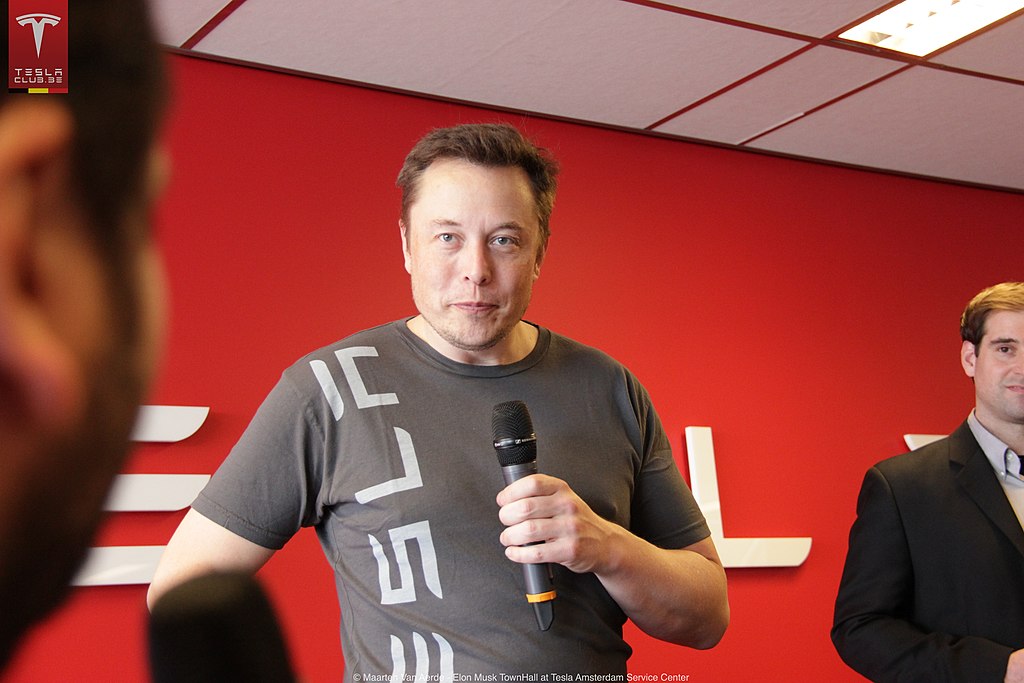
Elon Musk 2014. Photo Credit: Tesla Owners Club Belgium, CC BY 2.0 <https://creativecommons.org/licenses/by/2.0>, via Wikimedia Commons
While Rober frames the video as a neutral experiment, the undisclosed multiple takes, selective software choice, and differences in test conditions have left many questioning whether the video was more engineered for entertainment and persuasion than genuine scientific inquiry.
Final Thoughts
Rober’s Space Mountain stunt might have seemed like harmless mischief, but coupled with the discrepancies in his Tesla test, it points to a concerning trend: using slick production and selective presentation to shape narratives without fully disclosing all relevant information to viewers. As public trust in influencer-led “science experiments” becomes more fragile, creators owe it to their audiences to uphold transparency—especially when billion-dollar technologies and reputations are on the line.
The fact that independent users and X community notes unraveled inconsistencies in the video speaks volumes about the importance of vigilance in the digital age. When the presentation of facts can be massaged for entertainment value or to subtly favor certain technologies, it’s up to sharp-eyed viewers to ask the hard questions.
Do you think Rober was trying to attack Tesla? Sound off in the comments and let us know!
UP NEXT: Lilo & Stitch Trailer Shatters Records While Snow White Sinks—Fans Reward Faithful Adaptation
