


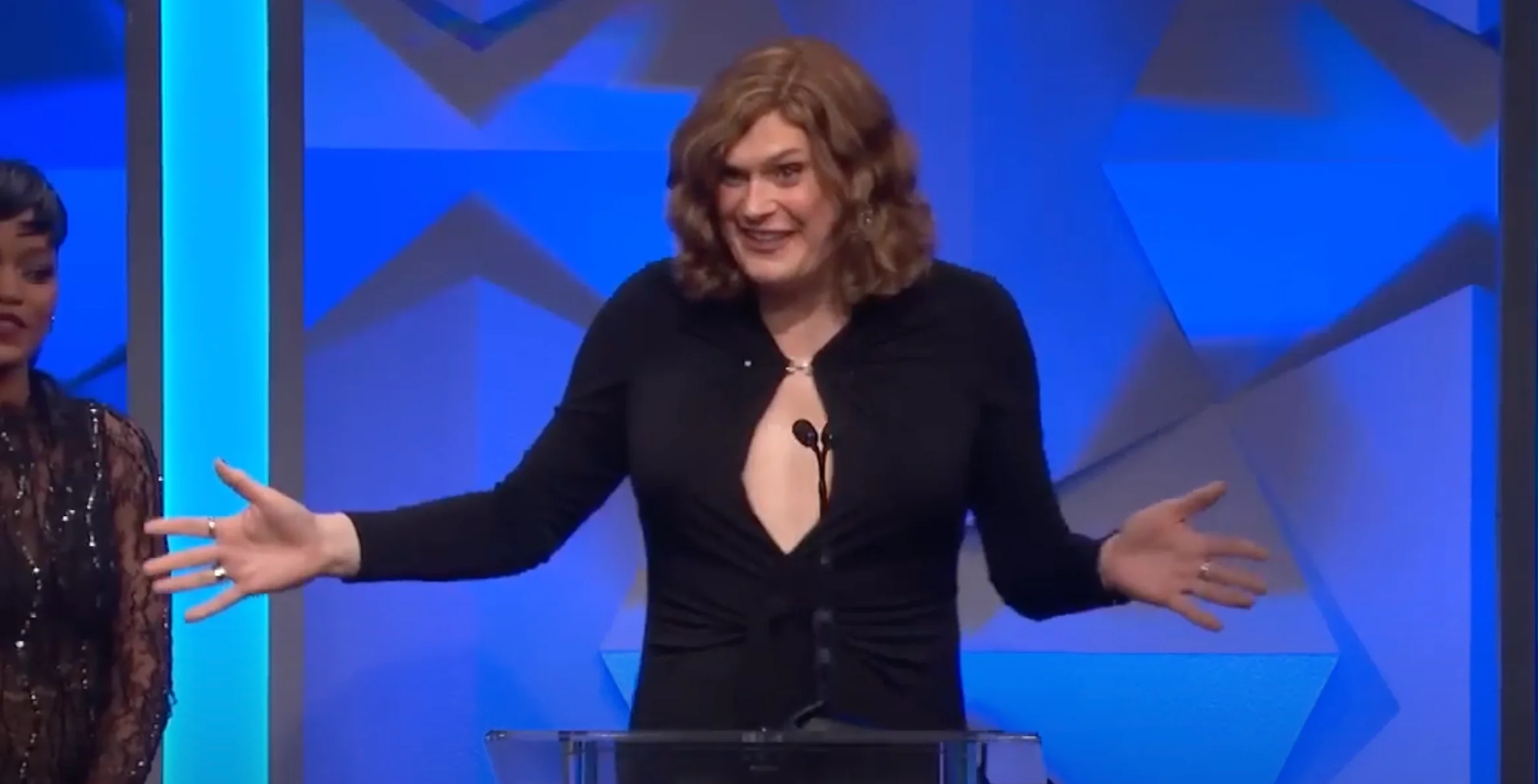
The Matrix co-director Lilly Wachowski says Hollywood doesn’t want the “queer stories and trans stories” being pitched around town, including one project the director pitched and described rather memorably as “Star Wars with lesbians in space.”
There’s just one problem with that argument.
Hollywood has spent years making projects featuring Pride-centric characters, relationships, and stories — including, remarkably enough, a recent Star Wars series featuring lesbian characters in space.
Many of these projects have failed commercially, been canceled, or both.
Speaking in a wide-ranging new interview with Variety, Wachowski discussed the difficulty of getting new projects financed in Hollywood.
“I’ve pitched a lot of wonderful, cool queer stories and trans stories, and Hollywood didn’t want any of it,” Wachowski said.
One of those projects was an adaptation of Hannah Templer’s comic Cosmoknights, which Wachowski was developing with Wynonna Earp creator Emily Andras and producer Amy Poehler.
Wachowski provided an elevator pitch that will probably sound awfully familiar to anyone who has paid attention to Disney during the past several years.
“It’s ‘Star Wars’ with lesbians in space.”
According to Wachowski, the team developed a series bible, shot a presentation video, and took the project around Hollywood.
Lilly Wachowski being interviewed by Collider – YouTube, Collider
READ: ‘Matrix’ Director Lilly Wachowski Accuses ‘Harry Potter’ Fans of “Supporting My Eradication”
“Everybody passed,” Wachowski said.
Another proposed project was an adaptation of Gretchen Felker-Martin’s Manhunt, while Wachowski has separately struggled to finance The Hunted, a roughly $10 million thriller with what was previously described as a “wall-to-wall trans cast.”
“This is around 2022, and now it’s four years later and I haven’t made a thing,” Wachowski told Variety. “I cannot find a studio that will do any of it.”
Those rejections are real. The question is whether Hollywood’s reluctance to finance these particular projects demonstrates an unwillingness to make LGBT stories — or whether studios have some very recent reasons to question how large the audience is for certain projects built heavily around identity.
Hollywood Already Tried ‘Star Wars With Lesbians’
The irony of pitching Hollywood “Star Wars with lesbians in space” in 2026 is that Disney and Lucasfilm have already come remarkably close to testing that concept.
It was called The Acolyte.
Leslye Headland’s Disney+ Star Wars series prominently featured a coven of witches led by Mother Aniseya and Mother Koril, who were depicted as the parents of twins Osha and Mae. Headland herself described the witches’ relationship as romantic.
The show also became closely associated with Pride representation during its promotional campaign, with Headland discussing the subject repeatedly while stars Amandla Stenberg and Jodie Turner-Smith spoke publicly about the show’s themes and representation.
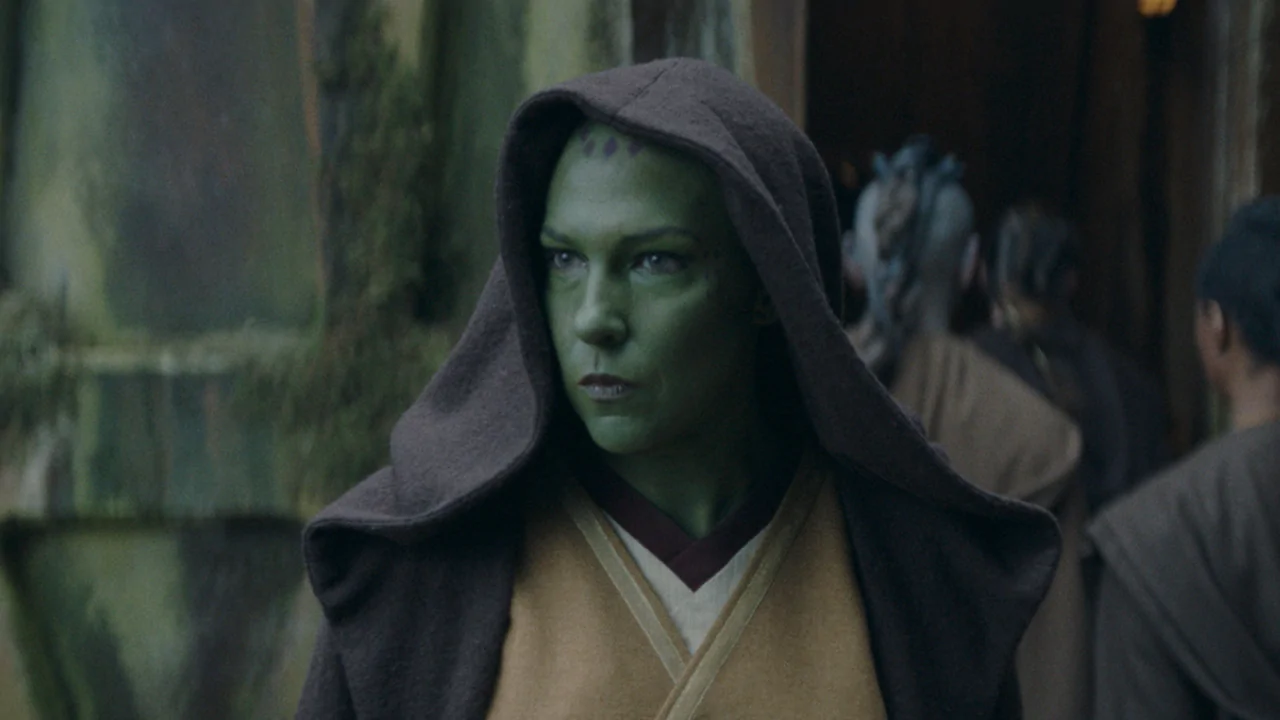
Vernestra Rwoh (Rebecca Henderson) in Lucasfilm’s THE ACOLYTE, season one, exclusively on Disney+. ©2024 Lucasfilm Ltd. & TM. All Rights Reserved.
Disney reportedly spent approximately $230 million on The Acolyte, but there wasn’t enough of an audience to justify doing it again.
Disney Entertainment co-chairman Alan Bergman eventually explained why Disney canceled the show.
“We were happy with our performance, but it wasn’t where we needed it to be given the cost structure of that title, quite frankly, to go and make a season two,” Bergman said.
Disney didn’t refuse to make the show. They made it. The company poured hundreds of millions of dollars into it, attached the Star Wars brand to it, put it on Disney+, and marketed it internationally.

(L-R): Mother Aniseya (Jodie Turner-Smith) and Koril (Margarita Levieva) in Lucasfilm’s THE ACOLYTE, season one, exclusively on Disney+. ©2024 Lucasfilm Ltd. & TM. All Rights Reserved.
READ: Astra Created a 120 FPS Version of Super Smash Bros. Melee for Mac OS in 6 Hours
Then the audience wasn’t large enough relative to its enormous cost to convince Disney to make another season.
So when Wachowski says Hollywood rejected a project pitched as “Star Wars with lesbians in space,” executives aren’t being asked to imagine what might happen.
They have a fairly recent case study.
‘Strange World’ Became a $100 Million Disaster
Disney’s Strange World provides another example.
The 2022 animated adventure featured Ethan Clade, Disney Animation’s first openly gay teenage protagonist, and the studio did not hide that aspect of the character.
The movie was a spectacular theatrical failure. Variety reported that Strange World cost approximately $180 million to produce before tens of millions more were spent on marketing and distribution.
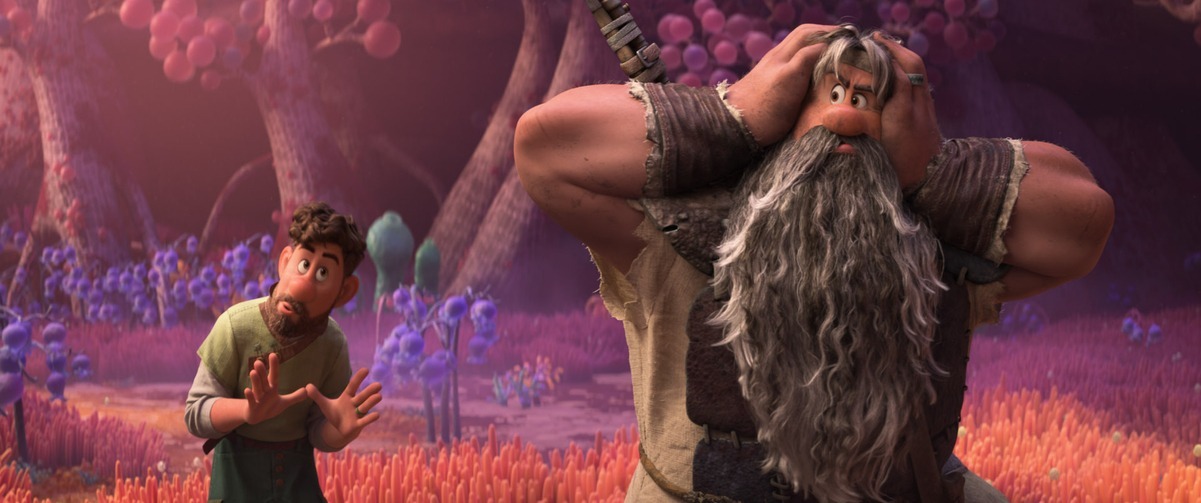
LOST AND FOUND — Walt Disney Animation Studios’ original action-packed comedy adventure “Strange World” introduces the Clades, a family that comes together in an uncharted, treacherous land. Jake Gyllenhaal voices Searcher Clade, who unexpectedly finds himself on a mission to this strange world, where he happens upon his long-lost, larger-than-life father. Voiced by Dennis Quaid, Jaeger Clade always wanted to be the kind of explorer legends are made of—but, lost during an expedition, nobody had heard from him in decades. Helmed by director Don Hall (Oscar®-winning “Big Hero 6,” “Raya and the Last Dragon”) and co-director/writer Qui Nguyen (co-writer “Raya and the Last Dragon”), with Roy Conli (Oscar®-winning “Big Hero 6,” “Tangled”) producing, “Strange World” releases November 23, 2022. © 2022 Disney. All Rights Reserved.
It opened with just $11.9 million domestically during its traditional opening weekend and $18.6 million over the five-day Thanksgiving frame.
Industry sources estimated that the movie would lose at least $100 million during its theatrical run.
Again, that doesn’t mean Strange World failed because Ethan was gay. Its weak story, poor audience reception, marketing, and Disney’s larger post-lockdown animation problems all provide possible explanations.
But that’s precisely the point.
Hollywood made the movie. Audiences simply didn’t show up.
Universal Tried ‘Bros’
Then there’s Bros.
Universal Pictures put considerable weight behind Billy Eichner’s 2022 romantic comedy, which was widely promoted as a landmark mainstream studio comedy centered on two gay men and featuring a predominantly gay principal cast.
The movie was well reviewed, it received an A CinemaScore, and Universal gave it a wide theatrical release.
Audiences, however, overwhelmingly stayed home.
READ: Jimmy Kimmel Reportedly Faces Massive Budget Cut to Keep ABC Show Alive
Bros opened to approximately $4.8 million domestically against a reported production budget of $22 million.
After the disastrous opening, Eichner famously took to social media and complained that “straight people, especially in certain parts of the country, just didn’t show up for Bros.”
Whatever explanation one prefers for its failure, Hollywood can’t reasonably be accused of refusing to make the movie.
A major studio financed it, distributed it, and marketed it.
Consumers made their decision afterward.
Even GLAAD’s Numbers Show Hollywood Made Plenty of This Content
Perhaps the strongest rebuttal to the idea that Hollywood simply doesn’t want LGBT stories comes from GLAAD.
The advocacy organization’s own 2024-2025 Where We Are on TV report counted an astonishing 489 LGBT regular and recurring characters across scripted broadcast, cable, and streaming television.
Streaming services alone accounted for 372.
Those aren’t numbers produced by an entertainment industry that spent the previous several years categorically refusing to make LGBT-inclusive entertainment.
But the report also reveals something else. A lot of those shows aren’t coming back.
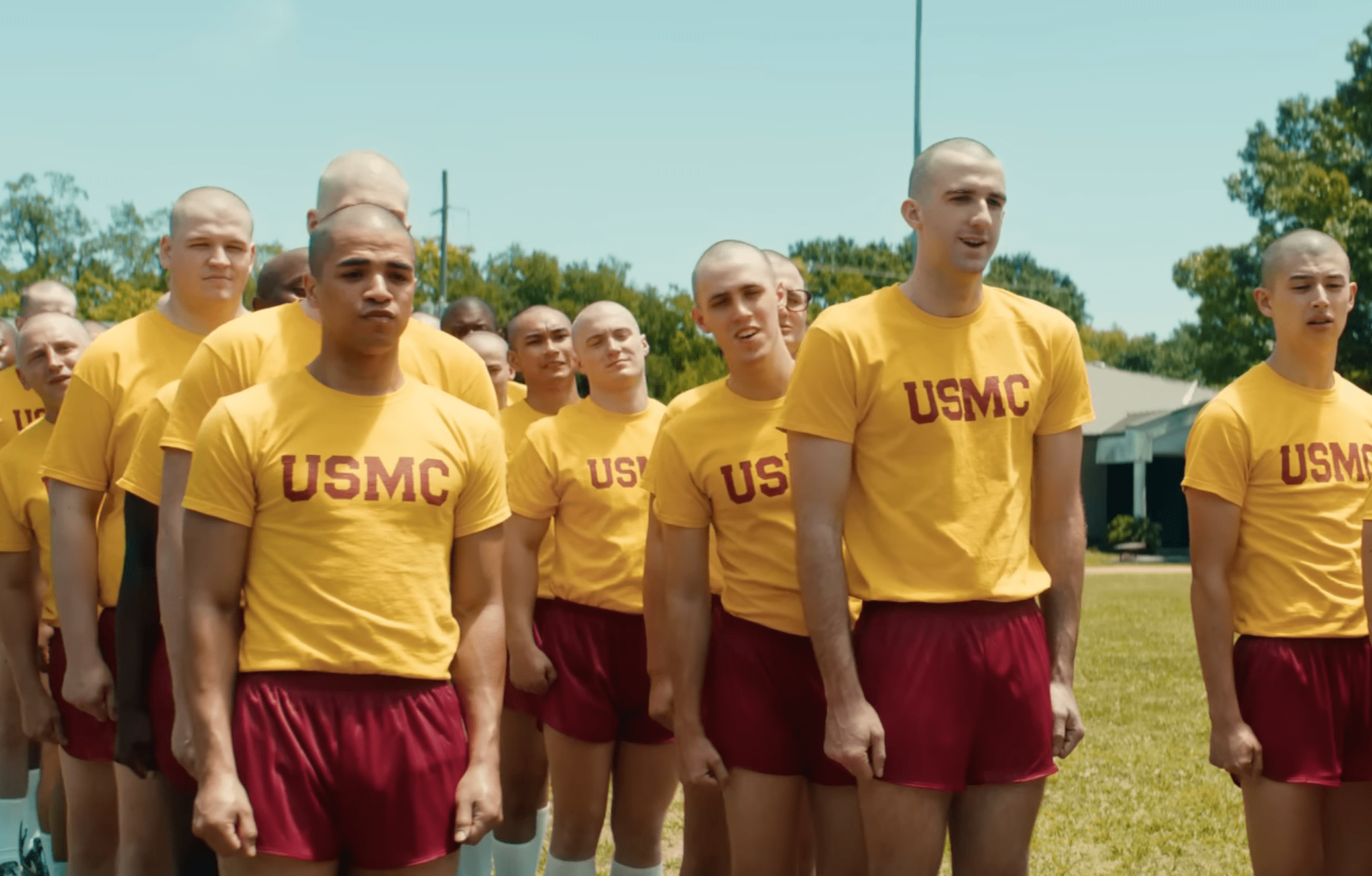
A scene from the Netflix show Boots – YouTube, Netflix
GLAAD found that 201 of the 489 characters would not return, including 159 whose departures were specifically caused by shows being canceled or ending.
In total, 61 LGBT-inclusive television series tracked by GLAAD had been canceled or ended. Streaming accounted for 43 of them.
That doesn’t prove those shows were canceled because they featured LGBT characters. Some concluded naturally, some were expensive, some undoubtedly suffered from the same financial pressures affecting the rest of streaming television, and others simply failed to attract sufficiently large audiences.
But it does demonstrate something important about Wachowski’s complaint.
Hollywood didn’t refuse to make LGBT-inclusive television. It made an enormous amount of it.
The problem now appears to be keeping it commercially viable.
Hollywood’s Problem May Be Economics, Not Representation
There’s a legitimate story buried underneath Wachowski’s frustration.
Hollywood has become more cautious.
The streaming gold rush is over. Studios are cutting spending, reducing the number of projects they commission, and demanding greater financial discipline after years in which seemingly endless amounts of content were produced to chase subscribers.
That environment is going to make unconventional projects harder to finance.
But that’s considerably different from claiming Hollywood simply “didn’t want” Pride-centric stories.

Lilly Wachowski – YouTube, Netflix Espana
The entertainment industry spent years emphasizing LGBT representation.
Disney put openly gay characters into animated movies, Universal released a major-studio gay romantic comedy, Lucasfilm produced The Acolyte, and streaming platforms commissioned hundreds of characters across dozens upon dozens of programs.
And a lot of them failed.
Now, studios appear to be asking a question Hollywood spent much of the streaming era avoiding: How many people are actually going to watch this?
That’s particularly relevant when the elevator pitch itself revolves around identity.
Wachowski didn’t describe Cosmoknights to Variety simply as an exciting science-fiction adventure about knights rescuing princesses from arranged marriages.
The description was “Star Wars with lesbians in space.”
Noah Schnapp as Will Beyers in Stranger Things 5 – Netflix
Hollywood has spent the better part of a decade being told that representation itself can be a selling point. The industry tested that proposition repeatedly and studios now have box-office receipts, streaming data, subscriber information, audience research, and cancellation decisions that didn’t exist when this experiment began.
That information proves representation can’t substitute for convincing people to watch.
Hollywood already made Bros. and Strange World along with hundreds of LGBT-inclusive television characters.
And, most remarkably given Wachowski’s pitch, Disney already spent hundreds of millions of dollars making something awfully close to “Star Wars with lesbians in space.”
It didn’t get a second season.
Perhaps the question isn’t why Hollywood suddenly refuses to make these stories. Perhaps Hollywood finally started looking at the receipts.
How do you feel about these comments by Lilly Wachowski? Sound off and let us know!
