


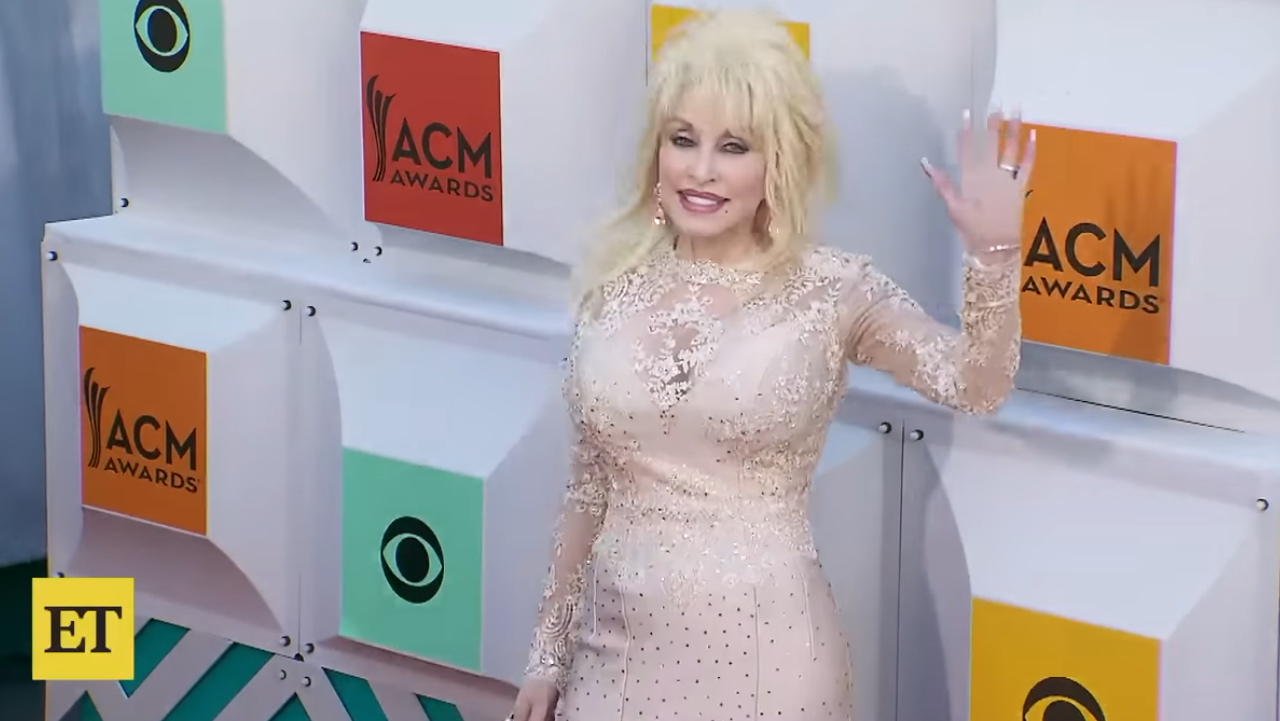
Barely had America begun mourning Dolly Parton before the political struggle over her legacy commenced.
Progressive organizations, commentators, and media outlets began presenting Parton as everything from a feminist icon to an ally of the socialist cause. Songs about working women became political manifestos, her kindness toward Black and gay Americans became evidence of ideological allegiance, and even the circumstances surrounding her childlessness were pressed into service as a modern feminist argument about rejecting motherhood.
Megan Basham of The Daily Wire has now responded with a flamethrower.
In an extensive Daily Wire opinion piece, Basham argues that the effort to transform Parton into a left-wing mascot doesn’t merely distort the singer’s record, it violates one of the clearest wishes Parton expressed throughout her career: that she not be placed inside a political box.
Basham’s takedown is deliberately extreme and certain to infuriate those who regarded Parton as a progressive fellow traveler. But its central accusation lands.
Admiring qualities in Parton that overlap with progressive values is perfectly legitimate. Declaring that she secretly belonged to a political movement she repeatedly declined to join is something else entirely.
Dolly Parton Refused to Become a Political Weapon
Basham begins with the strongest evidence in her case: Parton’s own words.
When ABC attempted to draw Parton into criticizing Donald Trump in 2018, she refused outright.
“I don’t do politics,” Parton said, explaining that she had fans across the political spectrum and did not want to alienate them. When the interviewer persisted, she ended the exchange with characteristic Southern bluntness, warning that he could continue asking, but she might still tell him “where to stick it.”
This is what happened in 2018 when ABC tried to goad Dolly Parton into attacking Trump
Every celebrity should take note: pic.twitter.com/YaEZw39PPh
— End Wokeness (@EndWokeness) August 26, 2026
READ: James Gunn Rumored to Direct Batman as Andy Muschietti Exit Chatter Grows
Parton took the same position at the 2017 Emmy Awards. Jane Fonda and Lily Tomlin used their 9 to 5 reunion to denounce Trump as a “sexist, egotistical, lying, hypocritical bigot.” Parton conspicuously declined to join them. Instead, she joked that her co-stars must still be describing Franklin Hart Jr., the fictional villain of their 1980 film, before changing the subject with another joke.
She was equally unwilling to be drafted into Hillary Clinton’s campaign. After Parton told The New York Times that Clinton was qualified and that she would support her if she became president, news organizations reported the remark as an endorsement.
Parton immediately corrected them.
“I try not to get political,” she said. “I have not decided who I’m voting for.” She explained that her comments had been taken out of context and emphasized that she had not endorsed either candidate. CBS News reported her clarification at the time.
These weren’t isolated evasions. Parton repeatedly refused opportunities to join public attacks on Republicans, endorse Democrats, or allow entertainment reporters to turn her into a partisan celebrity. Her position was consistent: she had personal opinions, but she would not use her fame to tell the country which political tribe it should join.
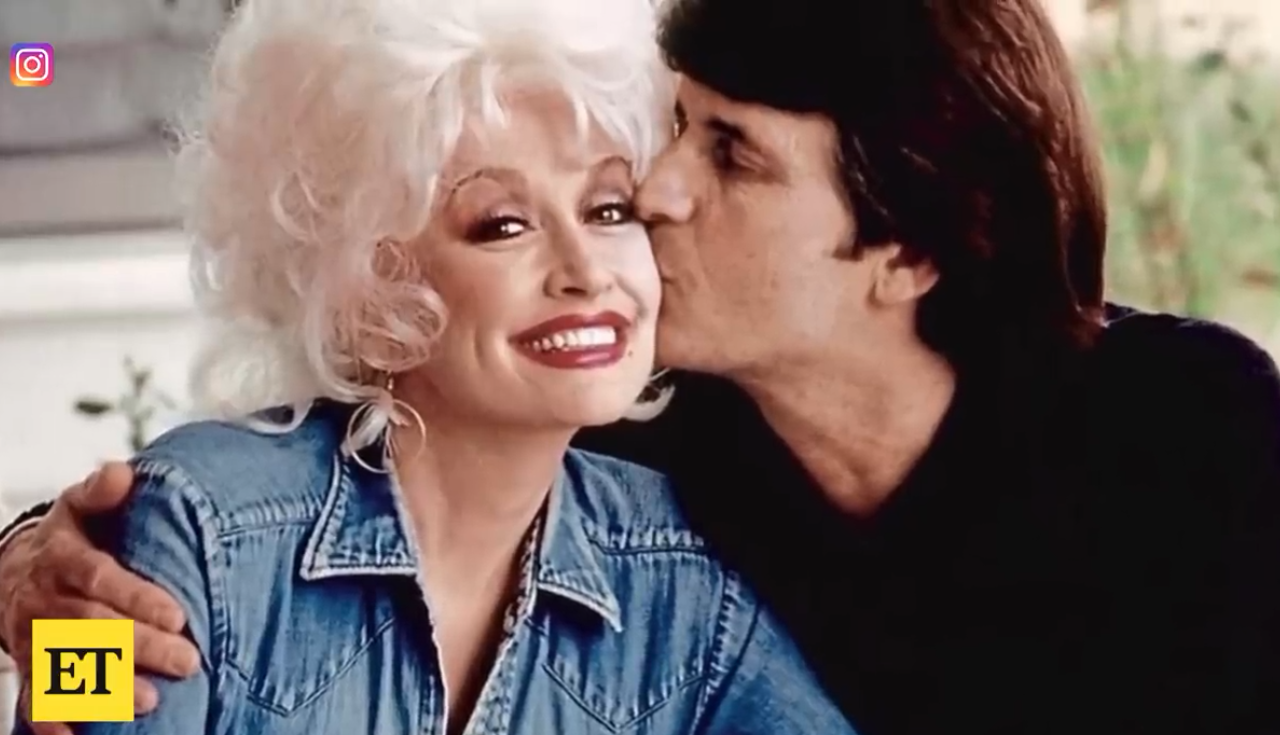
Dolly Parton and Carl Dean – YouTube, Entertainment Tonight
“I have too many fans on both sides of the fence,” she explained on the Dolly Parton’s America podcast, according to the Associated Press.
That position was more than commercial calculation. It reflected Parton’s conviction that entertainers didn’t have to convert every moral belief, charitable act, or personal relationship into a political declaration.
This is the part of her legacy that posthumous efforts to “claim” her inevitably erase. Parton didn’t spend decades carefully resisting partisan classification so that activists could classify her the moment she was no longer able to object.
No, “9 to 5” Did Not Make Dolly a Communist
The most absurd appropriation involves attempts to recast Parton as some species of socialist.
Basham cites post-death messages from the Democratic Socialists of America and the Communist Party USA, as well as online arguments treating “9 to 5” as a communist anthem. Commentator Derek Guy argued that its criticism of workers enriching business owners could be interpreted through Marx’s theory of labor and value.
That’s a possible academic interpretation of a lyric, but it’s not proof of Parton’s politics.
Parton explicitly said that she did not view 9 to 5 as a political sermon. The story concerned three women dealing with one appalling boss, she explained in a 1980 interview—not an argument against bosses, private ownership, or capitalism itself.
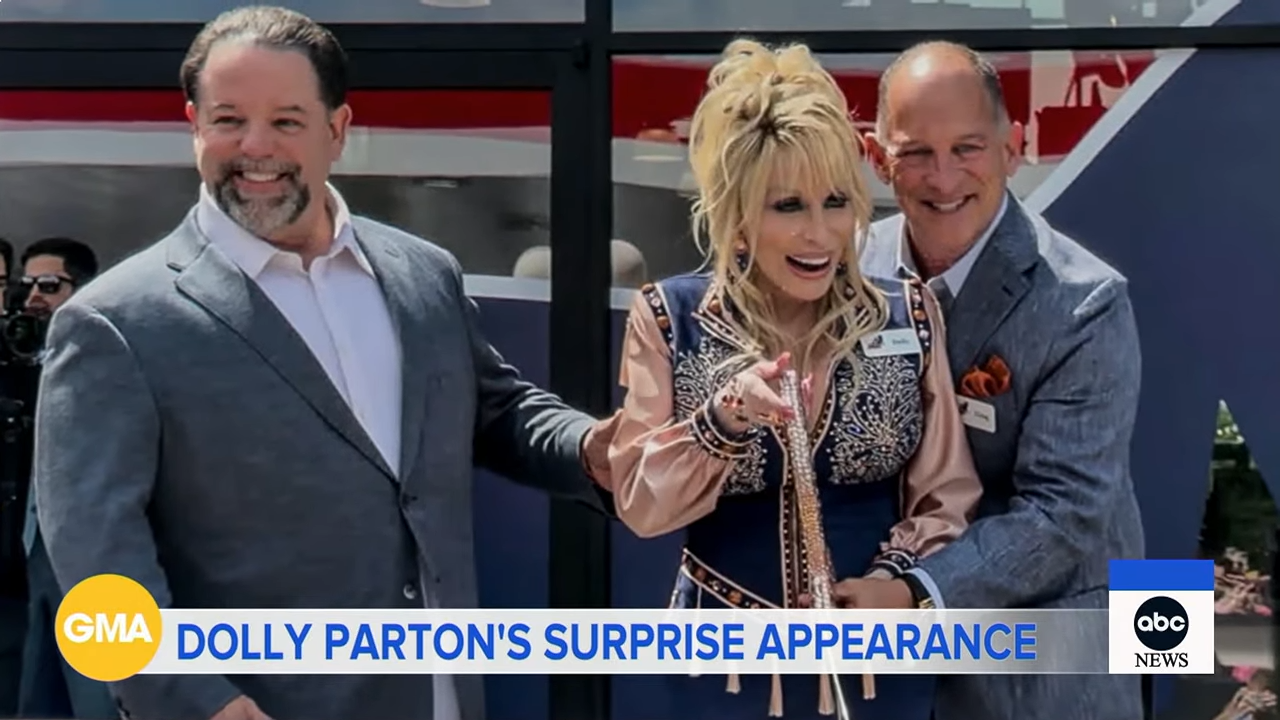
Ribbon-cutting for Dolly Parton’s Tennessean Travel Stop – Good Morning America, YouTube
More importantly, Parton’s life presents an almost comically poor foundation for socialist mythology.
She built a commercial empire, maintained control of her intellectual property, and famously refused to surrender part of the publishing rights to “I Will Always Love You” for an Elvis Presley recording. The decision ultimately preserved an enormously valuable asset when Whitney Houston’s rendition became a worldwide phenomenon.
The Associated Press confirms that Parton rejected the proposed Presley deal because she would have been required to share her publishing rights.
That doesn’t prove that Parton subscribed to every conservative economic doctrine. Capitalists can criticize exploitation, support workers, and write songs about abusive employers. It does, however, make it preposterous to present her as an enemy of private ownership.
“9 to 5” succeeds because millions of ordinary people understand what it feels like to be underpaid, overlooked, or mistreated at work. Recognizing that experience doesn’t require a copy of Das Kapital.

Grist Mill At Dollywood – YouTube, Tyler
READ: Jelly Roll Cries on TV and Attempts to Recast His Politics After Week of Trump Attacks on Kimmel
Basham is entirely right on this point: describing the song as communist tells us far more about the interpreter than it does about the woman who wrote it.
Dolly Parton Explicitly Rejected Modern Feminism
Parton didn’t merely avoid calling herself a feminist. She rejected the label when asked directly.
“No, I do not. I love men,” Parton answered during Dolly Parton’s America. She later made her position even clearer: “I don’t think of it as being feminist. It’s not a label I have to put on myself.”
The activist response has been to disregard her answer and declare her a feminist anyway.
That’s precisely the kind of ideological appropriation Basham condemns. Parton’s professional independence, business success, and songs about female experience don’t entitle activists to impose an identity she expressly rejected.
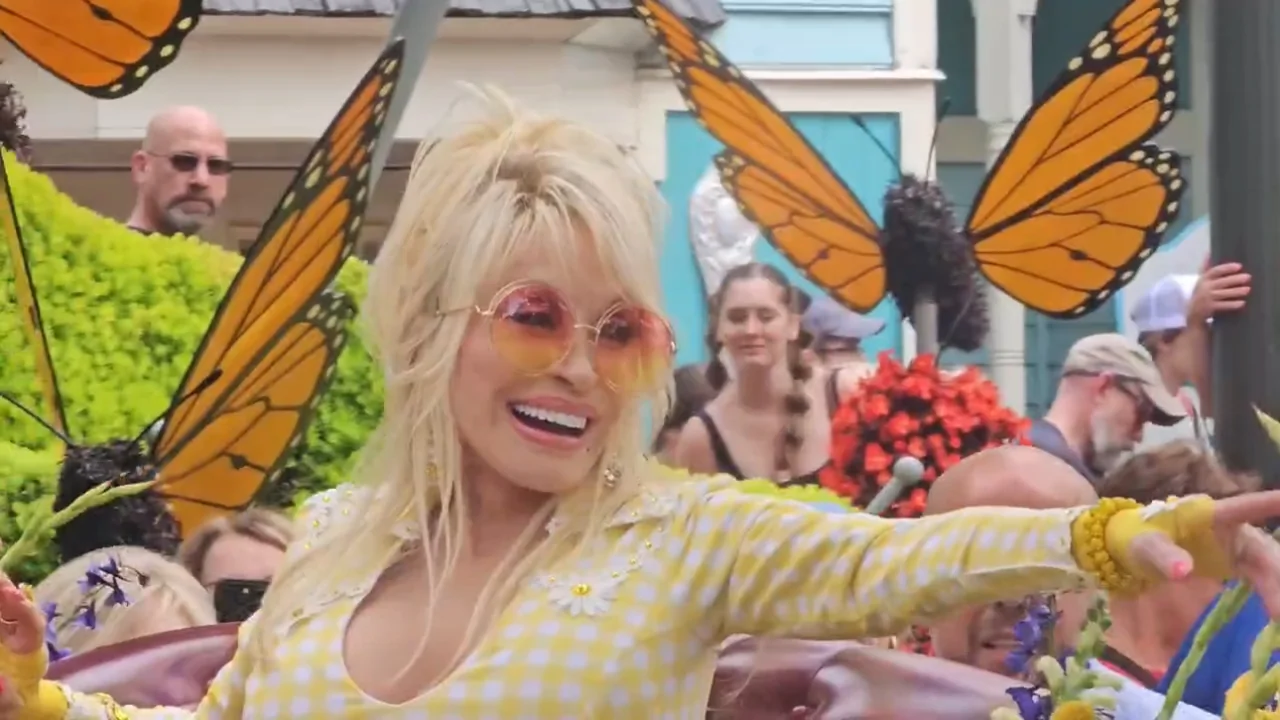
Dolly Parton rings in the 40th anniversary of Dollywood in person – Photo Credit: That Park Place
A woman doesn’t become a modern feminist merely because she is strong, successful, independent, or unwilling to tolerate mistreatment. Those qualities existed long before the modern feminist movement attempted to claim ownership of them.
Parton also rejected the politics frequently attached to the label. When discussing 9 to 5 in 1980, she said she wouldn’t have participated if the film had been intended as a political sermon or “women’s lib” manifesto. The story was about three women confronting one despicable boss—not an indictment of men, business, or capitalism.
Parton believed in women’s dignity and ability, but she didn’t accept the ideological package activists insisted must accompany those beliefs.
The National Organization for Women’s posthumous declaration that Parton “defined feminism” therefore erases the very woman it claims to honor. Parton defined herself, and she said no.
Waiting until her death to overrule that answer is not admiration. It’s political appropriation.
The Audacity of The Child-Free Rewrite
Basham’s criticism is especially forceful when addressing attempts to present Parton as an emblem of voluntary childlessness.
Following Parton’s death, a Washington Post column described her as a “hero in child-free circles” and argued that she showed a person could love children while “personally choosing against parenting.” The column did acknowledge that Parton unsuccessfully attempted to become pregnant, but its broader framing emphasized choice.
That framing collapses a much more painful history.
Parton suffered serious reproductive-health problems, underwent a partial hysterectomy, and publicly said that she could not physically have children. She also described the period surrounding those health problems as profoundly difficult.
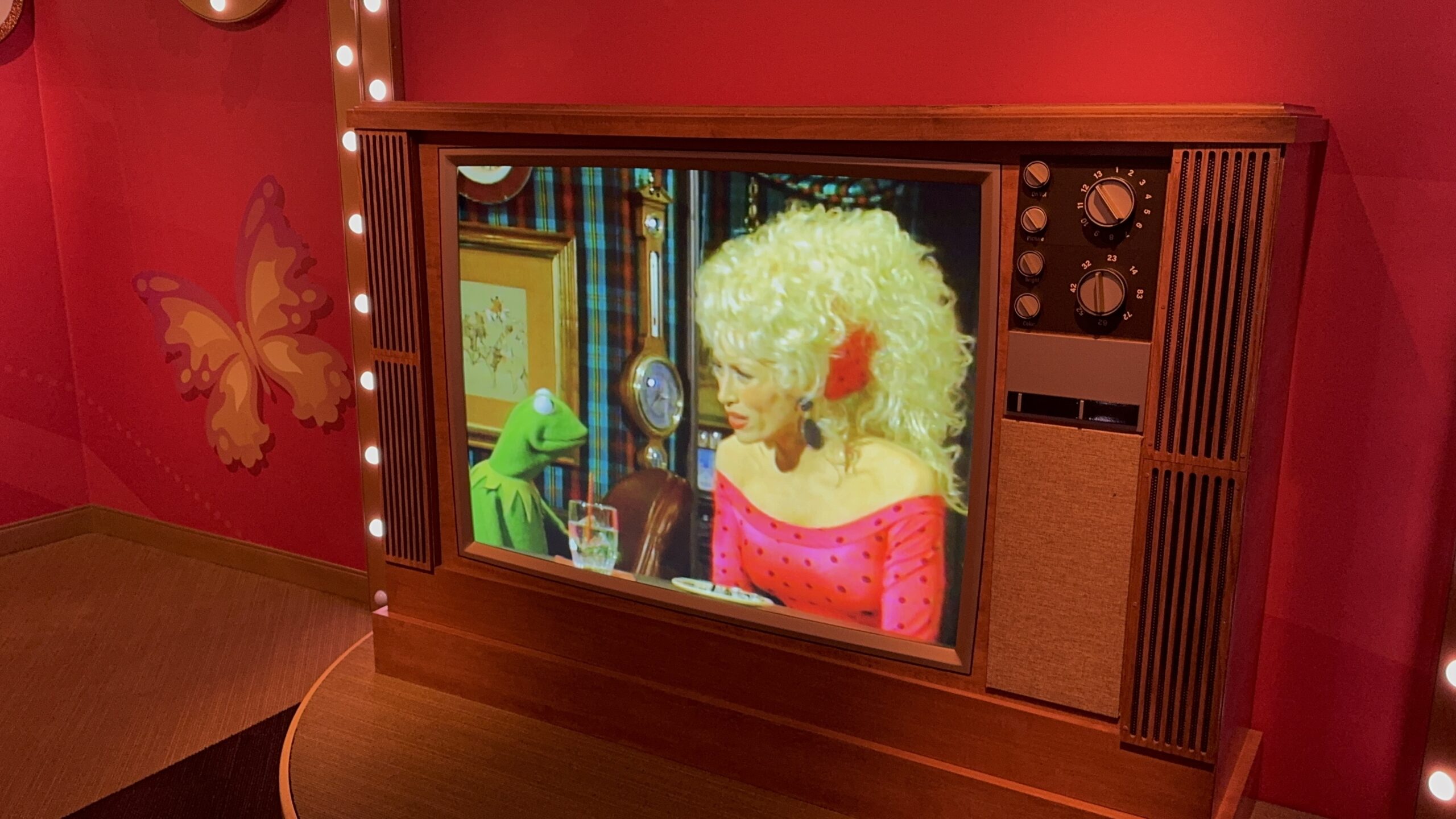
Dolly Parton talks with Kermit The Frog in the Dolly Parton Experience in Dollywood – Photo Credit: M. Montanaro
Her later observation that motherhood might have prevented her from building the career and philanthropic work she ultimately created was an attempt to understand the life she was given. It doesn’t prove that infertility had secretly been her preferred outcome.
Parton sometimes discussed not having children as a source of freedom, while at other times describing unsuccessful efforts to conceive and the pain surrounding her medical problems. The responsible approach is to preserve that complicated record.
Turning acceptance of an unwanted reality into proof of an ideological “choice” risks confusing resilience with preference.
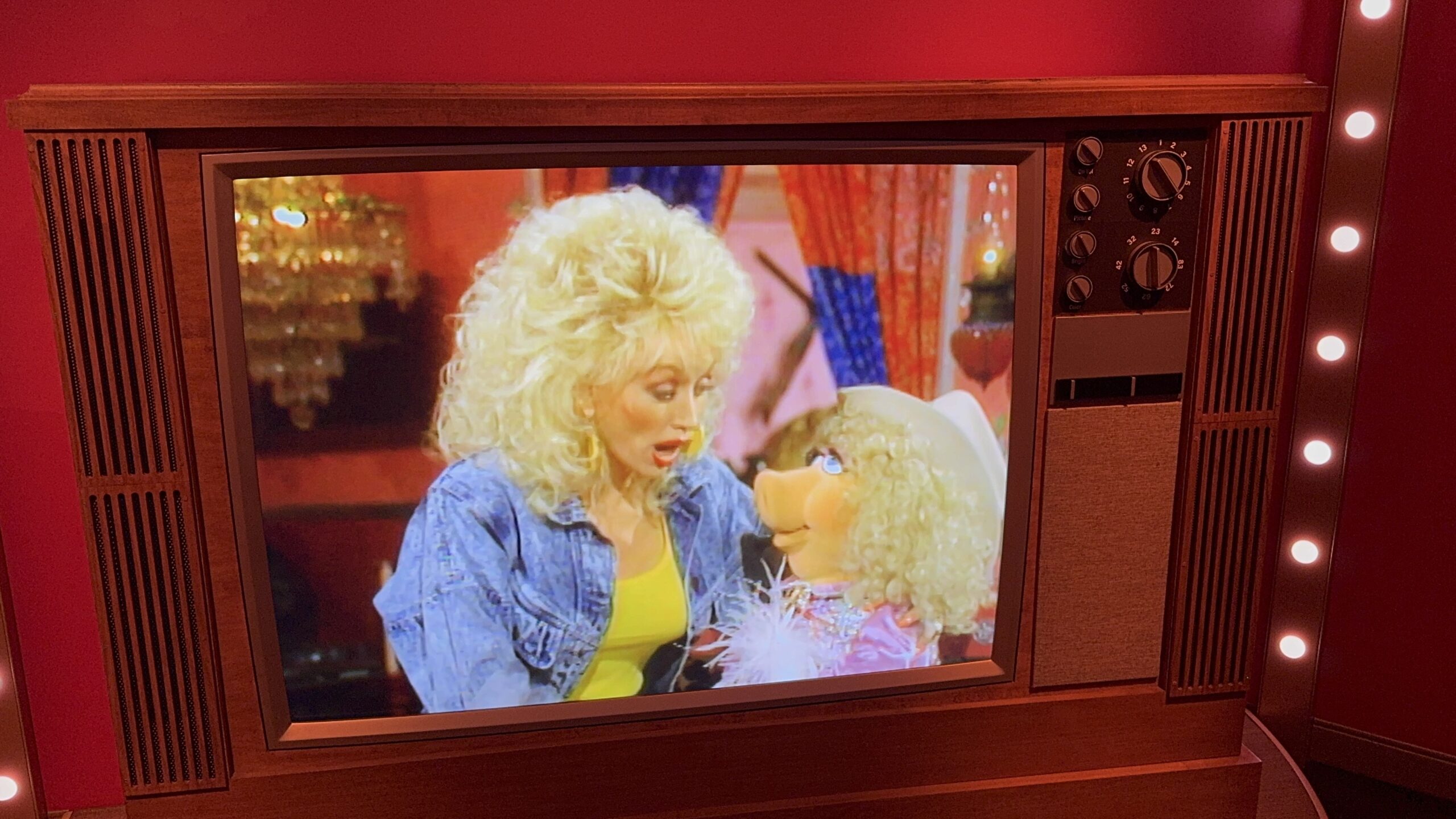
Dolly Parton and Miss Piggy at the Dolly Parton Experience in Dollywood – Photo Credit: M. Montanaro
Parton transformed her circumstances into the Imagination Library, a literacy program that has distributed hundreds of millions of books. She frequently expressed the belief that God had not given her children so that all children could become hers. That’s a story about grief, faith, adaptation, and service—not a clean political slogan against motherhood.
Loving People Didn’t Make Dolly Parton a Left-Wing Activist
Basham exposes another tactic used to claim Parton: separating her words from their context and converting Christian compassion into left-wing activism.
Parton’s frequently cited comments about Black Lives Matter are a clear example.
“Of course black lives matter,” Parton said. “We all matter. We’re all God’s children.”
The final two sentences are essential. Parton wasn’t endorsing a political organization, its leadership, or its ideological program. She was making a universal Christian statement about the value of all human life.
Her earlier remark was similarly direct: “Do we think our little white asses are the only ones that matter? No!”
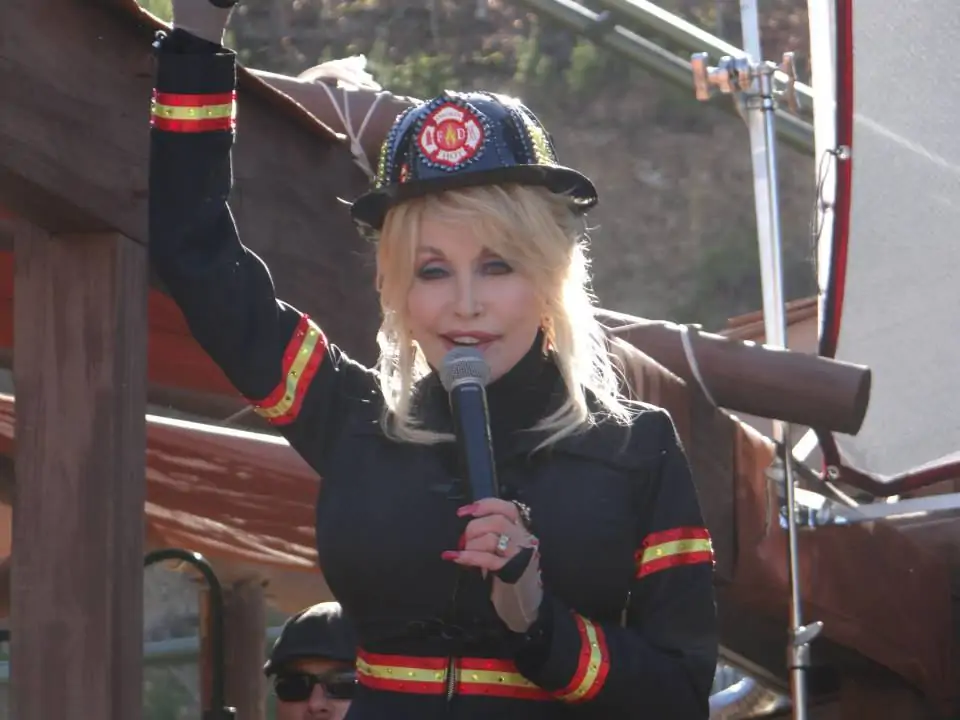
Dolly Parton Dressed As a Firefighter At Dollywood, Photo Credit: Kris Harris King, CC BY-SA 3.0 <https://creativecommons.org/licenses/by-sa/3.0>, via Wikimedia Commons
READ: Apple TV Raises Its Price Again, Tripling Its Monthly Cost Since Launch
That condemned racial indifference. It didn’t make Parton a member of the Black Lives Matter movement. Media outlets nevertheless extracted the politically useful phrase and presented it as evidence of partisan allegiance.
The same distortion surrounds her comments about gay and transgender people.
Asked about North Carolina’s bathroom law in 2016, Parton refused to enter the political fight, saying: “I think everybody should be treated with respect. I don’t judge people, and I try not to get too caught up in the controversy. I hope that everybody gets a chance to be who and what they are.”
Parton then deflated the interviewer’s effort to turn her answer into a political declaration: “I just know if I have to pee, I’m going to pee. I don’t care where it’s going to be.”
She didn’t endorse a boycott, condemn the state’s Republican leadership, or join the organized campaign against the law. She expressed her belief in treating people respectfully and refused to go further.
Reporters tried again after Tennessee enacted restrictions involving public drag performances and medical gender interventions for minors.
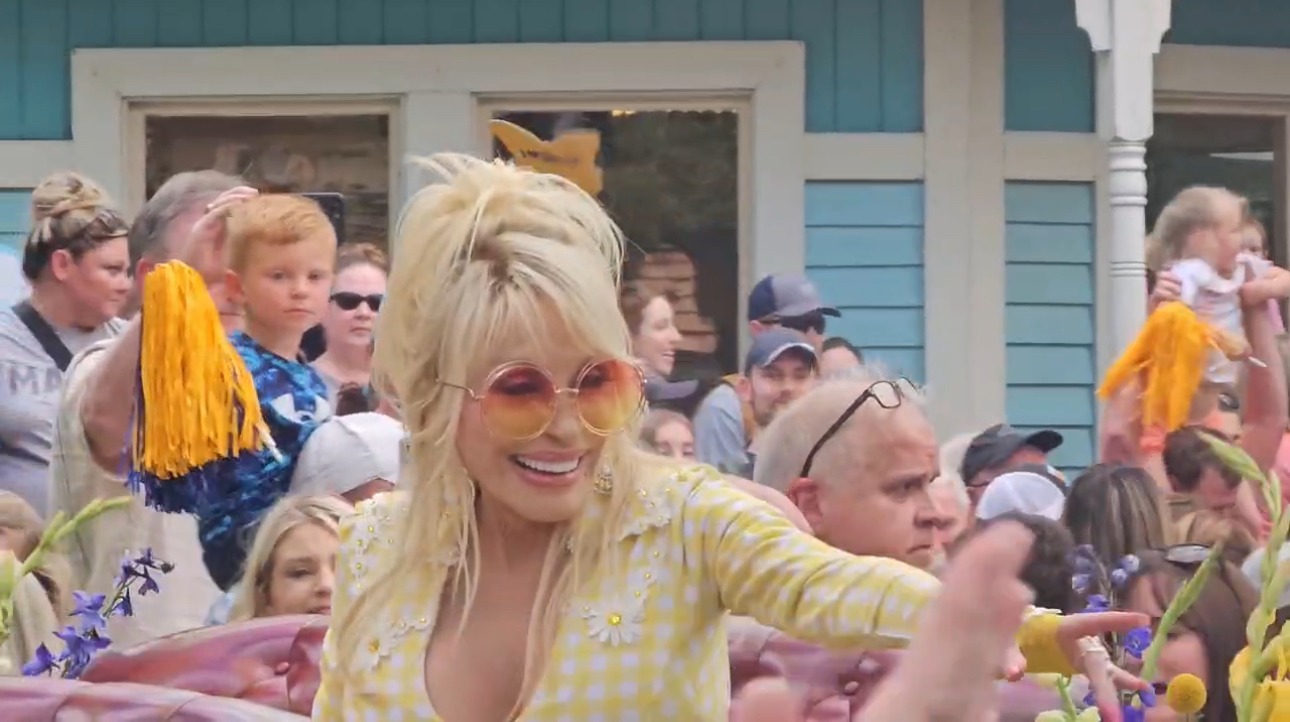
Dolly Parton rides through the streets of Dollywood to celebrate the park’s 40th anniversary – Photo Credit: That Park Place
“Well, what I always say, ‘I just want everybody to be treated good,’” Parton responded. “I try not to get into the politics of everything. I try to get into the human element of it.”
She explained that her family and circle of employees included many different kinds of people: “I’ve got transgender people. I’ve got gays. I’ve got lesbians. I’ve got drunks. I’ve got drug addicts—all within my own family.”
Her conclusion was personal rather than political: “I know and love them all, and I do not judge.”
That was Parton’s consistent position. She loved people, refused to judge them, and declined to transform that love into political activism.
Activists insist that compassion requires ideological submission. Under that formulation, saying that black lives matter supposedly makes someone an adherent of the Black Lives Matter organization, while loving gay or transgender relatives supposedly constitutes support for the entire Pride political agenda.
Parton refused that false choice.
1977 interview – the dignity of Dolly Parton, while Barbara Walters does her best to humiliate and make her feel uncomfortable pic.twitter.com/Dxnh5iT6uM
— Journey Through Time (@JrnyThroughTime) January 29, 2024
She didn’t lead Pride campaigns, lobby against Republican legislation, endorse Black Lives Matter as an organization, or use her celebrity to attack conservative voters. She repeatedly redirected political questions toward personal kindness, Christian love, and individual dignity.
The media waited until her death and then converted those expressions of love into endorsements she never gave. Erasing that distinction is not a tribute to her. It is an attempt to seize her legacy.
Basham’s Broader Warning Lands
Basham concludes that leftism possesses a “totalizing ambition” that refuses to allow anything to remain outside politics. That’s the most incendiary portion of her argument, but the posthumous scramble for Parton supplies it with uncomfortable force.
Within hours of her death, commentators weren’t merely celebrating the ways her music spoke to them. They were adjudicating which political faction deserved to inherit her.
The socialist Dolly, feminist Dolly, queer-icon Dolly, gun-owning Dolly, Christian Dolly, and capitalist Dolly all contain fragments of the real person. None of them contains the whole.

The Palace Theater in Dollywood at Christmas time – Photo Credit: Marvin Montanaro
That was precisely why Parton remained so broadly beloved. She could oppose mistreatment without delivering a lecture, affirm people without endorsing their entire political program, and practice charity without transforming recipients into ideological props.
She was neither empty nor neutral. She possessed strong beliefs about faith, work, ownership, generosity, dignity, and judgment. What she rejected was the demand that these beliefs be assembled into a party platform.
Basham is right that conservatives should resist an attempt to fabricate a socialist Dolly Parton. But conservatives must also follow the same rule themselves. Defending Parton from progressive appropriation can’t become an excuse to manufacture a covertly right-wing Dolly in its place.
The principled response isn’t to claim her more effectively. It’s to stop claiming her.
Dolly Parton Belonged to Herself
The battle over Parton’s legacy illustrates exactly why she avoided politics.
Partisans see a universally loved figure and immediately recognize the cultural authority that could be gained by placing her image on their side. Her refusal to cooperate only makes the prize more valuable: everyone wants to prove that beneath the rhinestones, Dolly was secretly one of them.
Basham’s furious rebuttal is most convincing when it returns to Parton’s explicit insistence that she wouldn’t participate in that game.
Parton could champion working women without being a Marxist. She could love gay people without becoming a party operative. She could oppose racial prejudice without endorsing every organization speaking in the name of racial justice. She could embody female independence without adopting a label she didn’t believe described her. She could also preserve her copyrights, build businesses, give away fortunes, carry a gun, and remain suspicious of political tribalism.
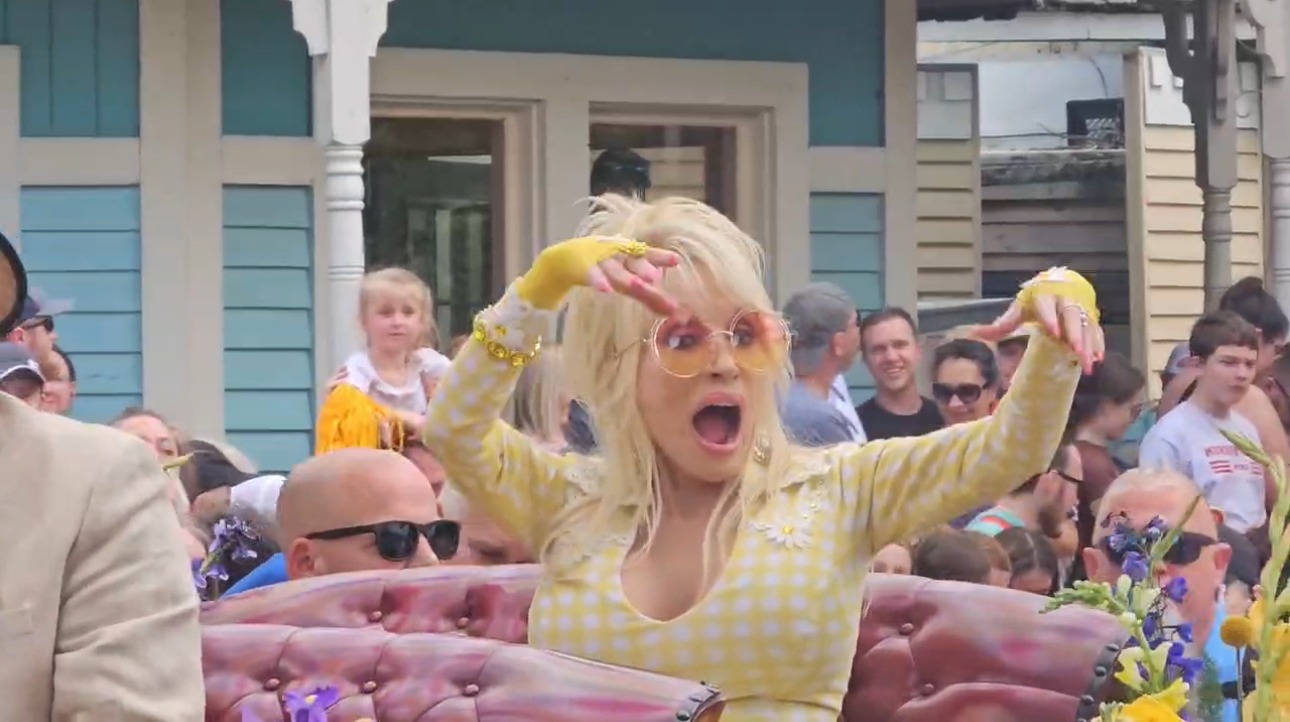
Dolly Parton has fun with guests at Dollywood’s 40th anniversary celebration – Photo Credit: That Park Place
That combination may frustrate activists, but it’s not contradictory. It’s human.
Dolly Parton wasn’t an ideological blank canvas. Nor was she a socialist mascot waiting to be discovered after her death.
She was something American culture increasingly struggles to tolerate: a person whose convictions didn’t arrive as a prepackaged partisan bundle.
The best way to honor her is to let her remain that way.
How do you feel about activists attempting to claim Dolly Parton for their causes? Sound off and let us know!
UP NEXT: Tennessee Moves To Name Nashville International Airport After Dolly Parton
