


Paramount Skydance is doubling down on pressure against the coalition attempting to block its massive Warner Bros. Discovery merger, once more demanding that 12 states and the Writers Guild of America put up a staggering $1.88 billion bond if they intend to keep the deal from closing while their lawsuits play out.
In new court filings Tuesday, Paramount reiterated its demand that the plaintiffs challenging the merger be required to provide financial security covering the potentially enormous losses created by delaying the transaction.
The company argues that its proposed acquisition of Warner Bros. Discovery is otherwise ready to close, having now received regulatory clearances covering 69 jurisdictions around the world. The lawsuits brought by a California-led coalition of 12 states and the WGA are, according to Paramount, the only remaining obstacles.
And Paramount says that delay is about to become extremely expensive.
“If plaintiffs insist that this transaction is paused during the pendency of their lawsuit, they must accept the financial consequences if their challenge ultimately fails,” a Paramount spokesperson said in a statement Tuesday.
The company added that it agreed to postpone closing the deal in order to facilitate an expedited legal process but “expressly” preserved its legal rights in doing so.
“We are not asking the district court to lift the no-close order, but to require enforcement of the bond that protects our financial interests while the litigation remains pending,” Paramount said.
Paramount Could Soon Be Paying $7 Million Every Day
The dispute revolves largely around a ticking fee included in Paramount’s agreement to acquire Warner Bros. Discovery.
Beginning October 1, Paramount is obligated to pay Warner Bros. Discovery shareholders approximately $7 million per day if the transaction remains unfinished. That works out to roughly $650 million per quarter.
By the time the antitrust litigation is expected to conclude next spring, Paramount estimates its financial damages from the delay — including both ticking fees and additional financing costs — could reach as much as $1.88 billion.
Paramount initially requested the bond on August 17.
Paramount Pictures Logo – YouTube, ClosingLogosHD
READ: Coral Reef Restaurant Will Reopen in EPCOT November 2026
California Attorney General Rob Bonta and the other plaintiffs subsequently argued that Paramount created the problem for itself by voluntarily agreeing to both the ticking fees and the temporary pause on completing the acquisition.
“Paramount now wishes to offload its responsibility” for the ticking fee onto the states and WGA, the plaintiffs argued in an August 31 filing, according to Variety.
They further argued that neither taxpayers nor a nonprofit labor union should effectively be required to insure Paramount’s acquisition of Warner Bros. Discovery.
Paramount isn’t buying it.
Paramount Says Opponents Can’t Block Deal Without Risk
Paramount’s argument is relatively straightforward: If the plaintiffs believe strongly enough in their cases to prevent the company from completing a transaction that has otherwise cleared its regulatory hurdles, they should bear responsibility for the damages if the court ultimately determines they were wrong.
The company contends that both the Clayton Act and Rule 65 of the Federal Rules of Civil Procedure support requiring a bond to compensate a party damaged by an injunction that ultimately proves unwarranted.
“Paramount agreed to delay closing to facilitate a prompt trial,” the company argued. “It didn’t waive its right to the bond protection required while the transaction is paused.”

Logos for Paramount Skydance and Warner Bros. – Paramount, WB
Paramount also accused the states of waiting until the “eleventh hour” to bring their case after conducting investigations for months without identifying areas of competitive concern to the company.
The company says the plaintiffs have not actually disputed its evidence showing that the delay could cause up to $1.88 billion in financial damage.
There’s also an interesting wrinkle involving the WGA.
According to Paramount, the union itself has previously argued that the Clayton Act requires a “very substantial bond” when an injunction threatens significant financial losses.
Paramount is now attempting to use that position against the guild.
Paramount Accuses Rob Bonta of Contradicting Himself
The fight became even more contentious this week when Paramount accused California Attorney General Rob Bonta of contradicting his own legal argument during television appearances.
One of Bonta’s arguments against requiring the bond is that Paramount voluntarily agreed to delay completing the transaction rather than having the court impose an injunction.
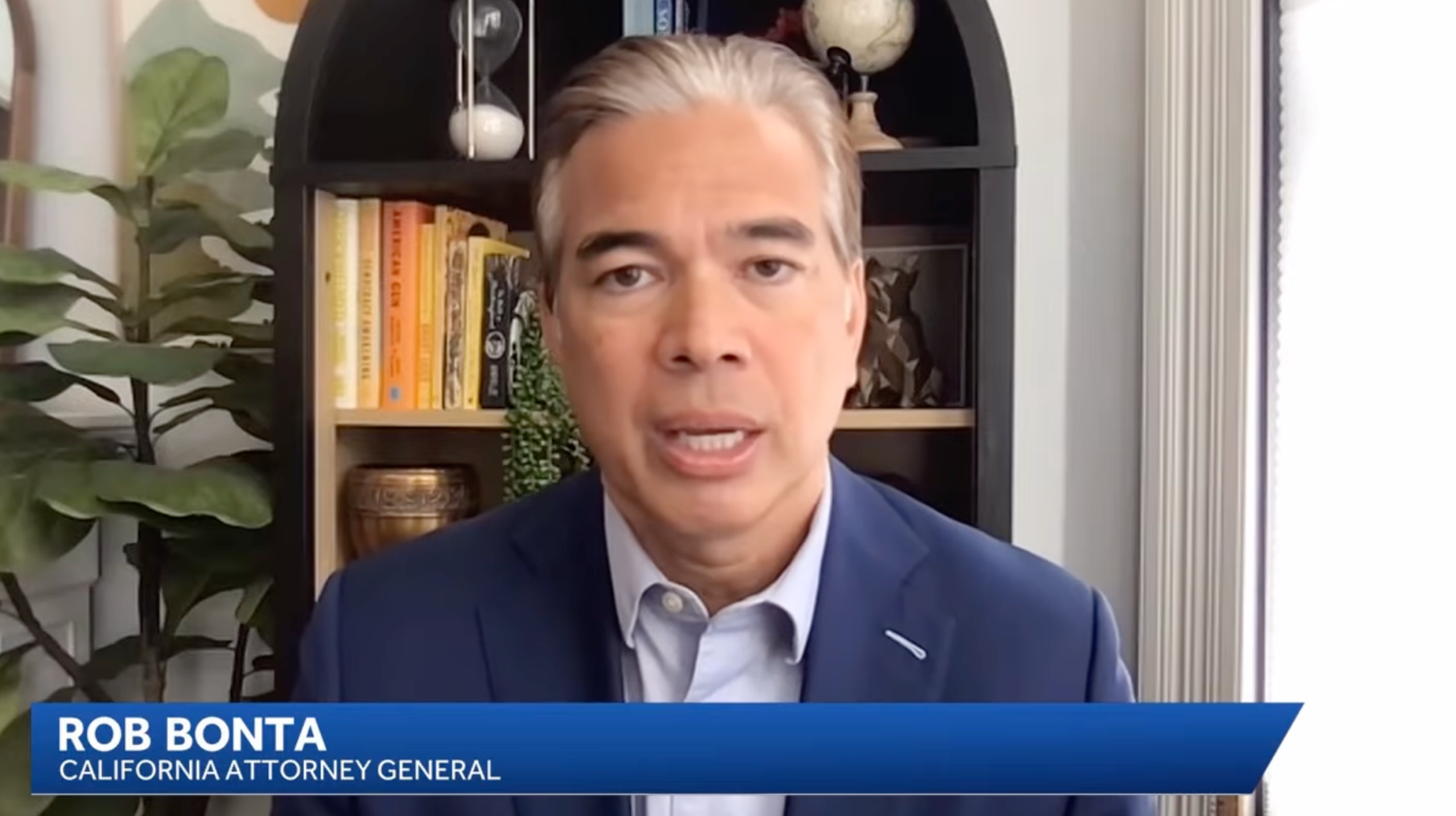
California Attorney General Rob Bonta – YouTube, KCRA 3
READ: Jimmy Kimmel Live Rumored to End in 2027 — ABC Denies Cancellation Report
But Paramount says Bonta subsequently characterized the arrangement publicly as effectively equivalent to an injunction. The studio therefore argues that an injunction blocking the transaction triggers the bond protections it’s seeking.
Bonta’s office isn’t backing down.
“We believe Paramount’s motion has no merit and look forward to presenting our case in court at the September 24th hearing,” his office said Tuesday.
Biden-appointed U.S. District Judge Araceli Martínez-Olguín is scheduled to hear arguments over Paramount’s bond request on September 24.
Only Two Lawsuits Stand Between Paramount and Warner Bros.
The larger picture is increasingly important.
Paramount says it has now satisfied every closing condition contained in its merger agreement and obtained regulatory clearances covering 69 jurisdictions.
That leaves the lawsuit filed by California and 11 other states, along with the separate challenge brought by the Writers Guild of America, standing between David Ellison and Warner Bros. Discovery.
The states argue that combining Paramount and Warner Bros. Discovery would create an entertainment giant with excessive leverage over the film and television industries, potentially allowing it to raise prices and reduce competition.
David Ellison in an interview with Bloomberg – YouTube, Bloomberg Podcasts
The WGA similarly argues that consolidation could hurt writers by reducing the number of major employers competing for their work.
Paramount maintains exactly the opposite: that combining the companies would create a stronger competitor to companies including Netflix and Disney while generating additional investment in movies and television.
And Wall Street increasingly appears to believe Ellison will ultimately get his deal.
Barron’s reported last week that investors were pricing in roughly an 85% probability that the Warner Bros. transaction ultimately closes, up dramatically from just over 50 percent only a month earlier.
The Price of Delaying Paramount Is About to Become Very Real
That makes the September 24 hearing considerably more important than another procedural skirmish in a corporate merger.
Paramount has effectively put a price tag on the effort to stop the Warner Bros. acquisition. If the states and WGA ultimately prevail, the deal could still be stopped. But Paramount’s argument is that its opponents shouldn’t be able to delay a transaction indefinitely, potentially cost the company nearly $2 billion, lose their cases, and then walk away from the financial consequences.
The clock is also rapidly approaching October 1.

The logo for Paramount Skydance – Paramount
Once those ticking fees begin, every additional day that Warner Bros. Discovery remains outside Paramount’s control potentially adds another $7 million to the bill.
For months, the battle over Warner Bros. has revolved around whether California and the WGA can stop David Ellison from completing one of the largest entertainment acquisitions in history.
Now Paramount is asking a different question: If they’re wrong, who pays for it?
What do you think will happen in the battle for the Paramount WBD merger? Sound off and let us know!
UP NEXT: Five Injured in Scaffolding Collapse at George Lucas’ Summit Skywalker Ranch
