


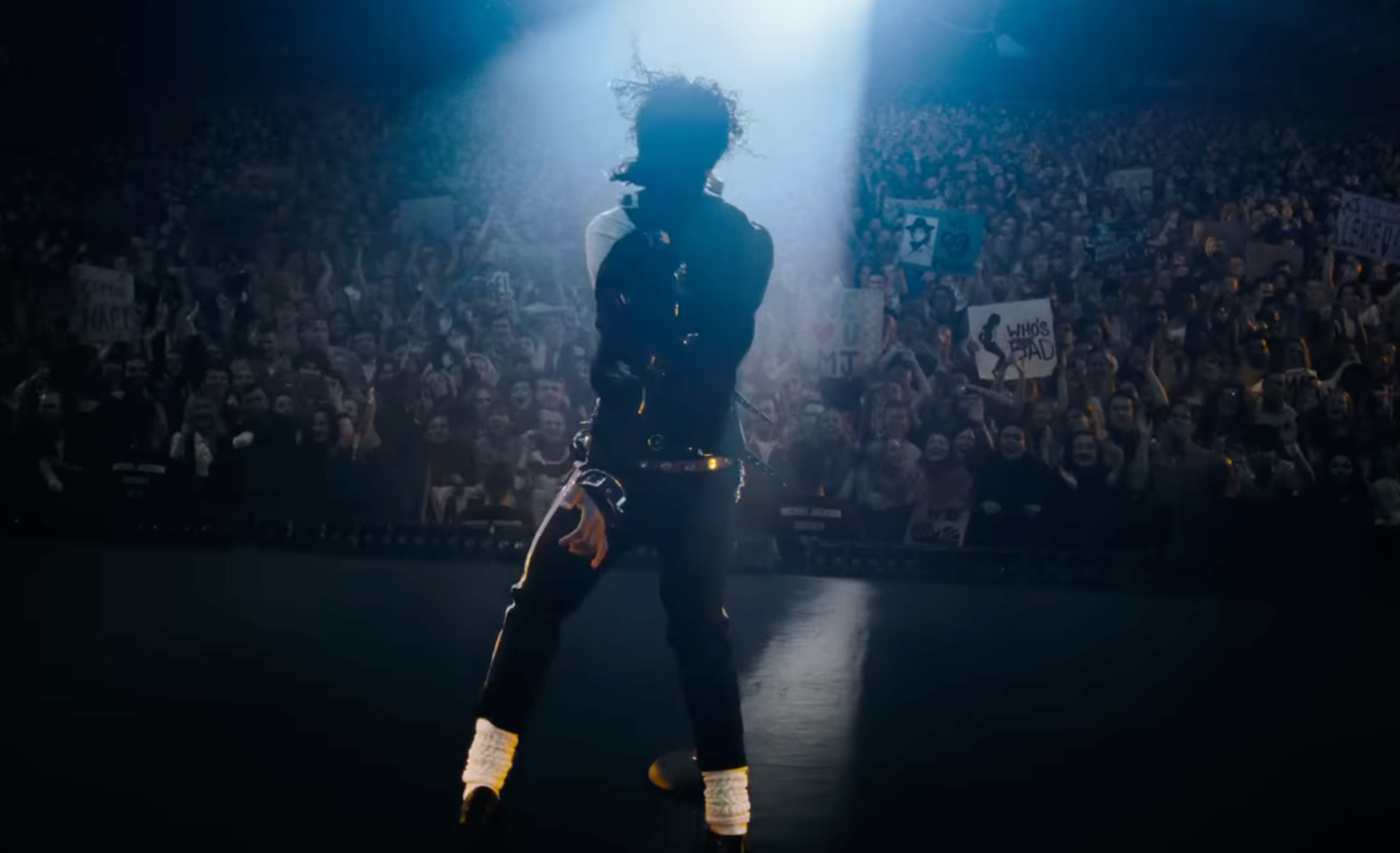
As I write this Michael review, I remember June 25, 2009 with uncomfortable clarity. At the time, I was working in a bank call center, the kind of place where your day was measured in hold music, overdraft fees, and the emotional stability of strangers who absolutely believed their checking account problems were now your spiritual responsibility.
I was sitting across from a coworker while we both waited on hold, trying to fix yet another account issue, when the guy next to us casually said, “Hey, Michael is in the hospital.”
What was remarkable was that nobody asked, “Which Michael?”
Everyone knew.
Michael Jackson.
There are some people who exist so loudly in culture that they only need one name. Michael was one of them.
I remember stopping mid-conversation and just saying, “What?” right before my line picked up and I had to snap back into professional mode—helping a woman explain why 27 overdraft attempts somehow still counted as 27 overdraft fees.
Throughout the day, I kept sneaking looks at the news between approved breaks, clicking through headlines like I could somehow personally change the outcome through browser refreshes alone. Every 10-minute break turned into frantic searching. At one point, I saw he was “stabilized for the moment,” and for a little while, that felt like enough.
At lunch, I asked the woman next to me what she thought would happen.
Without missing a beat, she said, “Michael ain’t ever going to die.”
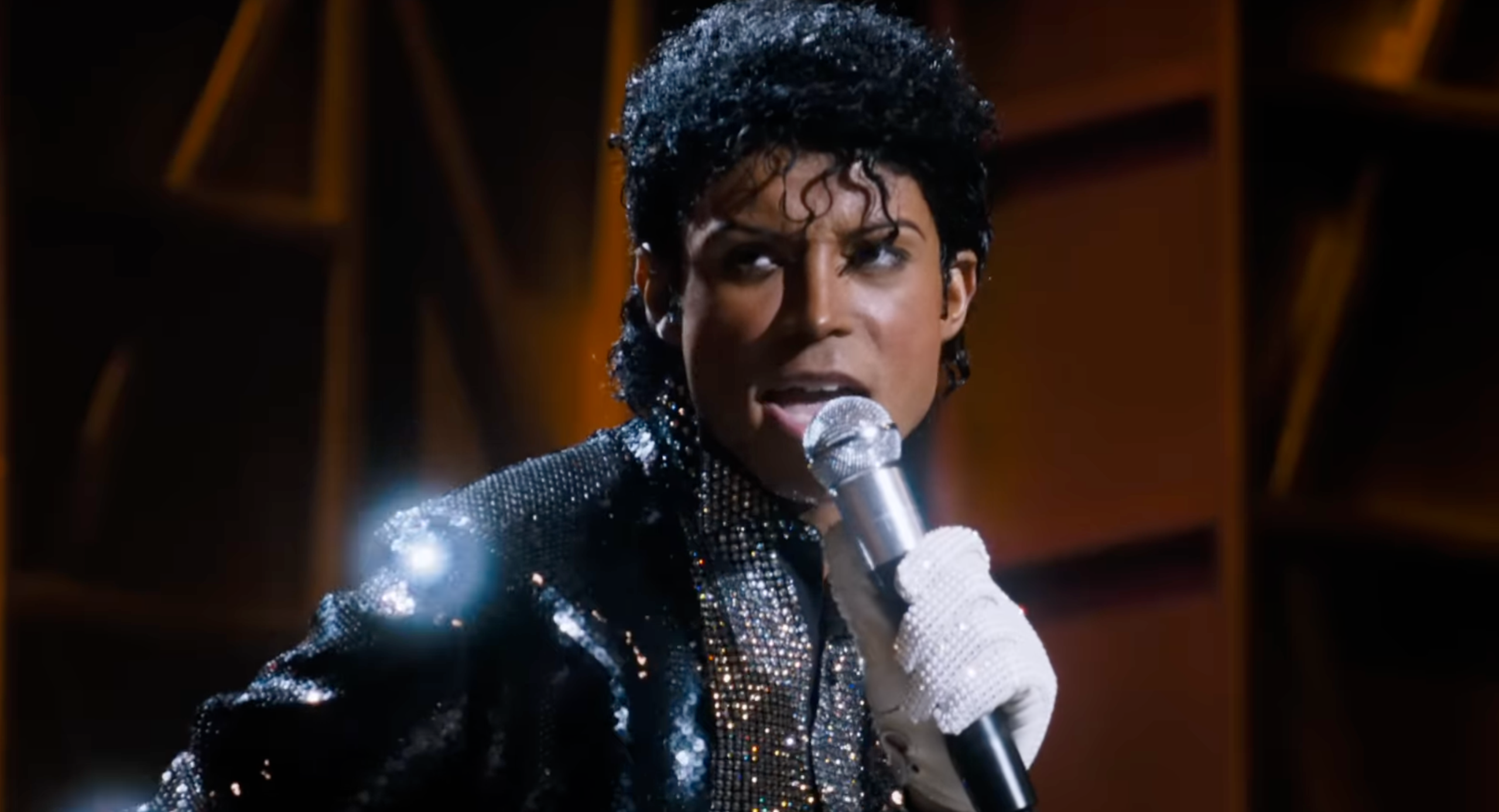
An image from Michael – YouTube, Universal Pictures
READ: Amazon MGM Studios Plans Live-Action Adaptation of FernGully
There was a kind of logic to that. Some people feel less like celebrities and more like weather. Permanent. Impossible to imagine the world without them. But when we came back from lunch and sat down at our desks, the news had changed.
He was gone.
The whole little cluster of us went quiet. Just silence while we kept helping people reset passwords, explain interest rates, and pretend the world hadn’t shifted slightly sideways. When I got into my car that evening, the only thought I had was, Well… music is really going to be lame now.
From Cultural Icon to Movie Subject
Fast forward years later, and I’m walking into the theater to see The Super Mario Galaxy Movie when I spot the poster for Michael.
I grabbed my husband’s sleeve. “I want to see that.”
He looked at me with one raised eyebrow. “Seriously?”
My answer was immediate. “I’m a Michael kid. Of course I want to see it.”
I grew up with Michael Jackson. His music is stitched into the background of my life so thoroughly that I’m pretty sure some of it has fused directly into my DNA. When my family didn’t know what to get me as a gift, the latest Michael Jackson single, CD, whatever was always a winner. He is one of the very few artists where I may not know every detail of the man, but if you play one of his songs, I will absolutely start singing along—loudly, confidently, and almost always off key.
Beat It, Remember the Time, Black or White, Smooth Criminal, and Blood on the Dance Floor are so embedded in my life that hearing the opening notes feels less like listening to music and more like unlocking old memories I forgot I had.
That was the power and influence he has when he was alive. Could a movie capture this?
This Movie Just…Gets It
I walked into that theater with a critical eye for two reasons: the memory of Michael Jackson and the responsibility of writing about the film honestly. Watching a movie about someone whose music shaped so much of your life is strange because while he was technically a stranger, he never felt like one. His songs were there during birthdays, family cookouts, awkward school dances, and late-night cleaning sessions when life needed a soundtrack. I know my bias, but if people trust me to review something like Michael, then I owe them honesty, not just nostalgia.
That creates a different kind of expectation.
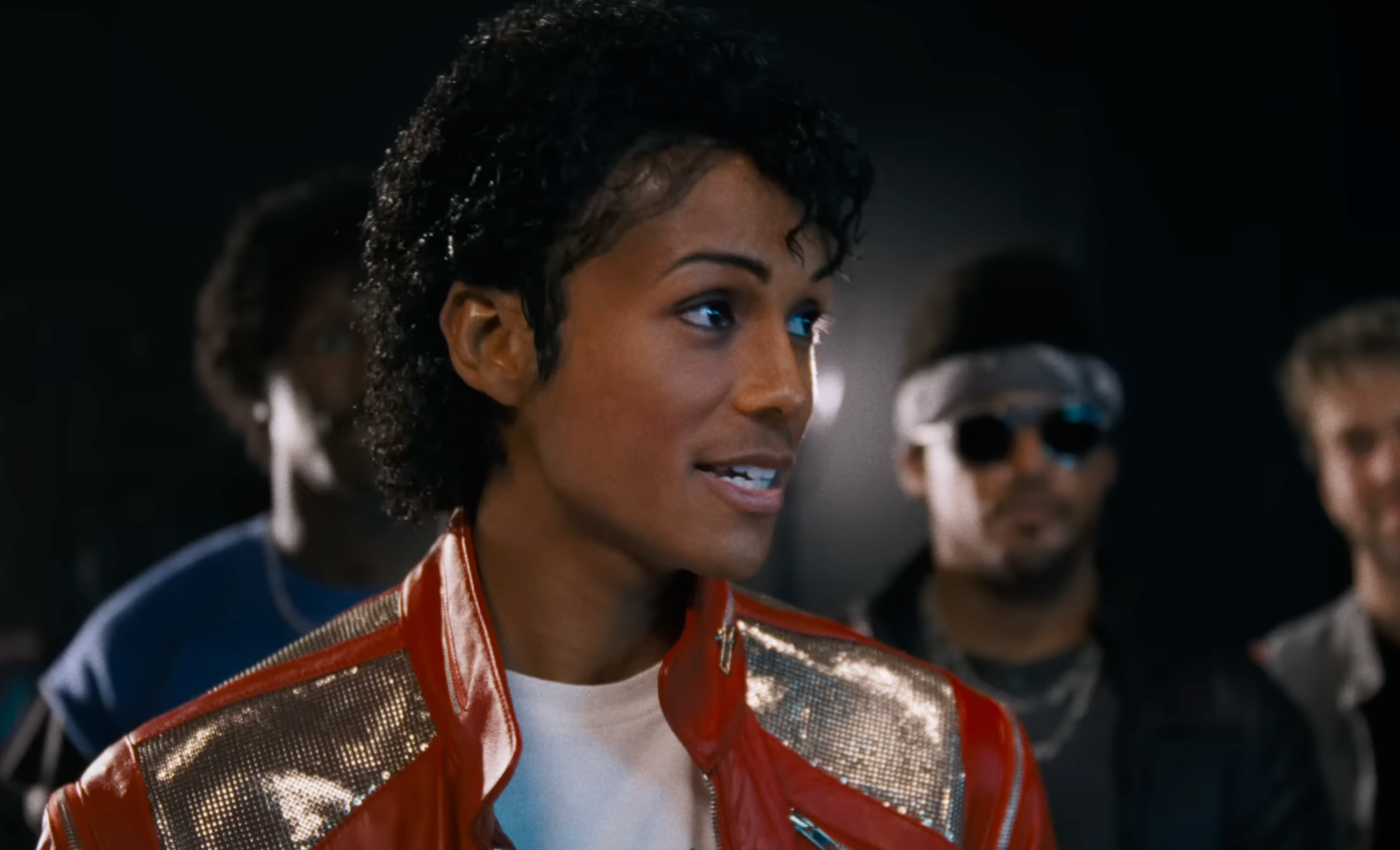
An image from Michael – YouTube, Universal Pictures
READ: Where Even Shadows Fear to Tread — The Story Hollywood Wouldn’t Make
But man, let me tell you—the opening of this movie hit me right in the nostalgia. That opening music got me immediately and within the first few minutes I was a teenager again, singing under my breath and remembering exactly why Michael Jackson’s music became part of the wallpaper of so many people’s lives. It was the right way to start the film because it built hype instead of asking for patience. Whoever it was that knew to do this, you have my respect.
The film understands one very important thing: before Michael Jackson was controversy, he was magic.
The Movie Works Best When It Stops Performing and Starts Showing
One of my favorite directing choices was the atmosphere shift between when Katherine Jackson spoke and when Joe Jackson spoke. When the mother entered a scene, there was warmth, softness, something human. When the father entered, the air changed. It got tighter. Smaller. Like everyone in the room suddenly remembered they were being watched.
That was smart.
Even better was the way they handled eye contact. Michael could connect with an audience effortlessly. He could stare into thousands of people and somehow make it feel personal. But put him in front of his father? Different man. Different body language. Different breathing. That detail mattered.
For people unfamiliar with the history of the Jackson family, there have been stories for decades about how harsh Joe Jackson was as a father and manager—stories of intense discipline, emotional control, and accusations of physical abuse during the years he was pushing the Jackson children, especially Michael Jackson and the rest of the The Jackson 5, toward stardom.
The film does not avoid showing Joe Jackson being physically abusive. There are multiple scenes where he beats Michael Jackson in front of the family, and the movie makes sure you understand the fear he carried with his “family.” But if you came looking for a deeper confrontation of the full history surrounding those abuse stories, the film still handles it enough for you to get the point and the implications hinted at afterward.
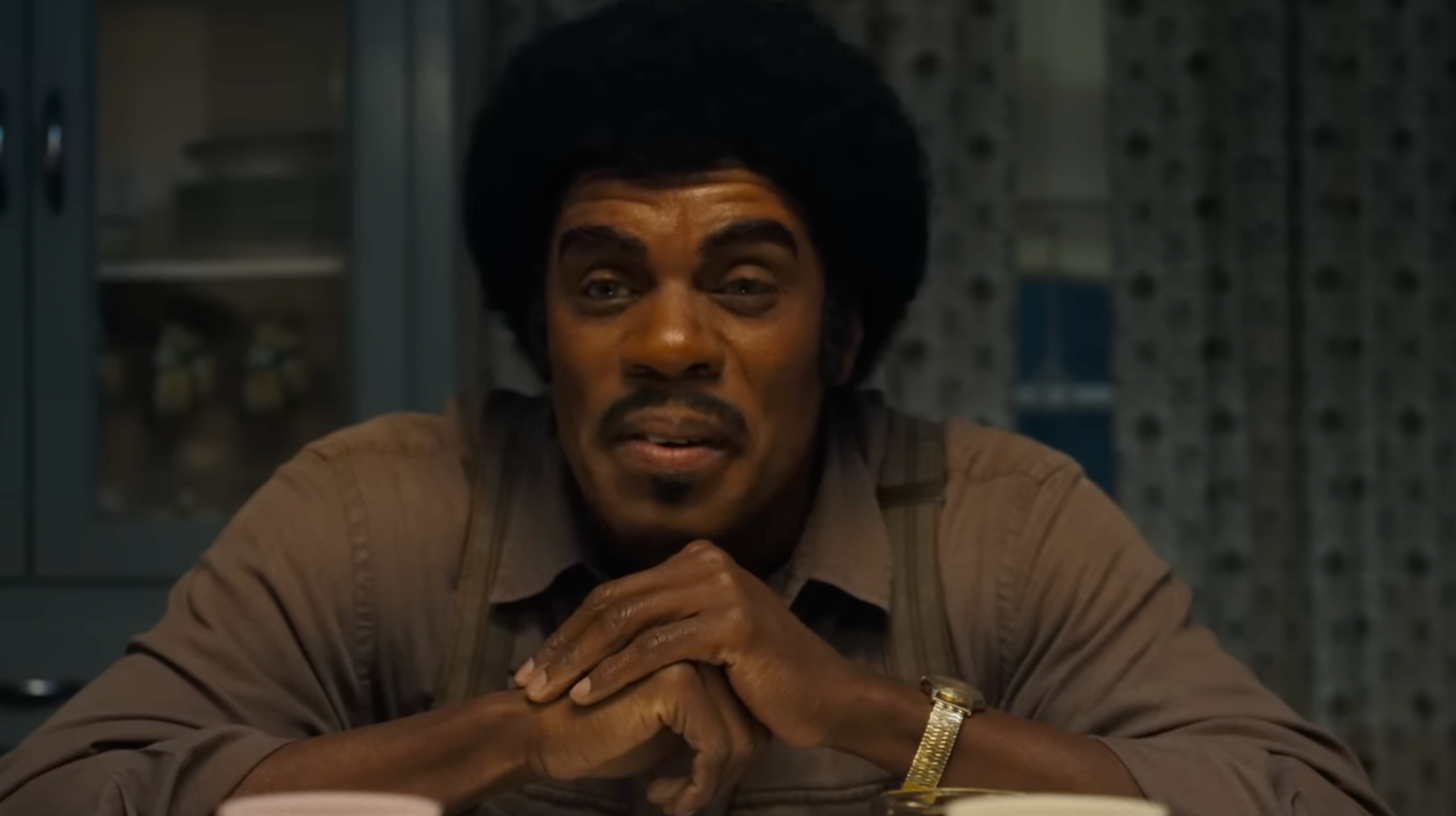
At its core, this is a story about Michael Jackson and Joe Jackson, and the two of them work as remarkable foils for each other. Michael feels almost like Peter Pan—someone desperate to fly free, to hold onto wonder, imagination, and something bigger than the walls he grew up inside.
An image from Michael – YouTube, Universal Pictures
Joe, by contrast, is the force pulling him back down, a father driven by control, discipline, and financial success, convinced survival and greatness only come through pressure. One is chasing art, escape, and meaning; the other is chasing security, legacy, and proof that his sacrifices mattered. That tension makes the film work, because Joe is not just Michael’s father—he is the obstacle Michael spends his life trying to rise above.
Joe’s desk looked less like office furniture and more like a throne, and that visual told you everything without a word said. Once the family was doing well, his space felt built to elevate him, to remind everyone around him who held the power in that house and who believed he was responsible for getting them there. In contrast, Michael’s room felt like the only place he tried to escape to, a small world where he could breathe, dream, and be something other than the version his father demanded.
Where the Hell Was Janet?
While I was trying very hard to be responsible and take notes like a proper reviewer, I found myself getting pulled in by the cast and how well they handled these scenes. With very little, they managed to do so much—small looks, shifts in posture, the kind of silence that says more than dialogue ever could. I was captivated in ways I honestly did not expect to be.
But being impressed doesn’t mean I stopped noticing where the movie became less biography and more controlled family narrative, because at the end of the day, the Jackson family decided what version of this story would be told, who would be in it, and who would not—which brings me to the question half the internet is asking:
When you love Michael Jackson, you usually end up loving everything orbiting around him too—The Jackson 5, the larger Jackson family, and of course Janet Jackson. As much as people knew me for loudly butchering Black or White, they also knew me for absolutely yowling Rhythm Nation like I was contractually obligated to embarrass myself in public.
READ: Disney 460K Claude Calls in 9 Days Expose SAG-AFTRA’s AI Stonewalling as Talks Drag On
So naturally, I kept asking the same question while watching: where was Janet?
By all accounts, she should have been present in a story centered so heavily on Michael and the family dynamic, especially given things she has shared in interviews over the years. But the answer is probably much simpler than people want it to be: she said no.
I did a little digging, and not only did Janet Jackson not approve of this film, but Michael Jackson’s own children also chose not to be part of the project.
And honestly, that is enough. Just because the audience wants access does not mean we are owed it. I can be curious without pretending their private family decisions are my business.
Edges of the Truth
The same applies to the heavy sugarcoating around Motown Records and the machine around the Jackson family. There are parts of Michael’s rise that feel polished smooth enough to reflect light back at you.
If you are coming here for the full forensic breakdown of what happened in Michael Jackson’s life, this is not your documentary. This is the softened version, the cinematic version made for fans for how we wanted and still want to see him—the one where pain still exists, but it arrives with better lighting.
I’m torn on that, though, because if we want a film about Michael, how honest should it be? How much are we allowed to be invasive when it comes to family trauma?
Those are fantastic questions I don’t have perfect answers for. We don’t know how dark things got inside that family, what they had to sacrifice to get where they are now, or what wounds they still carry from those choices. I suspect there are a lot of hands in that history, and since I don’t know whose hands were where, I’m comfortable limiting my curiosity before it turns into entitlement.
Making Room for Joy
I really appreciated that the film made room for Michael Jackson’s joy. Too often, people reduce him into either a victim of his circumstances or an untouchable icon and forget he was also an artist who genuinely loved the work itself. You can see the excitement in him when he is learning the process, studying the music, building the performance, and trying to understand why something works instead of just accepting that it does. He was not just talented—he was hungry, curious, and obsessed with getting better, and that passion is part of what made him extraordinary. While studying the best of the best he has the best snack ever—popcorn.
That lines up perfectly with what Quincy Jones talked about in Q: Notes on Life. Quincy had already spoken about seeing that willingness to learn, especially after The Wiz, and how much Michael Jackson wanted mentorship and growth. The movie gets that part right. He was not just gifted musician—he was teachable and willing to learn after Quincy quietly corrected the wrong way he was saying a word.
Honestly, the fact that Quincy only gets a small scene in this film feels like a crime considering how deeply tied he was to some of Michael’s greatest work. This is the man behind Off the Wall, Thriller, and Bad—not just as a producer, but as someone who helped shape Michael into the artist the world remembers. Quincy did not just make records with him; he challenged him, refined him, and pushed him toward excellence. Their creative partnership is one of the most important artist-producer relationships in modern music, and reducing that to a brief appearance feels like trying to explain the moonwalk without mentioning feet.
What I appreciated, though, is that the film still captures the spirit of that relationship. Michael is shown as someone hungry to learn, eager to listen, and constantly searching for the next level of his craft. He was not walking into rooms assuming he was the smartest person there—he was walking in ready to absorb everything he could. That humility, paired with that level of talent, is a dangerous combination in the best possible way.
I also loved how often the film showed Michael Jackson trying to escape his father—not always physically, but emotionally. Every room felt like strategy, and every silence felt like survival. The kitchen confrontation scene was fantastic because it stopped performing and started bleeding. That scene had teeth. His bedroom should have been sanctuary, but even there he could not fully escape. It was supposed to be his private world, his little rebellion, his safe place, and the fact that even that had limits hit harder than some of the louder scenes.
The transition scenes throughout the film were masterfully done as well—smooth, elegant, and emotionally intelligent. They carried time without making it feel like homework, which is where a lot of biopics lose people. There was also something quietly heartbreaking about the way the film framed fans as family. When genuine relationships are fractured early, people build belonging wherever they can. Fame becomes community, applause becomes affection, and crowds start feeling safer than dinner tables. That idea made the entire film sadder and, honestly, made me unexpectedly protective—not of the legend, but of the kid underneath all of it.
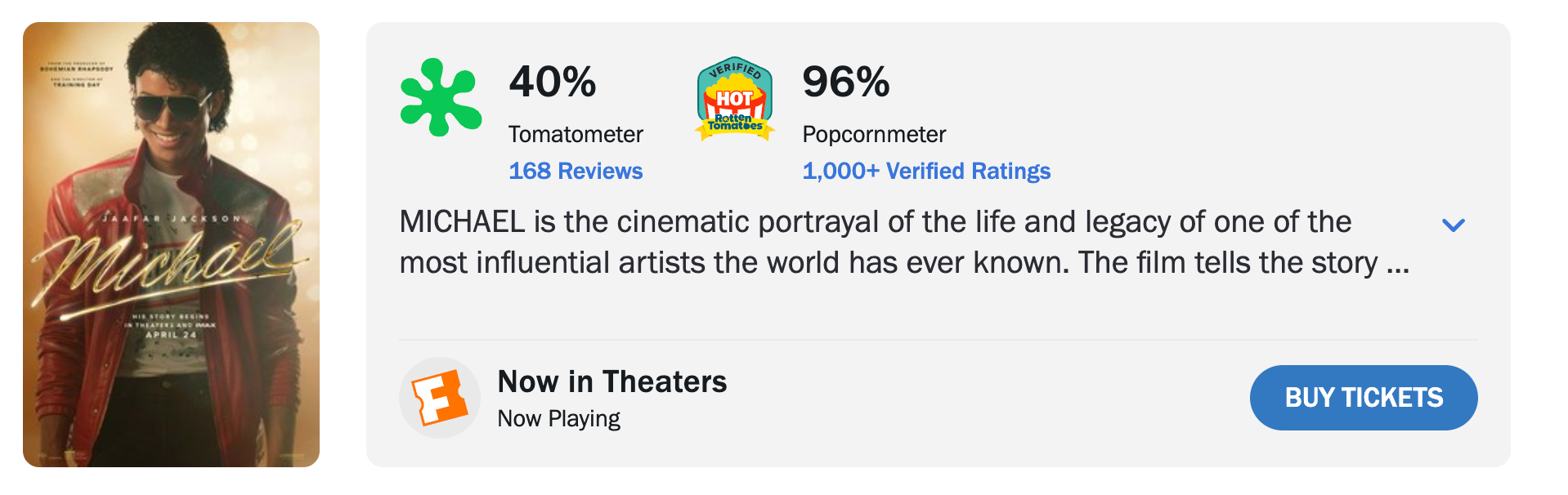
Rotten Tomatoes review scores for Michael – Rotten Tomatoes
That, to me, is where the film succeeds most. It creates that protective instinct and reminds you there was a child inside all that performance trying to survive something bigger than himself. Beneath all the polish, the message that worked for me was hope: rising up against the thing trying to control you and finding purpose through service, art, and becoming something larger than your circumstances. That is powerful, even if every historical detail is not perfectly preserved.
What is This Movie, Really?
I don’t think this is a perfectly factual retelling of Michael’s life. I think it is an altered version, a curated version, a family-approved version with better choreography. But it’s still effective. If you walk in expecting pure historical precision, you’re setting yourself up for disappointment. You are getting the fan version, but also getting something emotionally entertaining and, at times, genuinely moving—and that still counts.
I think this is a good film for anyone who loves stories about talent, survival, family damage, and the complicated cost of greatness. Also, let’s be honest, The Michael Jackson Estate and those albums are probably making an absolutely irresponsible amount of money right now, and frankly, good for them.
If you watch the film and decide to go replay a song in memory of Michael Jackson, I recommend Smooth Criminal. It still hits, it still makes you want to dramatically point at strangers like you are in the middle of a music video, and afterward you can do the responsible thing and ask Annie if she’s okay.
Frankly, after all these years, we deserve an answer.
FINAL SCORE: 8/10
What’s your Michael review? Sound off in the comments and let us know!
UP NEXT: Dean Cain Returns to the Superman Suit for the First Time in 30 Years
