


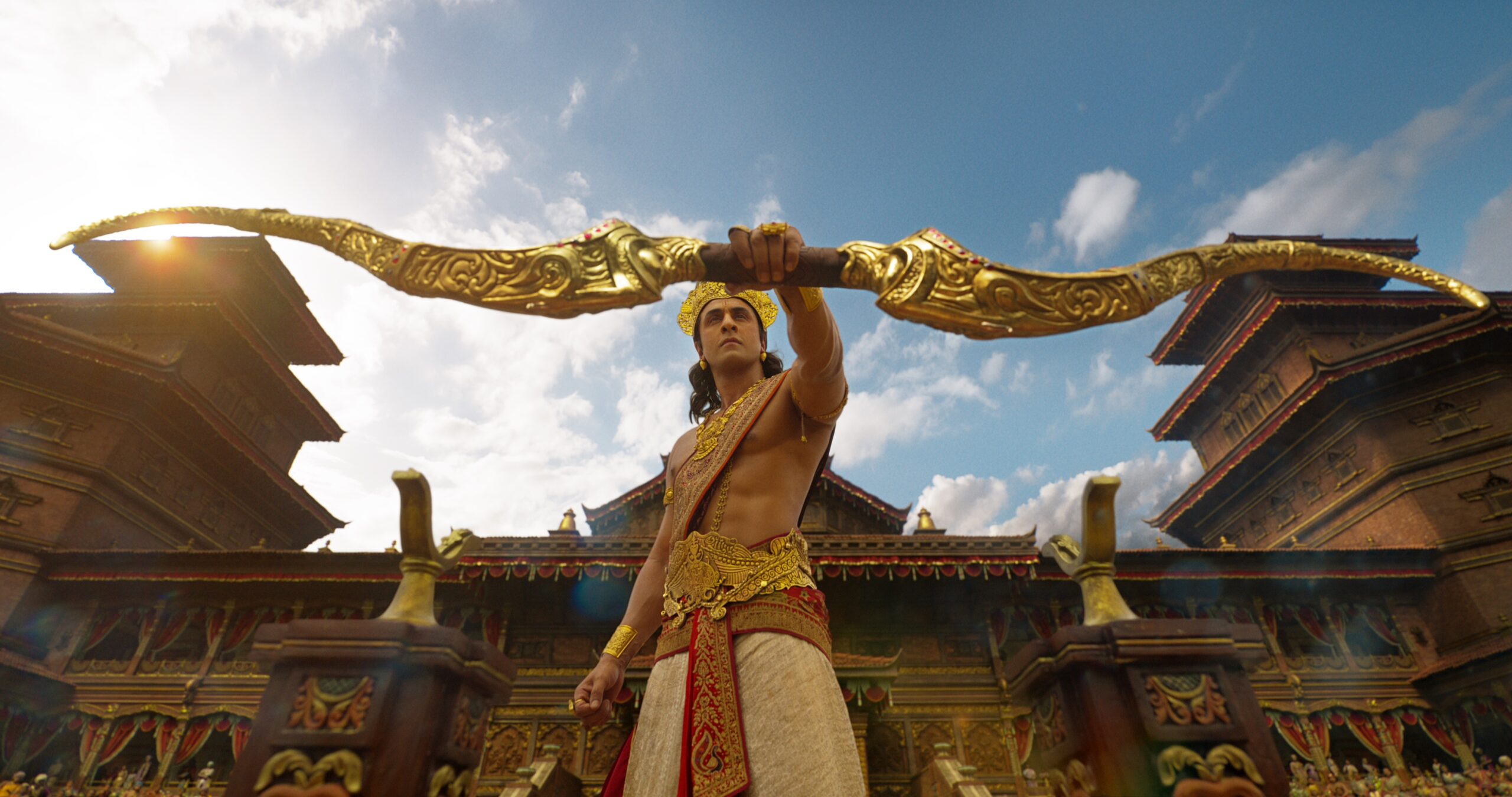
With a rumored $420 million budget and the distinction of being the most expensive Bollywood film ever made, the Ramayana: Rise of a Legend will either be majorly impressive or impressively bad. There’s little doubt that it will be a massive hit in India. Whether this Hindu mythological epic can captivate Western audiences is another question.
Adapted from one of India’s foundational epic poems, the film follows Prince Rama (Ranbir Kapoor), an avatar of the god Vishnu, and the near-immortal Ravana (Yash), the King of Lanka. Channeling the energy and grandeur of the 1950s and 1960s sword-and-sandals blockbusters, it delivers it with a distinct Indian flavor. You don’t get any ironic jokes, modern quips, or sarcasm. The film is sincere from start to finish. It’s been a while since we got a film like this—perhaps not since Peter Jackson’s The Lord of the Rings or the Star Wars prequels—and it’s refreshing to watch a film so unapologetically true to itself.
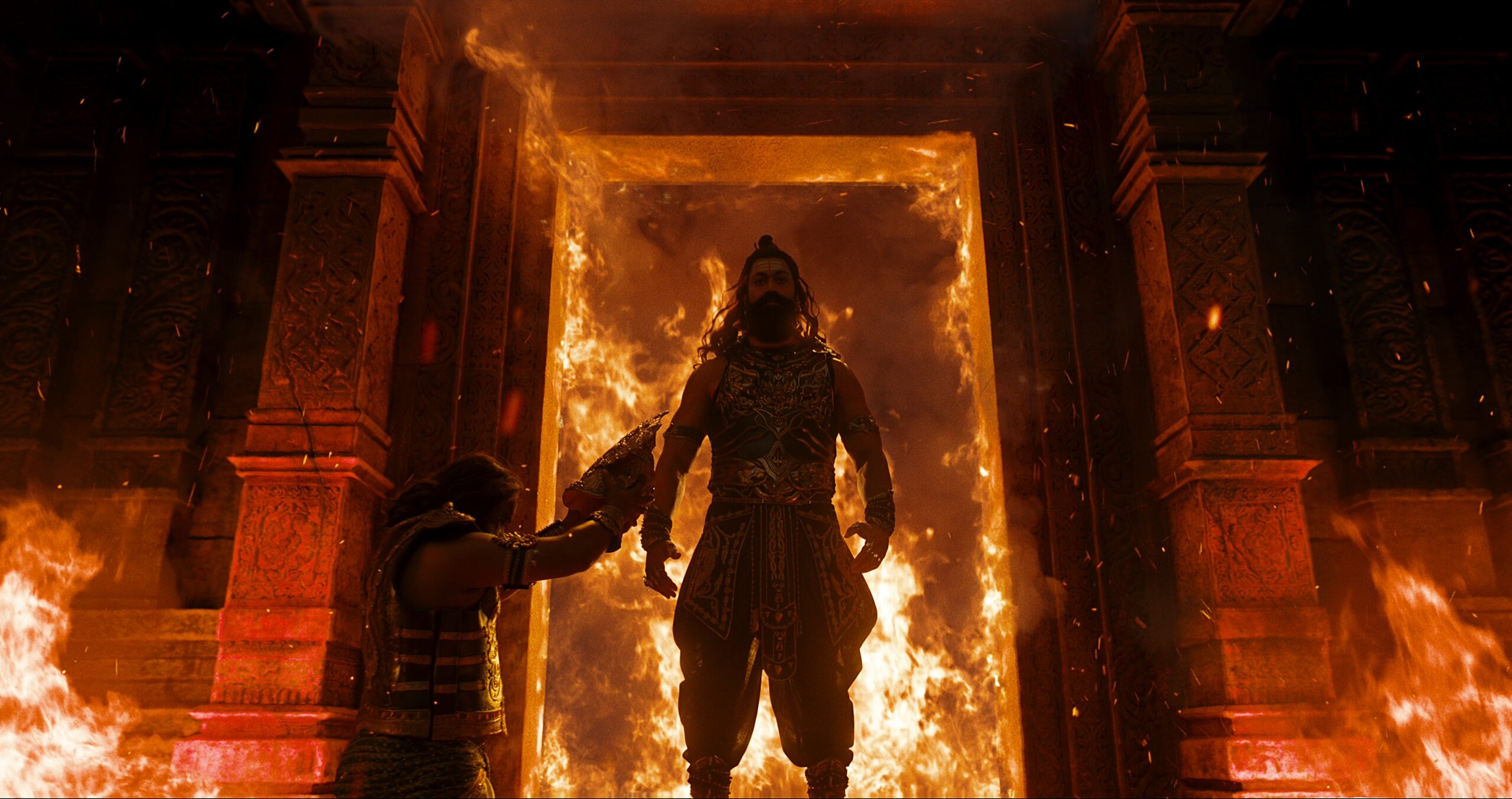
Ravana (Yash) in RAMAYANA: RISE OF A LEGEND.
3+ Hours of Dense Mythology
The 35-minute prologue (before the title card even appears) lays down the lore in exhaustive detail. So get comfy because you’re in for a long ride. It begins by chronicling Ravana’s rise from poverty and mastery of meditation to win favor with one of the gods, cleverly positioning him as the protagonist. Only later is it revealed that the true hero is Rama. The rest of the film is likewise overly drawn out: poses, conversations, small moments, and epic battles—usually accompanied by a booming Hans Zimmer score and a dramatic 360-degree panoramic shot. But when everything is a dramatic moment, nothing is.
Releasing the same weekend as Diwali, which celebrates Prince Rama’s return from his 14 years of exile, the cinematic spectacle brings this ancient Hindu religious tale to life, using Prince Rama as a vessel to teach important lessons about virtue. Clocking in at 196 minutes for the Hindi version (165 minutes for the English dub), director Nitesh Tiwari packs the runtime with dense with mythology and lore. For the uninitiated, the sheer volume of names, characters and interwoven stories can feel overwhelming.
Divine Will Over Human Choice
A deeper problem is that most of the characters lack agency as they are being divinely directed—Ravana gains pseudo-immortality and conquers the three worlds on easy mode; Rama, as Vishnu incarnate, is the only one capable of lifting Lord Shiva’s bow—so it feels like the hero and villain are passively moving through the film with little happening as a result of their own actions. This makes for a less interesting narrative, but it stems from an issue with the source material.
There’s even a moment where Rama asks a guru why so much has befallen him, only to be told that his actions determined his fate. But nothing up to this point has proved that to be true! Only in the final ten minutes does Rama seize control of his own destiny right before the credits roll, closing out Part 1 (yes, Part 2 is coming in 2028).
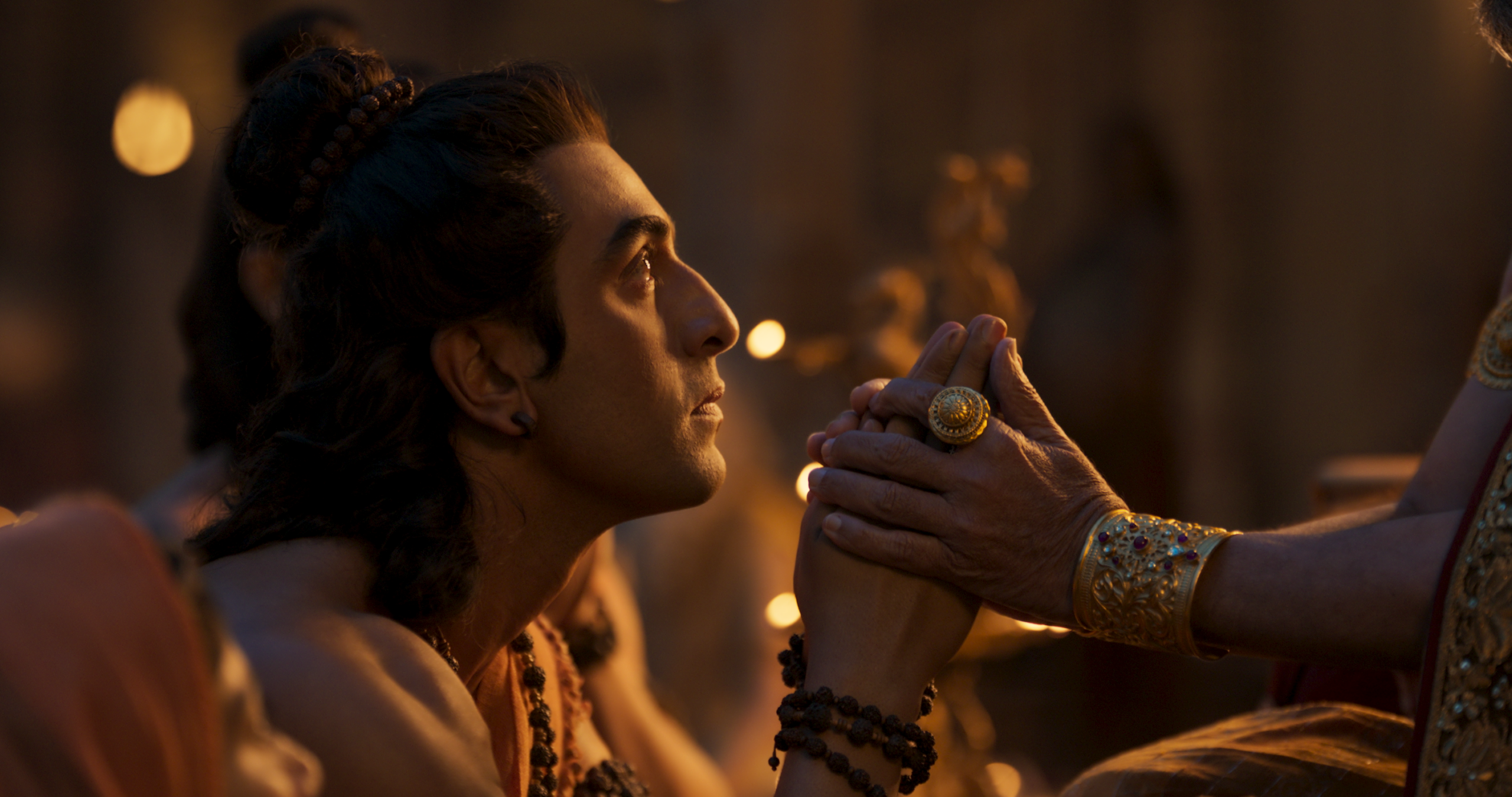
Ranbir Kapoor (Prince Rama) in RAMAYANA: RISE OF A LEGEND.
The cast is stacked with many big-name Indian actors, who are largely unknown in the West but they deliver great performances. Yash’s performance as the imposing Ravana shines every time he’s on screen and contrasts with Ranbir Kapoor’s Rama, who is a humble, valiant warrior. Rakul Preet Singh also delights as Ravana’s scheming sister, Shurpanakha.
Practical Sets Over Green Screens
Visually, the film is an unexpected treat. While Hollywood has grown dependent on green screens, India has remained committed to massive physical sets, and the contrast couldn’t be more striking. The principal characters and even crowds never feel fake or uncanny because they are real actors grounded in real sets. CGI, though obviously present, is very well done and surprisingly better than that of many big-budget productions. It’s also easy to get lost admiring the intricate architecture, ornate headpieces, and embellished attire of the characters, which is a mild drawback of the subtitled version, as reading subtitles can pull your attention away from the visual splendor.
While Ramayana: Rise of a Legend is unlikely to break through to a broad American audience, it will reward those who crave the classic cinematic epics of yesteryear. It is long and overstuffed at times, but if you choose to see it, opt for the Hindi version with English subtitles.
Ramayana: Rise of a Legend opens in theaters on November 5, 2026.
Rating: 5.5/10
What’s your review of ‘Ramayana: Rise of a Legend’? Sound off and let us know!
UP NEXT: Universal Confirms Major Dark Universe Expansion With New Indoor Roller Coaster at Epic Universe
