



Amazon MGM Studios has spent years insisting that The Lord of the Rings: The Rings of Power is a resounding success. Now, the show’s own leadership appears to be telling prospective viewers that they do not actually need to watch most of it.
During San Diego Comic-Con 2026, co-showrunner Patrick McKay promoted the third season’s five-year time jump as an opportunity for people who abandoned—or never started—the series to jump aboard without watching its first 16 episodes.
“We love the idea that even if you’ve maybe never seen the first two seasons, season 3 is a great place to jump in because the stories are starting in a brand new spot,” McKay told GamesRadar+.
McKay attempted to present this as a creative “advantage,” claiming the passage of time would give the show a “jolt of adrenaline.” The showrunner explained that relationships, kingdoms, and battle lines will have changed significantly during the gap, with Rivendell and Sauron’s fortress of Barad-dûr having been constructed off-screen.
However, encouraging audiences to begin a heavily serialized fantasy drama with its third season sounds less like a bold storytelling decision and more like an admission that Amazon desperately needs new viewers.
More importantly, it suggests the people making The Rings of Power understand that a substantial portion of the potential audience either did not finish the first season or never returned for the second.
The Rings of Power Lost Most of Its Initial Audience
The numbers surrounding The Rings of Power have long painted a very different picture from Amazon’s carefully worded public statements.
Amazon initially announced that the series’ two-episode premiere attracted 25 million global viewers during its first day, which the company declared was the largest premiere in Prime Video history. Nielsen also measured approximately 1.25 billion minutes watched in the United States during the program’s first several days.
That historic launch did not translate into comparable long-term engagement.
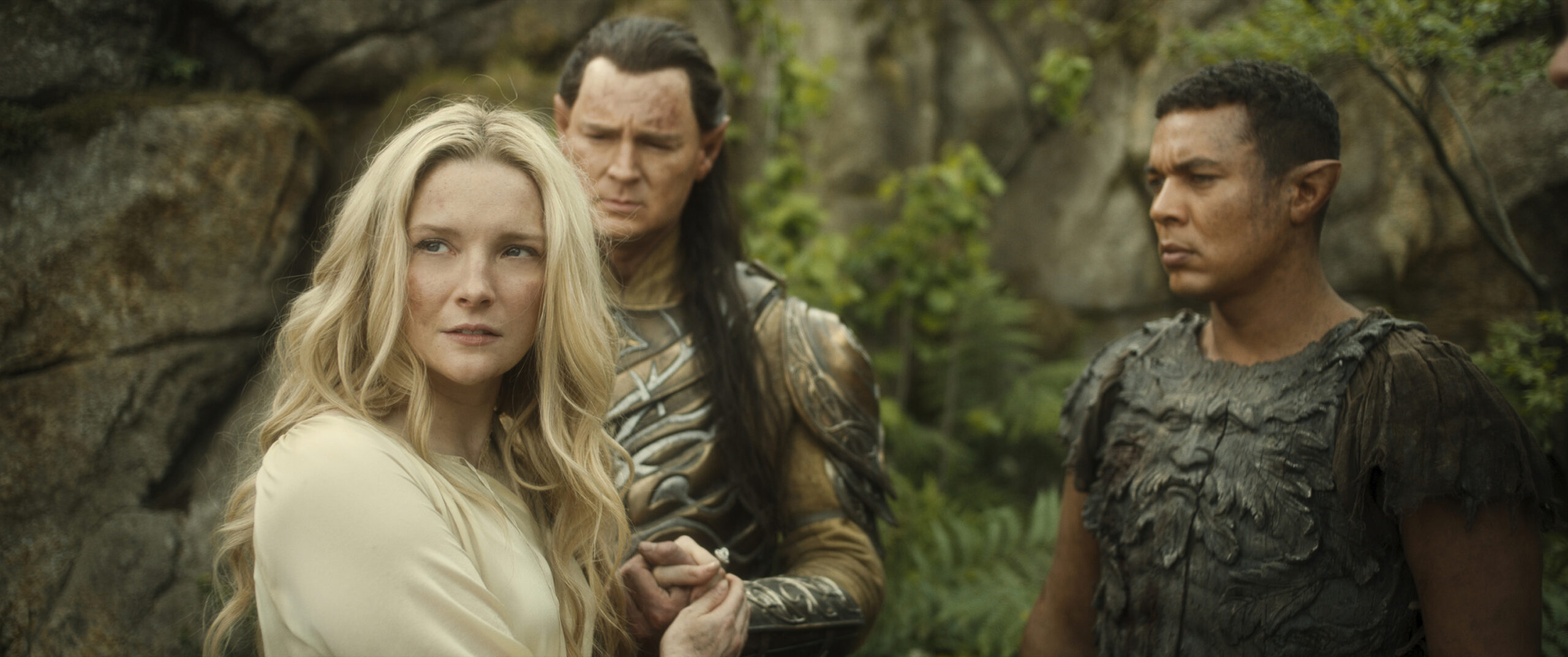
Morfydd Clark as Galadriel; Benjamin Walker as High King Gil-galad; Ismael Cruz Córdova as Arondir in The Lord of the Rings: The Rings of Power (2024), Amazon MGM Studios
READ: New ‘God of War’ Game Starring Kratos Announced After Fan Backlash Over ‘God of War: Laufey’
When the season finale arrived, The Rings of Power generated only 570 million minutes watched during the measured Nielsen week. It fell off Nielsen’s overall streaming list and placed fifth among streaming originals. That represented a massive decline from the excitement surrounding the premiere, even though the finale week offered viewers the entire eight-episode season rather than only the opening installments.
The comparison is not perfectly equal because Nielsen’s weekly totals include different numbers of available episodes and days of availability. Nevertheless, the direction was unmistakable. The audience that sampled Amazon’s enormously promoted premiere was not maintaining the same level of interest through the conclusion.
An even more damaging report followed in 2023.
The Hollywood Reporter reported that only 37% of the show’s initial American audience completed the first season. The reported international completion rate was only slightly better at 45%. In other words, nearly two-thirds of the American viewers who began Amazon’s supposed flagship fantasy series did not finish it.

Robert Aramayo as Elrond in The Lord of the Rings: The Rings of Power (2024), Amazon MGM Studios
That is the context behind McKay now assuring people that they can skip directly to season three.
This is not merely an attempt to make the program accessible. It looks like a practical response to the reality that most of the people who began the story didn’t reach the end of its opening chapter.
Season Two Fell Even Further
The second season did nothing to reverse the trajectory.
According to Samba TV, approximately 902,000 American households watched the season two premiere episode during its first five days. The first-season premiere had reached approximately 1.8 million American households in a shorter four-day measurement window. That placed the second-season premiere at roughly half the household audience recorded for the show’s original debut.
A later year-end analysis from streaming analytics company Luminate delivered an even worse assessment.

Charles Edwards as Celebrimbor in The Lord of the Rings: The Rings of Power (2024), Amazon MGM Studios
Luminate’s 2024 television report found that the second season suffered a 60% decline in total minutes watched compared to the first. The first season reportedly accumulated nearly 8 billion minutes, while season two fell to approximately 3 billion.
Amazon attempted to counter the negative attention by announcing that 40 million global viewers had “engaged” with the second season during its first 11 days. That figure eventually increased to more than 55 million before the finale. However, Amazon didn’t publicly provide a detailed definition of what constituted an engaged viewer or how much of the series each account had watched.
Someone who samples a few minutes of an episode is not necessarily an active fan, and Amazon’s own history with the show demonstrates why raw reach numbers don’t tell the entire story. The first season reached an enormous number of people, but the reported completion data indicated that most American viewers didn’t remain through the finale.
Amazon’s Most Expensive Television Gamble
The collapse becomes even more extraordinary when placed beside the program’s cost.
Amazon reportedly paid approximately $250 million merely to acquire the television rights to Tolkien’s material. The first season then carried a production expenditure of approximately $465 million, according to figures connected to New Zealand’s government production-rebate records.
That placed the initial rights purchase and first-season production costs at approximately $715 million before accounting for later seasons. Amazon’s intended multi-season commitment was widely projected to push the total investment beyond $1 billion, making The Rings of Power one of the most expensive television undertakings in history.
Amazon has repeatedly defended that investment.

LOS ANGELES, CALIFORNIA – AUGUST 15: Jennifer Salke, Head of Amazon Studios attends “The Lord Of The Rings: The Rings Of Power” Los Angeles Red Carpet Premiere & Screening on August 15, 2022 in Los Angeles, California. (Photo by Matt Winkelmeyer/Getty Images)
Former Amazon Studios head Jennifer Salke previously rejected suggestions that the program was anything less than successful, arguing that such descriptions did not reflect the company’s internal conversations. Amazon also claimed the first season eventually reached more than 150 million viewers globally.
But a series cannot survive indefinitely on the number of people who once pressed play.
The available third-party measurements show an enormous premiere followed by poor completion, a second-season premiere that lost approximately half of the first season’s sampled household audience, and a sophomore season whose total watch time reportedly fell by 60%.
Those are not the numbers of a growing cultural phenomenon. They are the numbers of a show in freefall.
Season Three Is Being Sold as a Rescue Mission
This is where Amazon’s messaging becomes difficult to ignore.
The Rings of Power wasn’t designed as an anthology. It wasn’t conceived as a collection of standalone adventures. Amazon sold it as a sprawling, serialized adaptation of Tolkien’s Second Age—a story audiences were expected to invest in for years.
Yet now, after spending well over a billion dollars and producing just 16 episodes, the show’s own creative leadership is effectively telling prospective viewers they don’t need any of it.
That’s a remarkable admission.

SAN DIEGO, CALIFORNIA – JULY 25: (L-R) Showrunners J.D. Payne and Patrick McKay speak onstage during The Lord Of The Rings: The Rings Of Power SDCC Press Preview Event at Venue 808 on July 25, 2024 in San Diego, California. (Photo by Jerod Harris/Getty Images for Amazon MGM Studios)
Instead of insisting Seasons 1 and 2 are essential viewing, Patrick McKay is assuring audiences they can simply start with Season 3 because everything has changed anyway.
That’s not how creators talk about successful television. Imagine the creators of Game of Thrones encouraging viewers to skip the first two seasons and begin with Season 3. Imagine Vince Gilligan telling audiences they didn’t really need the first two years of Breaking Bad. The suggestion would have been laughable because those shows were built around the idea that every season mattered.
Here, Amazon is asking viewers to overlook 16 episodes that reportedly cost hundreds of millions of dollars to produce.
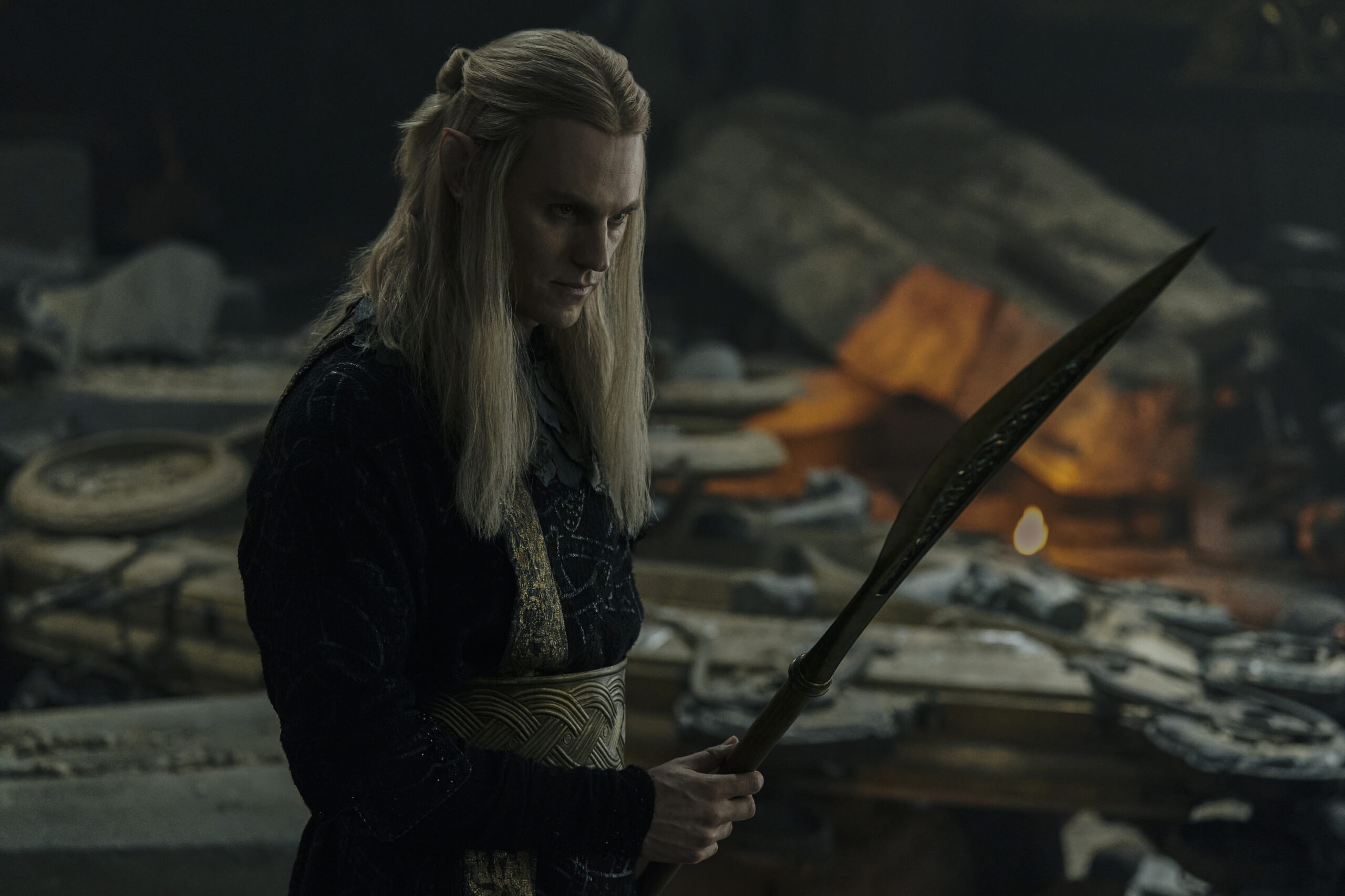
Charlie Vickers as Sauron in The Lord of the Rings: The Rings of Power (2024), Amazon MGM Studios
The five-year time jump suddenly makes a lot more sense in that context. It isn’t simply a storytelling device. It’s an opportunity to soft reboot the series without calling it a reboot. New relationships. New political landscape. New status quo. New jumping-on point.
For a show that was marketed as the most ambitious television production ever made, that’s a surprisingly modest sales pitch.
After years of declining viewership, historically poor completion rates, and a second season that reportedly lost roughly 60% of the first season’s viewing time, Amazon is no longer trying to convince audiences they missed something essential.
It’s trying to convince them they didn’t miss anything at all.
How do you feel about Rings of Power season 3? Sound off and let us know!
UP NEXT: Beneficiaries of Disney/Fox Merger Unite Against Paramount/WBD Merger
