


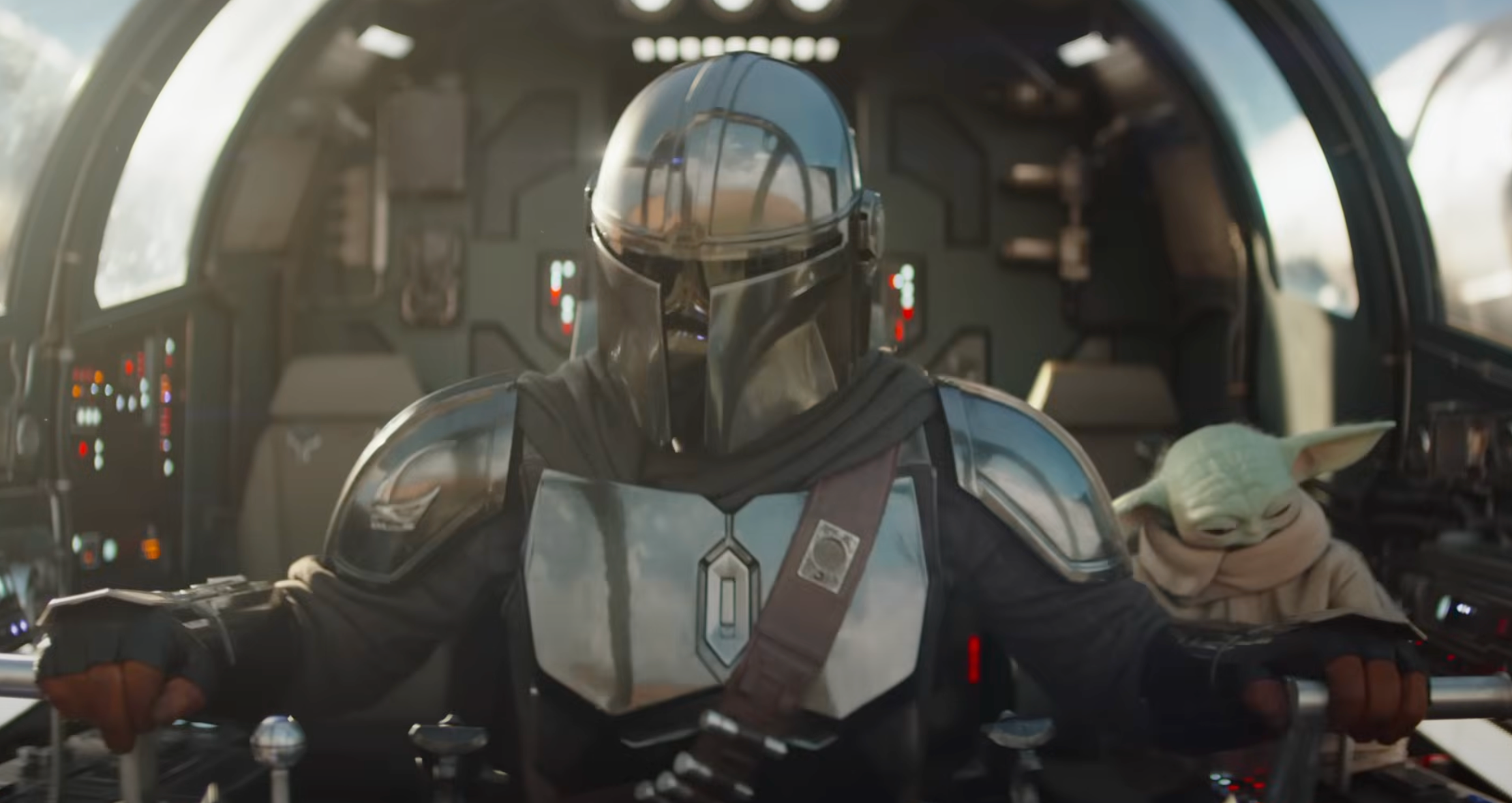
The following is a spoiler-free review of The Mandalorian and Grogu.
When The Mandalorian first aired, my husband and I sat down together in front of the television to watch it. That sounds far less dramatic than it actually was. It’s rare for us to step away from our computers long enough to commit to watching something together in real time, but Star Wars still carried enough emotional weight for us to make an event out of it.
At that point, the franchise was standing on shaky ground. The sequel trilogy had left many longtime fans confused, divided, or emotionally detached from something they grew up loving. For us, The Mandalorian felt like a final test. Either this show would remind us why we loved Star Wars in the first place, or it would quietly confirm that it was time to move on.
Why The Mandalorian Season 1 Worked So Well
Then the first episode aired. We loved it.
As someone who grew up loving spaghetti westerns, science fiction, samurai films, and anything inspired by Lone Wolf and Cub, this series felt tailor-made for me. A wandering armored gunfighter protecting a mysterious child while drifting through the harsh edges of the galaxy was exactly the kind of stripped-down storytelling Star Wars desperately needed.
READ: Star Wars: Galactic Starcruiser Named Biggest Flop in U.S. Theme Park History
The first season had confidence. It had atmosphere. It had restraint. It trusted visual storytelling, character moments, and silence instead of constantly trying to explain itself.
Most importantly, it felt sincere. The cast worked, the action worked, the world felt lived in again. For the first time in years, Star Wars felt adventurous instead of corporate. I finished that first season genuinely excited for the future of the franchise.
“This is the way” and “I have spoken” become a common response that even to this day my friends and I say to each other.
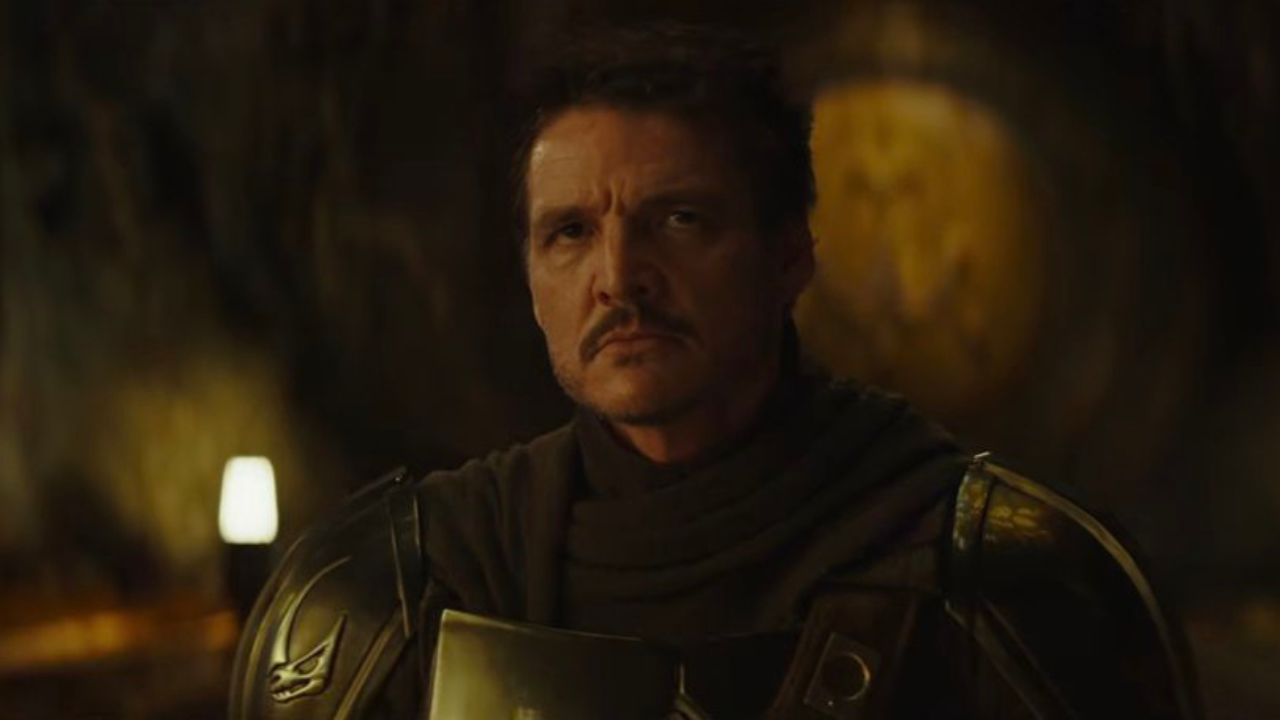
Pedro Pascal unmasked in The Mandalorian – YouTube, Star Wars
Did the trilogy movies under Kennedy’s watch do that? Nope.
Not unless you count the memes of Mark Hamal creepily drinking green milk. Whose idea was that? Do you need help? I know a guy you can talk to.
The Gina Carano Controversy and the Growing Disney Divide
Then reality started creeping back in. The controversy surrounding Gina Carano became impossible to ignore. Regardless of where people fell politically, it was hard not to notice the growing tension between Disney’s public image management and the audience that had embraced the show.
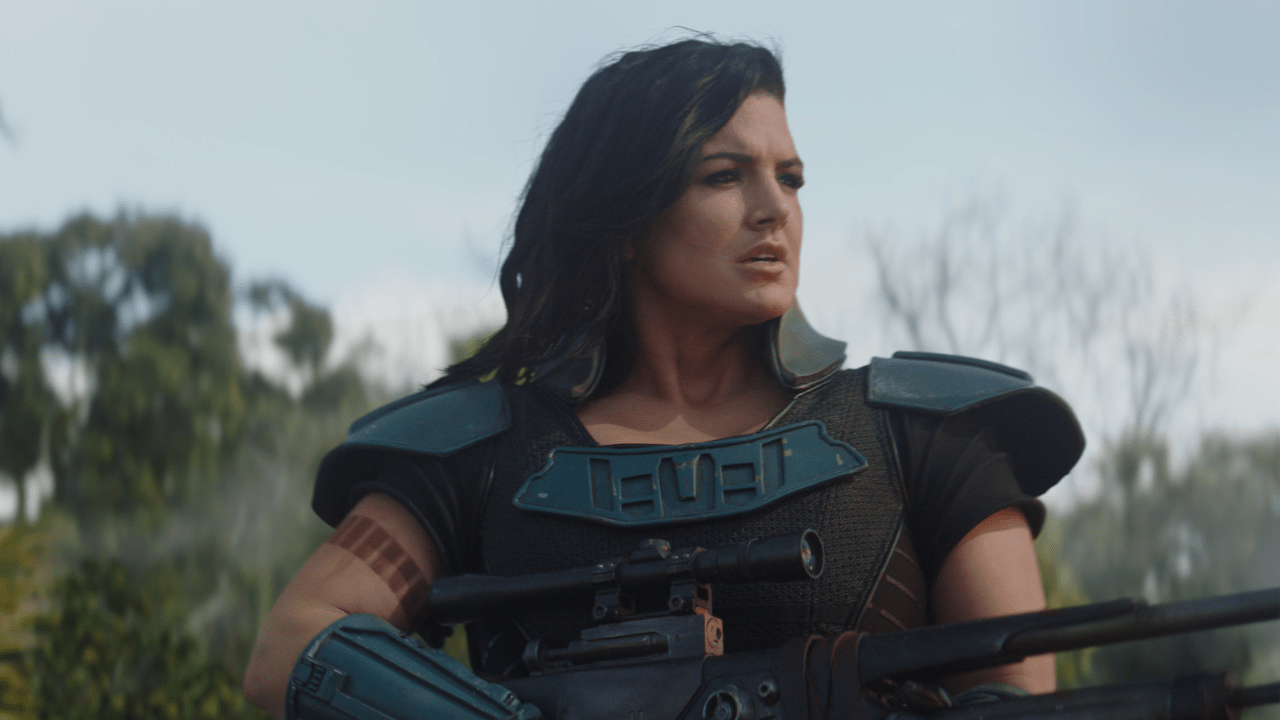
(L_R): Fennec Shand (Ming-Na Wen) and Cara Dune (Gina Carano) in Lucasfilm’s THE MANDALORIAN, season two, exclusively on Disney+. ©.
I respected Carano for refusing to publicly bend herself into whatever shape the corporation wanted at the time. Right or wrong, agreeing or disagreeing with her personally, there was something undeniably human about someone choosing integrity over career safety inside a system built on compliance.
That situation also marked the moment where the illusion around the production began to crack for me.
Kathleen Kennedy, Lucasfilm, and the Fear of Corporate Storytelling
I had heard from someone adjacent to the project that internal creative tensions were growing and that it was becoming increasingly difficult to keep Kathleen Kennedy from exerting heavier influence over the direction of the series.
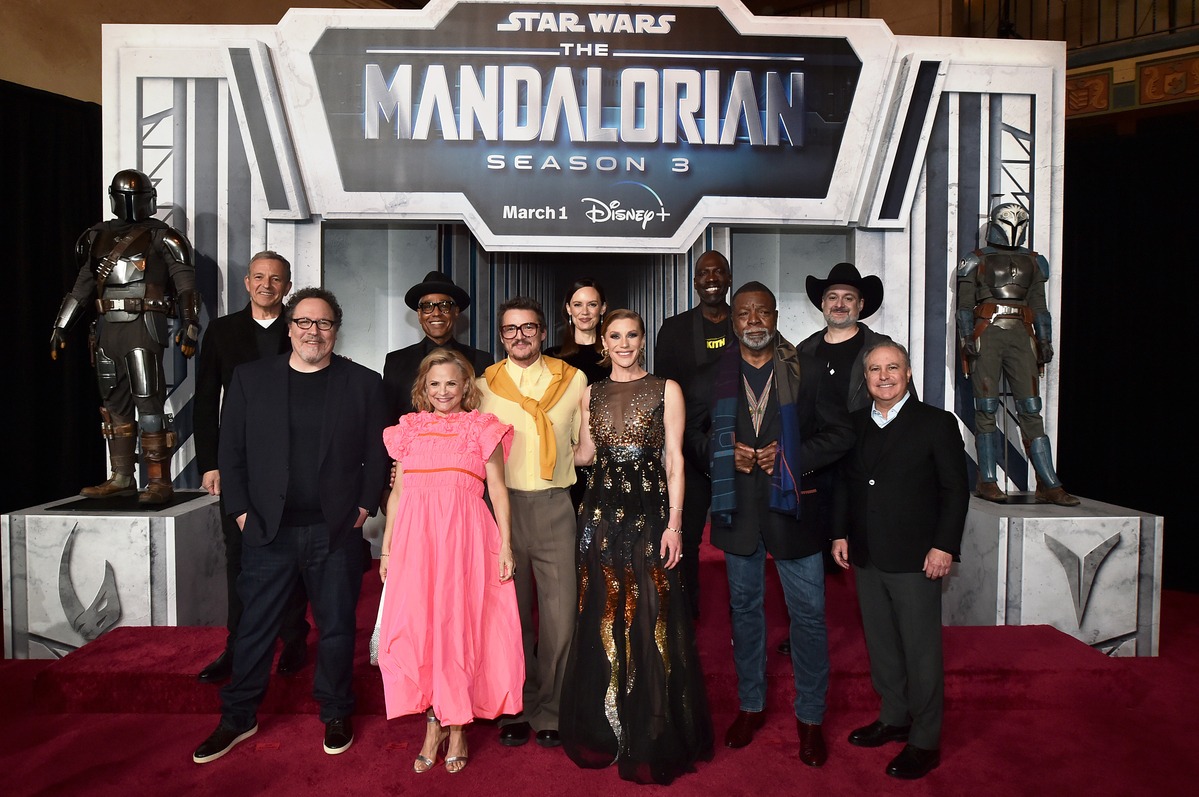
LOS ANGELES, CALIFORNIA – FEBRUARY 28: (L-R) The Walt Disney Company CEO Bob Iger, Showrunner/Executive Producer Jon Favreau, Giancarlo Esposito, Amy Sedaris, Pedro Pascal, Emily Swallow, Katee Sackhoff, Executive Producer Rick Famuyiwa, Carl Weathers, Executive Producer Dave Filoni and Alan Bergman, Chairman of Disney Studios Content attend the Mandalorian special launch event at El Capitan Theatre in Hollywood, California on February 28, 2023. (Photo by Alberto E. Rodriguez/Getty Images for Disney)
Speaking honestly from personal bias, I have never been particularly fond of Kennedy’s leadership era at Lucasfilm since she showed up in her “The Force is Female” shirt.. To me, it has often felt less focused on understanding audiences and more focused on controlling messaging around the brand itself.
Still, I kept watching because the foundation of The Mandalorian was strong enough to maintain my trust.
How Grogu’s Return Hurt The Mandalorian
Season 2 still delivered some genuinely major highs. The emotional farewell between Din Djarin and Grogu worked because the story finally committed to consequence.
Grogu leaving mattered. It expanded the continuity of the universe and opened the door for meaningful character evolution. I was genuinely excited to see what Jedi training would do for Grogu as a character and how that separation would affect Din moving forward.

The Mandalorian (Pedro Pascal) and Grogu in Lucasfilm’s THE MANDALORIAN, season two, exclusively on Disney+. © 2020 Lucasfilm Ltd. & ™. All Rights Reserved.
Even Din removing his helmet carried more emotional weight because it felt like the series was finally willing to evolve instead of endlessly resetting itself back to status quo.
Then Grogu suddenly returned.
Not in The Mandalorian itself, but awkwardly folded into The Book of Boba Fett before Season 3 had even properly begun. The emotional payoff of the Season 2 finale was undone almost immediately because the franchise machine seemingly could not tolerate separating its most marketable duo for very long.
That was the moment the illusion finally broke for me.

Grogu eating a cookie – Star Wars, YouTube
The story stopped feeling entirely like storytelling and started feeling more like brand maintenance. Grogu’s character development largely stalled, and he increasingly felt inserted into scenes simply because the franchise needed him present. In many ways, it reminded me of the “Where’s Toothless?” philosophy from How to Train Your Dragon, where creators realized younger audiences became anxious if too much time passed without seeing the mascot character on screen.
The difference is that Toothless was built around a different narrative structure and character function than Grogu. Grogu’s separation from Din actually had thematic weight because it represented growth, sacrifice, and the difficult process of moving forward. Reversing that development so quickly weakened the emotional consequences the series had spent two seasons building toward.
What makes the situation more frustrating is how little Lucasfilm has clarified about Grogu’s species and aging process, which makes it difficult to fully evaluate whether the character is progressing naturally or simply being kept narratively static for merchandising purposes.
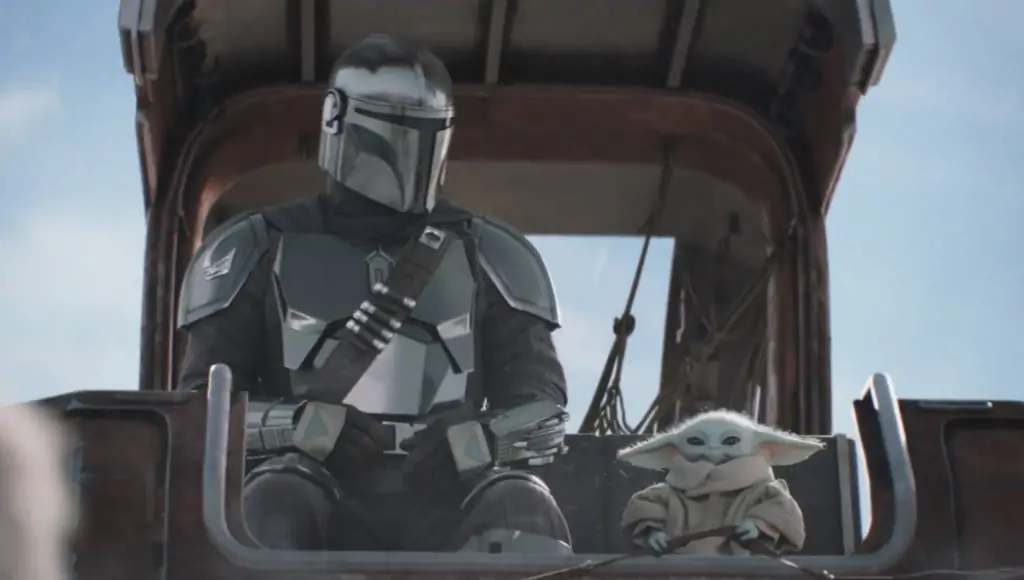
A screenshot from The Mandalorian and Grogu Super Bowl spot – Lucasfilm
The so-called “Yoda species” is believed to live for around 900 years, with Yoda himself achieving Jedi Master status by roughly age one hundred. Grogu, meanwhile, is around 50 years old during the events of The Mandalorian. Based on the timeline, he would have been approximately 22 during Order 66 before spending decades in hiding leading up to the years following Return of the Jedi.
Yes, I fully recognize how unbelievably nerdy it sounds that I went back and verified all of that timeline information.
Still, understanding that context only makes Grogu’s stalled development feel more noticeable. And honestly, that underlying frustration is important because it directly shaped how I walked into The Mandalorian and Grogu as a film.
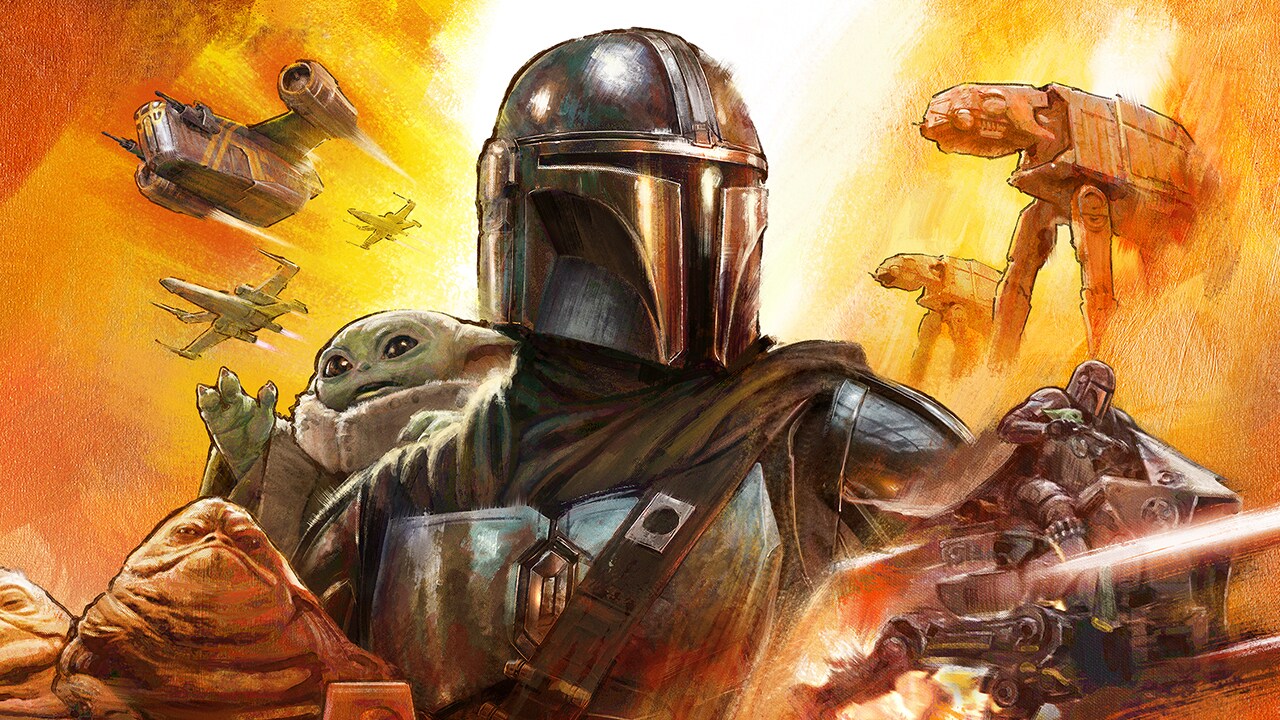
A piece of the Mandalorian and Grogu movie poster – Disney
There is a strange tension running through The Mandalorian and Grogu that becomes impossible to ignore once the credits roll. This is a movie filled with flashes of creativity, genuine affection for Star Wars lore, strong stunt performances, atmospheric cinematography, and moments that absolutely reminded me why audiences fell in love with this corner of the galaxy in the first place.
At the same time, it is also a film weighed down by uneven writing, narrative shortcuts, inconsistent character logic, and moments where the machinery of corporate franchise filmmaking feels painfully visible beneath the surface.
The Shadow Hanging Over Lucasfilm
Before the movie even properly began, it became obvious that audiences were walking into the theater carrying baggage tied to the larger state of Lucasfilm and modern Star Wars.
Multiple conversations around me revolved less around excitement for the film itself and more around frustrations with the franchise’s recent controversies. It created an unusual atmosphere where the movie already felt like it was fighting an uphill battle for goodwill before a single scene had even played.
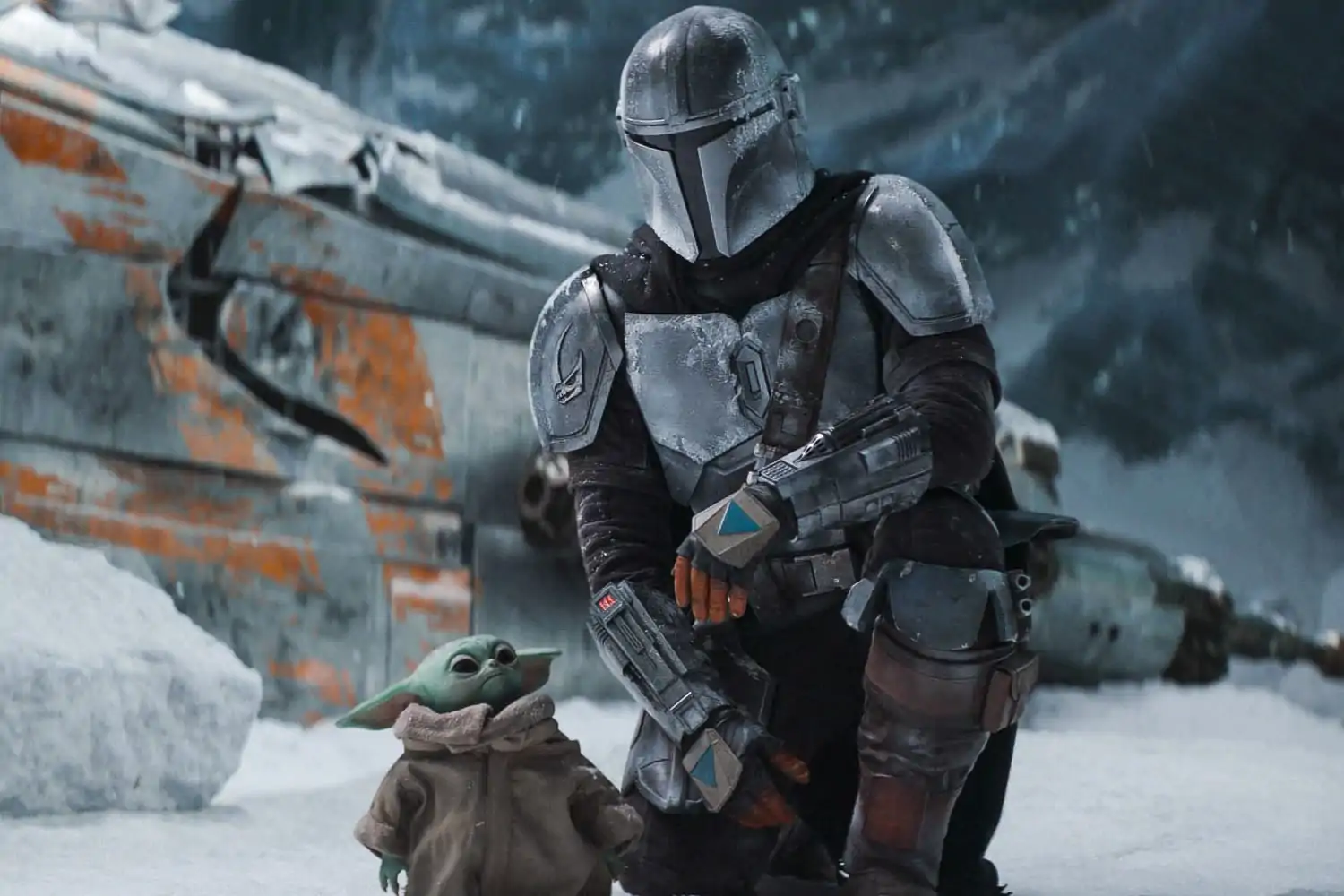
A screencap from The Mandalorian and Grogu – YouTube, Star Wars
Fair or unfair, The Mandalorian and Grogu feels like a project carrying the accumulated weight of years of audience distrust. There’s a growing sense among longtime fans that something they once deeply loved has gradually been buried beneath corporate management, brand politics, and inconsistent storytelling direction.
That context matters because it changes how people experience the film before the opening scene even begins.
‘The Mandalorian’ Was Never Just Pedro Pascal
One of the first things that genuinely stood out to me while watching this film was remembering that The Mandalorian has never simply been Pedro Pascal’s character.
There’s a physical language to performance that becomes obvious if you spend enough time paying attention to how people move. The way someone walks, turns their head, pauses before reacting, or occupies space tells you more than dialogue ever will.
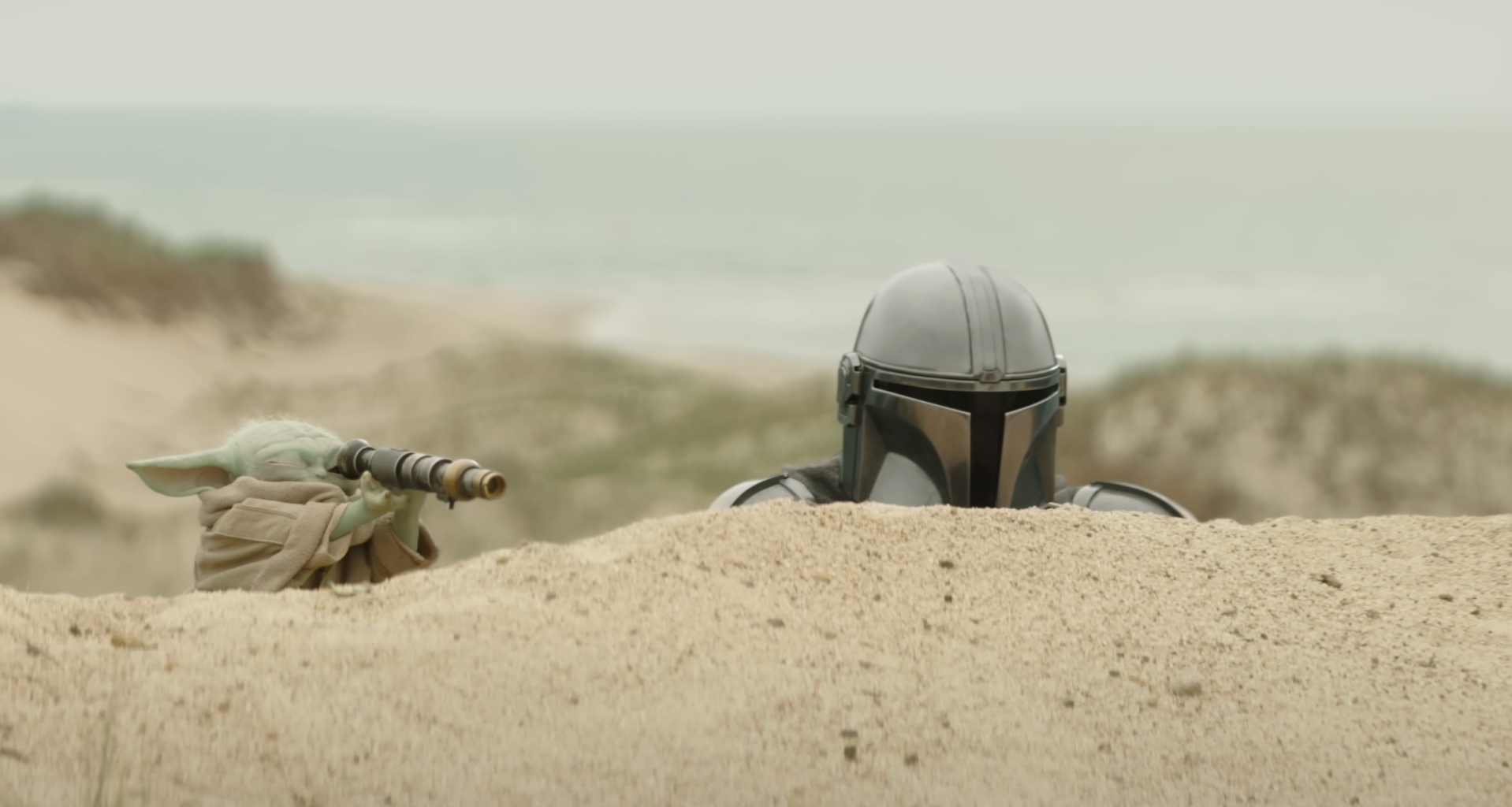
The Mandalorian and Grogu spying on enemies – YouTube, Star Wars
Throughout the film, it became very noticeable when Pedro Pascal was present and when Lateef Crowder or Brendan Wayne were the ones physically carrying the role beneath the armor.
Crowder and Wayne deserve far more credit than they are often given because they’ve spent years building the actual physical identity of The Mandalorian. The subtle posture shifts, the restrained movements, and the controlled presence all gave Din Djarin personality without turning him into an exaggerated caricature.
Ironically, those quieter moments often carried more weight than the scenes relying heavily on recognizable celebrity presence.
In many ways, the physical performers have become the true backbone of the character and I would rather it be their face as the Mandalorian. But with the help of AI, I can probably change that in the near future.
The Film Clearly Knows Its Audience
My theater itself was roughly half full, and a large portion of the audience had brought children with them.
That became important once the trailers started rolling because nearly every preview leaned heavily into family-oriented adventure films aimed at kids and parents.
Once that clicked into place, the overall tone of the movie made far more sense. This is not a darker or more mature evolution of The Mandalorian. This is Lucasfilm steering the franchise into broader family-film territory centered heavily around Grogu’s appeal. And you can see this with some fights where it is only the droids that get killed and the human looking characters mostly get tossed around by monsters without an obvious death moment.
Droid lives matter, too, yo…

Taika Waititi is IG-11 in the Disney+ series THE MANDALORIAN.
To the film’s credit, the opening action sequence genuinely works. The mysterious buildup surrounding The Mandalorian was effective, and there was a satisfying rhythm to watching him cut through enemies while the film slowly revealed him piece by piece.
Unfortunately, the dialogue immediately undercuts some of that momentum.
Weak Dialogue and Lazy Writing Hurt the Film
Several exchanges throughout the movie felt painfully repetitive, almost as if the script was afraid audiences wouldn’t understand what was happening unless characters repeatedly explained it out loud (Editor’s Note: Or they figured they’d be watching while on their phones!).
The larger problem, however, comes from how often the film relies on narrative convenience rather than properly earned storytelling. One example involves The Mandalorian approaching a safe house belonging to a target he intends to capture. The surrounding terrain is wide open with almost no meaningful cover, visually establishing that sneaking toward the structure would be extremely difficult. Then, almost immediately afterward, the movie cuts to him already standing inside the building with no explanation for how he got there.
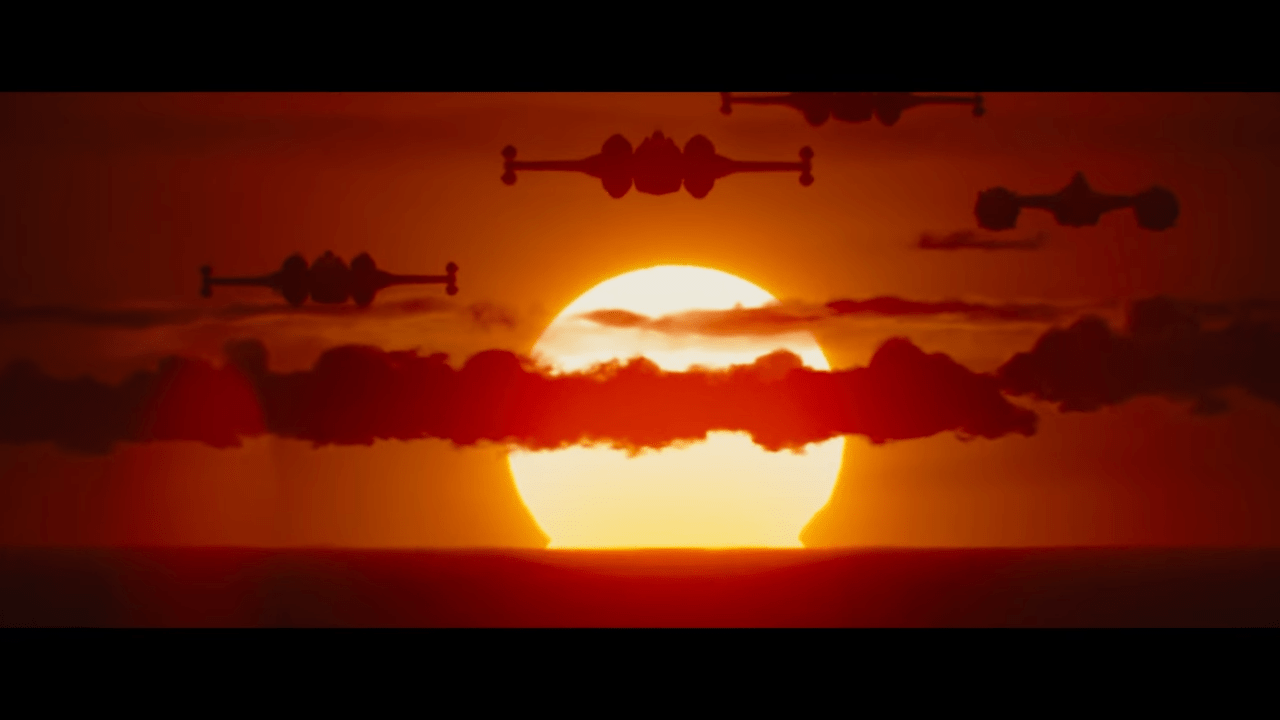
Opening shot from The Mandalorian and Grogu trailer – Star Wars, YouTube
The movie simply skips the difficult part because the plot needs him in the next room already.
That same issue repeats itself constantly throughout the film. Chase sequences lean heavily into exaggerated slapstick energy that sometimes feels closer to live-action cartoons than the grounded tone earlier seasons established. Endless storm troopers appear out of nowhere for the sake of the chase.
Action scenes frequently rely on objects or solutions suddenly appearing out of nowhere simply because the scene requires them.

Grogu from The Mandalorian and Grogu trailer – Star Wars, YouTube
READ: Supergirl Predicted To Open Similar to The Marvels at Domestic Box Office
At one point during a fight involving aquatic creatures, The Mandalorian suddenly has access to a spear that seemingly materializes into existence without setup or explanation. I am sure it was in the background of the scene, but the convenience of it was annoying. Collectively, these moments create the growing feeling that the film is less interested in coherent storytelling than quickly moving audiences toward the next set piece.
Grogu’s Storyline Still Feels Inconsistent
Grogu works better in this film than he has in several recent appearances because the movie at least attempts to give him narrative agency rather than treating him like walking merchandise.
There are scenes where he actively influences the direction of the plot, and portions of the movie even hint at the possibility that Din Djarin could eventually die and leave the Mandalorian mantle to Grogu entirely.
Honestly, that could have been an emotionally powerful direction for the franchise.
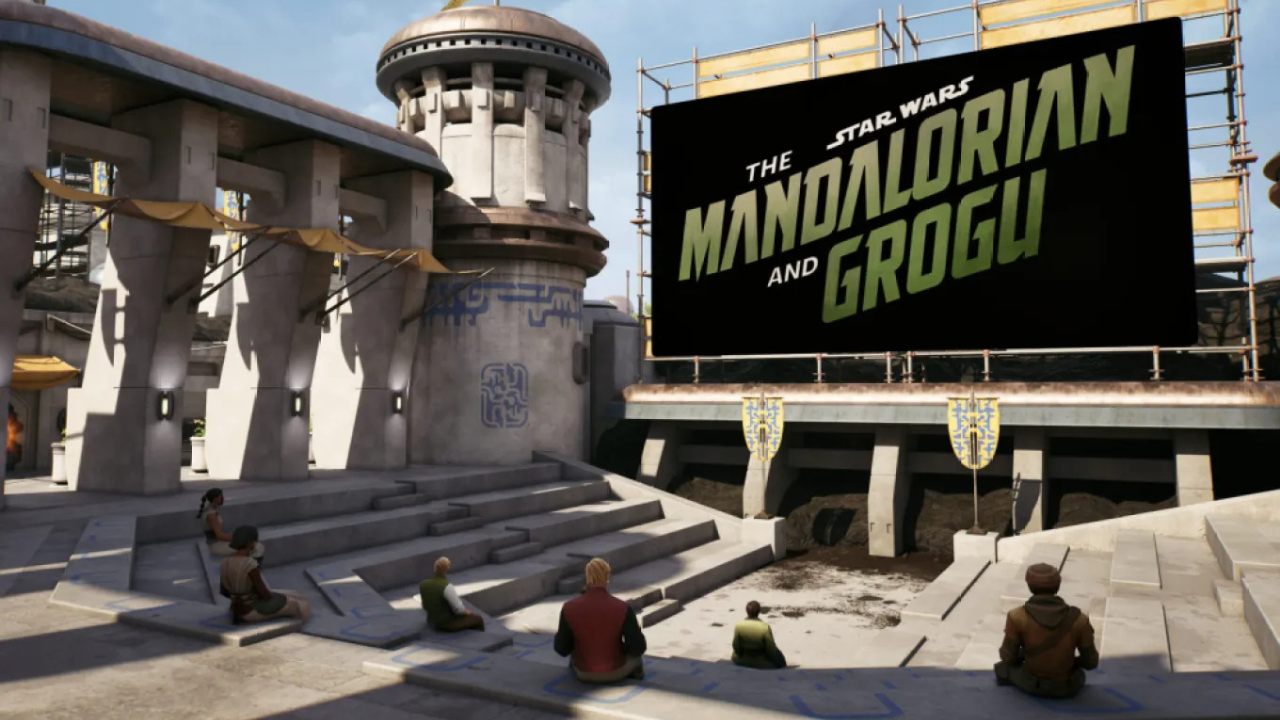
The Mandalorian and Grogu Amphitheater in Fortnite – Epic Games
At the same time, Grogu still suffers from wildly inconsistent writing whenever the plot requires limitations on his abilities. During the gladiator sequence, for example, he remains trapped in situations where his Force powers should logically allow him to intervene or escape. His abilities seem to function only when the script wants a dramatic or visually exciting moment.
The clearest example of this problem comes during the poisoned wound storyline. Rather than resolving the situation through skills Grogu has meaningfully developed, the movie introduces a hermit living in the woods whose sole purpose is essentially to solve the problem for the characters. The sequence feels like pure deus ex machina writing.

The Mandalorian and Grogu – Star Wars, YouTube
Ironically, it also highlights why many fans (me) were frustrated when Grogu’s Jedi training arc with Luke Skywalker was abandoned. Had Grogu continued his training, the movie could have logically paid off his development by allowing him to solve the problem himself.
Instead, the story introduces a random helper character (Gatori) to patch over a narrative corner the script backed itself into.
Rotta the Hutt Represents Both the Best and Worst of the Movie
Rotta the Hutt is one of the most fascinating examples of this film’s contradictions because he simultaneously represents some of its strongest ideas and weakest execution.
On paper, Rotta is genuinely compelling. He is the son of one of the most infamous crime lords in galactic history trying to establish an identity outside of Jabba’s enormous shadow. That is an excellent foundation for a character.

The Mandalorian and a Hutt – Star Wars, YouTube
Unfortunately, the script repeatedly explains his motivations over and over again as if the audience is incapable of understanding basic character setup the first time. Strong storytelling trusts viewers to absorb characterization naturally. This film constantly stops to restate ideas it has already communicated.
The movie also rushes major plot developments involving Rotta in ways that feel almost cartoonishly forced. One moment he is being transported safely in an aircraft, and almost immediately afterward he has suddenly been abducted by his aunt and uncle in a dramatic reveal designed purely to raise the stakes.

Concept art for Concept art for The Mandalorian and Grogu addition to Millenium Falcon Smuggler’s Run – Disney
Instead of feeling tense, the sequence feels rushed and artificial. Even so, I actually liked parts of Rotta’s character. His conflict with his aunt and uncle contained flashes of a much stronger story hiding underneath the surface. In another version of this script, Rotta honestly could have become one of the movie’s best additions.
Part of me even wishes the film had leaned harder into his criminal legacy rather than steering him toward the Republic by the ending. Watching Rotta attempt to reform the underworld from within while struggling against Jabba’s legacy feels far more interesting than simply folding him into another heroic faction.
The Star Wars Lore and Fan Service Actually Work
For all of the criticism directed at the movie’s weaker writing choices, I also have to admit that the film absolutely understands how to use nostalgia effectively.
More importantly, many of the references feel thoughtful rather than cynical. One of my favorite examples was the gladiator-style battle sequence involving The Mandalorian and Rotta the Hutt. The structure of the fight strongly echoes the in-universe Star Wars game known as Dejarik, also referred to as holochess. For longtime fans, seeing that was a genuinely rewarding detail.
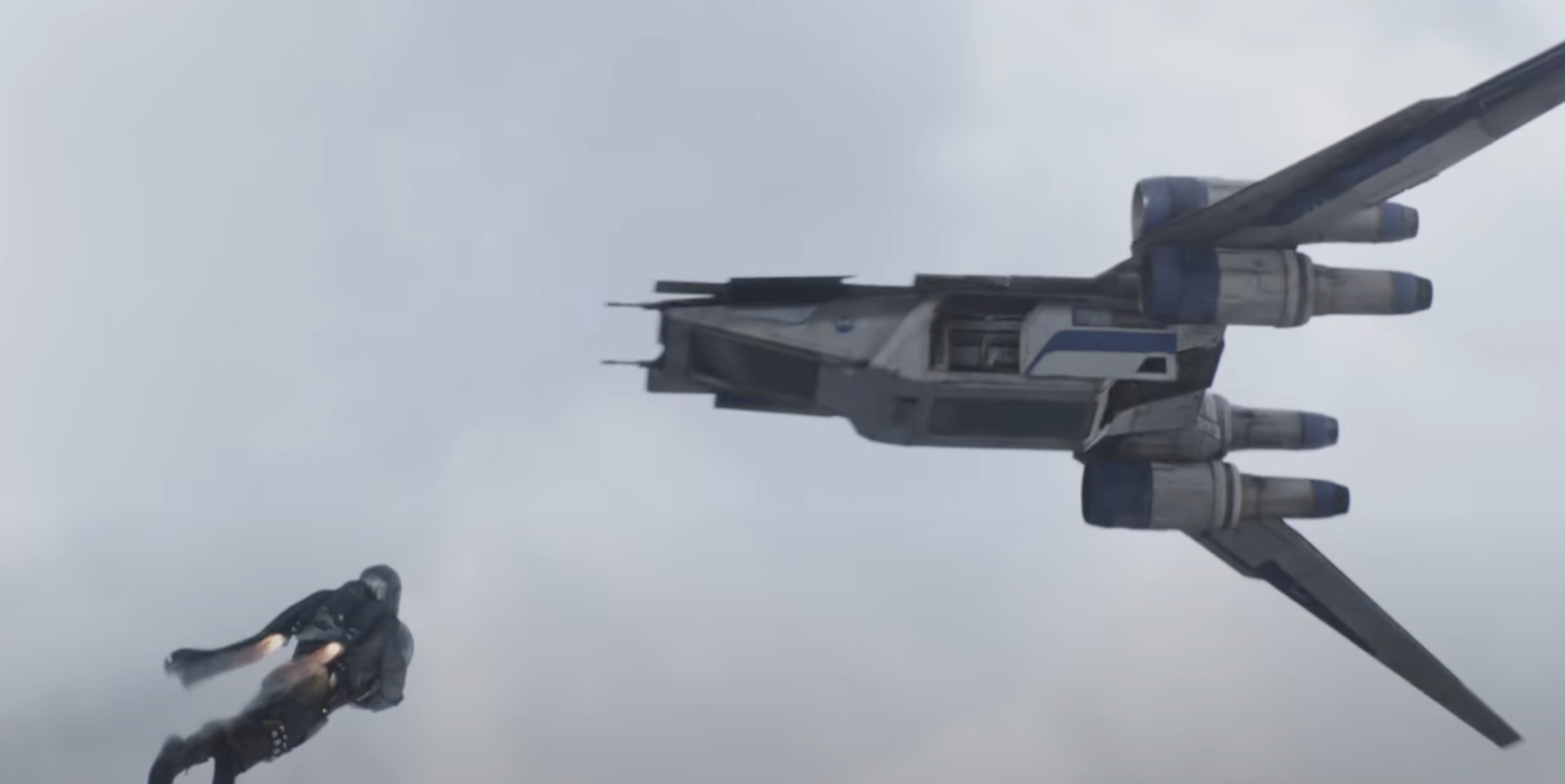
The Mandalorian flying toward a space ship – YouTube, Star Wars
The movie also embraces older practical effects sensibilities that originally helped define Star Wars. A sequence involving Grogu and several small creature companions leans heavily into puppet-style performances and Muppet-inspired filmmaking energy. I know some viewers will dislike it, but personally, I found it charming and refreshingly sincere.
The film even incorporates slight claymation and stop-motion-inspired visual textures during portions of the action scenes. Those tiny handcrafted imperfections gave parts of the movie a nostalgic warmth that reminded me why older science-fiction fantasy films felt so special in the first place.
Embo Completely Steals the Movie
Without question, the standout character in the film for me was Embo. The second I recognized the silhouette of his hat from The Clone Wars, I got excited. At first, I assumed it would simply be a quick cameo or Easter egg for longtime fans.
Instead, the movie fully committed to him.
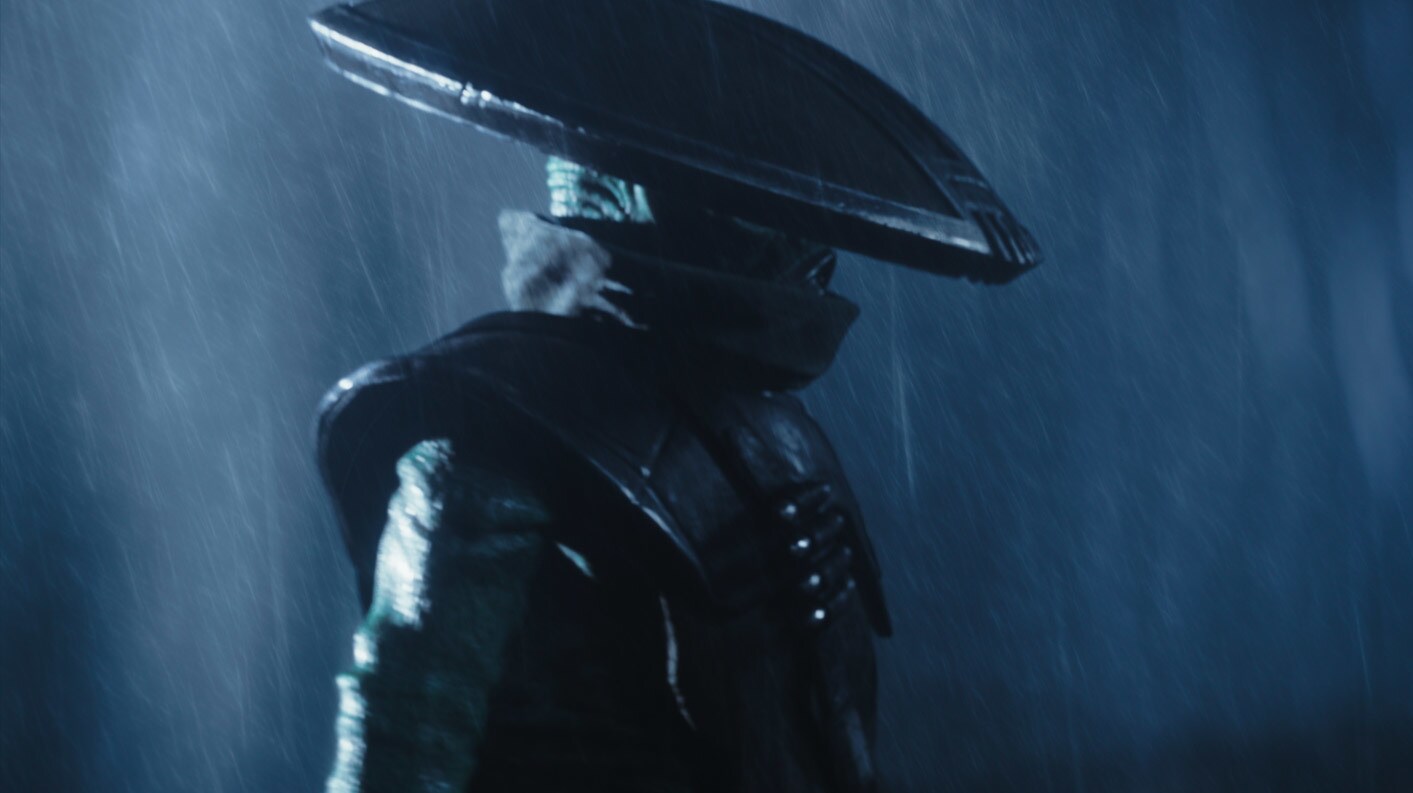
Embo in The Mandalorian and Grogu – Star Wars
Every scene involving Embo instantly improved the energy of the film. His movements were smooth, dangerous, and predatory in exactly the way a legendary bounty hunter should feel. Whoever protected this character during production deserves enormous credit because he retained every ounce of the cool factor that made him memorable in animation.
His fight scenes against The Mandalorian were some of the best action sequences in the entire movie. Honestly, I probably would have traded multiple Rotta-focused scenes just to get more time watching Embo operate as a hunter.
The Combat and Cinematography Are Surprisingly Strong
The combat choreography throughout the film is genuinely impressive whenever the stunt performers are allowed to fully control the physicality of The Mandalorian.

Fight sequence in The Mandalorian and Grogu trailer – Star Wars, YouTube
Lateef Crowder and Brendan Wayne brought sharpness, restraint, and tactical precision to several sequences that honestly elevated them above many modern blockbuster action scenes. Ironically, portions of the choreography felt cleaner and more satisfying than entire sections of recent action-focused franchise films like Mortal Kombat.
The cinematography also deserves praise, particularly because several scenes carry a heavy Blade Runner influence through lighting choices, framing, and atmosphere.
That influence extends directly into the soundtrack as well.
Ludwig Göransson’s Score Carries Emotional Weight
Ludwig Göransson once again delivers excellent work here, and portions of the score stood out enough that I found myself actively paying attention to the music during scenes rather than simply absorbing it in the background.
Large portions of the soundtrack lean into colder, moodier synth textures that create an almost futuristic noir atmosphere. Combined with the film’s lighting and cinematography, several sequences genuinely felt inspired by Blade Runner aesthetics.

Grogu in Lucasfilm’s THE MANDALORIAN, season two, exclusively on Disney+. © 2020 Lucasfilm Ltd. & ™. All Rights Reserved.
That tonal direction actually worked surprisingly well because it helped separate this film from the more overtly whimsical musical identity Star Wars sometimes leans into.
Even when the writing struggled, the music frequently carried emotional weight the dialogue itself could not.
Final Thoughts on The Mandalorian and Grogu
At the end of the day, I find myself deeply conflicted about this film because there are so many parts of it that I genuinely want to love. There are moments filled with thoughtful lore callbacks, strong physical performances, atmospheric cinematography, creative creature work, and flashes of the kind of emotional storytelling that made audiences connect with The Mandalorian in the first place.
At the same time, those stronger elements are constantly interrupted by lazy shortcuts, inconsistent characterization, weak dialogue, and moments where the writing seems more concerned with rushing the audience toward the next plot point than building meaningful narrative payoff. The result is a movie that never fully collapses into disaster but also never reaches the level of greatness it occasionally hints at.
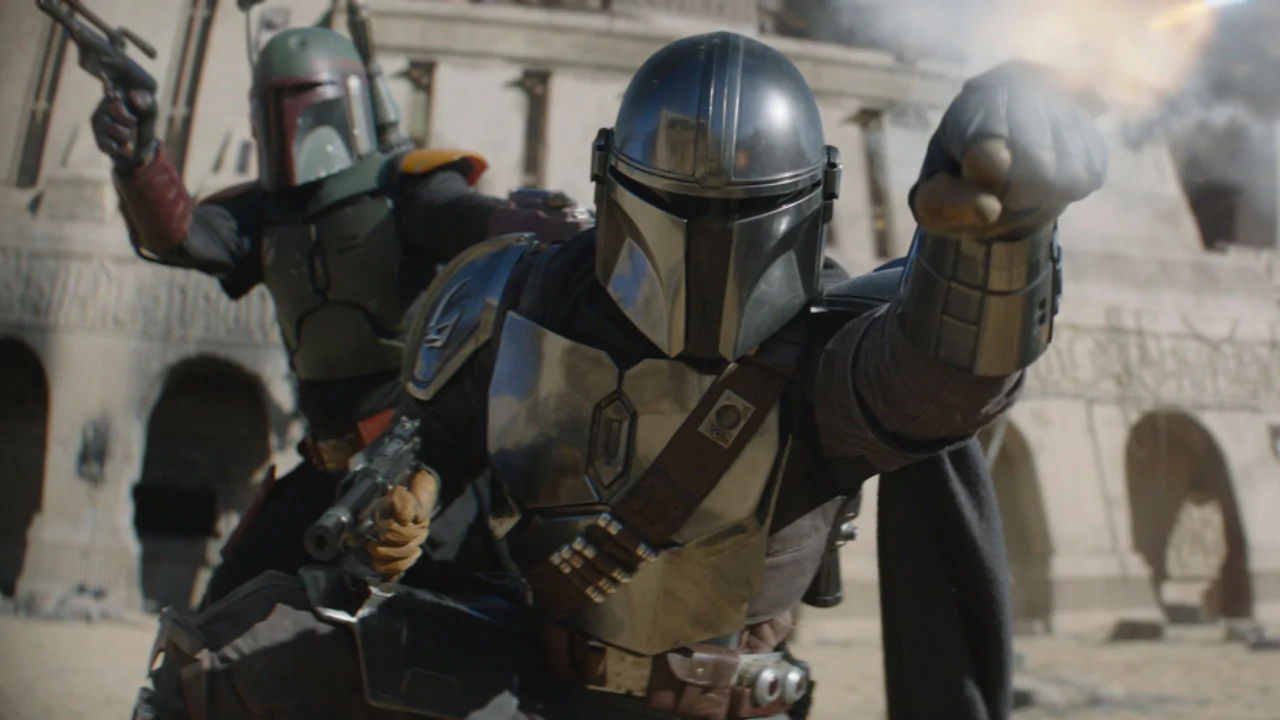
(L-R): Boba Fett (Temuera Morrison) and the Mandalorian (Pedro Pascal) in Lucasfilm’s THE BOOK OF BOBA FETT, exclusively on Disney+. © 2022 Lucasfilm Ltd. & ™. All Rights Reserved.
What frustrates me most is that I don’t believe this film failed because the people involved lacked talent or passion. In fact, many aspects of the movie clearly show enormous care from artists, stunt performers, composers, designers, and creators who genuinely understand why this universe resonates with people.
The problem is that throughout the film, I could constantly feel tension between the story that wanted to exist and the larger corporate machinery surrounding it.
There is a noticeable difference between storytelling driven by creative passion and storytelling shaped by constant executive interference, brand management concerns, and the pressure to maximize intellectual property value.

(Center, L-R): The Armorer (Emily Swallow), Din Djarin (Pedro Pascal) and Paz Vizsla (Tait Fletcher) in Lucasfilm’s THE MANDALORIAN, season three, exclusively on Disney+. ©2023 Lucasfilm Ltd. & TM. All Rights Reserved.
Too often, The Mandalorian and Grogu feels like a film caught somewhere in the middle of those two forces.
You can almost see the more focused, emotionally coherent version of the story struggling to break through layers of compromise and forced direction.
That lingering frustration is honestly what stayed with me most after leaving the theater—not anger or outrage. Just disappointment rooted in potential.
I kept seeing glimpses of a far stronger movie hiding underneath the version we ultimately received after years of meddling by forces that just could have sat in their office and stayed out of it.
The truth is that this story and these characters never needed excessive interference to succeed.

(L-R): Din Djarin (Pedro Pascal), Grogu and Bo-Katan Kryze (Katee Sackhoff) with the Mandalorian gauntlet shield in Lucasfilm’s THE MANDALORIAN, season three, exclusively on Disney+. ©2023 Lucasfilm Ltd. & TM. All Rights Reserved.
Audiences were already emotionally invested. The Mandalorian worked because it felt character-driven, focused, and sincere. It trusted atmosphere, simplicity, and emotional restraint more than spectacle or overexplanation. Somewhere along the way, portions of that confidence started getting buried beneath unnecessary detours and safer corporate instincts.
Even so, I can’t pretend I hated the film because I didn’t.
There were too many moments where I smiled, recognized a deep-cut piece of lore, admired a beautifully choreographed fight scene, or simply enjoyed being back in this corner of Star Wars again. That’s what makes the experience so complicated.
The Mandalorian and Grogu is a film filled with craftsmanship and care that is repeatedly undermined by uneven writing and visible narrative compromises. It contains genuine heart alongside frustrating carelessness. In another timeline, I honestly think this could have been something special.
FINAL SCORE: 6 out of 10
What’s your Mandalorian and Grogu review? Sound off in the comments and let us know!
UP NEXT: The Mandalorian and Grogu Unlikely to Hit $100 Million Opening Box Office Over 4-Day Holiday Weekend
