


J.K. Rowling has published a blistering essay accusing gender activists and their institutional supporters of advancing an elitist agenda at working-class women’s expense.
The Harry Potter author’s latest essay updates her June 2020 explanation of why she began speaking publicly about sex and gender. Six years later, she says her convictions remain unchanged, while her advocacy has expanded into funding legal challenges and support services.
Writing on her official website, Rowling argues that wealthy supporters of gender activism are often insulated from the consequences of policies they promote.
Rowling Explains Why She Continues to Speak Out
Rowling opens by noting that while her views have not changed, “the landscape certainly has, and my own involvement in the issue has become practical as well as theoretical.”
She discusses contributing to The Women Who Wouldn’t Wheesht, participating in The Witch Trials of J.K. Rowling podcast, and establishing charitable services and legal support. She presents those efforts as a continuation of nearly three decades helping women affected by abuse, poverty, and disadvantage.
“However, what to me represents no change at all in my political or ideological outlook has, in recent years, seen me and women like me subject not only to criticism but also to death threats,” she writes.

J.K. Rowling in Fantastic Beasts and Where To Find Them Behind the Scenes, Warner Bros. Pictures
READ: Marvel Rivals Toxic Speech Crackdown Brings Yearlong Mutes and Long-Term Bans
“This is because we oppose the current, dominant strain of trans activism, which holds that a man who declares himself a woman is, literally, a woman, and is therefore entitled to be treated as a woman in all contexts.”
When critics ask how those demands affect her personally, Rowling acknowledges that, beyond the violent threats, gender activism has not noticeably affected her life. However, she argues that other women cannot afford the same protection.
“In fact, the more privileged you are, the less it tends to affect you, and the more it might benefit you.”
That divide between influential supporters and women living with the policies they promote drives her broader criticism of the movement.
Rowling Calls Gender Activism “Elitist to Its Core”
Rowling challenges comparisons between contemporary gender activism and earlier campaigns for civil, gay, and women’s rights.
Those movements, she writes, involved ordinary people organizing to challenge powerful institutions. She characterizes today’s dominant strain of gender activism as operating in the opposite direction.
“Twenty-first century trans activism is the very inverse of those movements. It is elitist to its core.”
She accuses universities, cultural organizations, and government institutions of imposing gender ideology on people who never consented to it.
“Spawned in philosophy and gender studies departments, it has taken over cultural, political and state-run institutions, which have then attempted to impose it, top down, on regular people who never voted for it and, as all available polls show, do not believe in it.”
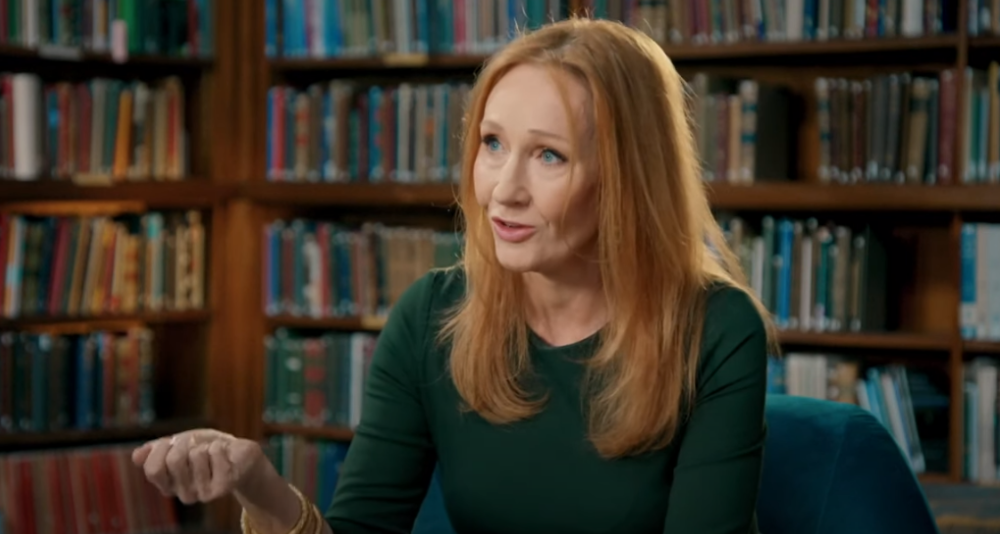
J.K. Rowling via The Rowling Library YouTube
READ: Disney World Cold Weather Guide: 7 Ways to Stay Warm in the Parks as Fall Begins
Her criticism extends to wealthy women whose advocacy, she argues, carries few personal costs.
“Nor does it hurt wealthy women who repost the vogueish mantras while sitting in dressing rooms guarded by private security guards.”
For those supporters, Rowling contends, endorsing the movement can bring social rewards without compromising their own privacy or security.
“Trans activism doesn’t hurt headline-hungry female politicians whose attitude to women’s rights is ‘whatever is good for me personally’. On the contrary, trans activism has been good for those women. It’s fashionable, and keeps them popular with their progressive tribe, and costs them, personally, absolutely nothing.”
Rowling Accuses Institutions of Abandoning Working-Class Women
Rowling also targets trade unions, accusing their leadership of failing women who raise concerns about workplace privacy and single-sex facilities.
“Union leaders these days appear to have abandoned their historic role as defenders of the working class, in favour of defending their own luxury beliefs.”
She connects that criticism to the J.K. Rowling Women’s Fund, which provides financial assistance to women seeking to defend their rights in law.
“It is these women, who don’t have deep pockets or expensive lawyers on speed dial, for whom I established my Women’s Fund.”
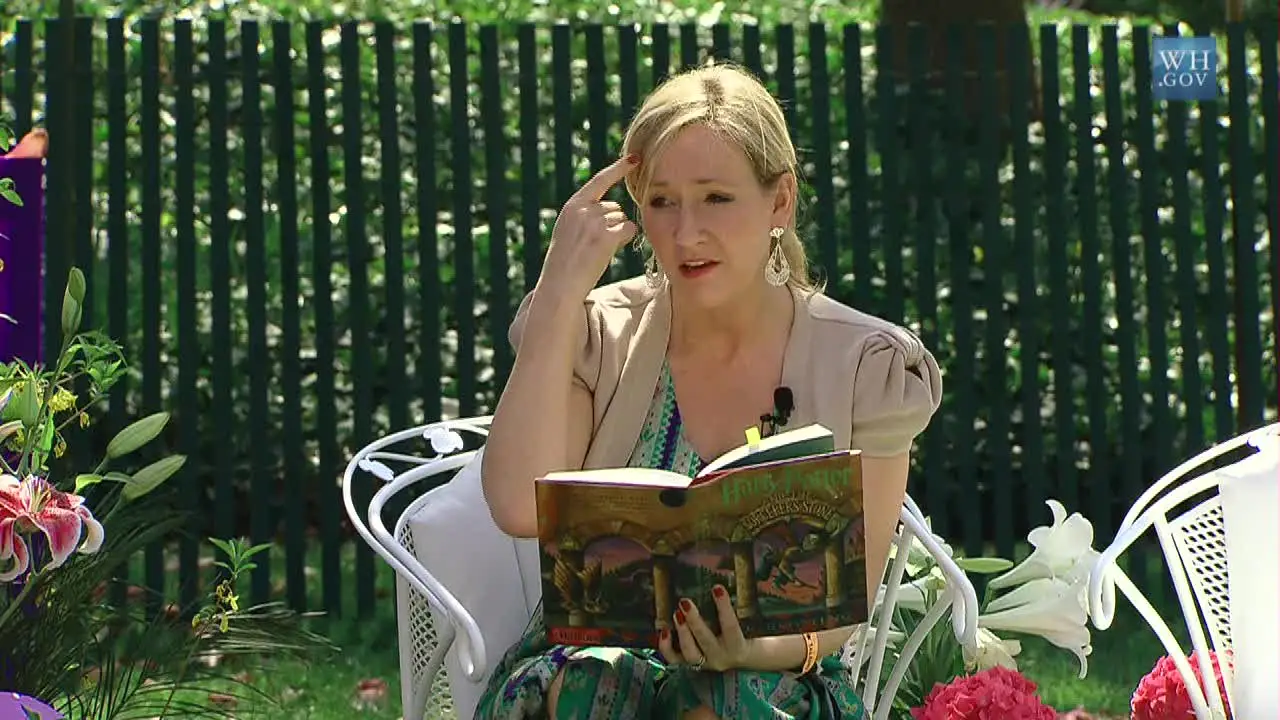
Author J.K. Rowling reads from Harry Potter and the Sorcerer’s Stone at the Easter Egg Roll at White House. Screenshot taken from official White House video. Photo Credit: Executive Office of the President, Public domain, via Wikimedia Commons
READ: Elon Musk Could Invest $10 Billion in Skydance — John Malone Predicts Major Hollywood Shakeup
According to Rowling, applications concerning disputes with private businesses have declined markedly, while state institutions remain more resistant. She argues that public bodies can continue fighting legal cases using taxpayers’ money.
She also discusses Beira’s Place, the Edinburgh support service she founded for women affected by sexual violence. Rowling says it faced telephone and online harassment intended to disrupt its operations.
Alongside those criticisms, she explicitly rejects discrimination against transgender people in employment and housing, as well as threats to their safety and human rights.
“Should trans people be discriminated against when it comes to housing or employment? Of course not. Should trans people be stripped of their human rights, or denied personal safety? Again: of course not.”
Rowling Vows to Continue Speaking Out
Acknowledging her own wealth, Rowling recalls living with financial insecurity and experiencing domestic abuse and sexual assault.
“As everyone knows, I’m in the privileged position of never needing to work again and of not needing state run services, but I once lived hand to mouth.”
Those experiences inform her criticism of affluent women who, she argues, dismiss concerns they can afford to avoid themselves.
Rowling closes by pledging to continue speaking publicly, funding legal challenges, and supporting survivors. Her final message returns to the class divide at the heart of her essay:
“That might not matter to you personally, but it matters to millions of women who don’t have the luxury of pretending that their sex doesn’t matter. I remain on their side.”
What do you think about J.K. Rowling’s essay? Sound off and let us know!
UP NEXT: Kevin Smith’s Star Wars and Marvel Crossover Sparks Backlash Over Cringeworthy Meta Dialogue
