



When you start talking about Disney legacies, one name should come up early: Tony Baxter. Not a CEO. Not a brand manager. An Imagineer.
As Disney stares down yet another leadership change, the usual applause is already starting for the executive class. Bob Iger is getting plenty of credit on his way out with Josh D’Amaro getting accolades on the way in. But that narrative always leaves out the people who actually built the Disney experiences generations of guests remember.
Disney’s long-term value wasn’t built in quarterly earnings calls. It was built by artists, designers, and builders who turned ideas into places people could actually walk through. Baxter is one of the clearest examples of that. He began his career at Disneyland before rising through Walt Disney Imagineering, and in 2013 he was officially recognized as a Disney Legend.
READ: Oriental Land Company Announces Disney Cruise Operations in Japan
Baxter and his teams were behind some of the most important developments in modern Disney Parks, including Big Thunder Mountain Railroad, the 1983 reimagining of Fantasyland at Disneyland, Journey Into Imagination at EPCOT Center, and later major projects like Star Tours, Splash Mountain, Indiana Jones Adventure, and Disneyland Paris.
His work didn’t just contribute to Disney Parks—it helped define what they became.
Here are some of the greatest Disney achievements of Tony Baxter.
Big Thunder Mountain Railroad Gave Disney a New Kind of Thrill Ride
Big Thunder Mountain Railroad is one of the clearest examples of Tony Baxter’s impact on Disney Parks—but the attraction didn’t start as Big Thunder at all.
In the early development of Magic Kingdom, Imagineer Marc Davis had designed a massive Frontierland centerpiece called Western River Expedition. It was intended to be a large-scale boat ride through the American West, filled with detailed scenes and storytelling. But after Magic Kingdom opened without Pirates of the Caribbean, guest demand forced Disney to shift priorities. Pirates was fast-tracked into Florida, and Western River Expedition was ultimately shelved.
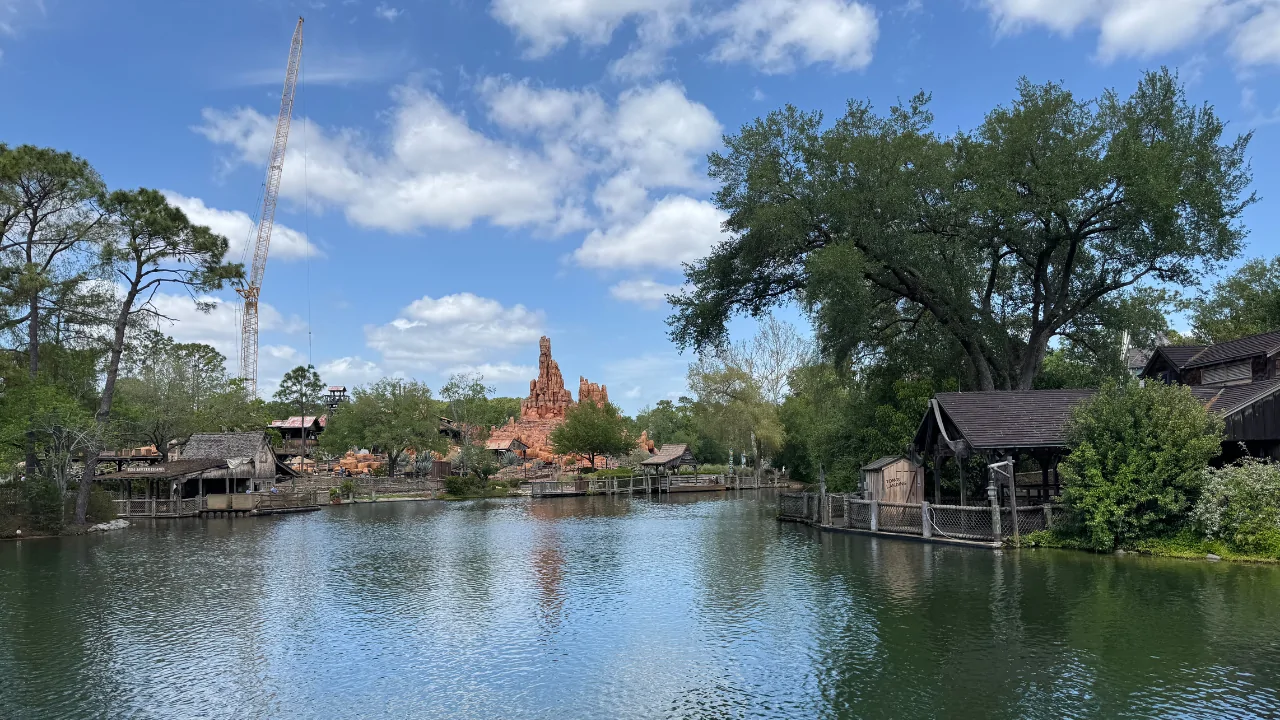
The Rivers of America and Big Thunder Mountain in Walt Disney World – Photo Credit: M. Montanaro
That left a major gap in Frontierland—one that Tony Baxter helped solve.
Rather than abandoning the concept entirely, Baxter took one of its key elements—the runaway mine train—and rebuilt it into something more focused and achievable. Instead of a sprawling boat ride, he and his team designed a high-speed coaster that could still carry a strong sense of place and story.
The attraction debuted at Disneyland first, even though the original problem existed in Florida. Magic Kingdom’s Frontierland had already been built and was harder to rework quickly, while Disneyland offered a more flexible space to develop and test the new concept. Big Thunder Mountain Railroad opened there in 1979 before being brought to Magic Kingdom the following year.
When Big Thunder Mountain Railroad opened at Disneyland, it wasn’t just a new attraction—it was a course correction. It proved that Disney could take a large, unbuilt concept and distill it into something more practical without losing its identity.

Big Thunder Mountain Railroad at Walt Disney World’s Magic Kingdom closed down – Photo Credit: That Park Place
READ: ‘Daredevil: Born Again’ Cast Makes Marvel Political Again
The attraction drew visual inspiration from the rock formations of the American Southwest, particularly Bryce Canyon, but what made it stand out was how completely the ride and environment were integrated. The track wasn’t laid onto a set—it was woven through it. The mountain wasn’t a backdrop—it was the experience.
That approach became foundational for Disney. Big Thunder didn’t just succeed on its own—it helped establish the standard that Disney thrill rides should feel like fully realized worlds, not just mechanical experiences with decoration layered on top.
The attraction’s long-term importance is easy to see in how often Disney replicated it. After Disneyland, versions followed at Magic Kingdom, Tokyo Disneyland, and Disneyland Paris—cementing Big Thunder as one of the company’s defining attractions.
The 1983 Fantasyland Rebuild Changed Disneyland for Good
One of Tony Baxter’s most important achievements isn’t a single ride at all—it’s the 1983 rebuild of Fantasyland at Disneyland.
At the time, Fantasyland was one of the park’s most iconic areas, but it was also one of the most outdated. Baxter and his team didn’t just refresh it—they reimagined it. The land was transformed into a richly detailed European-style village, with updated attractions and a unified visual identity that finally matched the kind of immersive storytelling Disney was striving for.
Before that rebuild, Fantasyland didn’t look like the cohesive, storybook village guests know today. Much of it still carried over from Disneyland’s early years, with rides housed in tent-like structures and flat façades that felt more like a carnival midway than a fully realized world.
The attractions themselves—Peter Pan’s Flight, Snow White, Mr. Toad—were already fan favorites. But the land around them didn’t match their quality. Compared to places like New Orleans Square or even Frontierland, Fantasyland felt thin, visually inconsistent, and noticeably behind the rest of the park.
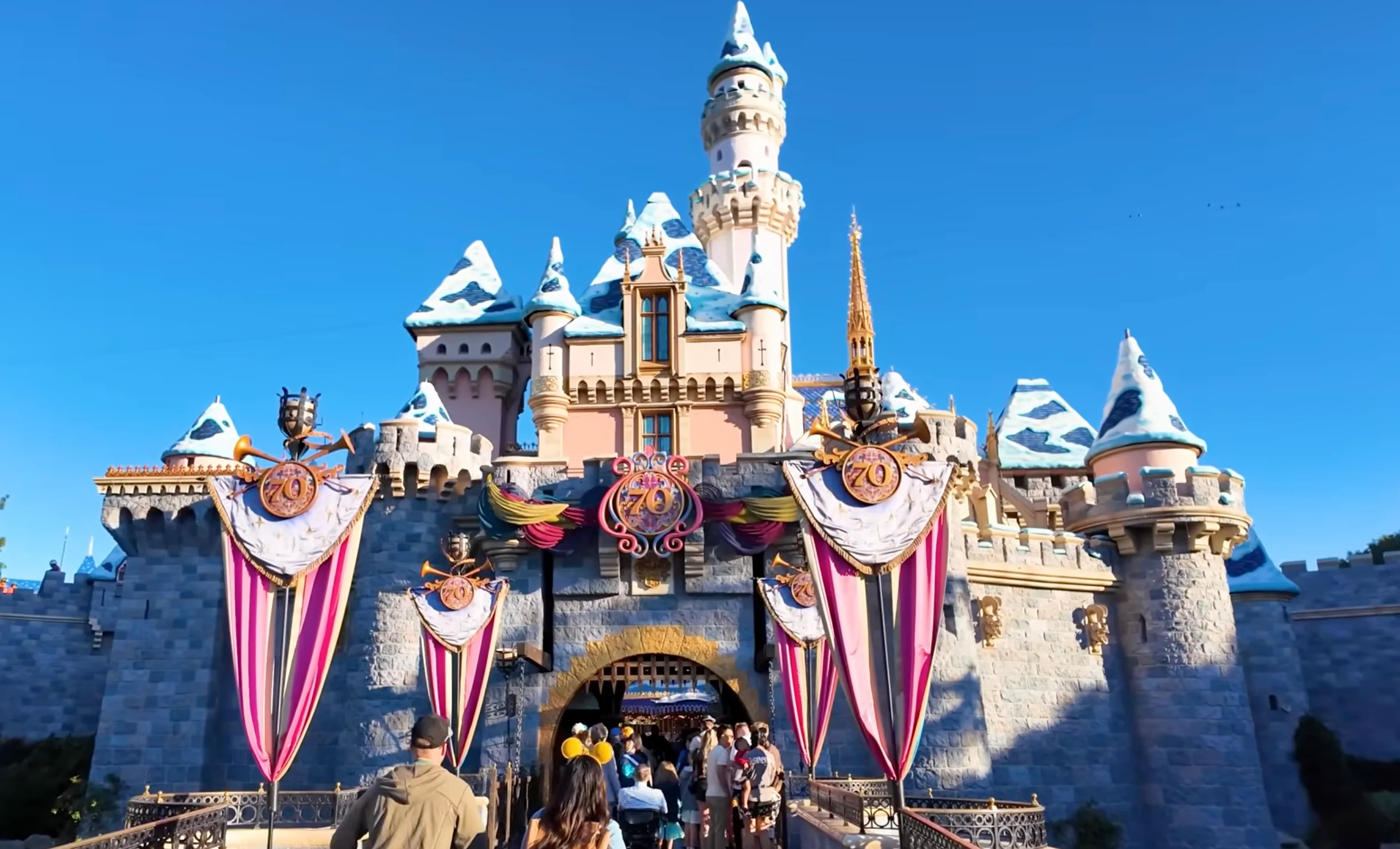
Sleeping Beauty Castle in Disneyland – YouTube, DocumentDisney
This wasn’t a simple renovation. It was a complete shift in how Disney approached its spaces. Fantasyland sits at the emotional core of Disneyland, and reworking it meant redefining how guests experienced one of the park’s most important areas. The result was a land that felt more cohesive, more atmospheric, and far more intentional in its design.
More importantly, it showed that Baxter wasn’t limited to individual attractions. He could take on an entire land—its look, its flow, its identity—and elevate it into something that felt fully realized. That ability to think beyond rides and shape complete environments would go on to define some of Disney’s most successful projects in the years that followed.
Journey Into Imagination Gave EPCOT One of its Defining Originals
That same year, Baxter helped deliver one of EPCOT’s most important original attractions: Journey Into Imagination, which opened at EPCOT Center in 1983.
The pavilion introduced Figment and Dreamfinder—two characters created specifically for the parks—and quickly became one of EPCOT’s defining experiences. At a time when Disney now leans heavily on film-based properties, this was something different. It was an attraction built entirely from an idea, not an adaptation.
READ: Gutfeld Continues to Dominate Late Night Viewership as Ratings Dwarf Colbert, Kimmel
Journey Into Imagination wasn’t anchored to an existing franchise. It was built around the concept of creativity itself, taking guests through a series of abstract, playful environments that leaned into imagination rather than spectacle.
That’s a big part of why Baxter’s work here still resonates. Figment wasn’t pulled from a movie. Dreamfinder wasn’t created to extend a brand. They existed because the attraction needed them—and because the idea demanded it.
Even now, when fans talk about what EPCOT used to be, Journey Into Imagination is almost always part of that conversation. Not because it was tied to a major property, but because it stood on its own—and worked.
Star Tours Proved Disney Could Bring a Blockbuster Universe Into The Parks
Star Tours marked a turning point not just for Disney Parks, but for Tony Baxter himself as a creative leader.
Baxter was one of the key Imagineers behind the attraction, working directly with George Lucas to bring the Star Wars universe into Disneyland in a way that felt tangible rather than promotional. This wasn’t Disney adapting one of its own stories—it was Baxter helping translate one of the biggest film franchises in the world into a physical experience guests could step into.
When Star Tours opened at Disneyland in 1987, it represented something Disney had never fully committed to before: building a ride around a major outside film property. Up to that point, the parks had largely relied on their own characters and worlds. Baxter helped prove that approach could expand without losing what made Disney work.
The scale of the launch reflected that shift. This wasn’t treated like a standard attraction opening—it was positioned as a major event, signaling that Disney was entering a new era of collaboration with Hollywood.
But the real achievement is how Baxter and his team made it feel real. Star Tours didn’t just reference Star Wars—it placed guests inside it. The queue, the setting, and the simulator experience all worked together to create the illusion of being part of that universe, not just observing it.
That may seem obvious now, but in 1987 it wasn’t. Star Tours helped establish a model that Disney still follows: taking major film properties and turning them into physical, immersive environments.
For Baxter, this wasn’t just another successful attraction. It was proof that his approach to storytelling could scale beyond Disney’s own characters—and still feel like Disney.
Splash Mountain Became one of Disney’s Signature Attractions
Splash Mountain is one of the clearest examples of Tony Baxter’s ability to take a risky concept and turn it into something iconic.
The project began as a practical problem. Disney had a large number of Audio-Animatronics sitting unused after the closure of America Sings, and there was internal pressure to find a way to repurpose them. Baxter didn’t just recycle assets—he built an entire attraction around them. Drawing from the characters and music associated with Song of the South, he and his team constructed a full narrative experience that blended humor, tension, and payoff in a way few attractions ever have.

Splash Mountain via 4K WDW YouTube
What set Splash Mountain apart was its structure. This wasn’t just a log flume with a drop at the end. Baxter designed it with deliberate pacing, using long stretches of storytelling to build toward a finale that actually felt earned. The climb, the music, the sudden tonal shift before the drop—it all worked together to create one of the most memorable moments in any Disney park.
And guests responded. Splash Mountain quickly became one of Disney’s most recognizable attractions, not because of branding or marketing, but because it delivered a complete experience. It had scale, it had personality, and it had a payoff that people remembered.
Its success also wasn’t limited to one park. Versions opened at Disneyland, Magic Kingdom, and Tokyo Disneyland, cementing it as one of the company’s signature attractions. Disney doesn’t replicate rides at that level unless they work—and Splash Mountain worked.
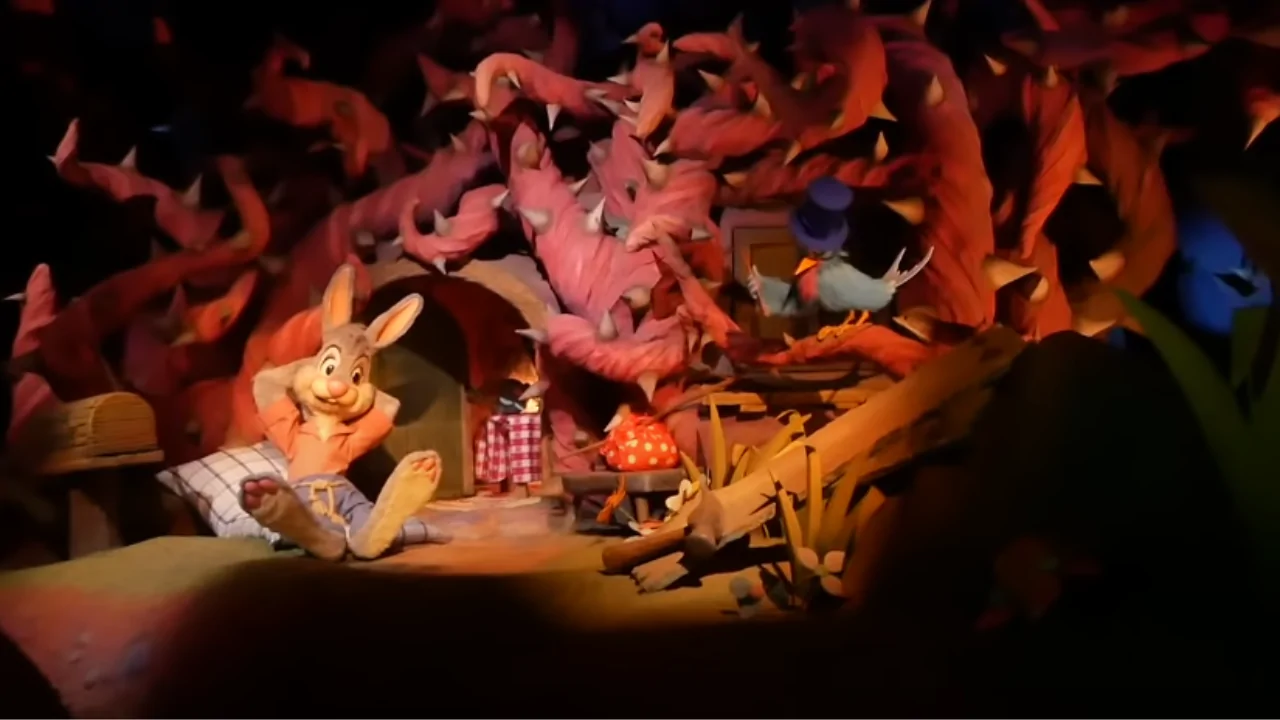
An image of Splash Mountain at Tokyo Disneyland via WDW News Today YouTube
READ: Darth Vader is Coming to Former Jedi Academy Training Stage At Disney Hollywood Studios
That’s why its later removal hit such a nerve with fans. The decision to gut the original Baxter attraction and replace it with Tiana’s Bayou Adventure wasn’t driven by ride quality or guest demand—it was a top-down political call approved by Disney leadership, including Bob Iger. The result has struggled to live up to what it replaced. Tiana’s Bayou Adventure features fewer animatronics, a less dynamic structure, and has already seen repeated operational issues that have led to closures.
For many longtime parkgoers, the frustration isn’t just about losing a ride—it’s about losing one of Tony Baxter’s most complete achievements. Splash Mountain wasn’t just popular. It represented a level of creative ambition and execution that defined an era of Disney Imagineering—and that’s exactly what made it so hard to replace.
Indiana Jones Adventure is One of the Strongest Cases for Baxter at His Peak
If there’s one attraction that most clearly shows Tony Baxter operating at the height of his powers, it’s Indiana Jones Adventure.
By the time the ride opened in 1995, Baxter wasn’t just designing attractions—he was refining a philosophy. This was the culmination of everything he had been building toward: large-scale environments, physical storytelling, and ride systems that served the narrative instead of replacing it.
Working alongside George Lucas and his team, Baxter helped translate the Indiana Jones films into something guests could physically experience. That meant more than just recreating moments from the movies. It meant building an environment that felt real—massive temple sets, practical effects, and a sense of danger that unfolded around you rather than on a screen.
What sets Indiana Jones Adventure apart is how completely it commits to that idea. The ride doesn’t rely on shortcuts. It puts guests inside a sprawling, physical world and uses motion, scale, and timing to create the illusion of chaos. Every turn, every near-miss, every set piece is designed to make the experience feel immediate and unpredictable.
That’s why the attraction has endured. It wasn’t just successful when it opened—it became one of the clearest examples of what Disney Imagineering could achieve at its best. When people talk about Disney operating at a very high level, Indiana Jones Adventure is almost always part of that conversation.
For Baxter, this wasn’t just another hit. It was proof that his approach—story-driven, environment-first, and grounded in real sets—could deliver something that still holds up decades later. Even now, it stands as one of the strongest arguments for what Imagineering can be when it prioritizes creativity over convenience.
Disneyland Paris Showed Baxter Could Help Shape an Entire Resort, Not Just Attractions
Baxter’s impact on Disney wasn’t limited to individual attractions—it extended to shaping entire parks. Nowhere is that clearer than Disneyland Paris.
Serving in a top creative leadership role during its development, Baxter helped guide the project at a level far beyond ride design. This wasn’t about building a single headliner—it was about creating a complete, cohesive environment where every land, transition, and sightline worked together.
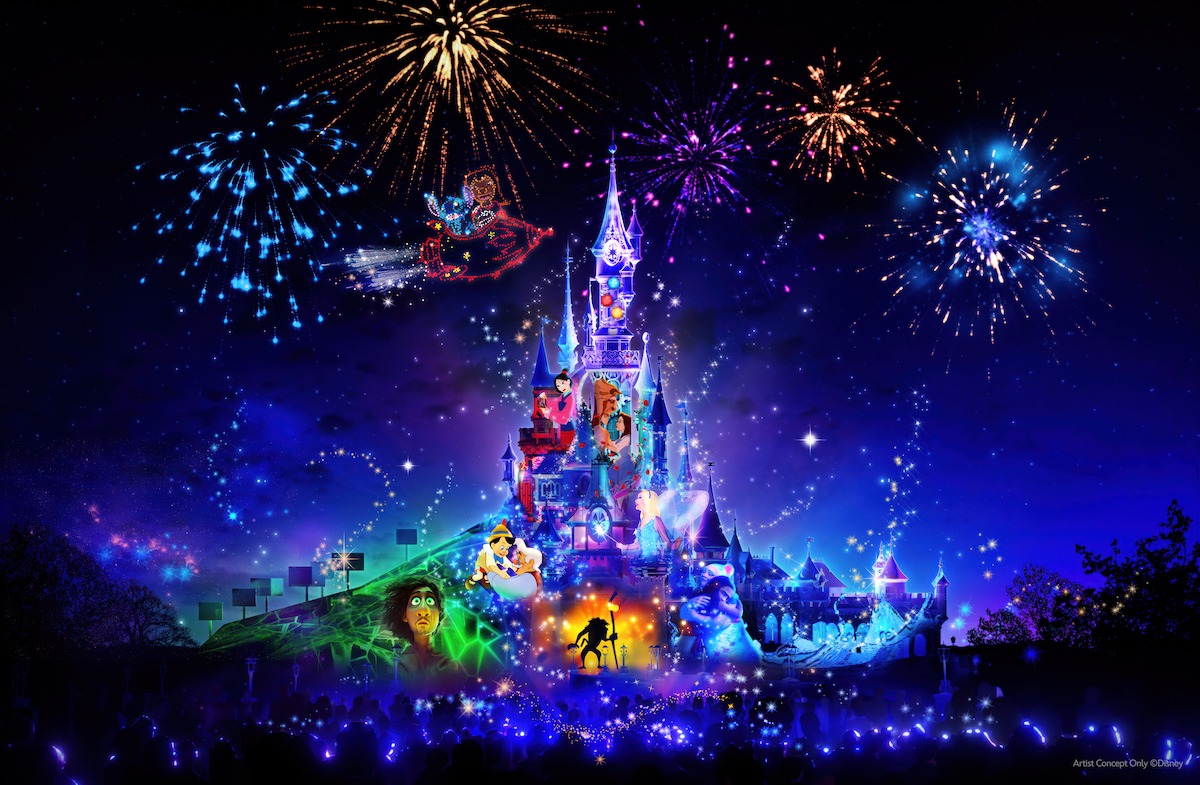
The new night time show coming to Disneyland Paris – Disney
That cohesion is what still sets Disneyland Paris apart. Frontierland tells a unified story anchored by Phantom Manor and Big Thunder Mountain. Discoveryland abandons the typical Tomorrowland aesthetic in favor of a Jules Verne-inspired vision that feels distinct and timeless. Even the layout of the park reflects a level of intentional design that prioritizes atmosphere and immersion over convenience.
That doesn’t happen by accident. It requires creative leadership that understands how all the pieces fit together.
And that’s what Baxter brought to the project. His influence wasn’t confined to individual attractions—it shaped how the entire resort feels. It’s one thing to design a great ride. It’s another to help build a place where everything works in harmony.
That’s the difference between contributing to a park and helping define it. And decades later, Disneyland Paris remains one of the clearest examples of what Disney Imagineering can achieve when that level of creative vision is in place.
Tony Baxter’s Real Legacy is Easier to See Than Most Executive Talking Points
Executives inherit quarterly reports. Imagineers leave behind places people actually remember.
Tony Baxter started at Disneyland scooping ice cream on Main Street. He didn’t rise through corporate strategy meetings—he rose by helping build the experiences that defined the parks. Big Thunder Mountain Railroad, The rebuilt Fantasyland, Journey Into Imagination, Star Tours, Splash Mountain, Indiana Jones Adventure, and Disneyland Paris — that isn’t branding. It’s a body of work you can walk through.

Legendary Disney Imagineer Tony Baxter – YouTube, Fandom Productions
And that’s why his influence hasn’t faded. It’s still there every day—in the way rides are designed, in how lands are built, and in what guests expect when they walk through those gates.
If Disney wants to understand what created loyalty in the first place, it won’t find the answer in executive talking points. It’s in the work left behind by people like Baxter—creatives who built something real.
That’s a true creative legacy. And it’s one Disney would be wise to remember.
What’s your favorite Tony Baxter Disney accomplishment? Sound off in the comments and let us know!
UP NEXT: ‘Spider-Man: Brand New Day’ Trailer Hits 1 Billion Views
