



Disney sent a cease and Desist letter to the Chinese company ByteDance over its Seedance 2.0 AI generation tool that has created a slew of viral videos over the last week.
For years, The Walt Disney Company bent over backwards to expand its footprint inside China — courting regulators, editing films for market approval, and reshaping global distribution strategies to keep Beijing happy.
Now, in a twist that feels almost inevitable, the entertainment giant finds itself staring down a Chinese tech titan in a high-stakes AI battle that could reshape the future of intellectual property enforcement.
And the irony couldn’t be thicker.
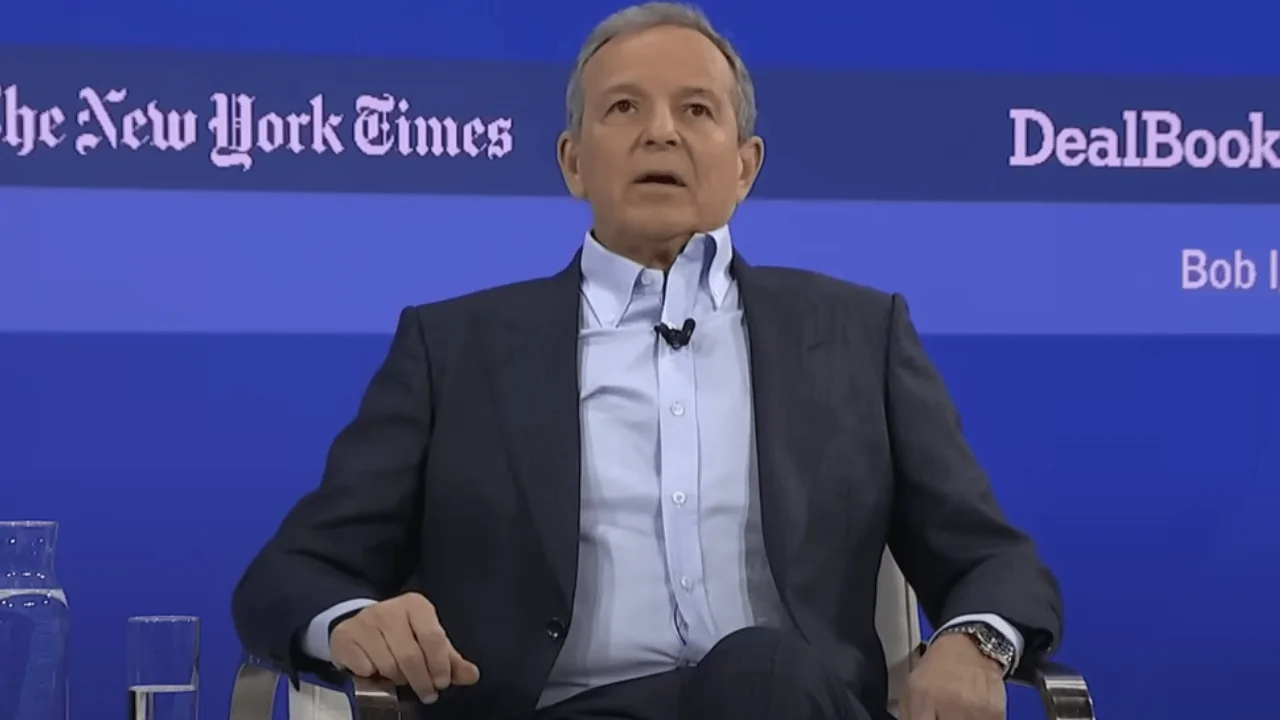
Bob Iger via New York Times Events YouTube
READ: James Van Der Beek Family GoFundMe Raises Over $1 Million in Under 24 Hours
According to new reporting, Disney has fired off a cease-and-desist letter to TikTok parent company ByteDance over its controversial Seedance 2.0 AI video platform — accusing the service of using Disney-owned characters and franchises without authorization.
Disney’s legal counsel didn’t mince words.
“ByteDance’s virtual smash-and-grab of Disney’s IP is willful, pervasive, and totally unacceptable.”
Hollywood’s Worst AI Nightmare
Seedance 2.0 sparked backlash almost instantly after users began generating hyper-realistic deepfake content using recognizable Hollywood IP.
Wolverine vs. Superman
Seedance 2.0 is only the beginning of a new era in filmmaking 🎬 pic.twitter.com/Yt9a15H2Qc
— Enis Presheva III (@EnisPresheva) February 12, 2026
We’re talking:
- Marvel characters
- Star Wars icons
- Animated sitcom personalities
- Even alternate endings to hit streaming shows
One viral example — a cinematic fight between Tom Cruise and Brad Pitt — spread across social media like wildfire, raising alarms throughout the film industry.

A clip from the Brad Pitt Tom Cruise AI fight – X, @RuairiRobinson
READ: Rachel Zegler Comedy Movie Rebrand Moves Forward In First Post-Snow White Project
Studios fear a future where audiences can generate blockbuster-level spectacle from their laptops… without paying a studio a dime.
The Motion Picture Association has already called for ByteDance to halt the activity, arguing the platform operates without meaningful safeguards against copyright infringement.
In other words — the genie is out of the bottle.
Disney’s China Strategy — A Complicated History
Here’s where things get… uncomfortable.
Because Disney’s outrage is colliding head-on with its own corporate history.
For decades, the company aggressively pursued Chinese market access:
- Shanghai Disneyland was built as a joint venture with state-linked partners
- Films were edited to comply with Chinese censors
- Release schedules were adjusted for regulators
- Corporate messaging was often tailored for Beijing approval
Disney didn’t just do business in China — it embedded itself there.
Which makes the current conflict feel less like a bolt from the blue and more like the logical endpoint of a long-running entanglement.

President Xi Jinping, leader of the Chinese Communist Party – YouTube, The Telegraph
You spend years courting a geopolitical rival for market access…and eventually, that ecosystem starts producing competitors.
The CCP Question Looms
Now enter the national-security dimension.
While ByteDance is not state-owned in the traditional sense, Chinese corporate law creates a far more complicated power structure than Western companies operate under.
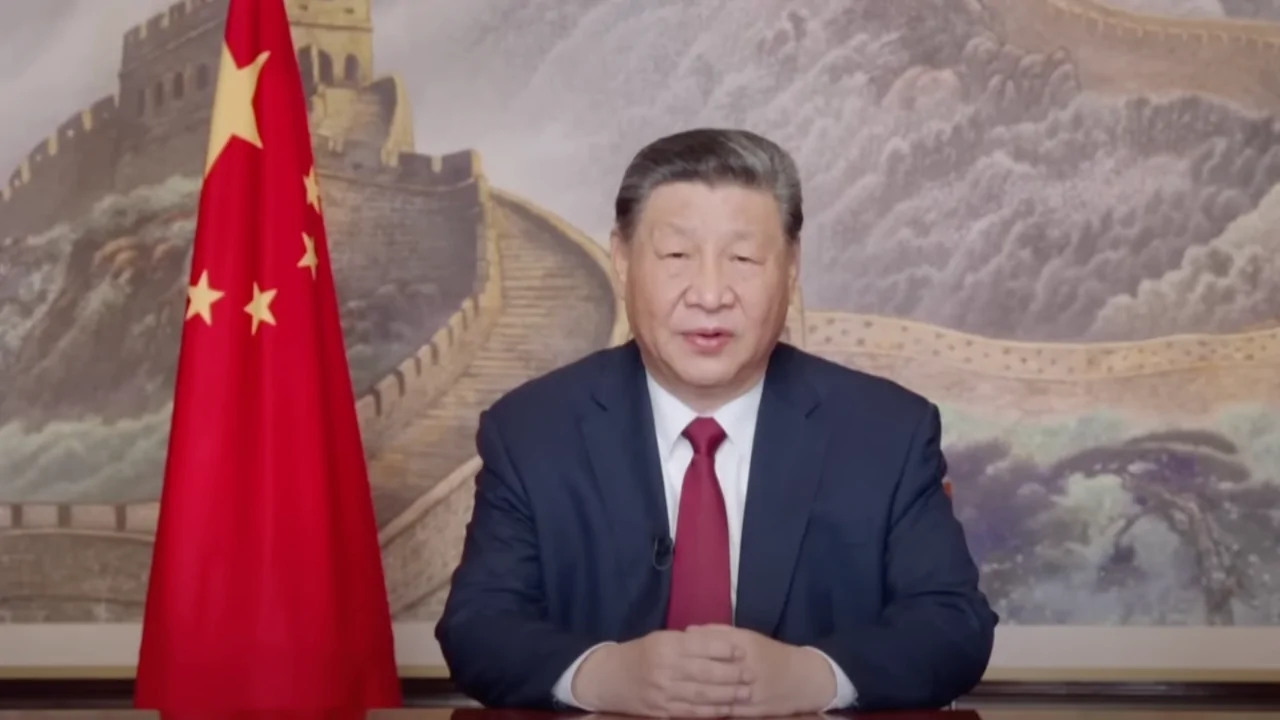
President Xi Jinping of China issues a New Year’s Address – YouTube, South China Morning Post
Chinese intelligence and cybersecurity statutes give government authorities broad authority to compel companies to provide data when requested.
That framework has already fueled years of scrutiny around TikTok in the United States.
So when a Chinese AI platform begins training or generating content using American entertainment IP, it inevitably raises larger concerns:
- Who controls the data?
- Where are the training models stored?
- What safeguards exist — if any — against government access?
Even if the CCP isn’t sitting in a ByteDance boardroom, the regulatory environment ensures the government maintains leverage.
Can Disney Actually Sue ByteDance Over AI Copyright?
One of the biggest questions surrounding this escalating clash is whether Disney can realistically take legal action against a Chinese tech giant over AI-generated content.
The answer is yes — at least on paper.
Deadpool vs Green Lantern.
Seedance 2.0 is incredible. pic.twitter.com/Og7NVAImZa
— ShadeOfAlchemy (@ShadeOfAlchemy) February 13, 2026
As the holder of globally recognized copyrights, Disney has the legal right to pursue infringement claims in multiple jurisdictions if its intellectual property is being used without authorization. That includes U.S. courts, where litigation could be filed if allegedly infringing AI content is accessible to American users or distributed through U.S.-based platforms.
Disney could also pursue legal remedies inside China itself. The country recognizes international copyright protections under treaties like the Berne Convention, and foreign companies do, in fact, win intellectual property cases in Chinese courts — though damages and enforcement outcomes can differ from Western jurisdictions.
But winning a lawsuit and stopping the behavior are two very different things.
We are cooked.
China’s Seedance 2.0 has taken over Hollywood and the Anime industry.
15 wild examples.
1. Wolverine Fighting Thanos pic.twitter.com/BNZdThUVgU
— Future Stacked (@FutureStacked) February 13, 2026
If AI generation systems, training infrastructure, or hosting services operate outside U.S. legal reach, enforcement becomes significantly more complicated. Courts can order app store removals, payment restrictions, or regional access bans — yet offshore platforms often remain difficult to fully contain.
There’s also a broader geopolitical layer hovering over the dispute. While ByteDance is not state-owned, Chinese national security and data laws give government authorities the legal ability to compel corporate cooperation under certain circumstances. That framework has fueled ongoing scrutiny of Chinese tech firms operating globally, particularly when sensitive data or proprietary material is involved.
Captain America vs Batman : Who is gonna win this fight?
Epic Marvel x DC crossover ⚡️ pic.twitter.com/kmOHqG0SEt
— Earth 616 (@MarvelExrth616) February 14, 2026
READ: Starfleet Academy Nielsen Ratings Show a Complete Disaster for Star Trek
None of that means government actors are involved in this specific dispute.
But it does illustrate why a corporate copyright fight between Disney and a China-based AI platform carries implications that extend far beyond entertainment law.
Because in the AI era, intellectual property conflicts don’t just play out in courtrooms.
They play out across borders, regulatory systems — and rival technological superpowers.
The AI Licensing Hypocrisy Problem
And here’s the final wrinkle.
Disney isn’t anti-AI. Far from it.
The company recently struck a reported $1 billion licensing deal allowing its characters to be used in OpenAI’s Sora video platform.
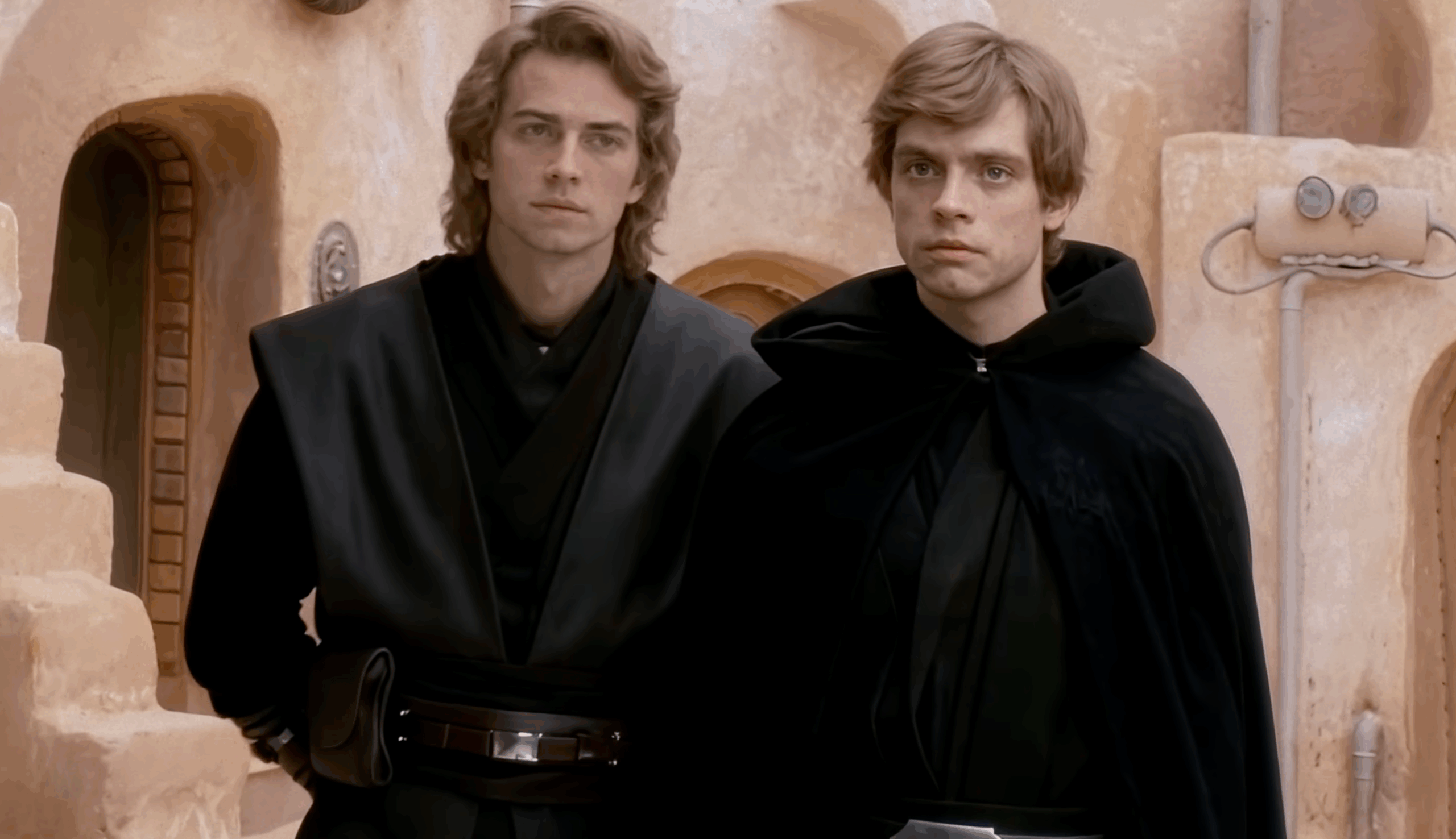
Anakin and Luke Skywalker made with AI – YouTube, Skywalker Stories
So the issue isn’t AI use itself. It’s control.
If Disney gets paid and approves the outputs — it’s innovation. If it doesn’t — it’s theft.
That distinction will define the next decade of media law.
A War Hollywood May Not Win
The clash between Disney and ByteDance is bigger than a cease-and-desist letter.
It’s the opening salvo in a global intellectual property war where:
- AI can replicate visual styles
- Deepfakes can mimic actors
- Franchises can be remixed endlessly
- And national borders mean less than server locations
Hollywood spent years worrying about piracy. Now it’s facing something far more disruptive: generative competition.
Seedance 2.0 is the best AI video model right now
People are creating insane ads, 3D gameplay, anime, and impossible scenes with it
10 examples + some prompts. Bookmark this 🧵
1. Epic finale battle that never happenedpic.twitter.com/avyQgTU68E
— Min Choi (@minchoi) February 12, 2026
And if Seedance-style tools continue evolving, Studios may soon find themselves competing not just with each other, but with the entire internet.
Do you think Disney can stop ByteDance? Sound off in the comments and let us know!
UP NEXT: U.K. Government Finds Reason to Object to Children Seeing Disney Content
