



A federal judge appointed by former President Joe Biden has temporarily halted the proposed merger between Paramount Skydance and Warner Bros. Discovery, handing opponents of the deal an early victory in what is shaping up to be one of the most significant antitrust battles in modern Hollywood.
On Monday, U.S. District Judge Araceli Martínez-Olguín issued a 14-day temporary restraining order preventing the companies from completing the transaction while the court considers a request for a preliminary injunction filed by a coalition of 12 Democrat-led states headed up by California.
The ruling does not kill the deal outright, but it represents the first major legal obstacle capable of delaying—or potentially derailing—the $110 billion merger.
Judge Says States Raised Serious Antitrust Questions
In her order, Martínez-Olguín concluded that the states had demonstrated “serious questions” regarding whether the merger violates federal antitrust law.
The coalition argues that combining Paramount and Warner Bros. Discovery would substantially reduce competition across multiple entertainment markets, particularly theatrical film distribution and basic cable programming. They contend that consumers would ultimately face fewer choices, higher prices, and less creative competition if the transaction is allowed to proceed.
READ: ‘Avengers: Endgame Encore’ Will Have 7 Additional Minutes and Connect to ‘Doomsday’
The judge also noted that Paramount itself acknowledged it would not suffer irreparable harm from a short delay, making it easier for the court to preserve the status quo while the legal issues are examined.
That finding proved pivotal.
Rather than allowing the merger to close first and attempting to unwind it later—a notoriously difficult process—the court determined that maintaining separate operations for a few more weeks better serves the public interest while the antitrust claims receive full consideration.
The Political Question Cannot Be Ignored
Although the lawsuit is framed around antitrust law, the political alignment surrounding the case is impossible to overlook.
Every member of the 12-state coalition is represented in the lawsuit by a Democratic attorney general. The participating states are Arizona, California, Colorado, Connecticut, Massachusetts, Minnesota, Nevada, New Jersey, New Mexico, New York, Oregon, and Washington. No Republican-led state joined the effort.
The judge who issued the temporary restraining order also has a clear political appointment history. U.S. District Judge Araceli Martínez-Olguín was nominated to the federal bench by former President Joe Biden, confirmed by the Senate in February 2023, and received her commission the following month.
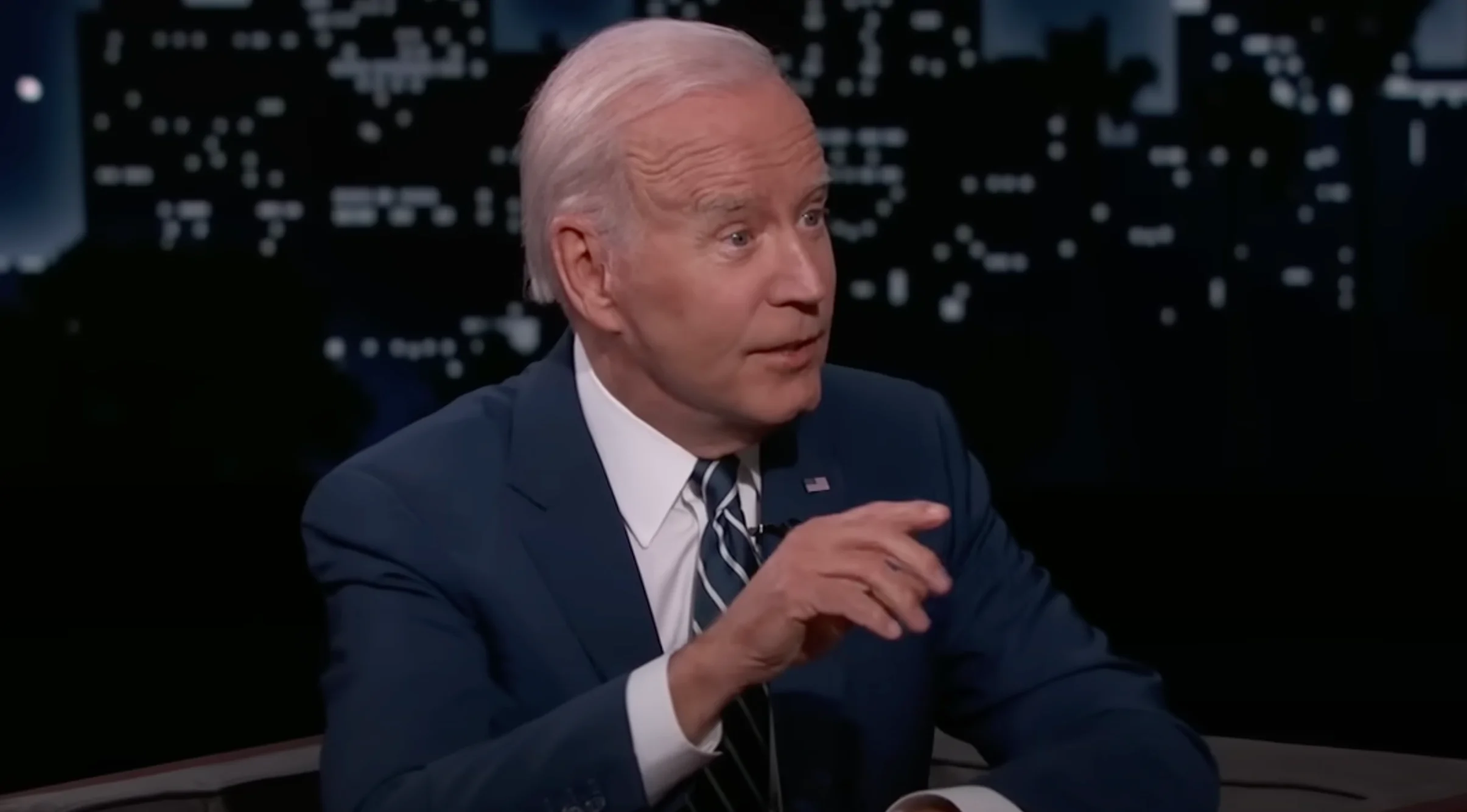
Joe Biden talking to Jimmy Kimmel – YouTube, Jimmy Kimmel Live!
That does not, by itself, prove that either the lawsuit or the ruling was politically motivated. Judges regularly rule against the interests of the presidents who appointed them, and state attorneys general have legitimate authority to pursue antitrust cases independently of Washington.
However, this merger is not limited to movie studios and streaming services. Warner Bros. Discovery owns CNN, while Paramount controls CBS and CBS News. The proposed transaction would therefore place two of the country’s most recognizable news organizations under the same corporate umbrella, making control of major national media properties part of the stakes. The states’ lawsuit itself raises concerns about reduced journalistic diversity through the consolidation of CNN and CBS.

A CNN Report on President Trump – YouTube, CNN
Against that backdrop, the politics question has to be asked. A coalition composed entirely of Democratic attorneys general has persuaded a Biden-appointed judge to halt a transaction that received federal antitrust approval under President Donald Trump for control over a fiercely left leaning cable news network.
That alignment doesn’t establish improper conduct, but it warrants scrutiny—particularly when the outcome could determine who ultimately controls CNN, CBS News, and a significant portion of the American entertainment industry.
California Celebrates Early Victory
California Attorney General Rob Bonta wasted little time celebrating the ruling, portraying the temporary restraining order as an important victory against what his office characterizes as an unlawful consolidation of media power.
Bonta argues that the lawsuit is necessary to preserve competition, protect workers, and prevent consumers from being left with fewer major studios. Those are the coalition’s stated concerns, but they are also the preferred framing of a group made up entirely of Democratic attorneys general seeking to block a merger approved by the Trump administration.

The Hollywood Sign – Photo Credit: Thomas Wolf, www.foto-tw.de, CC BY-SA 3.0 <https://creativecommons.org/licenses/by-sa/3.0>, via Wikimedia Commons
For Bonta and the other Democratic attorneys general, Monday’s ruling offers an early procedural win. It does not prove that the merger violates antitrust law, and it does not resolve whether the coalition’s objections are driven solely by competition concerns or are also influenced by the political consequences of placing CNN and CBS under new ownership.
Paramount Remains Confident
Despite the setback, Paramount expressed confidence that it will ultimately prevail.
In a statement following the ruling, the company emphasized that the temporary restraining order merely preserves the current situation while the court evaluates legal arguments.
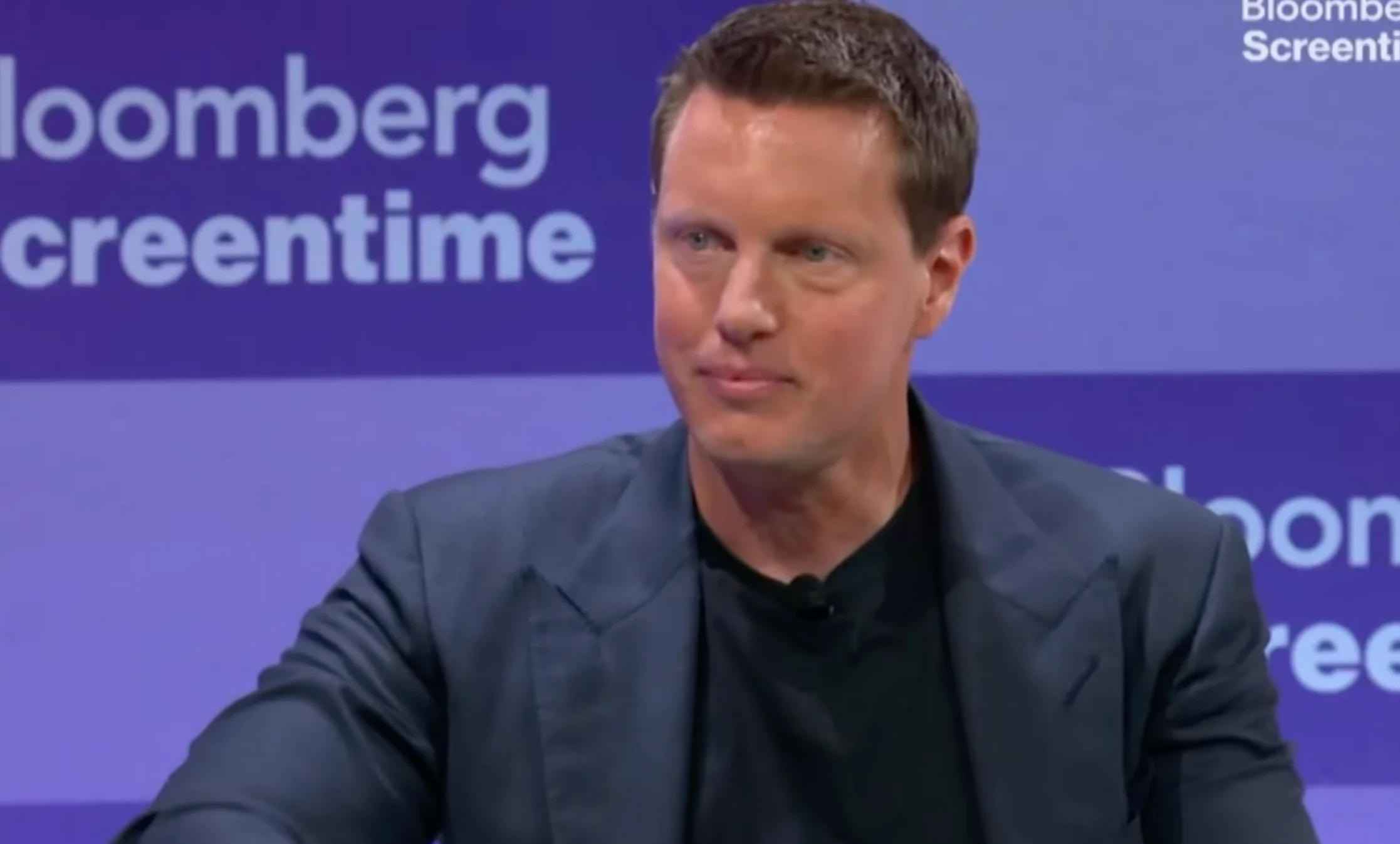
David Ellison talks to Bloomberg – YouTube, Bloomberg Podcasts
READ: Mark Ruffalo Once Effusively Praised Elon Musk and Tesla Before Condemning Him Over Politics
Paramount continues to argue that the merger is both lawful and pro-competitive, insisting the transaction would create a stronger competitor capable of challenging dominant streaming companies such as Netflix and Amazon while benefiting creators, consumers, and employees.
The company also disputes the states’ market definitions, arguing that traditional cable is already in long-term decline and that theatrical distribution has become significantly more competitive thanks to newer entrants.
Streaming Argument Didn’t Convince the Court
One notable aspect of the judge’s ruling involved Paramount’s efficiency argument.
The company has repeatedly maintained that combining Paramount+ with Warner Bros. Discovery’s streaming assets would create a more formidable competitor in the streaming wars.
Martínez-Olguín rejected that reasoning—at least for purposes of the temporary restraining order.

HBO Max and Paramount+ Logos – Paramount, Warner Bros.
She wrote that efficiencies in one market cannot simply offset potential harm to competition in another, citing established antitrust precedent that courts have repeatedly declined to accept such arguments.
While that does not determine the final outcome, it offers an early indication of how the court is viewing one of Paramount’s central defenses.
The Real Fight Begins Next Month
The temporary restraining order lasts 14 days, though it may be extended to 28 days if necessary.
The next major milestone comes with a hearing on the states’ request for a preliminary injunction, currently scheduled for Aug. 3. If granted, that injunction could prevent the merger from closing until the entire antitrust lawsuit is resolved—a process that could take months or even longer.
Historically, preliminary injunctions often determine the fate of major mergers.
Once a deal is delayed for an extended period, financing arrangements, shareholder confidence, and contractual deadlines frequently come under pressure.
Time Is Becoming a Factor
The legal delay also creates a practical problem for Paramount.
According to reports surrounding the merger agreement, if the transaction has not closed by Sept. 30, Paramount could begin owing millions of dollars per day to Warner Bros. Discovery investors under the terms of the deal.

The logo for Paramount Skydance – Paramount
That deadline adds substantial financial pressure to resolve the litigation quickly.
Even if Paramount ultimately wins, prolonged court proceedings could make the merger increasingly expensive to complete.
For now, however, Hollywood’s biggest proposed media consolidation remains on hold while the courts decide whether the deal should proceed—or whether one of the industry’s largest mergers will become another casualty of modern antitrust enforcement.
How do you feel about the merger of Paramount and Warner Bros.? Will it still happen? Sound off and let us know!
UP NEXT: Disney Layoffs Hit Pixar Hard as Company Cuts Several Hundred Jobs Across Multiple Divisions
