


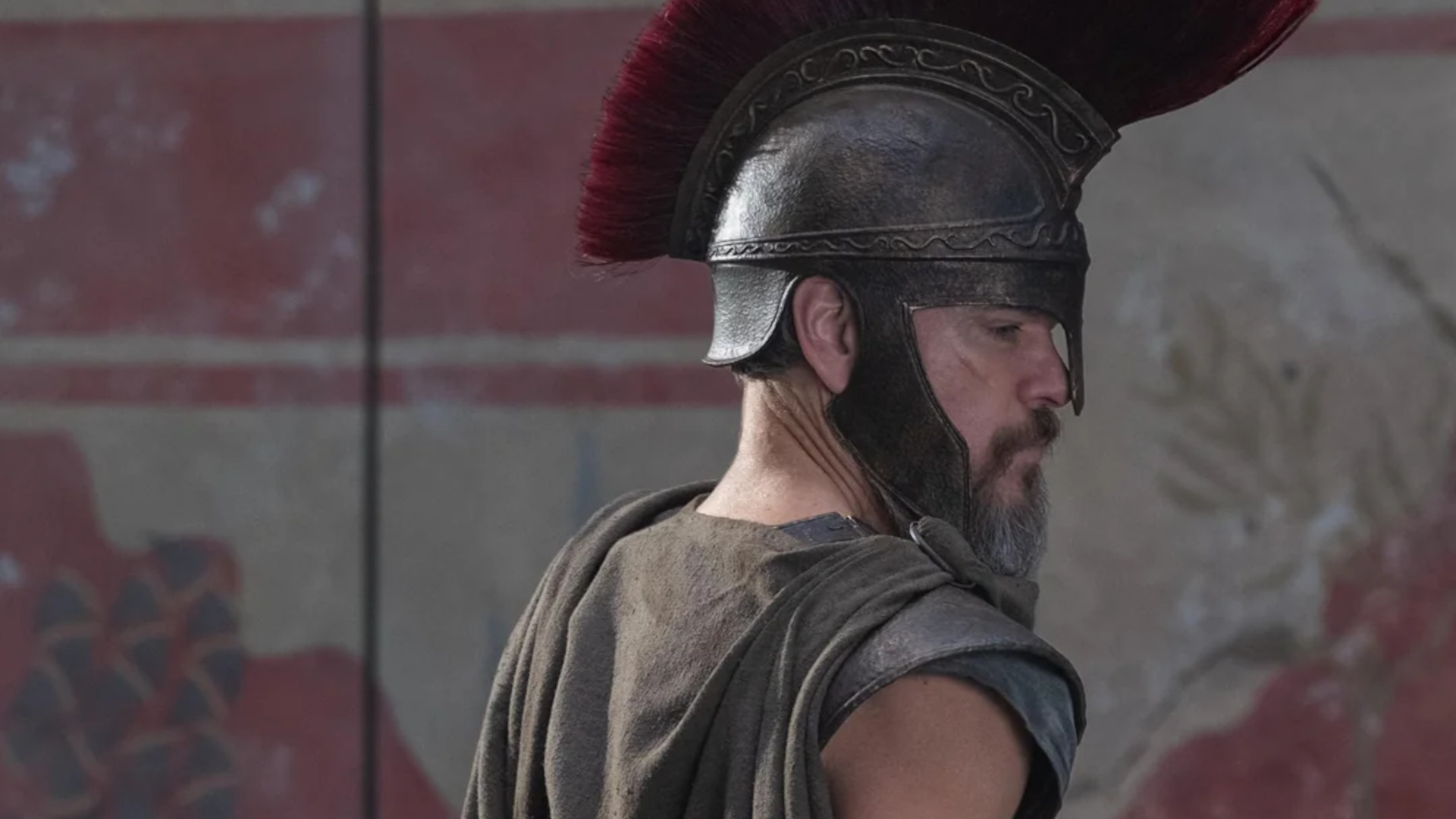
Over the past two weeks, to prepare for this review, I’ve made a point of becoming something of a student of The Odyssey. I read Homer’s poem, watched more than nine hours of previous adaptations of the story (right up to the adaption for the Wishbone show), and read Emily Wilson’s translation—the version Christopher Nolan has cited as an inspiration for his film. After spending that time immersed in one of Western literature’s greatest epics, I’ve come to a conclusion I genuinely wasn’t expecting.
Christopher Nolan’s The Odyssey is, in my opinion, the least engaging adaptation I’ve experienced (yes, including the dog one).
That is not a criticism I make lightly. Stories naturally evolve over time. Every generation retells myths, legends, and epics through the lens of its own culture. Sometimes those changes are necessary. Sometimes they’re brilliant. The best adaptations preserve the heart of the original while reshaping the presentation for a modern audience.
Nolan has certainly reshaped the story. The problem is that I believe many of those changes move the material backward rather than forward. Rather than building upon Homer’s work, the film frequently strips away the elements that have allowed The Odyssey to endure for nearly three thousand years. The result is a version that I found significantly less compelling than the ancient poem—and, surprisingly, less compelling than nearly every adaptation that came before it.
READ: ‘Avengers: Endgame Encore’ Will Have 7 Additional Minutes and Connect to ‘Doomsday’
After seeing the film a second time, I found myself questioning not only what had been changed, but why.
Some of the alterations feel less like creative reinterpretations and more like narrative concessions. Several characters appear to have been expanded, invented, or substantially rewritten in ways that don’t strengthen the story itself. My impression is that some of these decisions were made to accommodate specific performers or to create additional opportunities for certain actors, rather than because the original narrative benefited from those changes. Whether or not that was Nolan’s intention, it is the effect the finished film left on me.
There has already been extensive discussion surrounding the film’s casting. My concern isn’t with the actors themselves—many of them deliver strong performances with the material they’re given. My criticism is directed at the screenplay and the adaptation choices. Excellent actors cannot fully compensate for story decisions that weaken the themes, pacing, or characterization that made the source material timeless.
If you’re simply looking for a visually impressive fantasy adventure, your experience may differ from mine. But if you’re someone who genuinely appreciates Homer’s Odyssey—its themes, its structure, its characters, and the mythology that surrounds it—I think you’ll notice that many of the film’s most significant departures come at the expense of what made the original endure.
Emily Wilson’s Translation Deserves Better
One of the first points I want to address is Christopher Nolan’s repeated statement that his adaptation was inspired by Emily Wilson’s translation of The Odyssey. After reading her translation from beginning to end, I find that comparison difficult to understand.
Emily Wilson’s work has become the subject of two recurring criticisms.
The first is her use of modern vernacular. In the introduction to her translation, Wilson explains exactly why she made that choice. Her goal was to make The Odyssey more accessible to readers unfamiliar with classical language while also encouraging them to think differently about how language works. Whether or not you agree with that philosophy, it is an intentional and well-reasoned approach rather than an attempt to rewrite Homer’s story.
While I respect her position, I find myself reaching a different conclusion. Making classic literature more approachable has value, but I also believe there is tremendous value in allowing readers to wrestle with older language. Our modern vocabulary did not emerge out of nowhere. It evolved from works like Homer, Shakespeare, and countless other foundational texts. The more we distance ourselves from those linguistic roots, the more we risk losing an appreciation for how our language developed. At a time when many people already rely on artificial intelligence to summarize, simplify, and even think through difficult material, I believe we should be looking for more opportunities to challenge our minds rather than fewer.
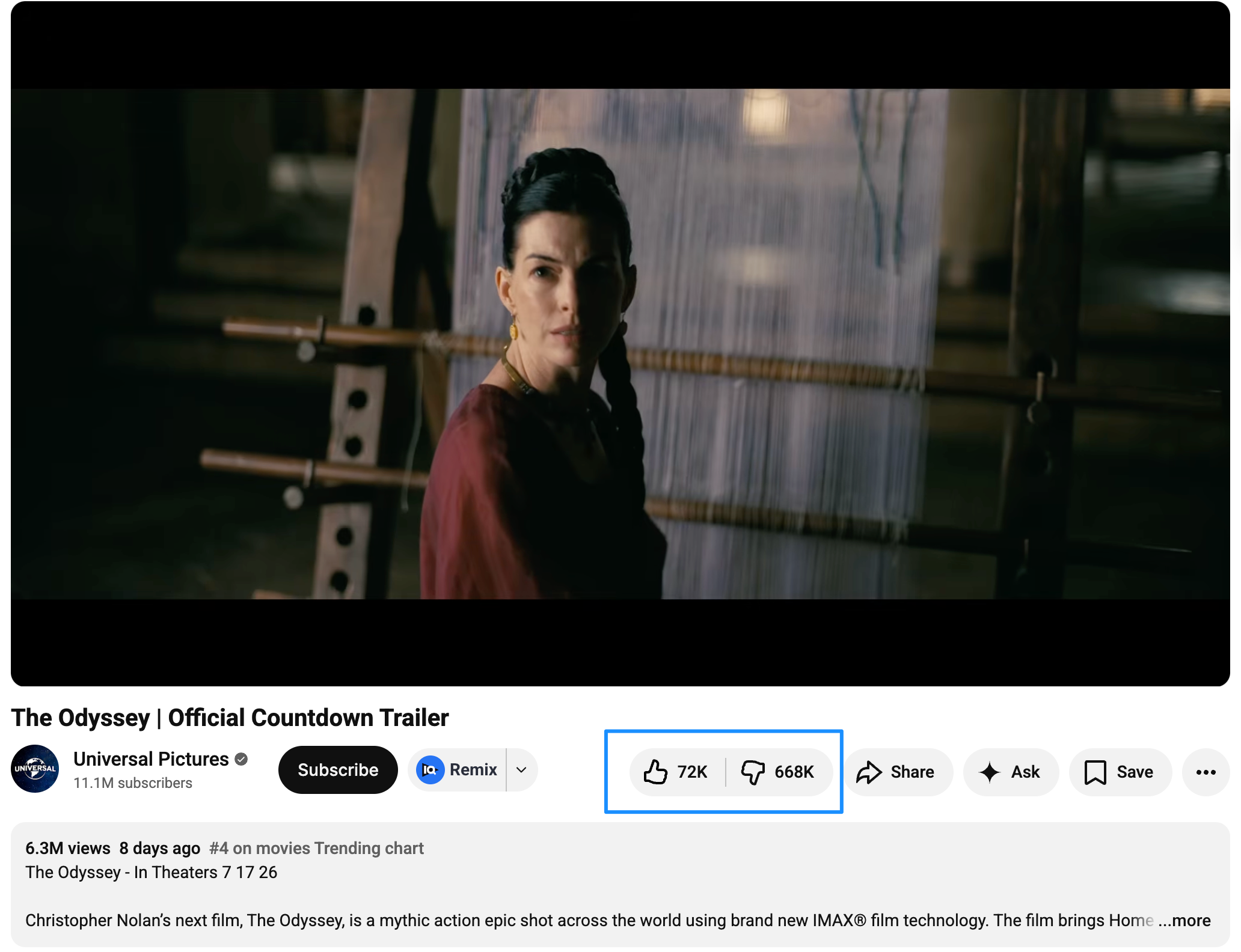
Dislikes for The Odyssey trailer – YouTube, Universal Pictures
If you begin with a modern translation like Wilson’s, that’s perfectly reasonable. I would encourage you not to stop there. Read an older translation as well. Compare them. Experience how the language has evolved. You’ll gain a deeper appreciation for both the poem and the history of English itself.
The second criticism aimed at Wilson is that her translation pays greater attention to the experiences of the women in the story. Having now read her work myself, I think this criticism is frequently exaggerated. Yes, Wilson occasionally highlights the suffering of female characters in ways that some earlier translators did not emphasize. That perspective is certainly present.
What’s not present is a wholesale rewriting of Homer’s narrative. The major events remain intact. The gods are still there. The structure is still Homer’s. Odysseus is still Odysseus. The themes that have allowed the poem to endure for nearly 3,000 years remain firmly in place.
One example often discussed is the execution of the household women at the end of the poem. Modern readers frequently encounter the word slave and understandably import modern assumptions into an ancient social system. While slavery certainly existed in the ancient world, the social and legal realities of household servants in Bronze Age Greece were considerably more complex than our modern understanding of the term. Different adaptations have explored this complexity in different ways. Some portray the women as having been coerced by the suitors, while others depict them as willingly cooperating in exchange for protection, status, or personal relationships. Regardless of the interpretation, these debates arise from the source material itself rather than from Emily Wilson inventing new storylines.
Wilson also makes technical choices with the poetry itself. She abandons some traditional approaches to meter and adopts a style intended to read naturally in modern English. Readers who care deeply about poetic structure may have opinions on those decisions, but they are translation choices, not fundamental changes to the narrative.
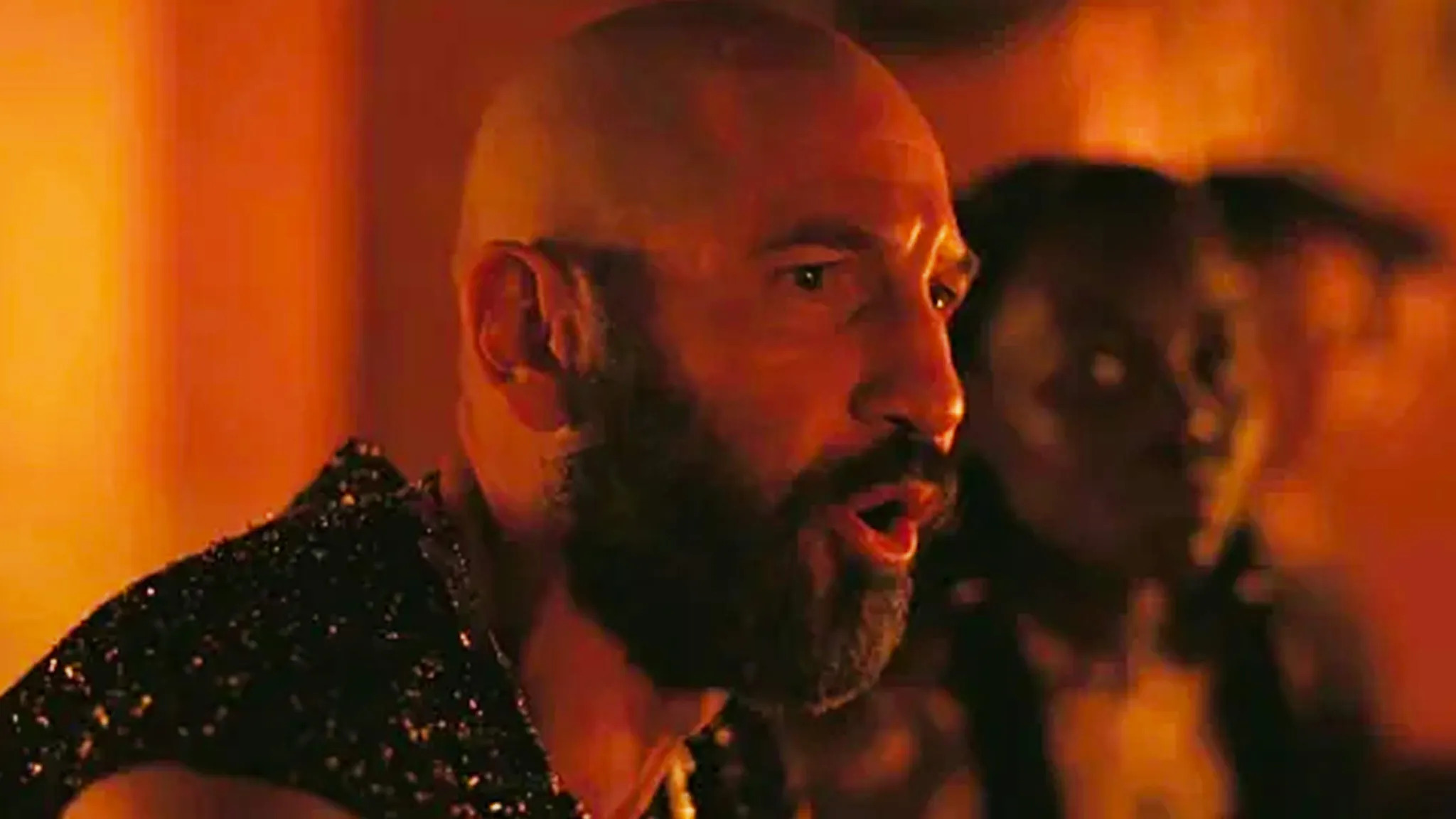
Jon Bernthal as King Menelaus in the teaser for The Odyssey – Universal Pictures
This is why I find it strange that Nolan’s film is so frequently associated with Wilson’s translation. Aside from the use of more contemporary language, very little in the finished film reflects what she actually produced. Wilson modernized the presentation while preserving the story. Nolan modernized—and in many cases substantially altered—the story itself.
For that reason, I think the criticism directed toward Emily Wilson because of Nolan’s adaptation is misplaced. Whatever someone thinks of her translation, it remains remarkably faithful to Homer’s narrative. The soul of the epic is still there. The same cannot be said for Nolan’s film.
As for why Nolan chose to cite Wilson’s translation as an inspiration, I can only speculate. Perhaps he genuinely found her work influential. Perhaps he wanted to draw attention to an excellent modern translation. Whatever the reason, I don’t believe audiences should assume that the film represents Wilson’s interpretation of Homer. After reading her translation and watching the film, I simply don’t see that connection beyond the most superficial level.
Comparing Christopher Nolan’s The Odyssey to Homer’s Epic
An adaptation should ultimately be judged on one question: Did the changes make the story better?
Every adaptation changes something. No one expects a filmmaker to recreate a three-thousand-year-old poem line for line on the screen. Time constraints, visual storytelling, pacing, and audiences all require certain adjustments. Some of the greatest adaptations ever made have departed from their source material while remaining completely faithful to its spirit.
That is the standard I believe every adaptation should be measured against.
The question isn’t whether Christopher Nolan changed The Odyssey. Of course he did. The question is whether those changes strengthened Homer’s story or whether they replaced it with something fundamentally different.
The Gods: Removing the Heart of Greek Mythology
The most significant change Christopher Nolan made wasn’t to a character or a scene. It was to the very foundation of Homer’s world.
In The Odyssey, the Olympian gods are not decorative mythology. They are active participants in the story. Athena guides and protects Odysseus, Poseidon embodies divine wrath, Hermes carries the will of Olympus, and Zeus oversees justice among both gods and mortals. Every triumph and every setback exists within a universe where humanity is constantly interacting with powers greater than itself.
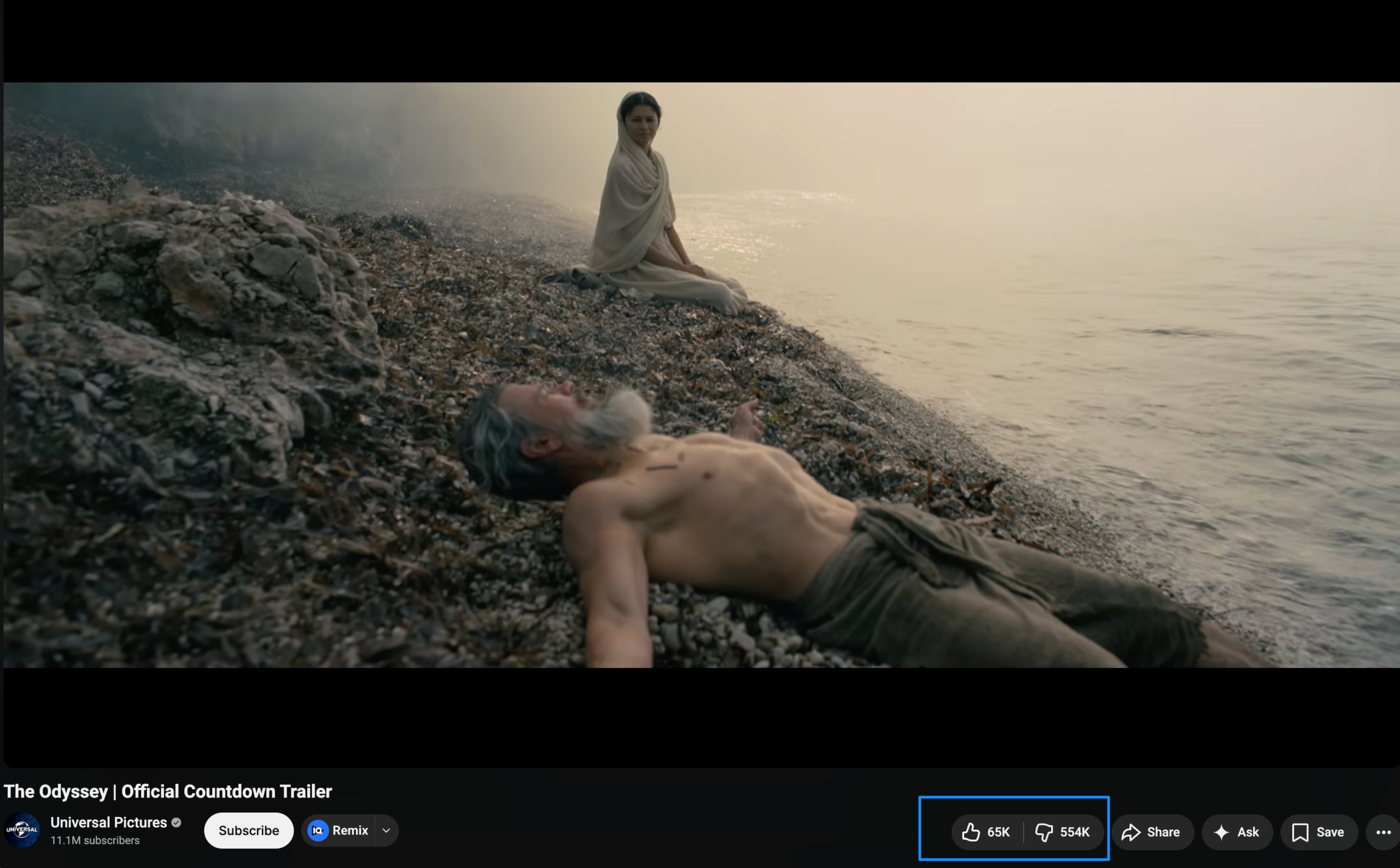
The Odyssey trailer dislikes as of July 6, 2026 – YouTube, Universal Pictures
This wasn’t simply a storytelling device. It reflected the Greek understanding of the world. Human beings possessed agency, but they also lived beneath the influence of fate and the divine. That tension is one of the defining themes of the epic.
Nolan largely removes that element. Divine intervention is replaced with psychological realism. Odysseus’ struggles become internal rather than cosmic. While that may appeal to viewers who prefer grounded storytelling, it also removes one of the poem’s central ideas. The result is a film that asks a different question. Homer asks how a man navigates a world shaped by gods and destiny. Nolan asks how a man lives with the psychological consequences of war.
Neither question is inherently wrong. However, one belongs to The Odyssey, while the other belongs to a different story altogether.
Odysseus: From the Man of Many Turns to the Broken Soldier
Homer introduces Odysseus as the “man of many turns.” His defining characteristic is not his strength but his intelligence.
Odysseus survives because he adapts. He lies convincingly. He solves impossible problems. He reads people better than they read him. Whether escaping Polyphemus, navigating Circe’s island, or reclaiming his home, victory comes through wit rather than brute force.
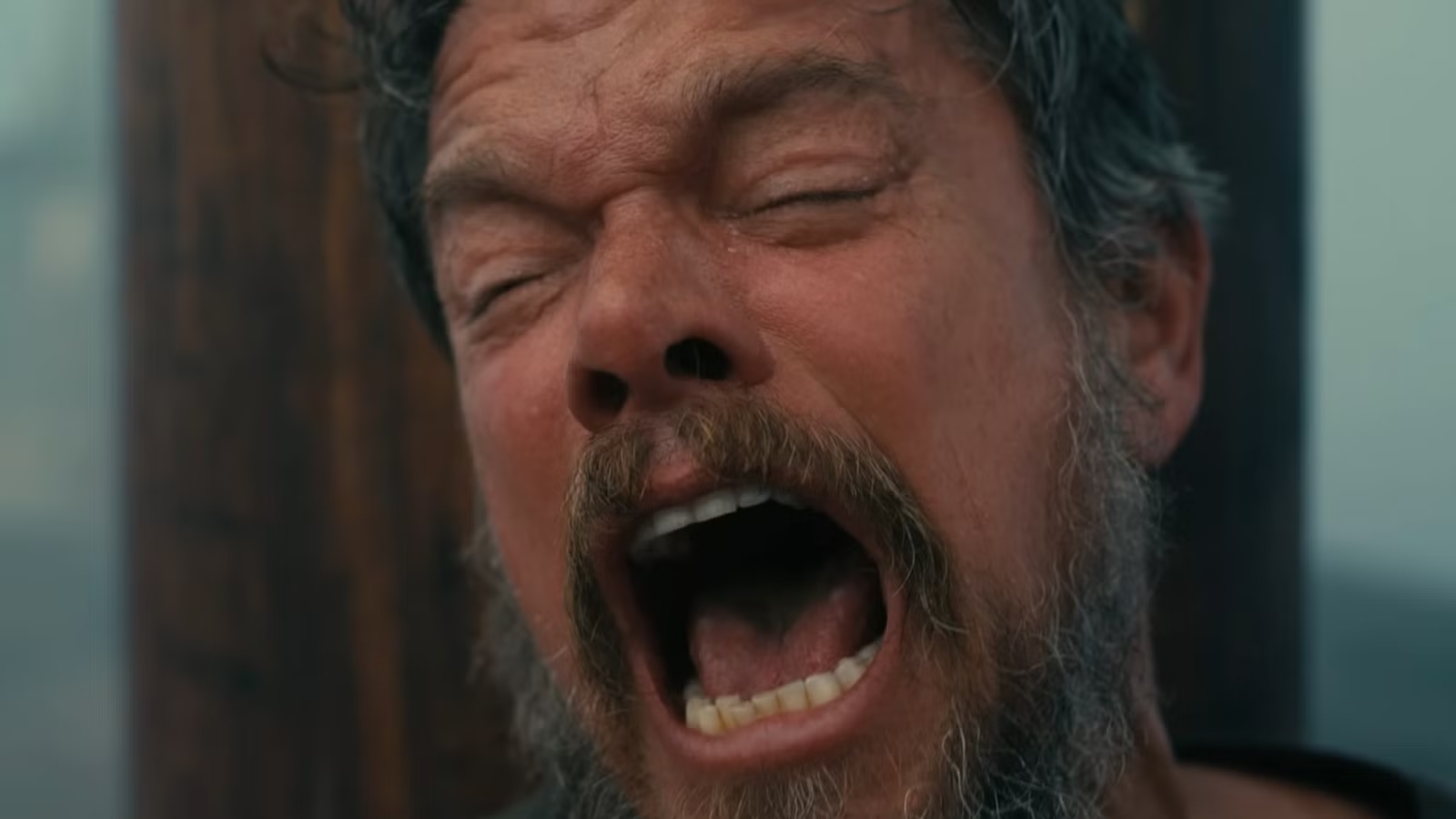
Matt Damon as Odysseus in the trailer for The Odyssey – YouTube @UniversalPictures
READ: Disney Layoffs Hit Pixar Hard as Company Cuts Several Hundred Jobs Across Multiple Divisions
Nolan’s Odysseus is defined primarily by trauma. The weight of war, guilt, and emotional exhaustion dominate his characterization. Those emotions certainly have a place. Any veteran returning from a decade-long conflict would carry invisible scars. Yet by elevating trauma above ingenuity, the film shifts the very identity of its protagonist. Rather than watching history’s greatest survivor think his way through impossible situations, we spend much of the film watching a man endure suffering.
That emphasis makes him feel less dynamic than his literary counterpart. Homer’s Odysseus is fascinating because he is always solving the next problem. Nolan’s Odysseus often feels like someone reacting to problems that have already happened.
The Women of The Odyssey
Helen is perhaps the clearest example. In Homer, she is intelligent, conflicted, and deeply aware of the suffering surrounding her. She frequently condemns her own role in the war and possesses an insight that many readers overlook. Nolan instead presents a more conventional tragic figure whose complexity is reduced in favor of emphasizing the emotional consequences of the Trojan War.
Penelope also changes. In the poem, she is every bit as clever as Odysseus. Her weaving ruse, her careful testing of strangers, and her refusal to surrender Ithaca demonstrate that she is his intellectual equal. While the film retains her devotion, much of her strategic brilliance receives less attention than it deserves.
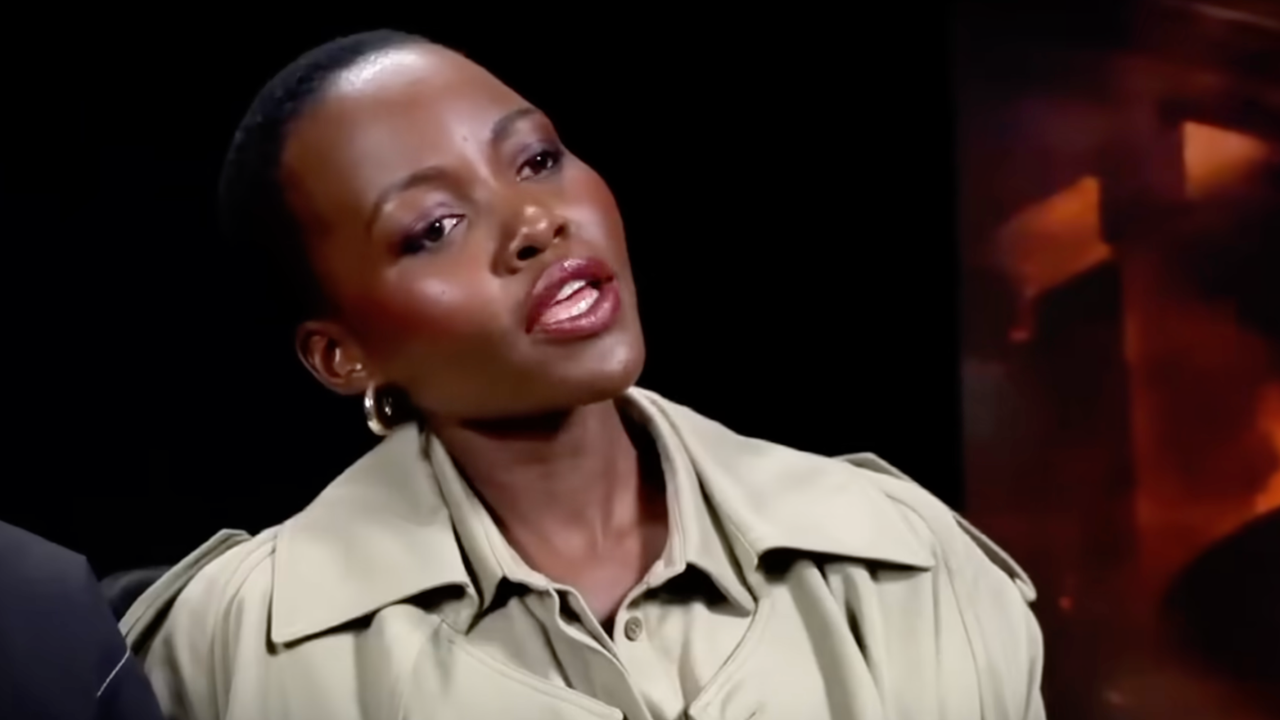
Lupita Nyong’o in an interview for The Odyssey – Universal
The household women provide another example. Modern discussions often frame them solely through a contemporary lens, overlooking the complexities of household service and loyalty in the ancient world. Even Clytemnestra’s motivations are expanded through material that does not originate in The Odyssey itself. Taken individually, these changes may seem small. Collectively, they reshape many of the women who gave Homer’s story much of its emotional depth.
Agamemnon and Iphigenia: Borrowing from Other Myths
One addition that stood out to me was the story of Iphigenia’s sacrifice. To be clear, this is an authentic Greek myth. It simply isn’t part of Homer’s Odyssey. That story comes from later Greek tragedies, where the sacrifice explains why Clytemnestra murders Agamemnon after the Trojan War. Including it isn’t inherently a bad decision. The question is whether it belongs in an adaptation of The Odyssey.
I don’t think it does. Homer already uses Agamemnon’s murder as a cautionary parallel to Odysseus’ own homecoming. That comparison works without adding material from other myths. By expanding Agamemnon’s story, the film shifts attention away from Odysseus—the character whose journey the audience came to see.
The Missing Phaeacians
Perhaps the film’s biggest omission is the complete removal of the Phaeacians. They’re far more than just another stop on Odysseus’ journey. The Phaeacians rescue him, show him hospitality, and, most importantly, provide the setting where he recounts the adventures that brought him there.
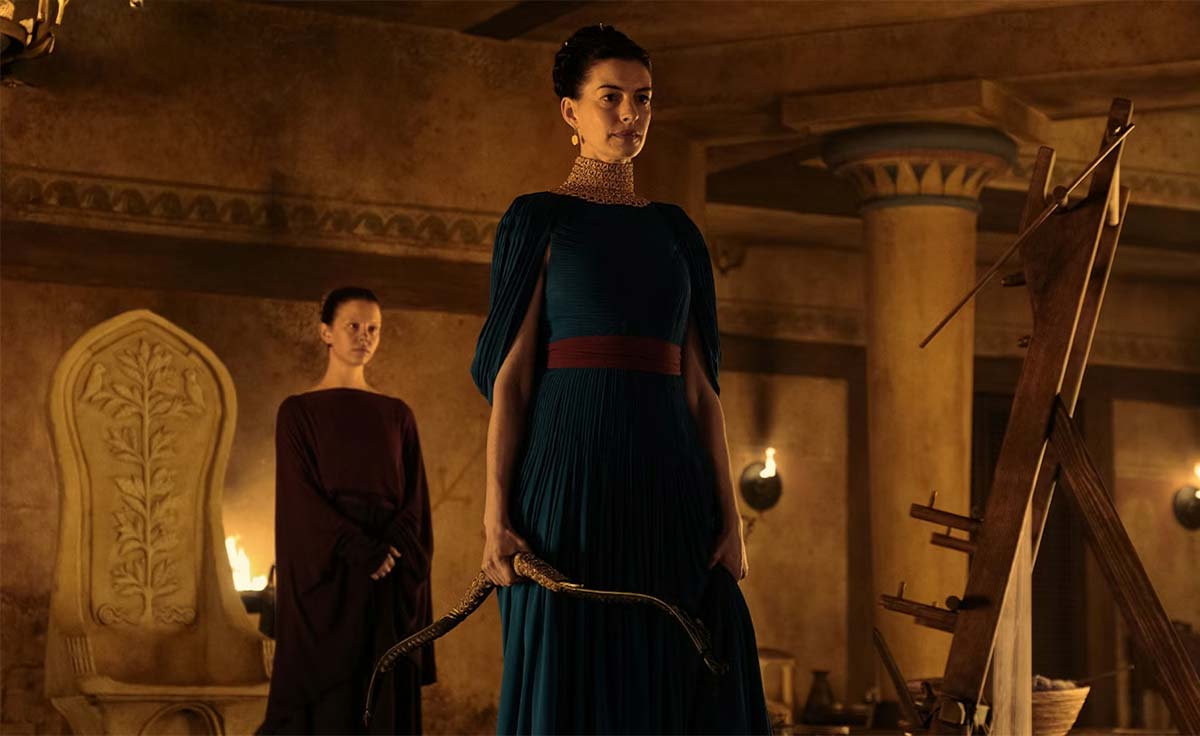
Mia Goth as Melantho and Anne Hathaway as Penelope in the trailer for The Odyssey – YouTube @UniversalPictures
Without them, The Odyssey loses one of its most elegant storytelling devices. They give Odysseus time to reflect, allow the audience to experience his journey through his own words, and reinforce one of the poem’s central ideas: stories are worth preserving.
Removing the Phaeacians may simplify the narrative, but it also removes one of Homer’s most thoughtful contributions to the epic.
Modern Audiences Don’t Need Simpler Stories
One question kept coming back to me throughout the film: Why are we so eager to simplify the classics?
Modern readers are more capable than many adaptations give them credit for. We can learn unfamiliar names, understand ancient customs, and follow mythology without every concept being modernized or explained away.
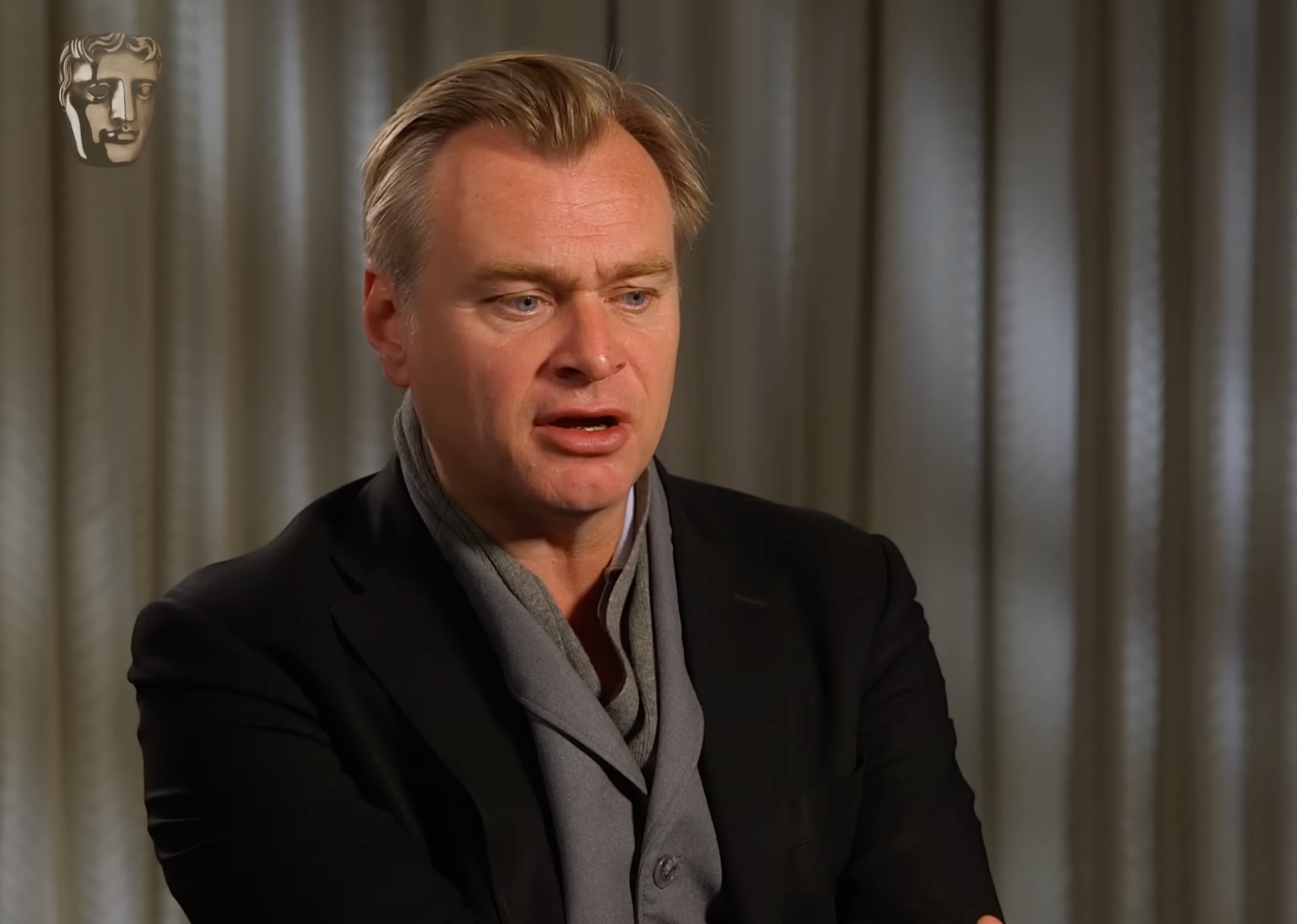
Christopher Nolan in an interview – YouTube, BAFTA Guru
Making classic literature accessible is a worthwhile goal, but accessibility shouldn’t come at the expense of complexity. The greatest adaptations don’t lower the bar—they invite audiences to rise to meet it while preserving what made the original work endure.
The Odyssey is a story that has captivated readers for nearly three thousand years because it challenges them. Rather than smoothing away those challenges, we should embrace them. They’re part of what has made Homer’s epic timeless.
Spectacle Isn’t the Same as Wonder
Christopher Nolan is one of the most visually talented filmmakers working today, and The Odyssey is undeniably impressive in its scale.
However, scale alone doesn’t create wonder. One of Homer’s greatest strengths is that every stop on Odysseus’ journey feels mysterious. Each island introduces something unexpected, encouraging both Odysseus and the reader to wonder what lies beyond the horizon.
While Nolan’s film is visually striking, it rarely captured that same sense of discovery for me. I often found myself admiring the craftsmanship of the scenes more than becoming immersed in the world itself. Spectacle can impress an audience, but wonder invites them to imagine. Homer’s Odyssey has endured because it does both.
The Biggest Change Was Theme
My disappointment with Christopher Nolan’s The Odyssey doesn’t come from any single change. Adaptations are expected to reinterpret their source material. The problem is that Nolan replaces Homer’s central themes with his own.
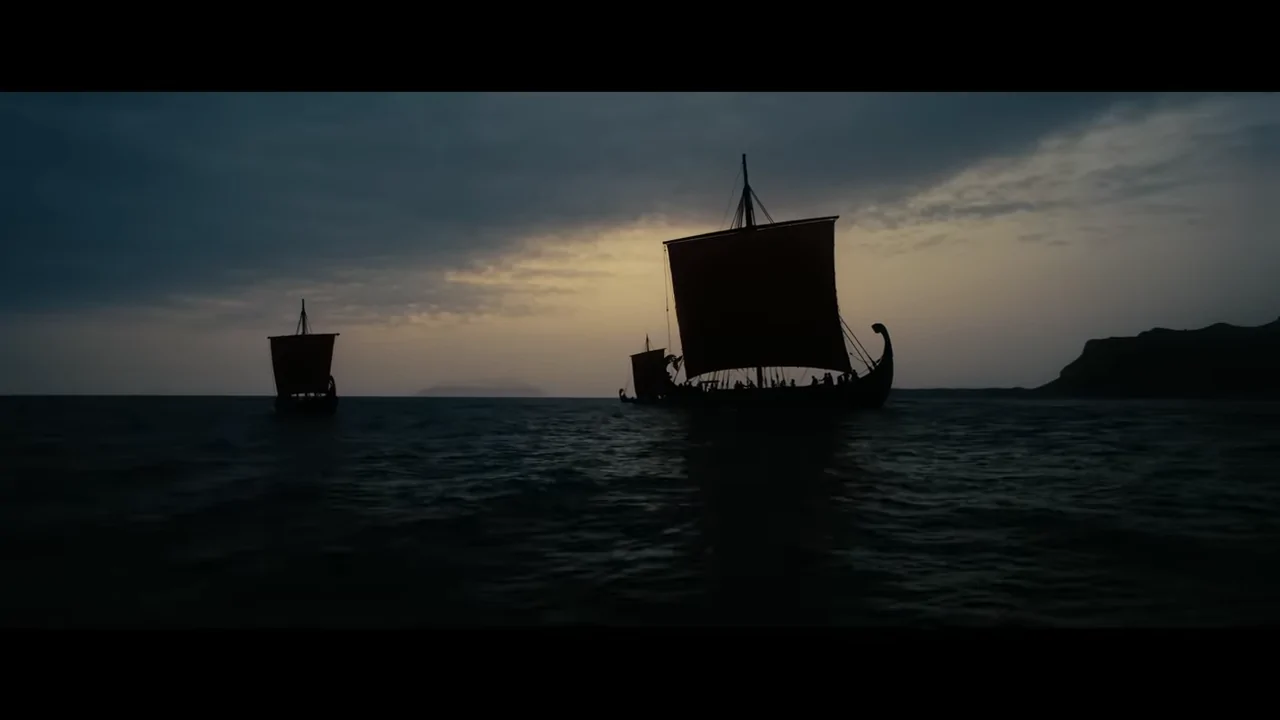
Scene from Christopher Nolan’s The Odyssey – Universal Pictures, YouTube
Homer’s epic explores fate, hospitality, honor, home, divine justice, and the triumph of intelligence over impossible odds. Nolan instead focuses on trauma, guilt, consequence, and redemption. Those are compelling themes, but they belong to a different kind of story.
By changing the ideas at the heart of The Odyssey, Nolan creates a film that follows the broad outline of Homer’s epic while leaving behind much of what made it timeless. That, more than any altered scene or omitted character, is why the film left me disappointed. Christopher Nolan made a beautifully crafted film in his own style.
Modern Commentary That Didn’t Serve the Story
Another area I want to touch on involves a handful of modern additions that, in my opinion, distracted from rather than strengthened the story.
To be clear, The Odyssey is not a modern romance. Homer doesn’t portray Odysseus as a flawless husband. During his journey home, he has relationships with Circe and Calypso, while Penelope remains in Ithaca waiting for him. Whether modern readers find that arrangement fair is a perfectly valid discussion to have, but it is a discussion rooted in the values and worldview of the ancient Greeks rather than our own. My concern is that Nolan occasionally interrupts that ancient worldview with dialogue and characterization that feel distinctly modern.
Circe’s introduction is one example. In Homer’s poem, she transforms Odysseus’ men into pigs because they have entered her home and she is testing them through her magic. The film reframes the moment with dialogue implying that men are already pigs by nature, making the transformation feel more like a commentary on modern gender dynamics than an expression of Circe’s role within Greek mythology. Whether that line lands with audiences will be subjective, but for me it immediately pulled me out of the story.
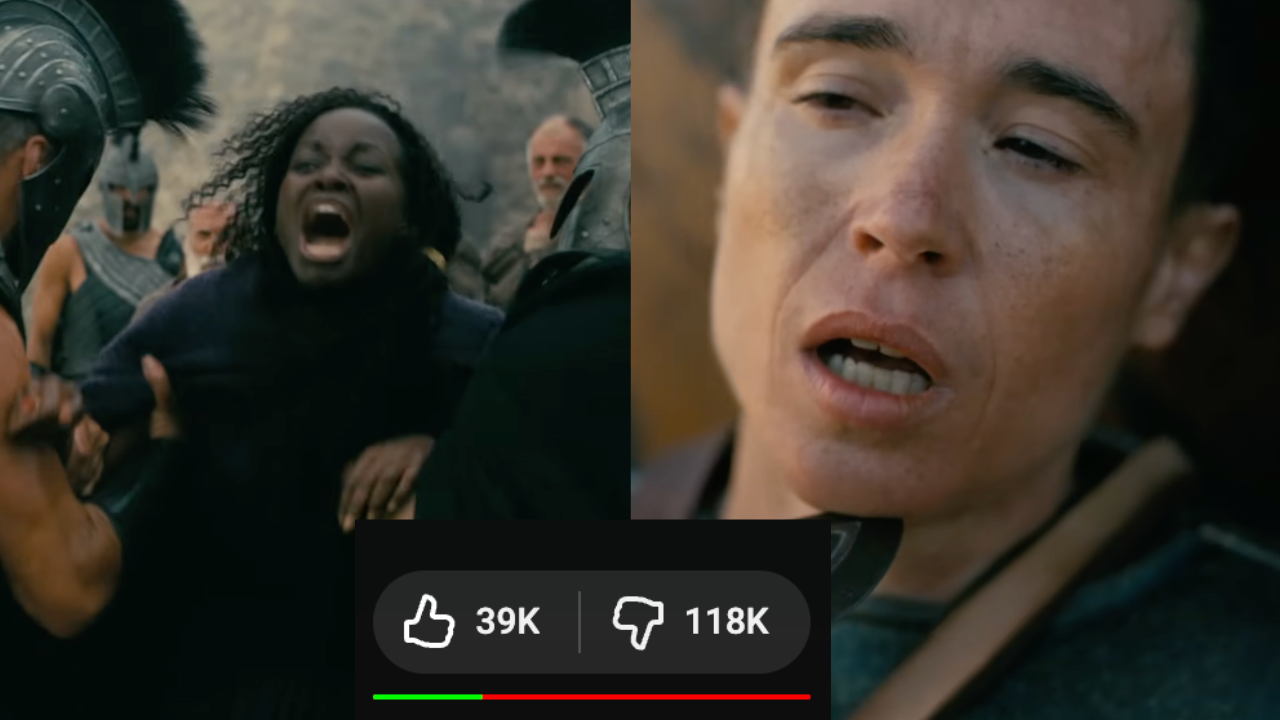
Lupita N’yongo and Elliot Page in the trailer for The Odyssey along with the video’s like to dislike ratio – YouTube, Universal Pictures
Another moment that felt out of place was Penelope’s confrontation with Telemachus, where she laments spending 20 years effectively holding the kingdom together only for her experience to matter less than “the stubble on his chin.” The scene reads as a modern commentary on gender and authority rather than something that naturally emerges from Homer’s narrative. Ironically, Telemachus’ reaction is one of the more authentic parts of the exchange. In Homer’s poem, he often struggles to balance his respect for his mother with his desire to establish himself as the man of the household. That tension is part of his character arc.
The visual presentation of several female characters also struck me as an odd creative choice. Many of the actresses cast in these roles are exceptionally striking performers, yet the film frequently downplays their appearance through styling, makeup, and costuming. Anne Hathaway’s Penelope is perhaps the closest exception, but even she feels intentionally subdued. Considering that beauty is repeatedly emphasized in Homer’s descriptions of figures such as Helen and Circe, I found this artistic direction puzzling.
None of these moments ruin the film on their own. My criticism is that they add a layer of modern social commentary that, in my view, wasn’t necessary. Homer’s Odyssey has endured because it speaks through the values and conflicts of its own world. Every time the film paused to remind me of ours, I found myself pulled out of the journey rather than drawn deeper into it.
Trauma Isn’t a Substitute for Character
The last point I want to touch on is a more personal one, and it has to do with Nolan’s portrayal of Odysseus as a man haunted by the Trojan War.
One trend I’ve noticed over the past decade is that when writers struggle to add depth to a character, they often fall back on familiar storytelling shortcuts. Villains are frequently defined by committing the worst imaginable acts simply to prove they’re evil. Likewise, male protagonists are increasingly given PTSD as the primary explanation for their behavior and emotional struggles. That isn’t a criticism of PTSD itself. It is a very real condition that has been portrayed powerfully in many stories. My criticism is that it has become a default narrative device rather than a thoughtfully explored aspect of a character.
Nolan’s version of Odysseus falls into that trap for me.
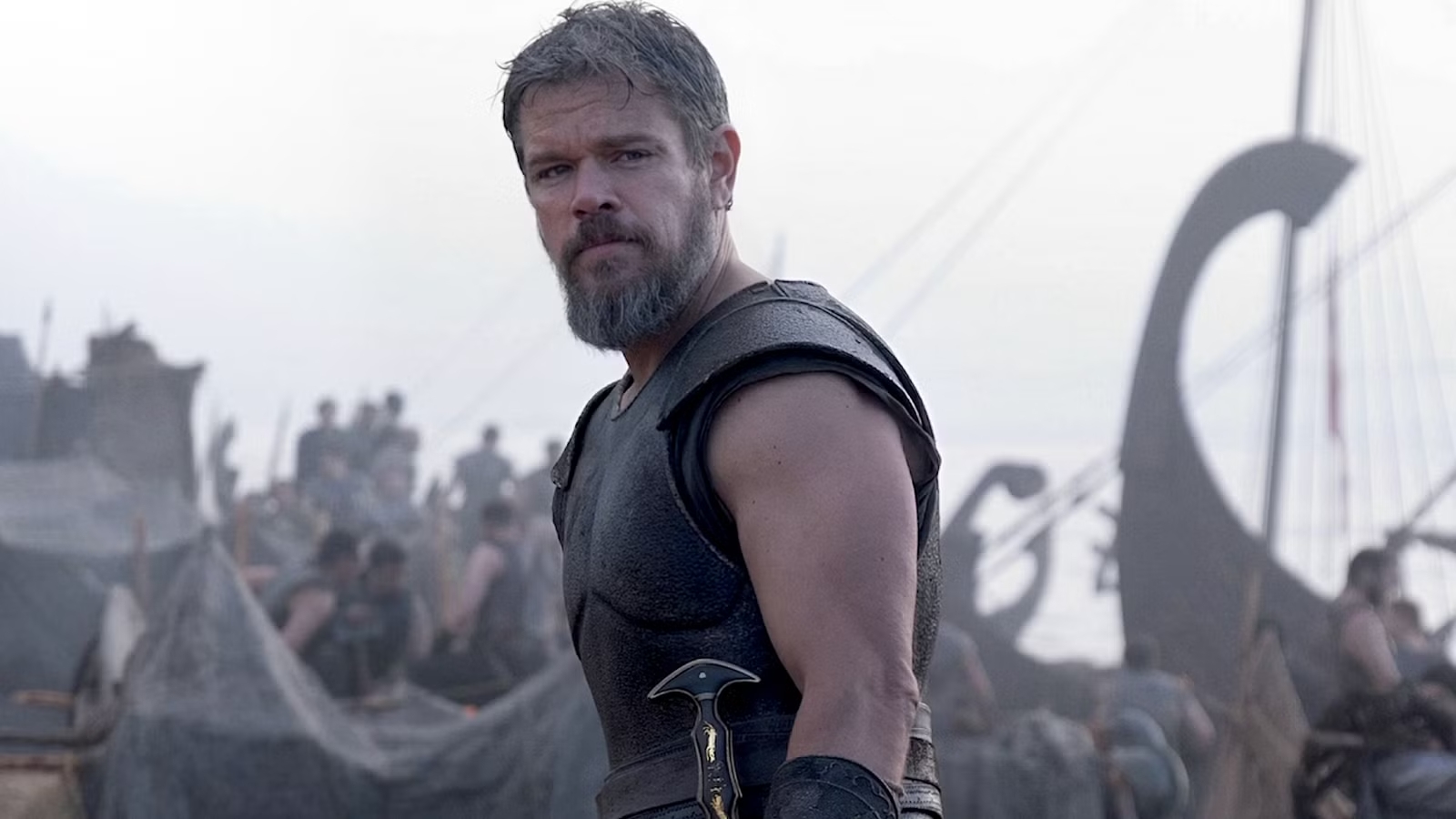
Matt Damon as Odysseus in the trailer for The Odyssey – YouTube @UniversalPictures
Could Odysseus have returned from Troy carrying deep psychological scars? Absolutely. My issue isn’t with the idea—it’s with the execution. The film leans so heavily on trauma that it overshadows the qualities that define Odysseus in Homer’s poem: his intelligence, adaptability, and relentless determination.
If you’re interested in a version of Odysseus that explores the psychological cost of war, I actually think The Return (2024), directed by Uberto Pasolini, handles that concept far more effectively. It presents a broken man without allowing his trauma to become his entire identity.
Nolan also introduces an idea that I found difficult to reconcile with the rest of his adaptation. By implying that Athena resembles a young woman Odysseus watched die during the sack of Troy, the film suggests that at least some of his encounters may be psychological rather than genuinely divine. It’s an interesting concept on paper, but it reinforces the film’s larger decision to replace fate and the influence of the gods with human psychology and personal responsibility. In some ways, we are saying that Odyssy’s journey is from the point of view of an unreliable narrator and he has hallucinated the whole twenty year journey.
Am I Done Yet? Almost!
Throughout the film, Nolan shifts the focus away from divine intervention and toward human choice and responsibility. If that is the story he wants to tell, then I expected the conclusion to reflect that philosophy. Instead, after reclaiming Ithaca and sacrificing so much to return home, Odysseus leaves his kingdom behind and departs with Penelope.
I understand that this ending echoes a conversation the two share at the beginning of the film, creating a sense of narrative symmetry. However, I didn’t find that payoff particularly satisfying. More importantly, it seemed to contradict the film’s own themes. If the story is about accepting responsibility for one’s choices, abandoning the kingdom that cost so many lives to reclaim feels like a strange final decision.
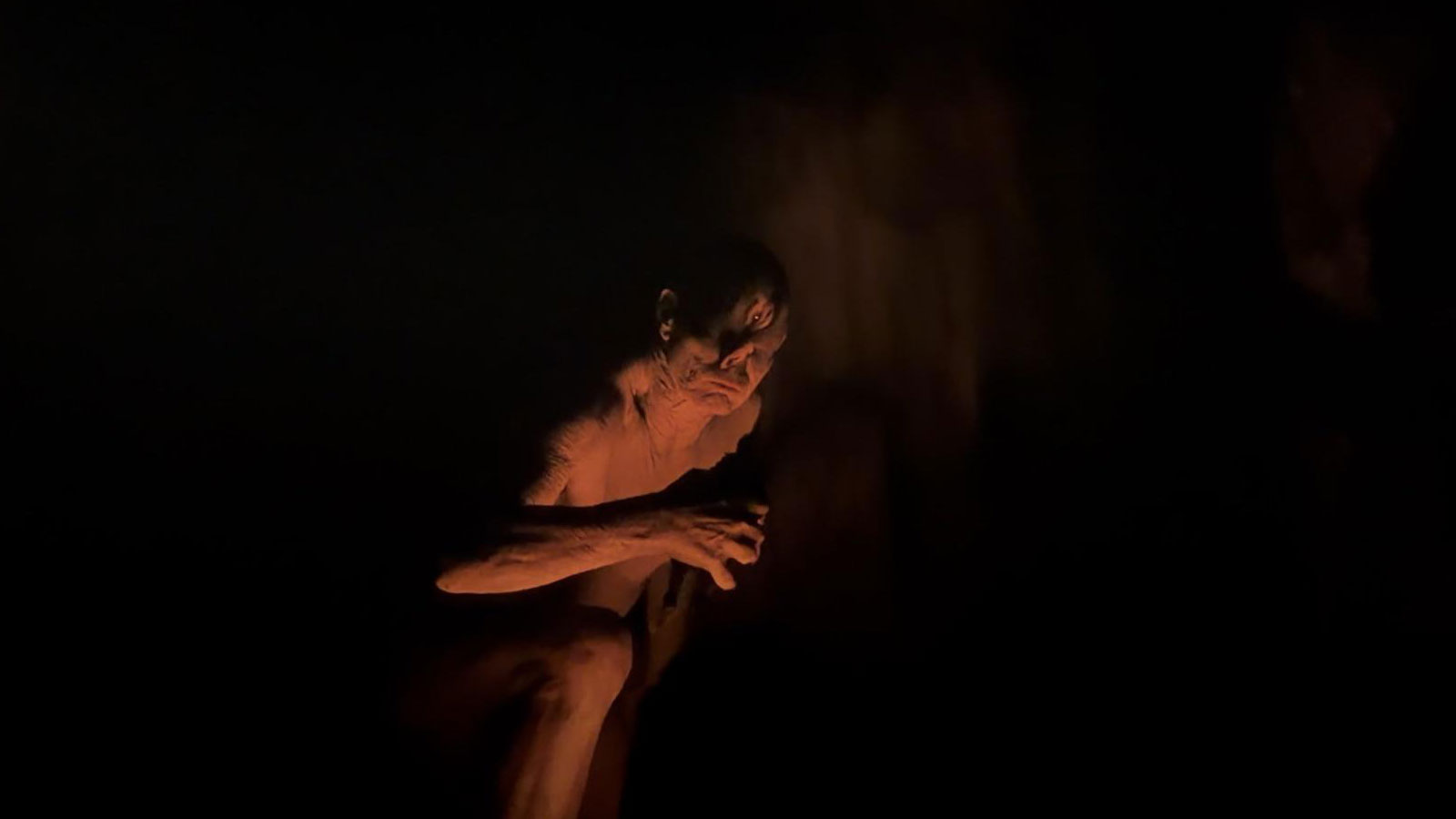
The Cyclops in the trailer for The Odyssey – YouTube @UniversalPictures
I’m not criticizing the ending simply because it differs from Homer. In truth, the closing books of The Odyssey have been debated by scholars for centuries, and adaptations have always taken liberties with them. My concern is I don’t believe Nolan’s ending follows from the story he chose to tell.
A film doesn’t have to be faithful to its source material to succeed. It does, however, need to remain faithful to its own internal logic. For me, that’s where The Odyssey ultimately stumbled.
Final Thoughts
I could keep going. There are plenty of other changes I could dissect if my goal were simply to beat Marv’s word count for “person who disliked this movie the most.” That’s become a bit of a running joke between us, and I’m fairly confident I could get there if I really wanted to. (Editor’s Note: She did, by over 800 words! -Marv)
I haven’t even touched on the strange decision to include mythological creatures while minimizing the role of the gods who define that mythology. I skipped over the repeated references to Zeus’ laws of hospitality despite Zeus himself being almost entirely absent. I didn’t spend much time discussing the Cyclops, who was transformed from Homer’s cunning and terrifying antagonist into what largely felt like a creature built around jump scares. Nor did I dive into the Sirens, the monsters, or several of the other creative choices that left me scratching my head.
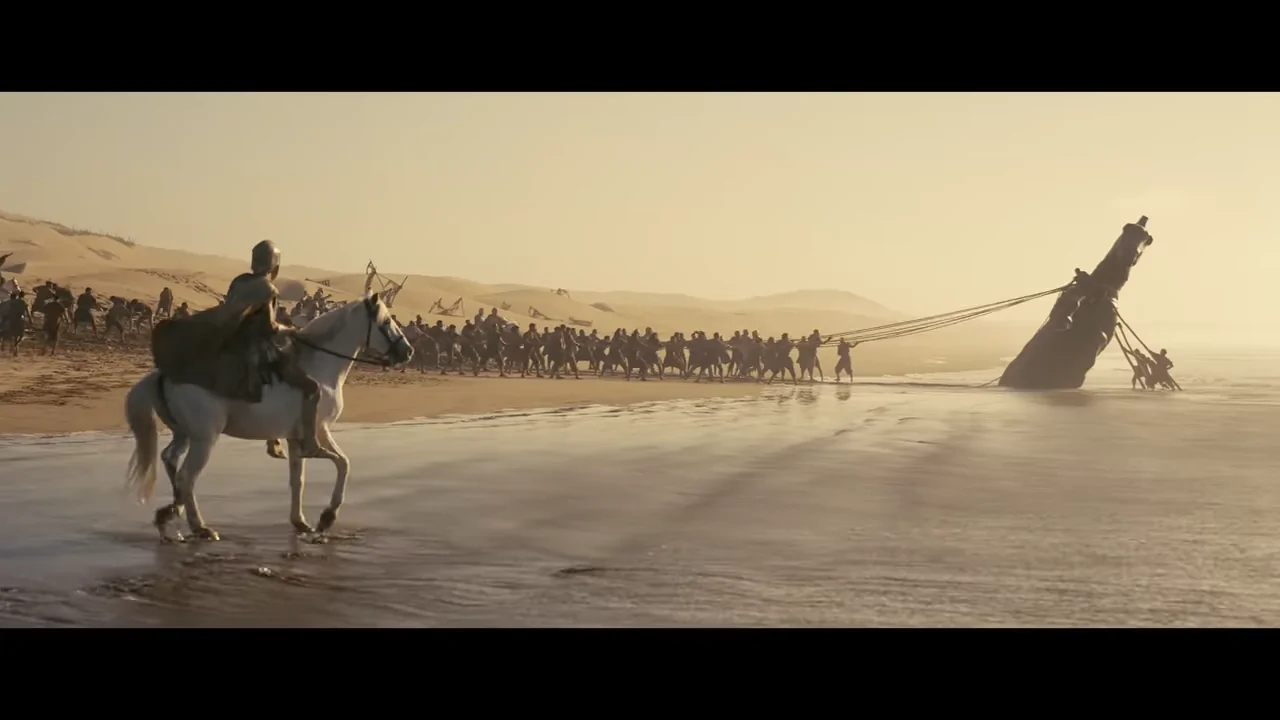
Shot for the trailer for The Odyssey – Universal Pictures, YouTube
At some point, though, you have to stop comparing the film to the poem and simply ask whether it succeeds on its own merits. For me, the answer is no.
I give Christopher Nolan’s The Odyssey a 4 out of 10.
The reason it isn’t lower is because I can see the craftsmanship behind it. This wasn’t a lazy production. It has all the ingredients of a great film, yet somehow never becomes one. Instead, it becomes something I found surprisingly dull. For a story that has captivated audiences for nearly three thousand years, that’s perhaps the greatest disappointment of all. If you’re curious, I’d still encourage you to watch it and form your own opinion. Read Homer. Watch other adaptations. Compare them for yourself. Great stories deserve thoughtful discussion, and The Odyssey certainly provides plenty to talk about.
As for me, if I have to rewatch this film or watch paint dry, I am going to watch paint dry.
What’s your review of The Odyssey? Sound off and let us know!
UP NEXT: Michael Ending Global Theatrical Run in Many Markets After Record-Setting Showing
