


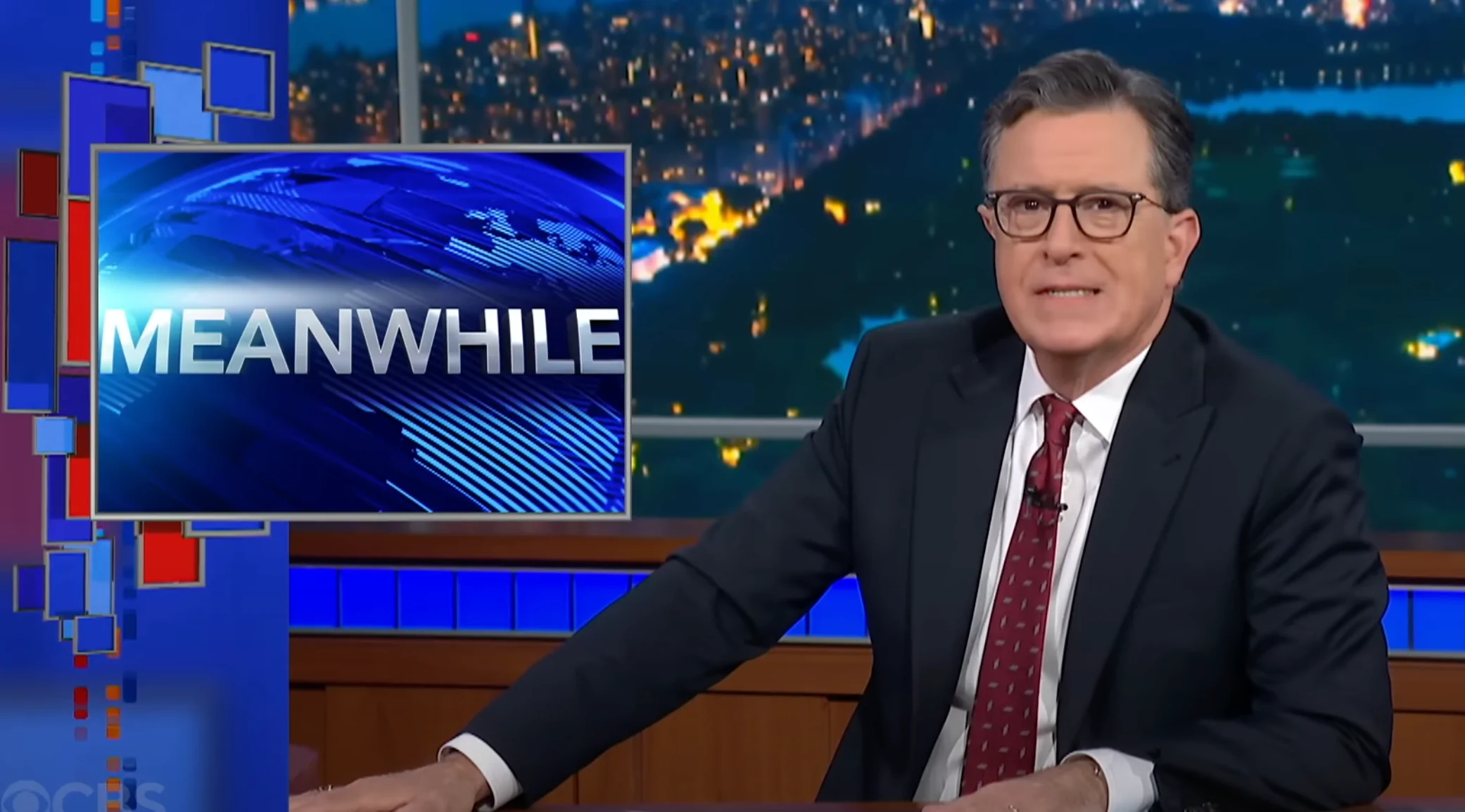
Late-night host Stephen Colbert is escalating his public feud with CBS — this time lashing out at the network after it issued a statement directly contradicting his on-air claim that executives had blocked a politically charged interview from airing on The Late Show.
During Tuesday night’s broadcast, Colbert addressed the growing controversy head-on, accusing his own network of going behind his back when it moved to publicly rebut his version of events.
Stephen Colbert Delivers a Monologue on The Late Show – YouTube, The Late Show With Stephen Colbert
“Without ever talking to me, the corporation put out this press release,” Colbert told his audience, holding up CBS’s statement on air. “This statement, it’s a surprisingly small piece of paper considering how many butts it’s trying to cover.”
These remarks are the latest turn in a dispute that began after Colbert revealed his interview with Texas State Rep. and U.S. Senate candidate James Talarico would not air on the broadcast program.
Colbert previously claimed CBS attorneys told staff “in no uncertain terms” that the interview could not run, adding during Monday’s monologue: “Not only could I not have him on, I could not mention me not having him on.”
CBS Pushes Back
But CBS quickly moved to dispute that characterization.
In a formal statement, the network said the interview was never prohibited — only flagged for regulatory risk tied to federal broadcast law.
“The Late Show was not prohibited by CBS from broadcasting the interview with Rep. James Talarico,” a spokesperson said. “The show was provided legal guidance that the broadcast could trigger the FCC equal-time rule for two other candidates, including Rep. Jasmine Crockett, and presented options for how the equal time for other candidates could be fulfilled.”
Stephen Colbert on The Late Show With Stephen Colbert – YouTube, The Late Show With Stephen Colbert
CBS further stated that the show ultimately chose to release the interview on YouTube — with on-air promotion — rather than pursue equal-time accommodations on the broadcast itself.
In other words, according to the network, the segment wasn’t censored — it was redirected by Colbert’s choosing.
Colbert Doubles Down
Colbert, however, made clear he rejects that framing.
He told viewers that “every word” of his Monday night script had been approved by CBS lawyers before the interview was pulled and said he even received additional legal notes during a commercial break — something he claimed had never happened in the show’s run.
Stephen Colbert speaks at the 2025 Emmys – YouTube, Television Academy
READ: ‘The Mandalorian and Grogu’ Trailer Finally Shows What the Movie Is Selling — But is Anyone Buying?
Despite the sharp criticism, Colbert attempted to soften the corporate clash by closing with a more conciliatory note. “So I don’t know what this is about. For the record, I’m not even mad. I really don’t want an adversarial relationship with the network.”
Still, the public nature of the back-and-forth has already created precisely that dynamic — a rare spectacle of a network star openly sparring with his own employer in real time.
A Question of Communication
Colbert’s claim that CBS issued its statement “without ever talking to me” raises an obvious follow-up question: Did the host speak with the network before going on air and accusing it of censorship?
Colbert claims that the network approved every word of his script Monday night, but he also claimed they told him that he couldn’t air the interview, which the network refutes.
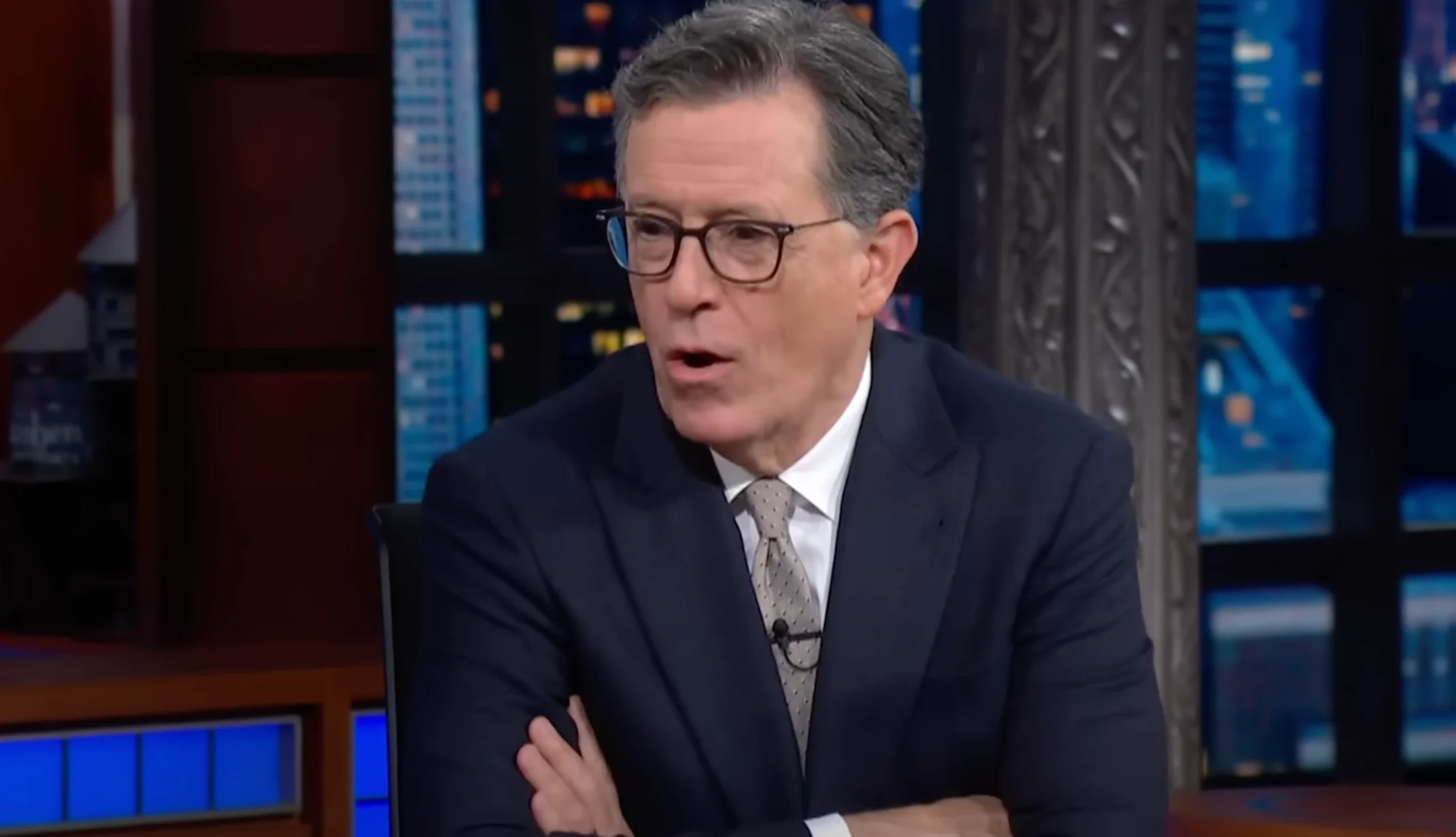
Stephen Colbert interviews Jimmy Kimmel – YouTube, The Late Show With Stephen Colbert
And if CBS didn’t consult him before releasing its rebuttal, the network may have been reacting to his public accusations. If Colbert didn’t consult CBS before leveling those accusations, the escalation may have been mutual.
Either way, the dispute appears to have played out more in public than behind closed doors.
The “Victimhood” Effect
Whatever the internal dynamics, the external impact is undeniable — particularly when it comes to audience attention.
Colbert’s YouTube release of the Talarico interview has exploded in viewership, drawing 5.6 million views — a figure that dwarfs the performance of most Late Show interview uploads, which rarely approach the million-view mark.
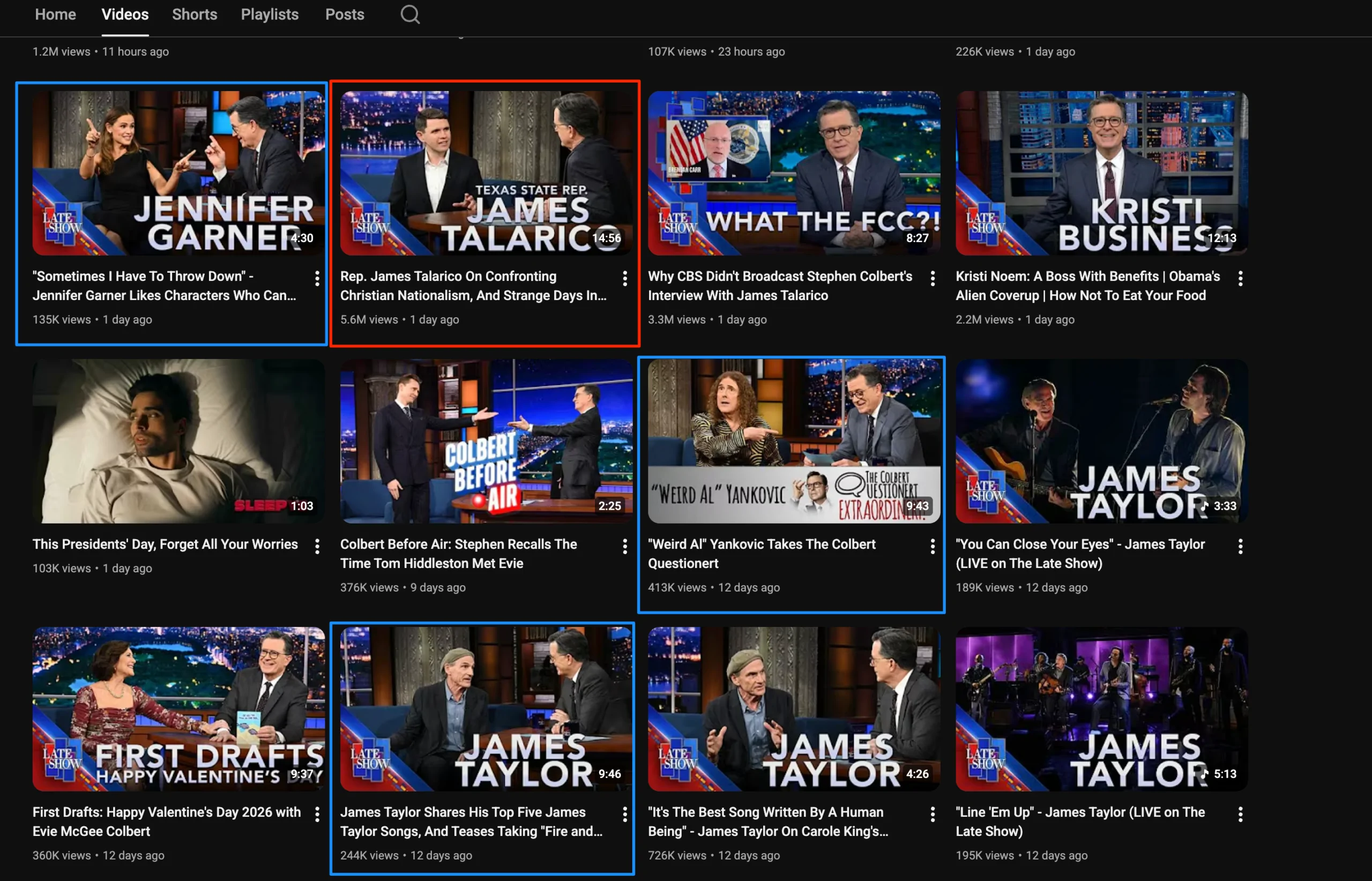
An image showing viewership numbers for interviews on YouTube by Stephen Colbert highlighting the James Talarico interview in red and other more average interviews in blue – YouTube, The Late Show With Stephen Colbert
READ: Stephen Colbert Lashes Out at CBS After Network Blocks Partisan Senate Candidate Interview
The surge suggests the censorship narrative — whether fully accurate or not — dramatically boosted public interest.
Controversy, it seems, drove clicks.
The spike mirrors past late-night flashpoints where perceived suppression fueled short-term audience surges, as viewers rallied around hosts framed as targets of political or corporate pressure.
Regulation vs. Rhetoric
At the core of the dispute is the FCC’s Equal Time rule, which requires broadcasters to provide comparable airtime to competing political candidates during election cycles.
Networks routinely flag potential triggers and outline compliance pathways — ranging from rebuttal bookings to adjusted distribution strategies.
Stephen Colbert dances around with human needles – YouTube, The Late Show With Stephen Colbert
CBS maintains that is exactly what happened here: legal caution, not censorship.
Colbert, by contrast, framed the situation as institutional suppression — even linking the dispute to broader political pressure surrounding federal regulators and the Trump administration.
That rhetorical leap helped galvanize his audience — but it also invited scrutiny once CBS publicly contradicted the claim.
Credibility on the Line
With both narratives now on record, the controversy has shifted from a censorship story to a credibility contest.
- Colbert’s version: The interview was effectively blocked under political pressure.
- CBS’s version: The show received routine legal guidance and chose an alternate distribution path.
The truth may ultimately rest in how one defines “prohibited” versus “advised against.” But the fallout is already clear.

Jimmy Kimmel and Stephen Colbert laughing together – YouTube, The Late Show With Stephen Colbert
Colbert succeeded in drawing massive attention to the interview — and to himself — in the final stretch of his late-night tenure. Whether that attention was driven by misunderstanding, legal interpretation, or strategic framing is now the question hanging over the saga.
And thanks to CBS’s public rebuttal, it’s a question that isn’t going away anytime soon.
Do you think Stephen Colbert was honest about what CBS did? Sound off in the comments and let us know!
